Safari
-
Sir Bani Yas
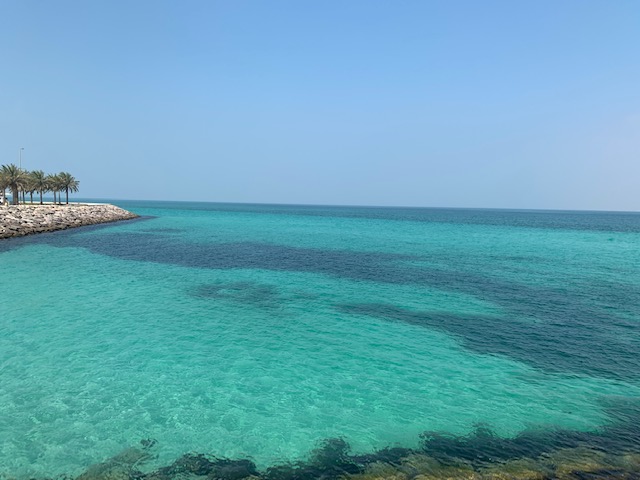
December 30, 2019 /
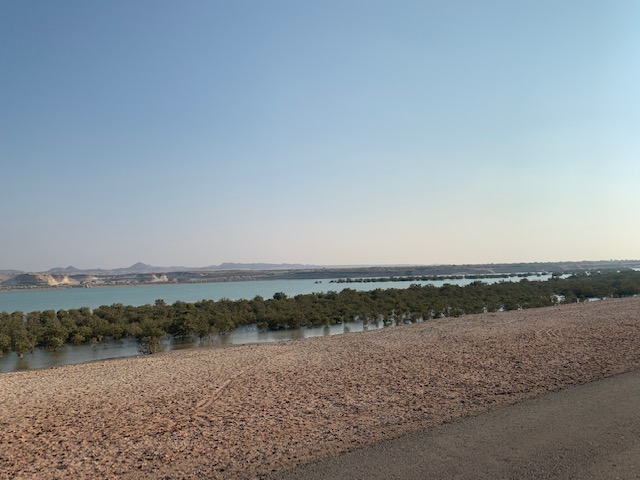
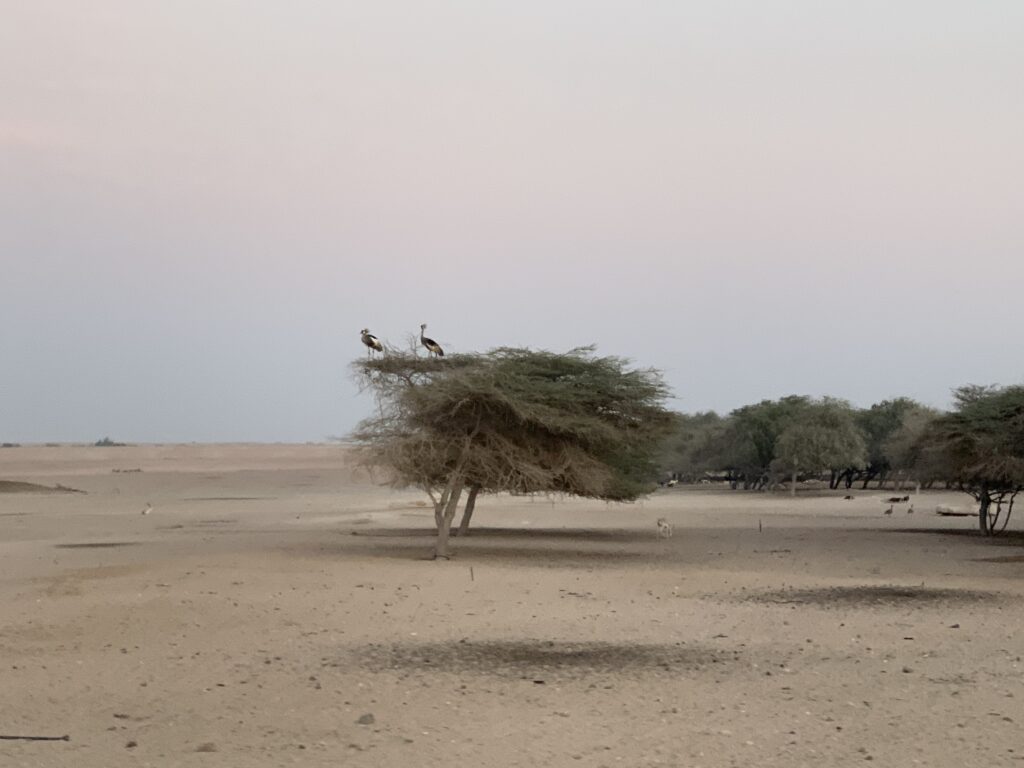
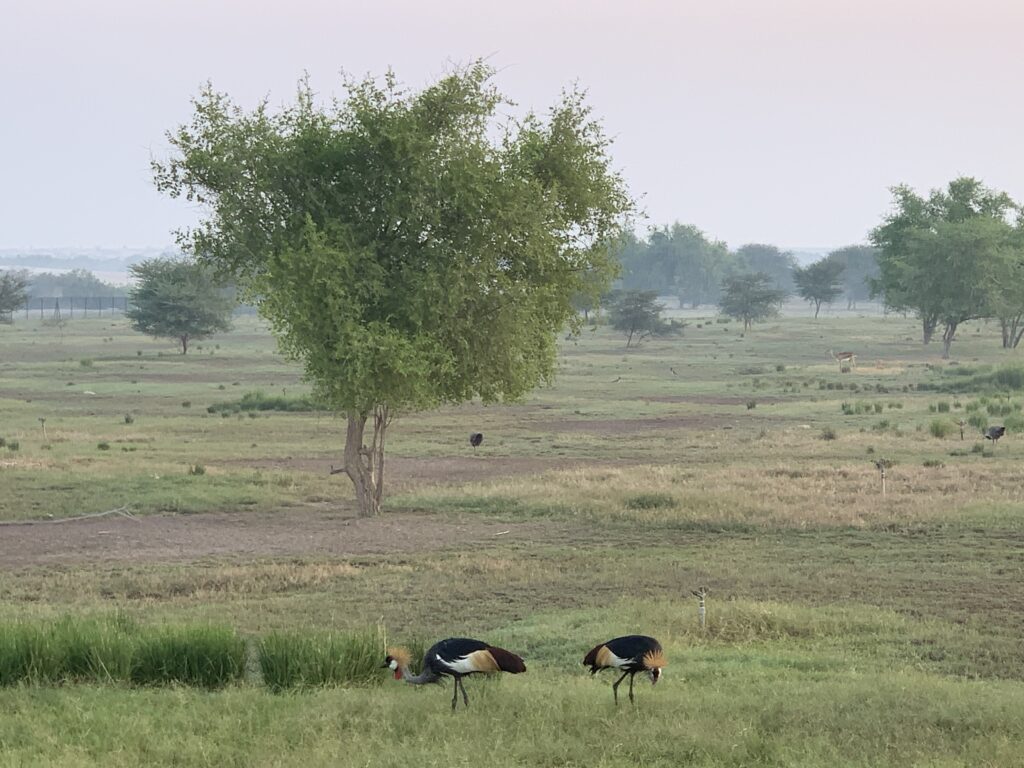
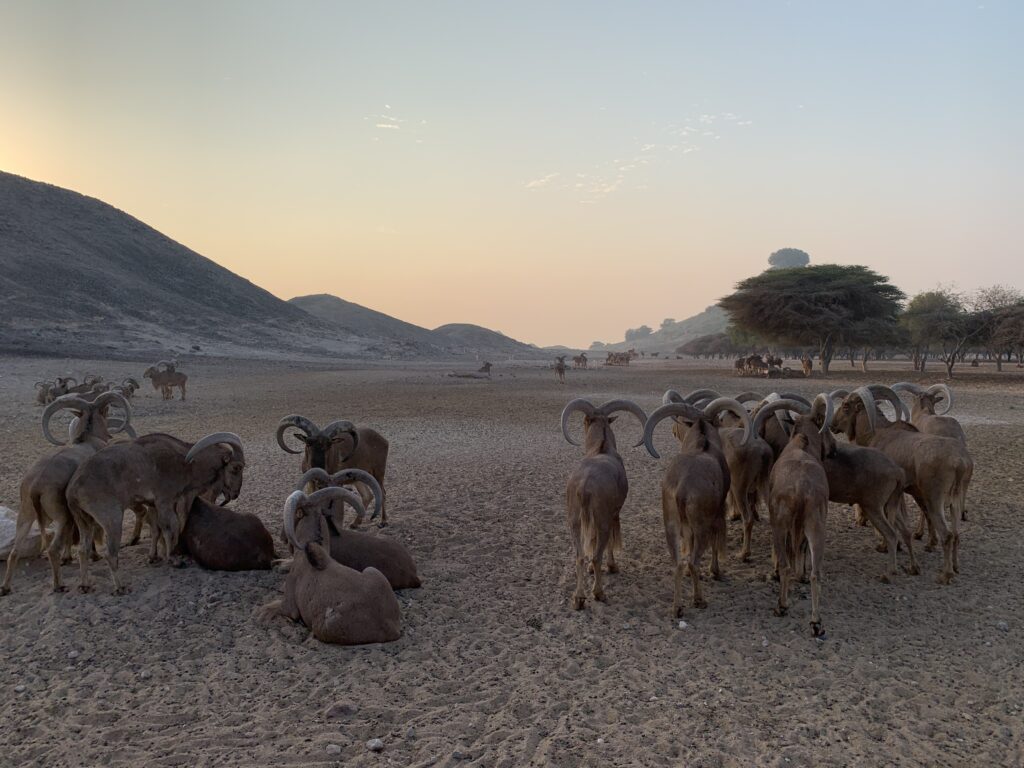
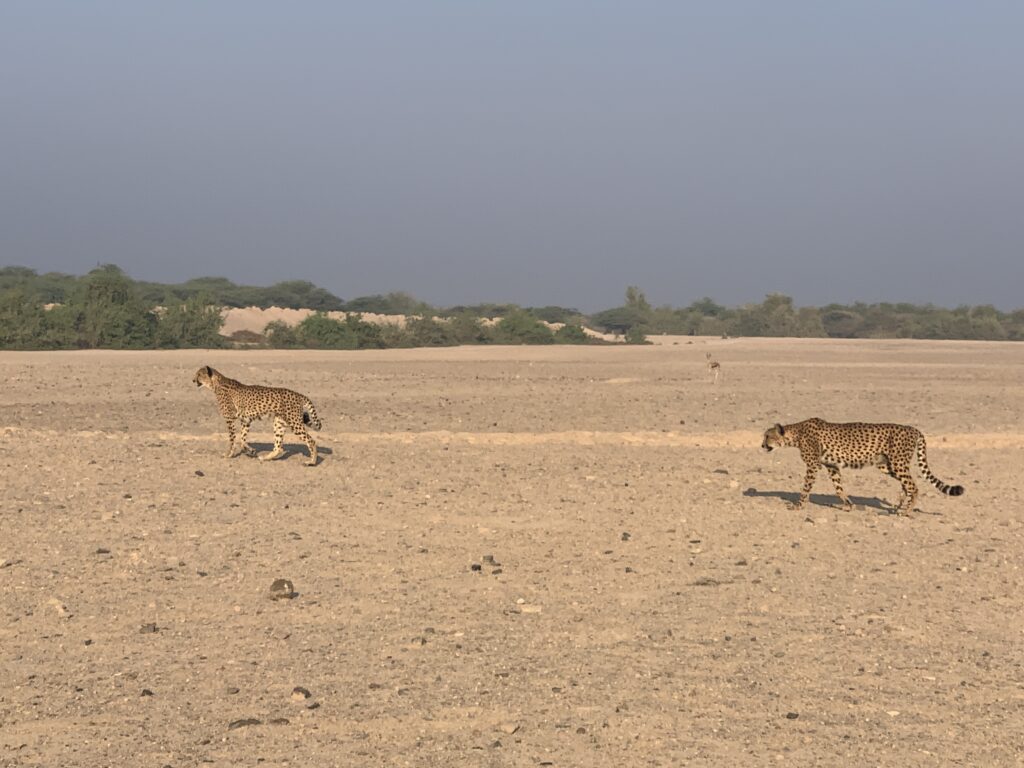
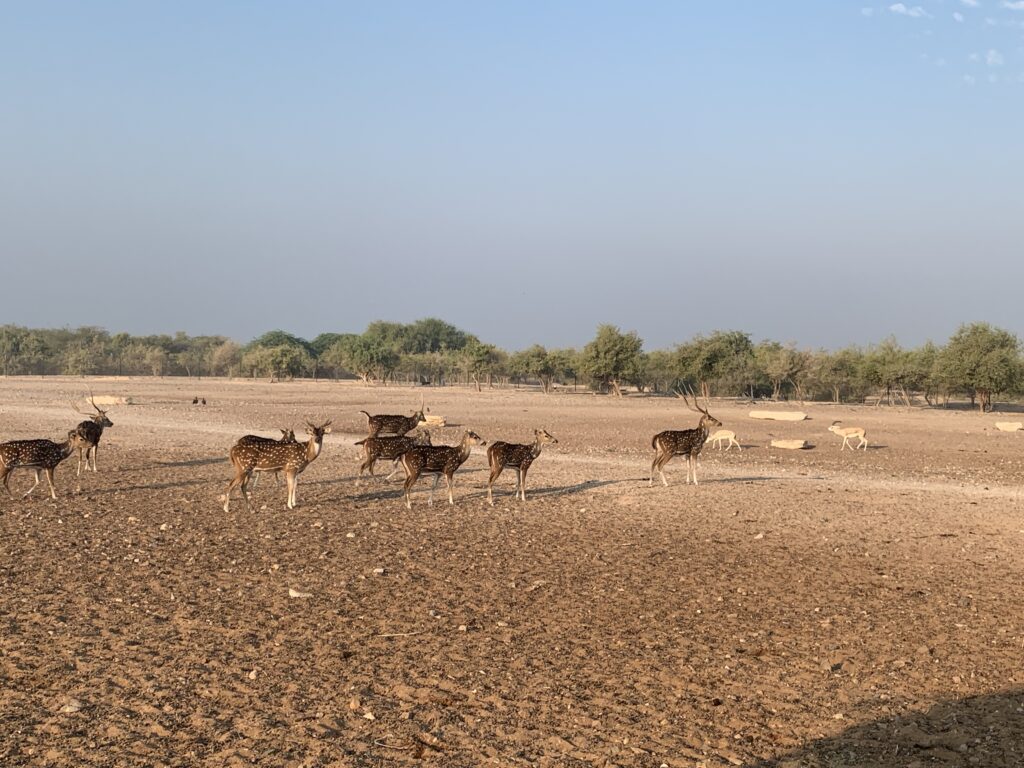
Sir Bani Yas is an island about 150 miles southwest of the United Arab Emirates capital of Abu Dhabi and it’s certainly not your standard stop in the desert. Not long ago, this 30-square-mile island—the biggest of eight Desert Islands just offshore—was abandoned. The Bani Yas tribe, who first moved here 7,000 years ago, left it for good at least a century ago. In the early 1970s, you could still see why. There were no trees or freshwater sources here; just craggy rocks and bare shorelines lapped by the waves of the Arabian Gulf. That’s when Sheikh Zayed bin Sultan Al Nahyan, the UAE’s founder visited and made a bold plan. He’d transform it into a nature reserve to give sanctuary to endangered animals of the UAE, Africa, and beyond. Since the death of Sheikh Zayed in 2004, Sir Bani Yas has been transformed into a wildlife park. More than 350 km of original fencing has been torn down to create an ‘open range’ safari feel on the refurbished island. Some creatures, such as the spotted deer and the athletic sand gazelles, roam wild – hence the 50km/h speed limit on the single lane, paved road – while others, such as cheetahs, are contained in sprawling, expansive pens. You can almost mistake the scene of oryxes, gazelles, hyenas, jackals, and cheetahs for a Kenyan savanna.
A two-and-a-half-hour drive from Abu Dhabi via the E-11 highway will allow you to hop onto one of the four short, daily ferry rides (departing at noon, 3 p.m., 6 p.m., and 11 p.m.). We took the earliest, so as to be able to still make the most of the afternoon ahead of us. Three resorts dot different parts of the island. We had reserved Desert Islands, a bigger resort on the north shore of Sir Bani Yas, set up at Sheikh Zayed’s former vacation home. And indeed the Hotel has a decor of Arabian, Asian and African influence, apparently designed to look as if Sheikh Zayed himself decorated it with exotic artifacts from his travels.The ground floor room was spacious and comfortable, with a broad balcony overlooking the sprawling pool.
Once you reach the hotel, there are so many activities to choose from that you run the risk of forgetting about the beautiful sandy beaches of the island.
Whilst the beaches are beautiful and it’s great to spend some time relaxing, everything is geared more towards getting out and making the most of the landscape, whether on dry land or in the water. And there is something for everyone with history and culture tours (there’s an ancient Christian Monastery on the island dating back to 600AD), kayaking, diving, snorkelling, horse riding, archery, nature walks, wildlife drives and mountain biking among other.
After booking our 2 activities for the weekend, we spent a couple of hours at the beach which, despite the hotel pool heaving with overnighters, was absolutely deserted.
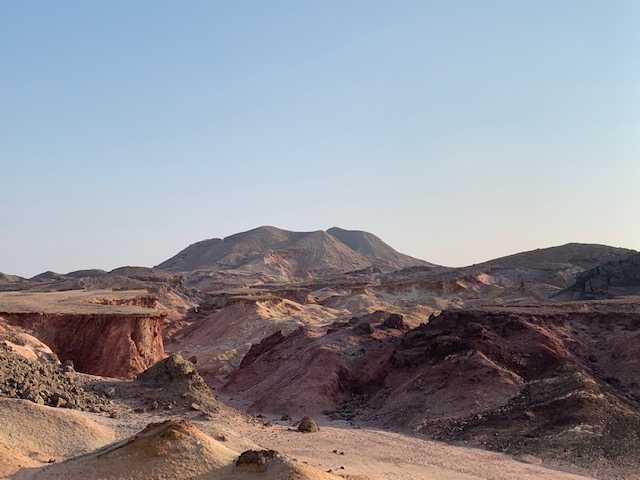
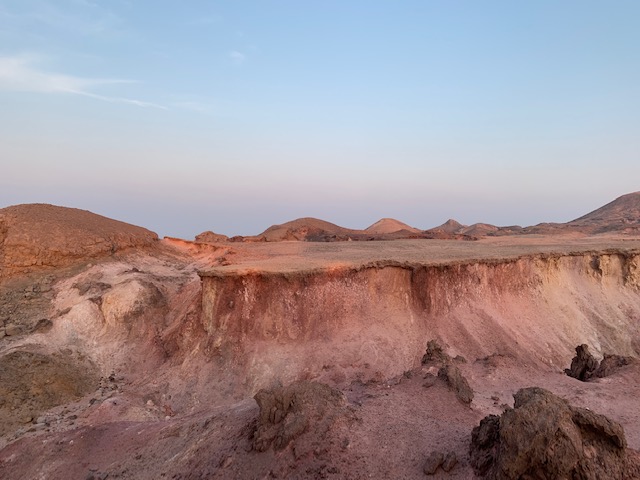
We started our exploration of the island around 4:30 pm with a guided walk through a narrow, lunar-like wadi (valley or ravine). A wadi is technically a dried up river bed. The 90-minute walk rises slightly amidst the salt that in the century has risen from the depth of the island towards the surface, thus creating patterns of twisting rocks and shadowy crags that boast a rainbow of colors from the reddish hues of oxidized iron mixing with yellows from sulfur, purples from magnesium, green from copper and some sparkle from hematite on the red-rock floor.
Although seemingly quite flat from the road, the landscape does boast some impressive rock formations and offers a completely different perspective from high up. The wadi is mostly made of salt and is therefore quite bare of vegetation. The crunching sound under your feet is the gypsum, the salt from which plaster is made of. Gypsum is white but it gets some color from the other neighboring minerals. We learnt from our guide that plaster differs from chalk in that the former can become solid again (as in plaster casts) while the latter does not have this ability.
You’ll have no choice but to eat in the hotel while staying here – it is quite literally in the middle of nowhere. Don’t fear though, because you’ll be spoilt for choice with the food on offer. You can choose from a huge breakfast buffet at The Palm all-day-dining restaurant where the friendly chefs will whip you up a made-to-order omelette. For dinner there are a few options. We did a catch buffet barbecue at Amwaj. Set right on the beach, a small walk from the hotel, its décor is pretty special with cosy, oversized chairs and sofas on the terrace creating a relaxed vibe that makes you feel a world away from Abu Dhabi.


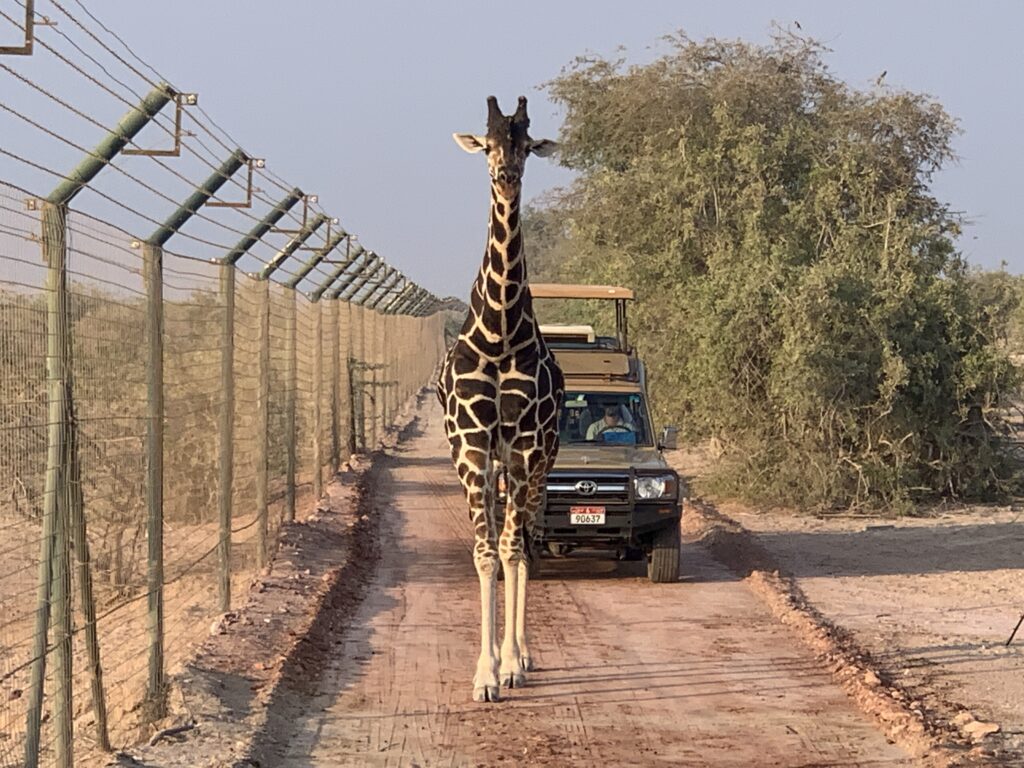
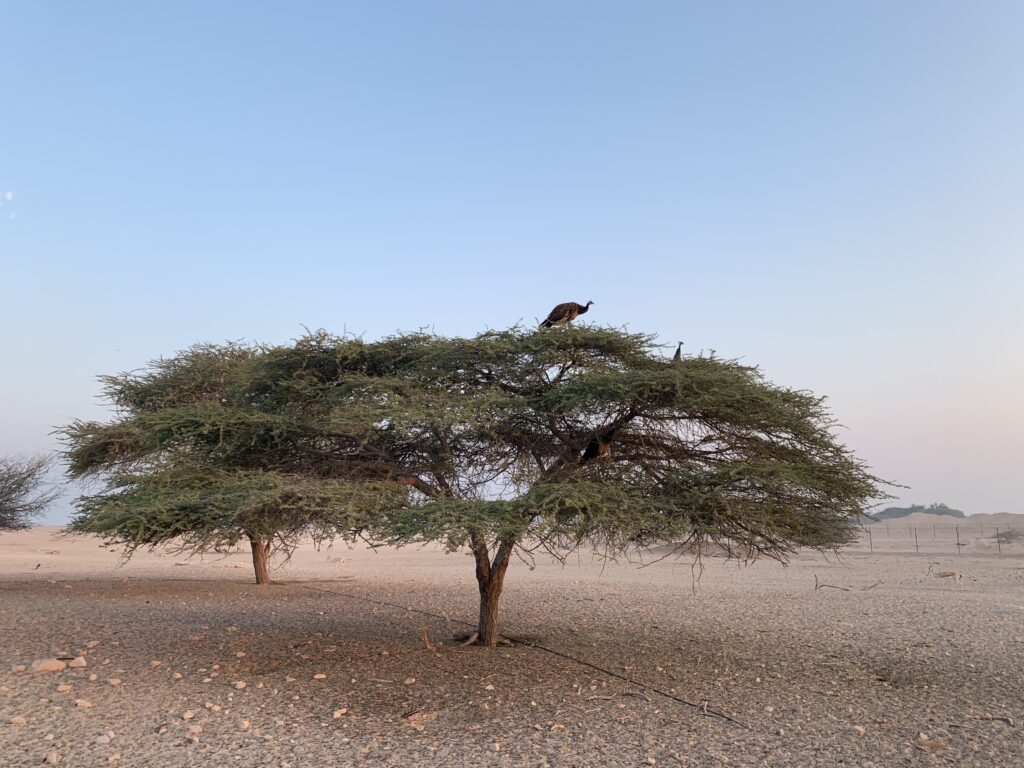
The Arabian Wildlife Park safari that we did early morning of our second day is the highlight of any visit. Up to half a dozen guests jump into an open-sided Land Cruiser to make leisurely 90-minute drives. The windows are open and the roof lifts up so you can be sure to get close up and unobstructed views of whatever you may be lucky enough to see. While you are driving towards the gated areas of the park, it is difficult to imagine that in the beginning there were only 70 dates trees in the island while now there are over 2.5 million trees—like the umbrella thorn acacia, olive trees, apple and pear trees, or the gum tree that the eland antelope are so drawn to— planted by hand. The pipeline system to irrigate this vast area (mostly made of salt, do not forget about it) extends over 73,000 miles. In addition, the resorts plant a mangrove for every guest.
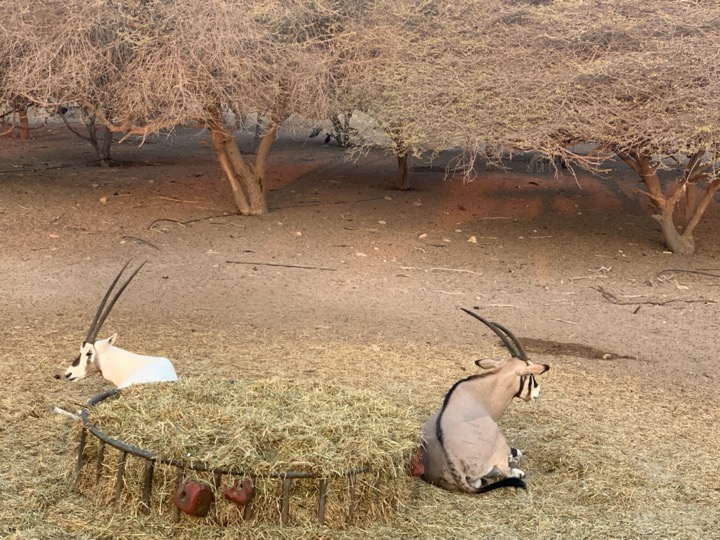
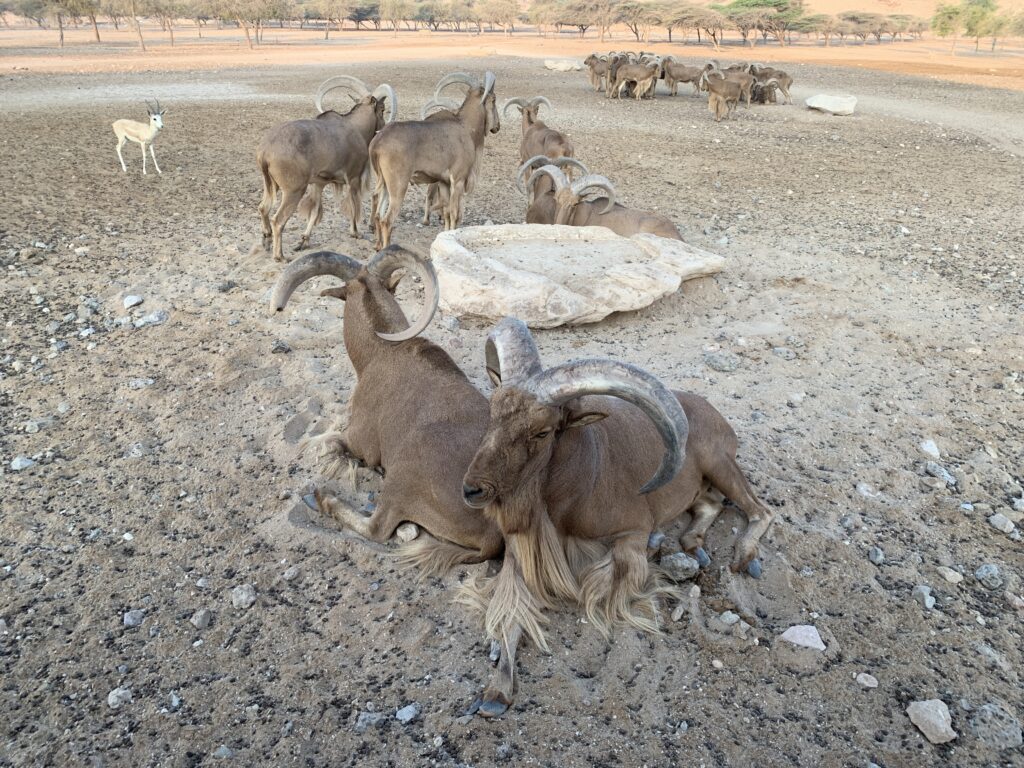
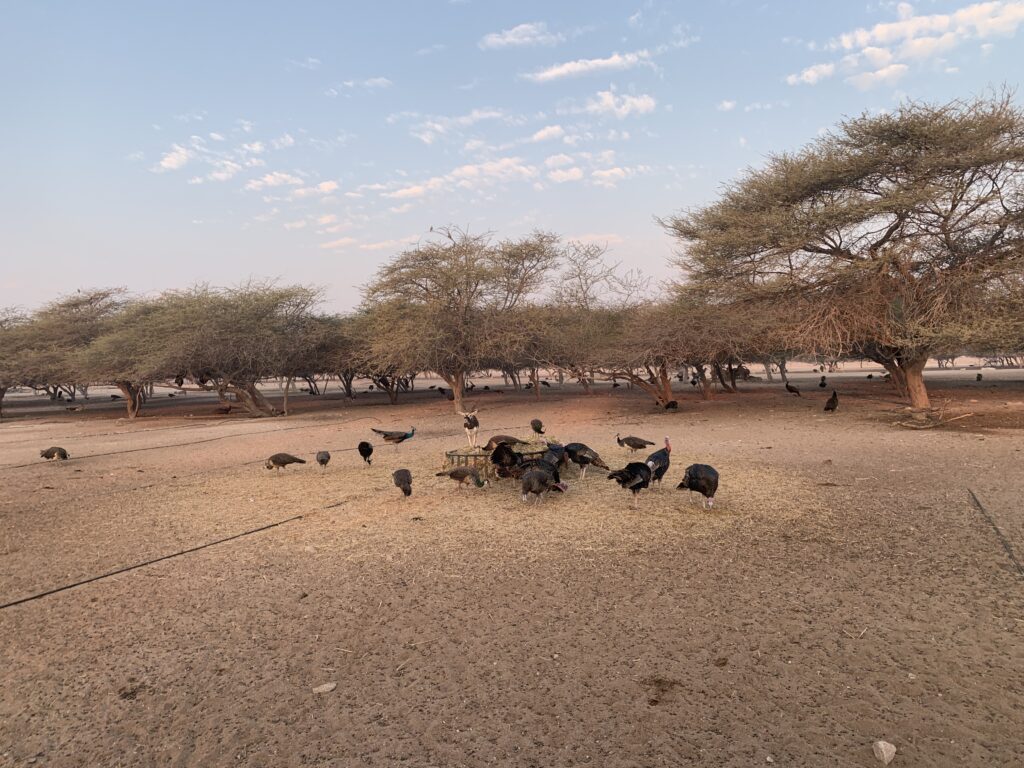
Wildlife is literally everywhere on the island, and even before venturing behind the gates of the wildlife park we’d seen plenty of Sand Gazelles (the namesake of Abu Dhabi) and Arabian Hyrax to name only a couple. The Arabian Hyrax are actually the whole reason why Sheik Zayed created all this: they were a symbol of the gulf, nearly extinct 40 years ago, and now thanks to Sir Bani Yas no longer endangered. Behind the gates, this must be about as close as you can come to a safari outside of Africa, where 16 thousand of beasts of 27 different species now live, including Indian Black Bucks (the fastest one, at 87 km/h), Sand Gazelles (the most numerous), Barbary Sheep, Arabian Oryx (with their straight horns), peacocks (the blue ones are from India, the green ones from Burma) and Spotted Deers (those are antlers, not horns!).
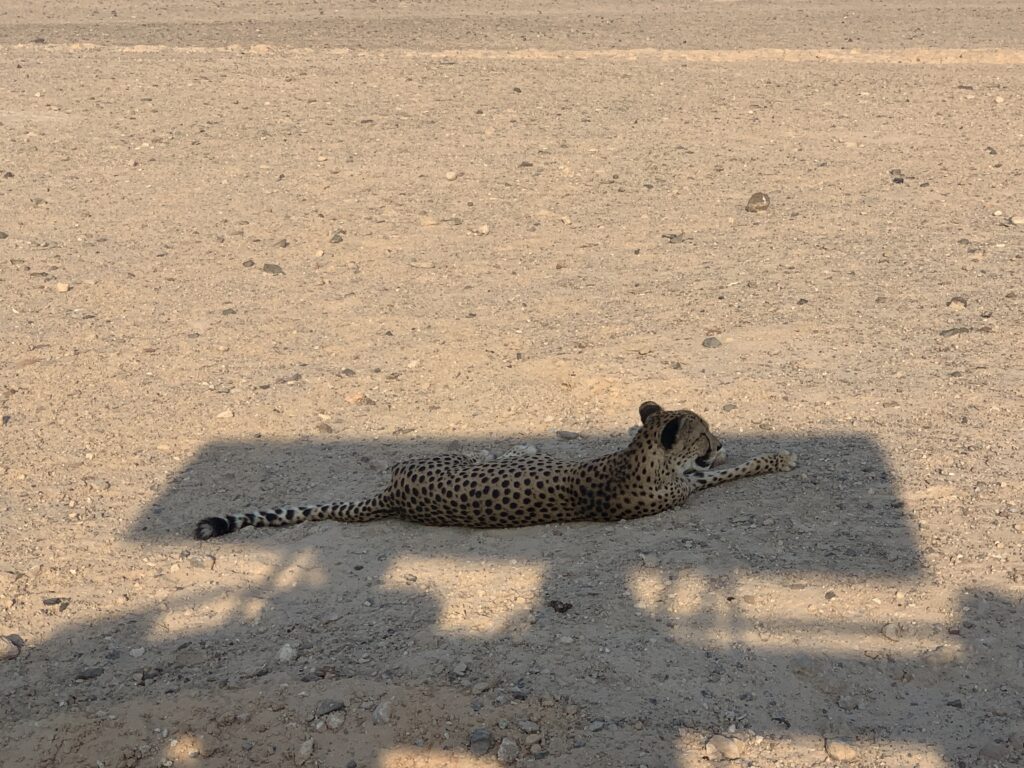
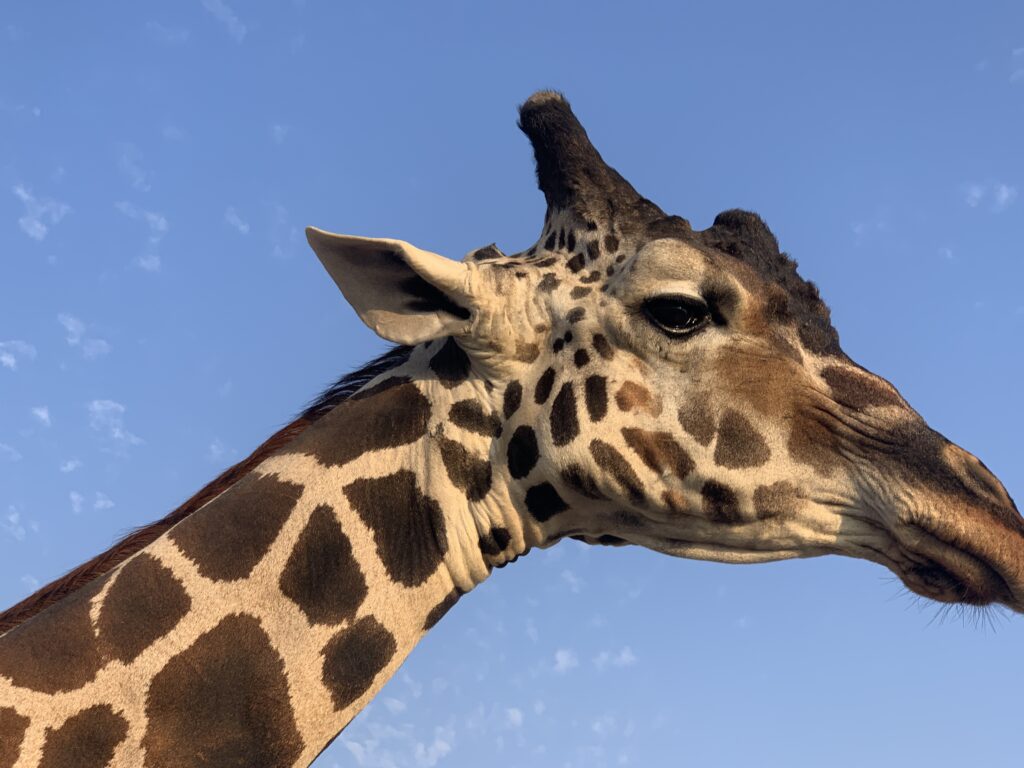
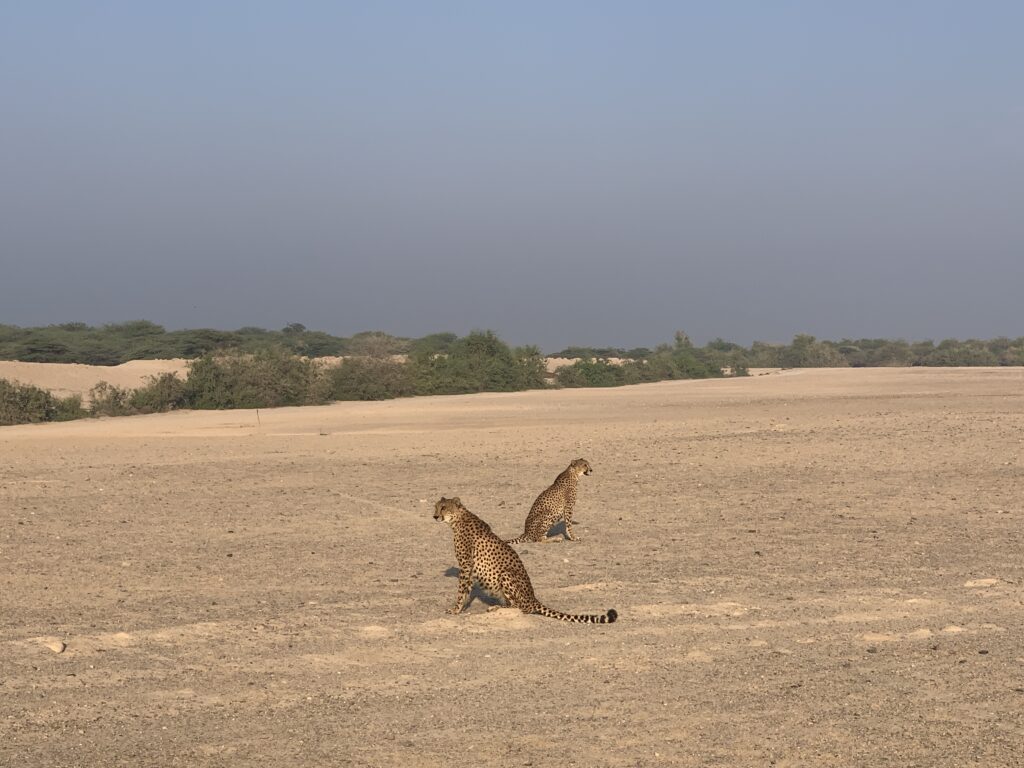
After reaching the top of the mountain that stands at the center of the island (1040 ft), on the other side of the island we had a close-up encounter with reticulated giraffes. But the highlight of the safari was for certain getting to know the 3 cheetahs that roam the park (5 more will soon be coming). With an initial jump start of 7 meters, they can reach 120 km/h in 3 seconds and are really elegant and impressive felines. Two of them are brothers, Gabriel and Gibbs; you will easily recognize Gibbs from his limping. They are the perfect example of teamwork, with Gabriel running to catch the prey and Gibbs doing the killing. The third cheetah is Cuba, he lives by himself since he is not related to the other two and the Park wants to avoid fights among these endangered predators.
-
Akagera National Park
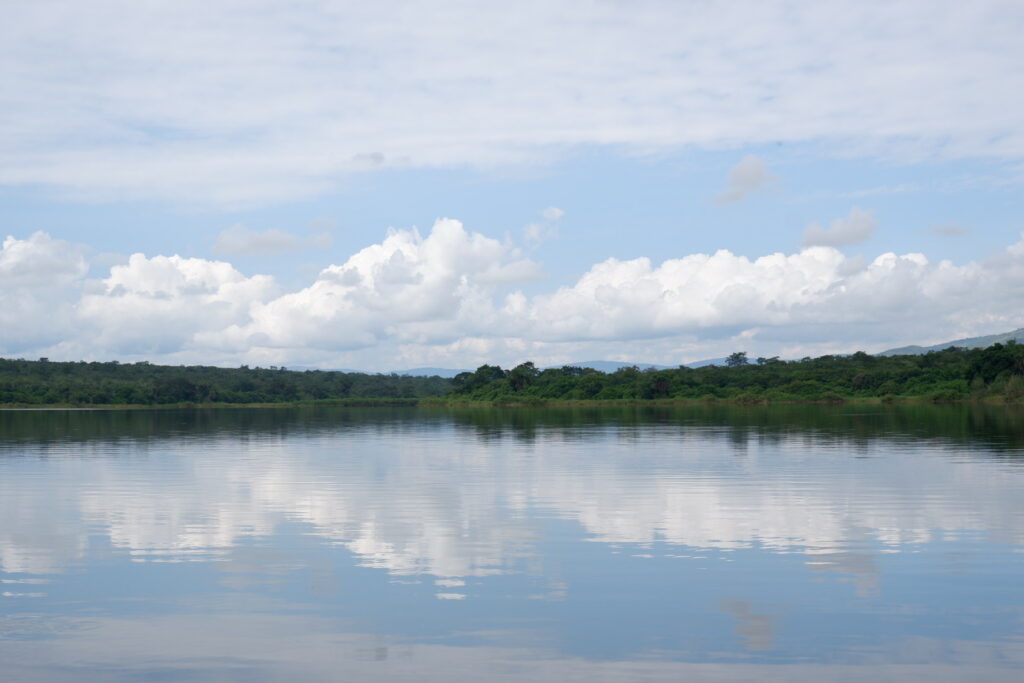
May 9, 2019 /Rwanda can be a bit chaotic: traffic, tons of people on the streets, accidents. But there are certainly ways to escape all these for a few days. One, is to go to Akagera National Park, Rwanda’s largest, just two hours drive from Kigali.
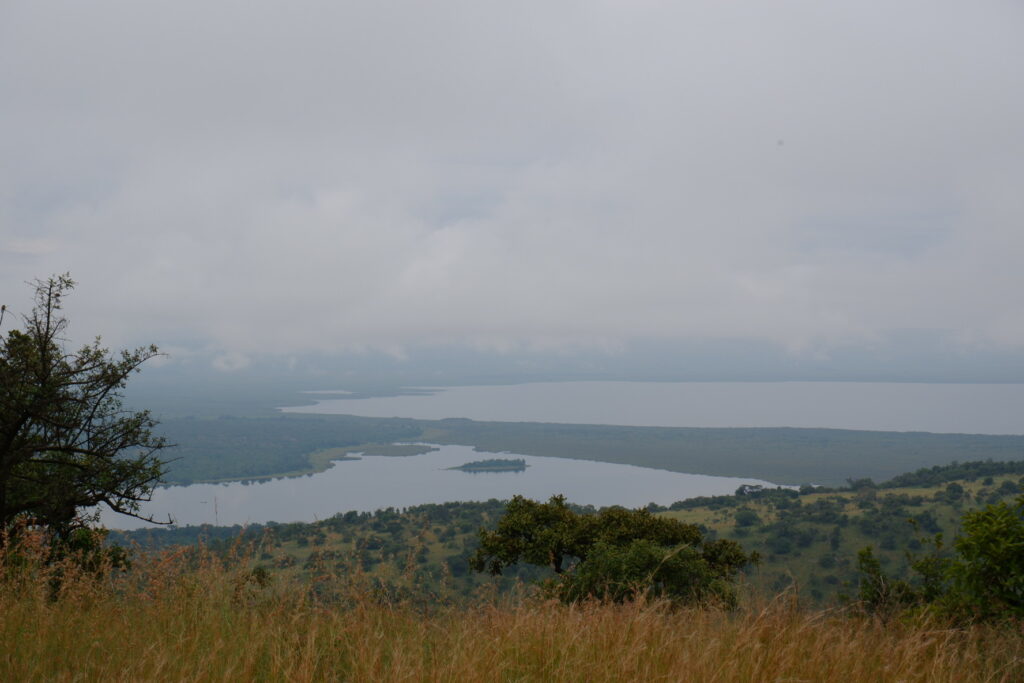
Set at a relatively low altitude on the border with Tanzania, Akagera National Park could scarcely be more different in mood to the breezy cultivated hills that characterize much of Rwanda. Covering an area of 1,120 kms the park is named for the Akagera River that flows along its eastern boundary and feeds into a labyrinth of lakes.
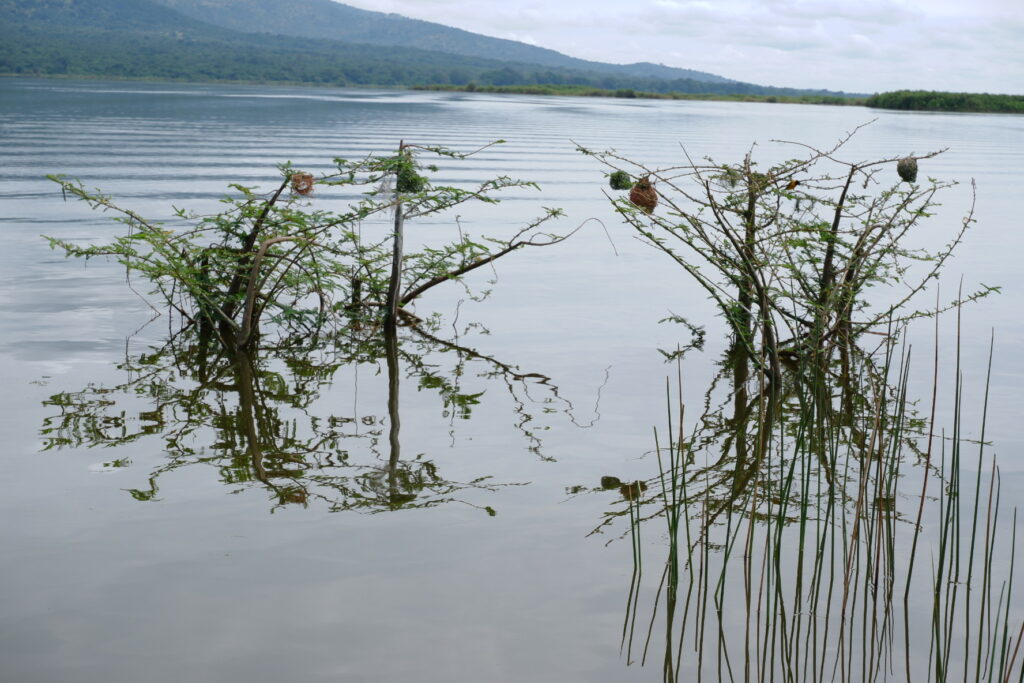
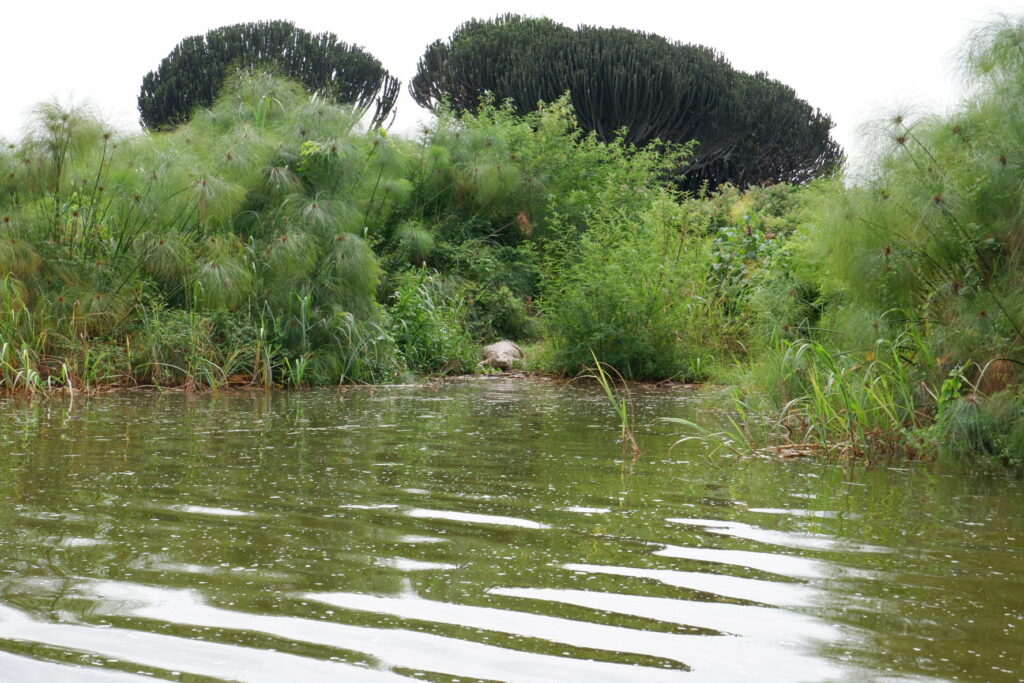
Rolling hills of Acacia bush, panoramic views across scattered grasslands, patches of thick forest and a mosaic of swamp-fringed lakes along the meandering Akagera watercourse all contribute to this park unrivalled scenic beauty.
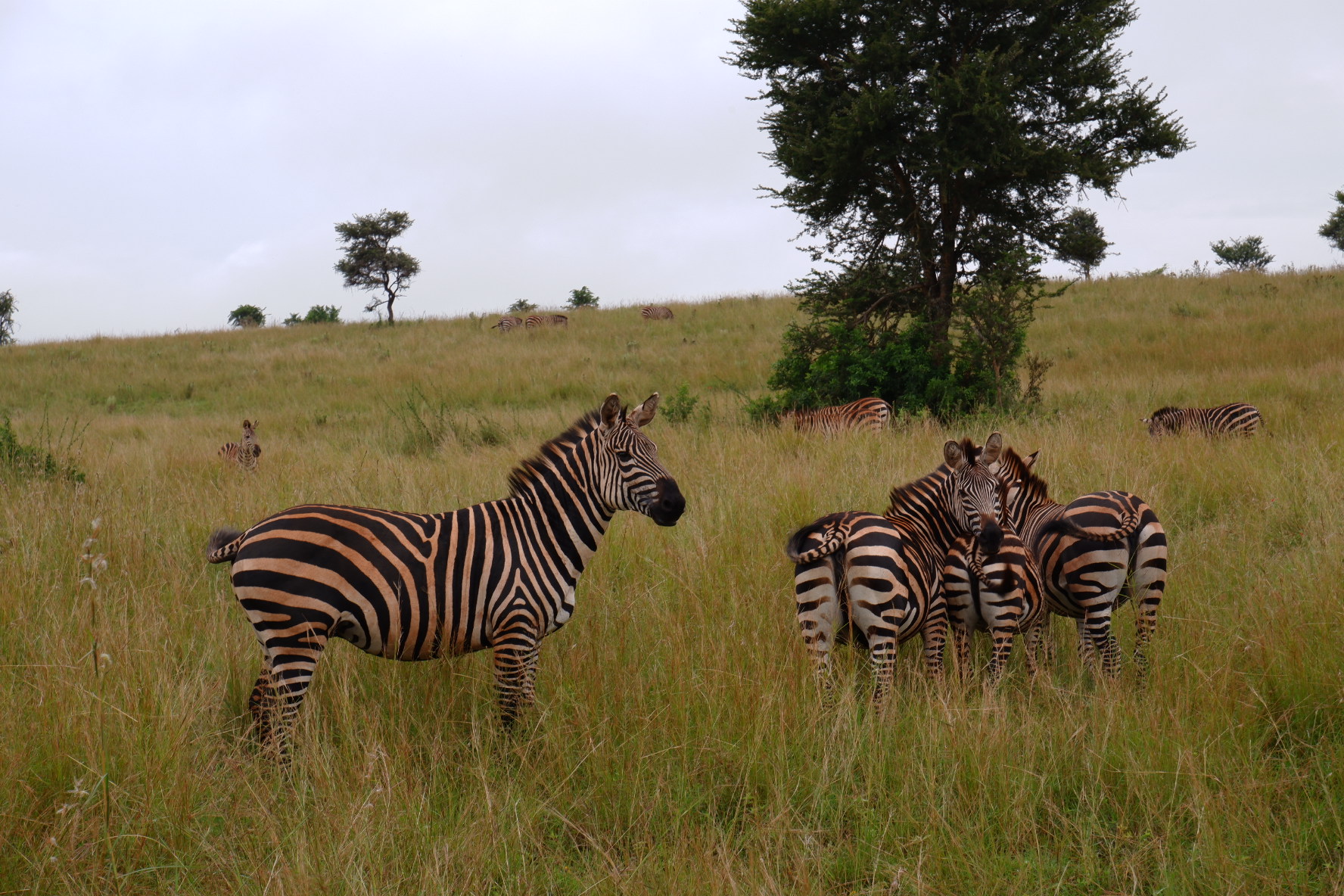
Akagera is unique in Rwanda as the only savannah environment in the country and is home to the country big game. Large herds of buffalo, zebra, impala and giraffe are seen on the open plains while smaller antelope such as oribi, bushbuck and reed buck exist widely throughout the park. Elephants tend to stay around the lakes, which are inhabited by large numbers of hippos and crocodiles. Baboons and vervet monkeys are commonplace, less so is the secretive blue monkey. Leopard, hyena and jackal are also residents and may be seen on a night drive along with genet, serval, bushbabies, porcupine and other nocturnal wildlife. An important population of sitatunga lives in the papyrus swamps along with other rarities such as shoebill and other papyrus endemic bird species.

TRAVEL TIPS + RESOURCES - For first time and frequent travelers 
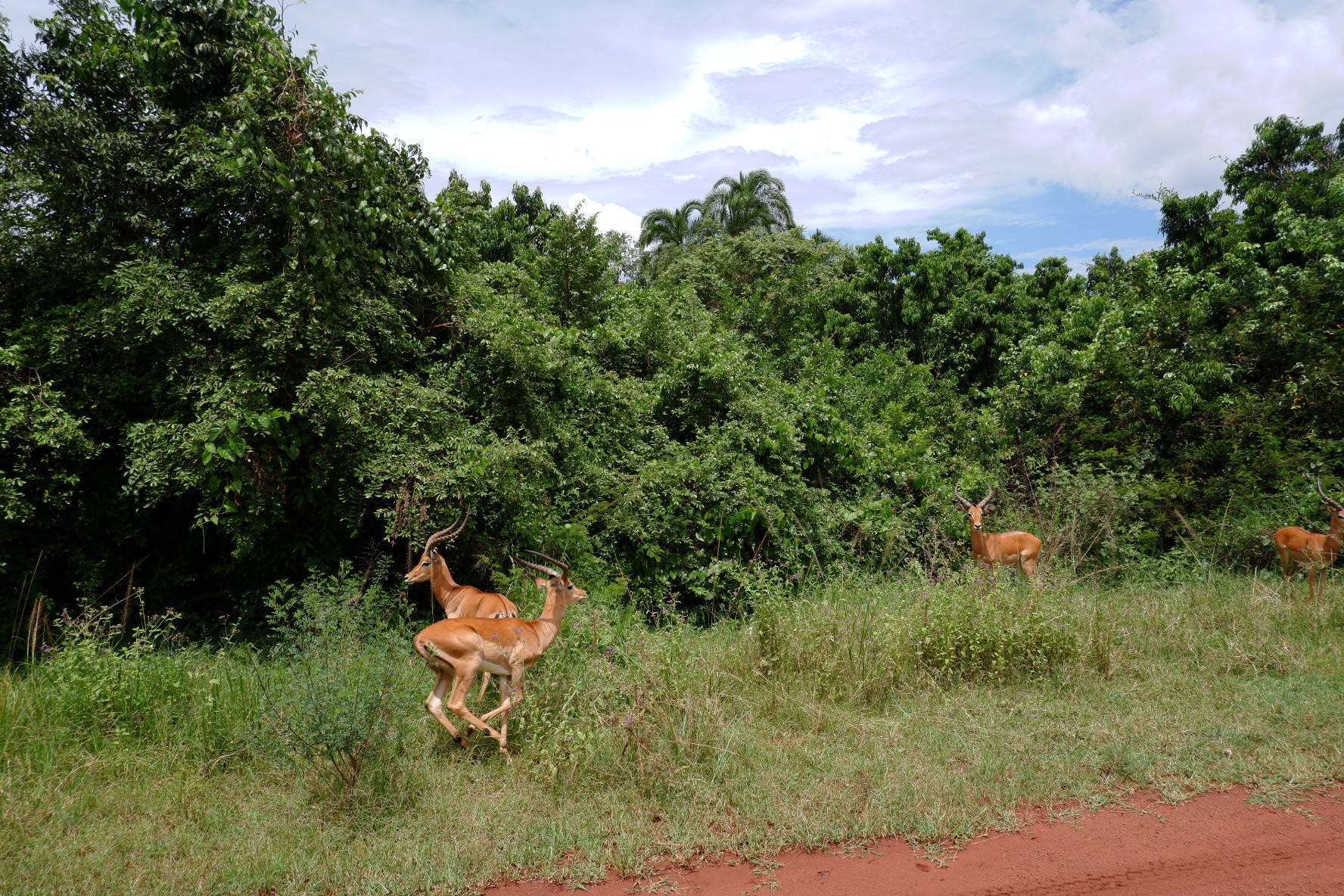
Male impalas 
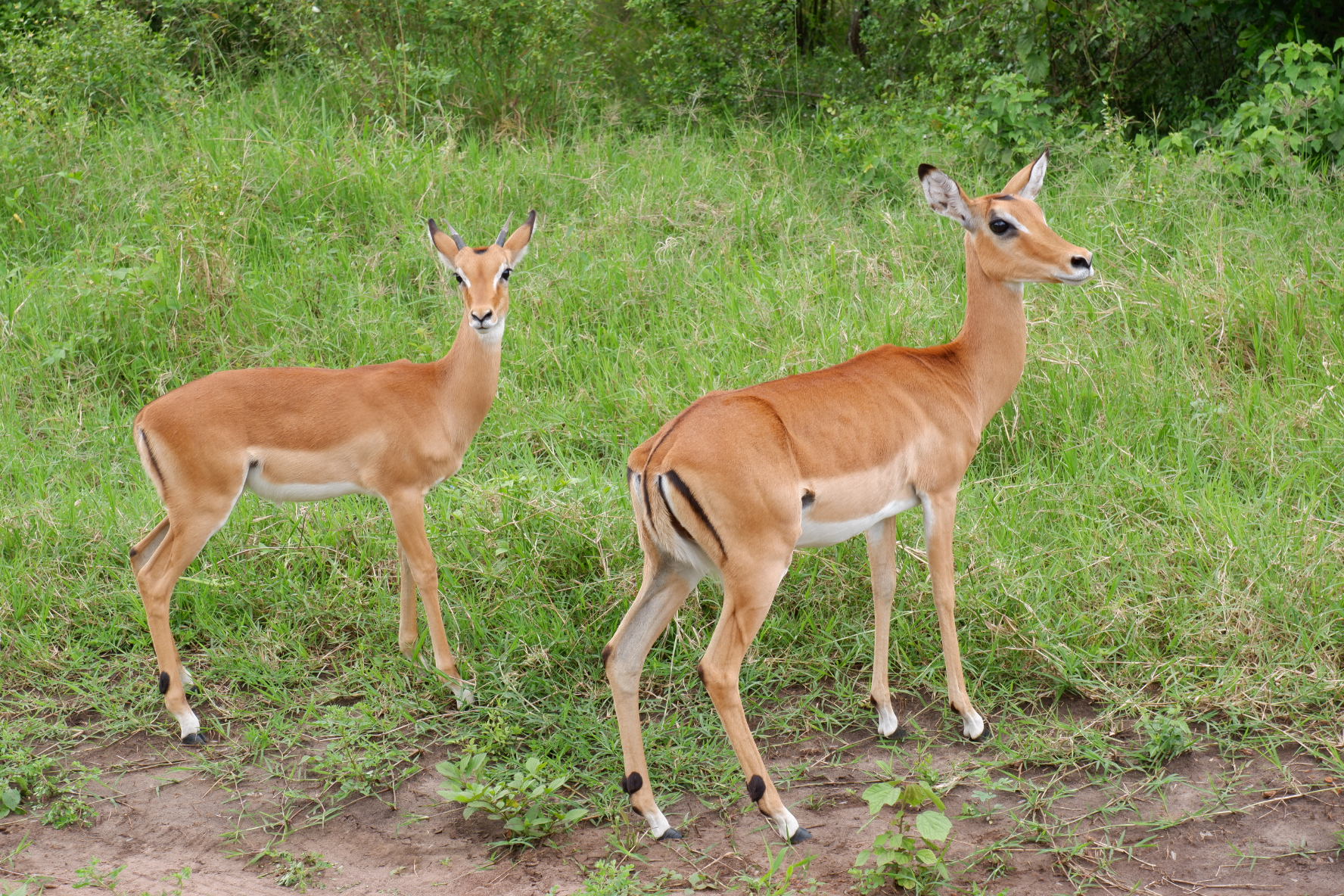
Female impalas 
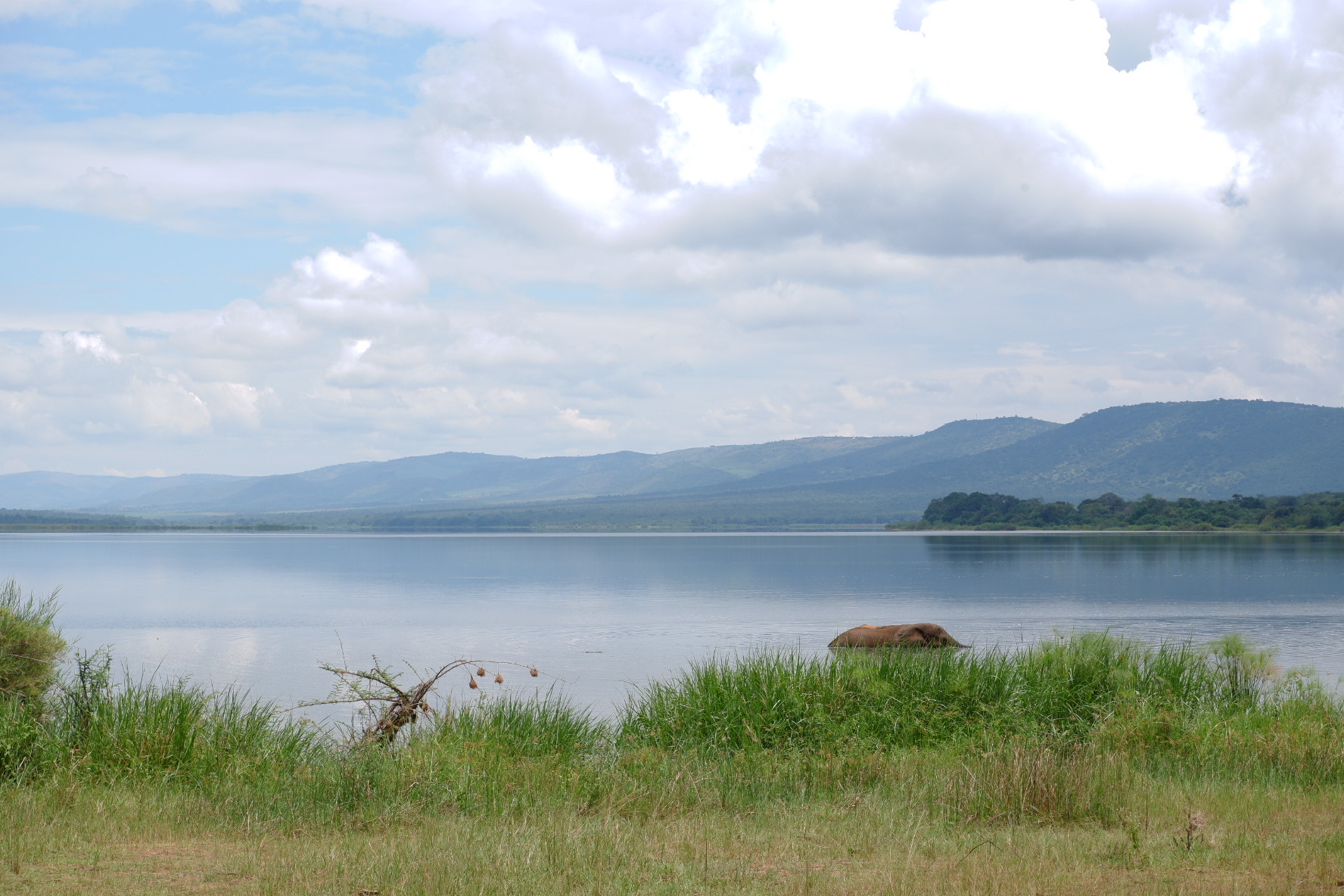
Elephant (bathing) 
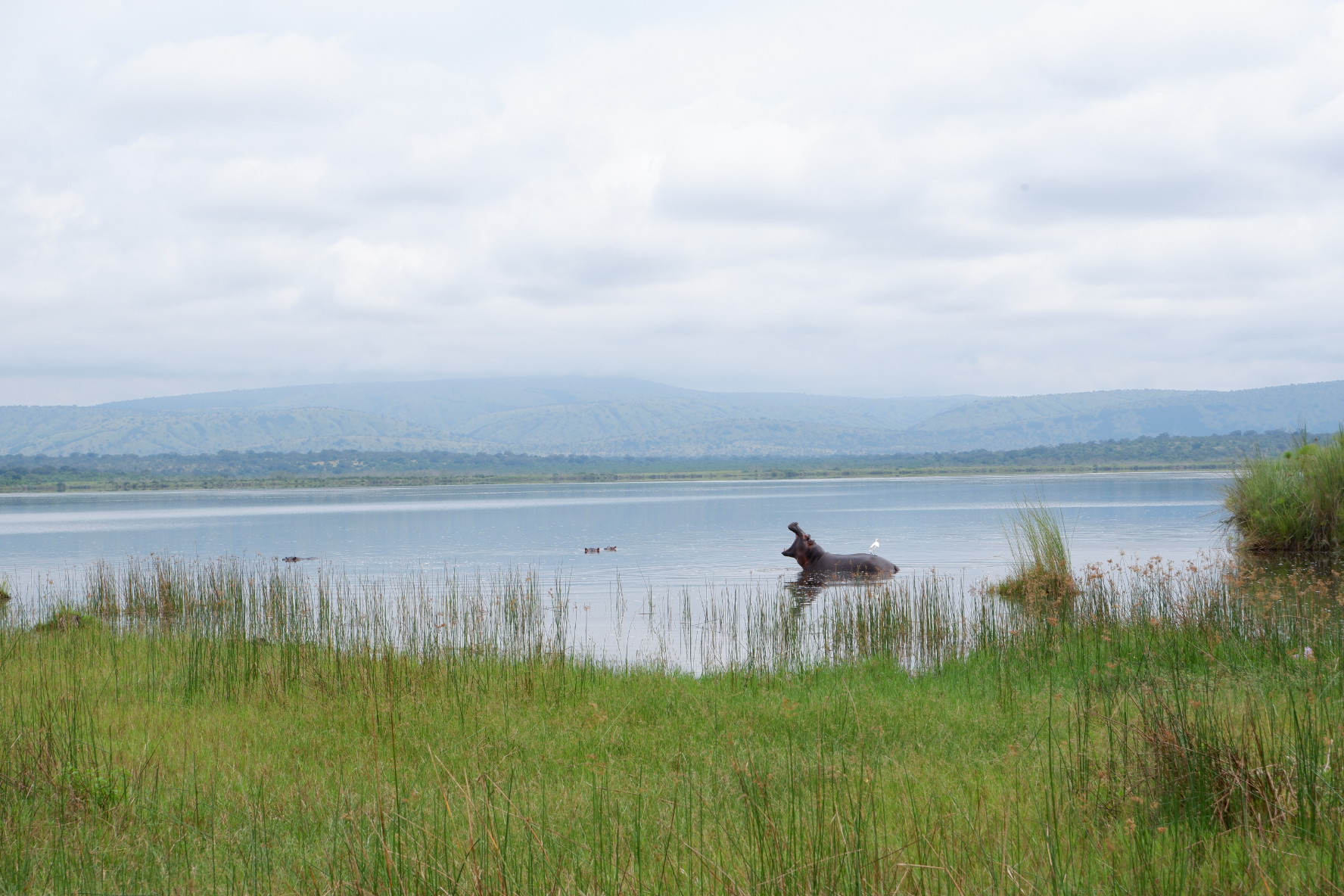
Hippo (yawning) 
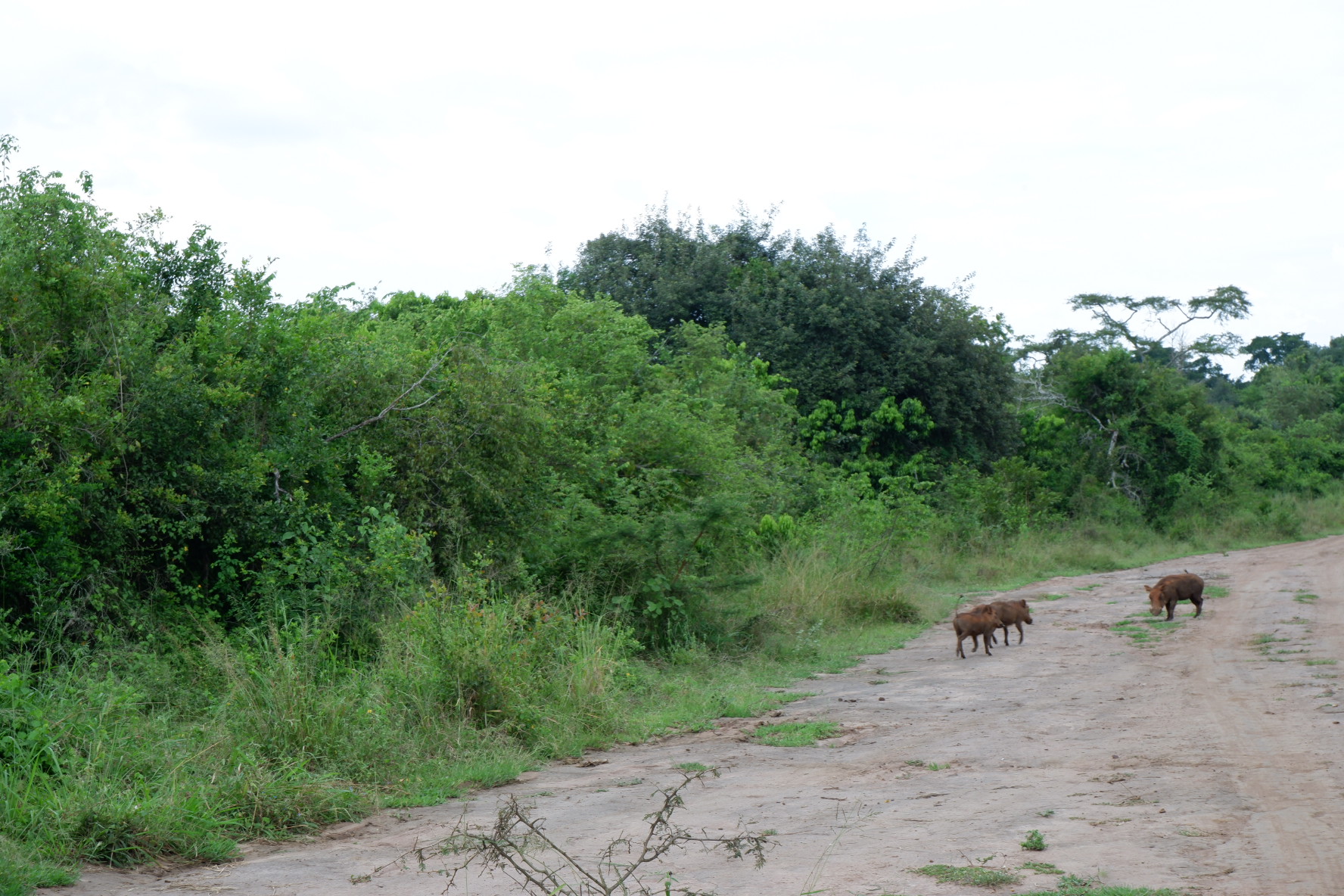
Warthogs 
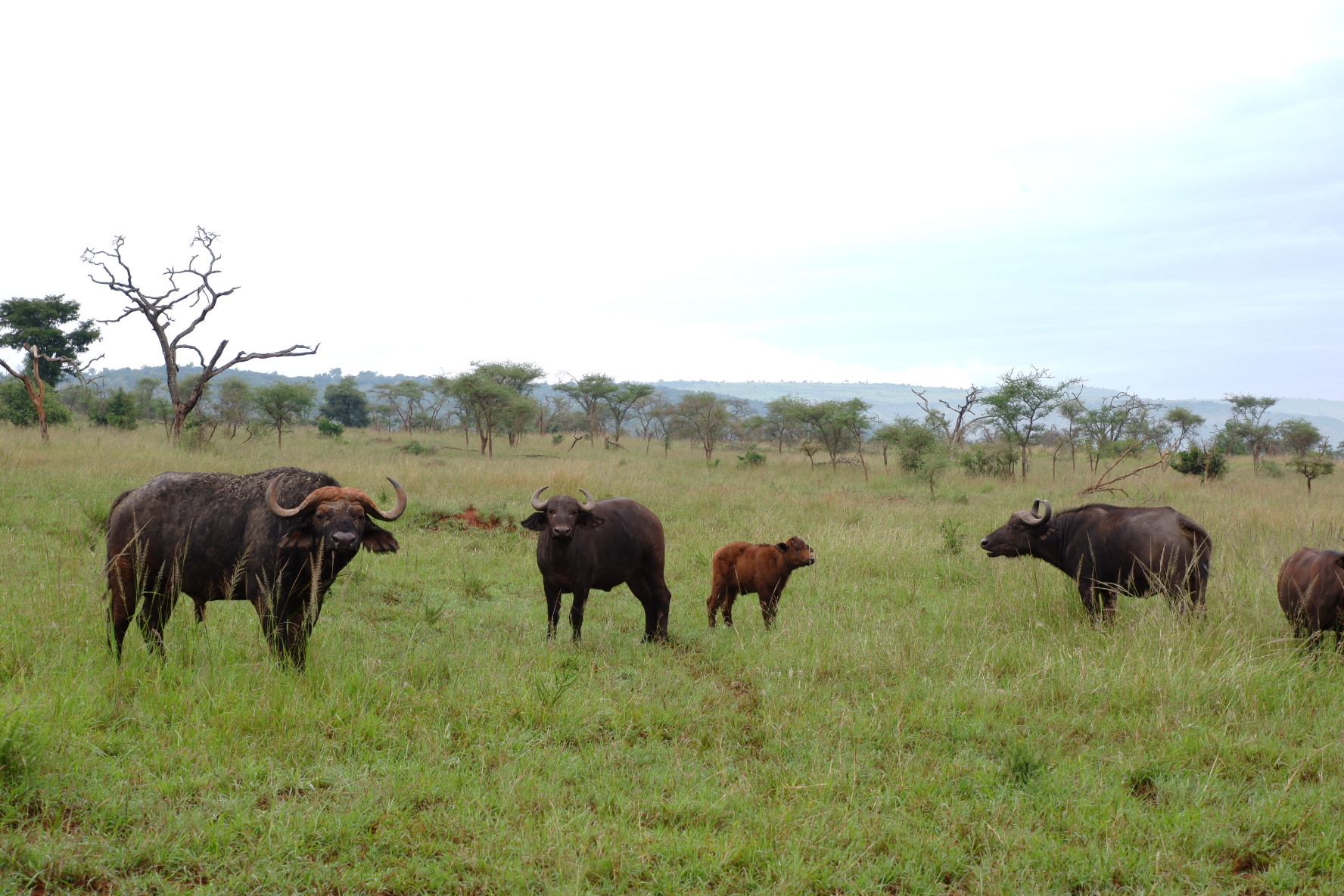
Buffalos (staring) 
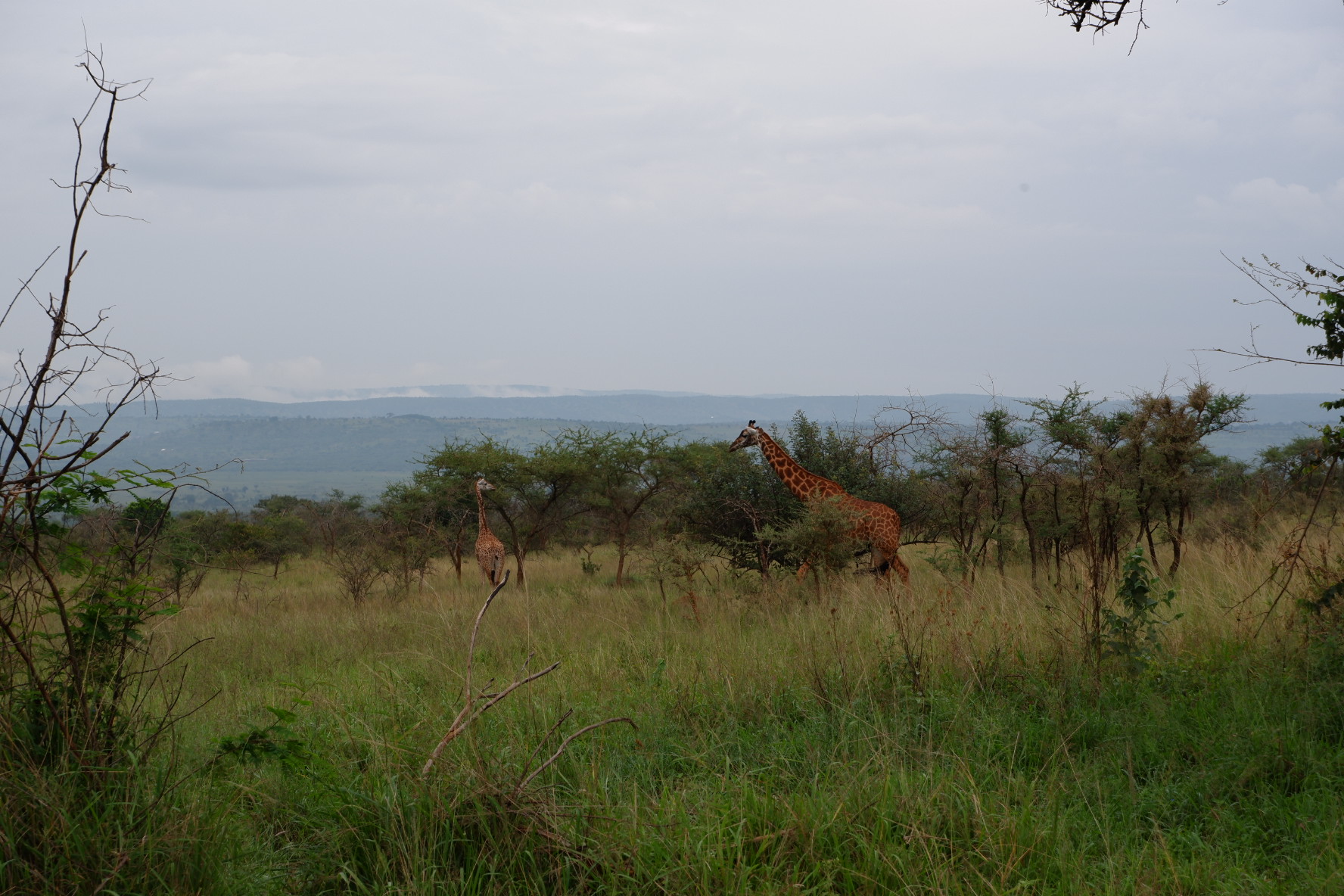
Giraffes 
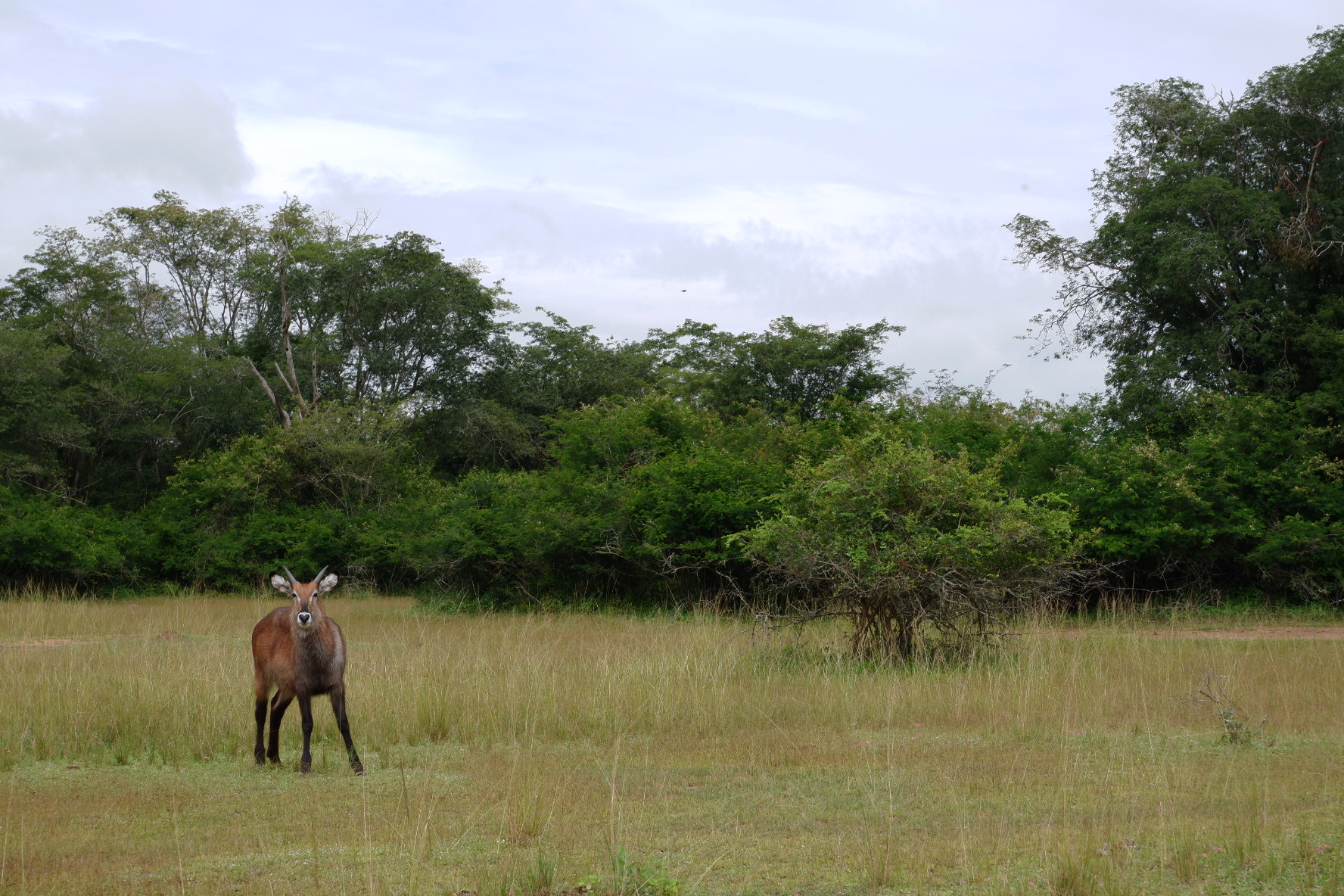
Bushbuck 
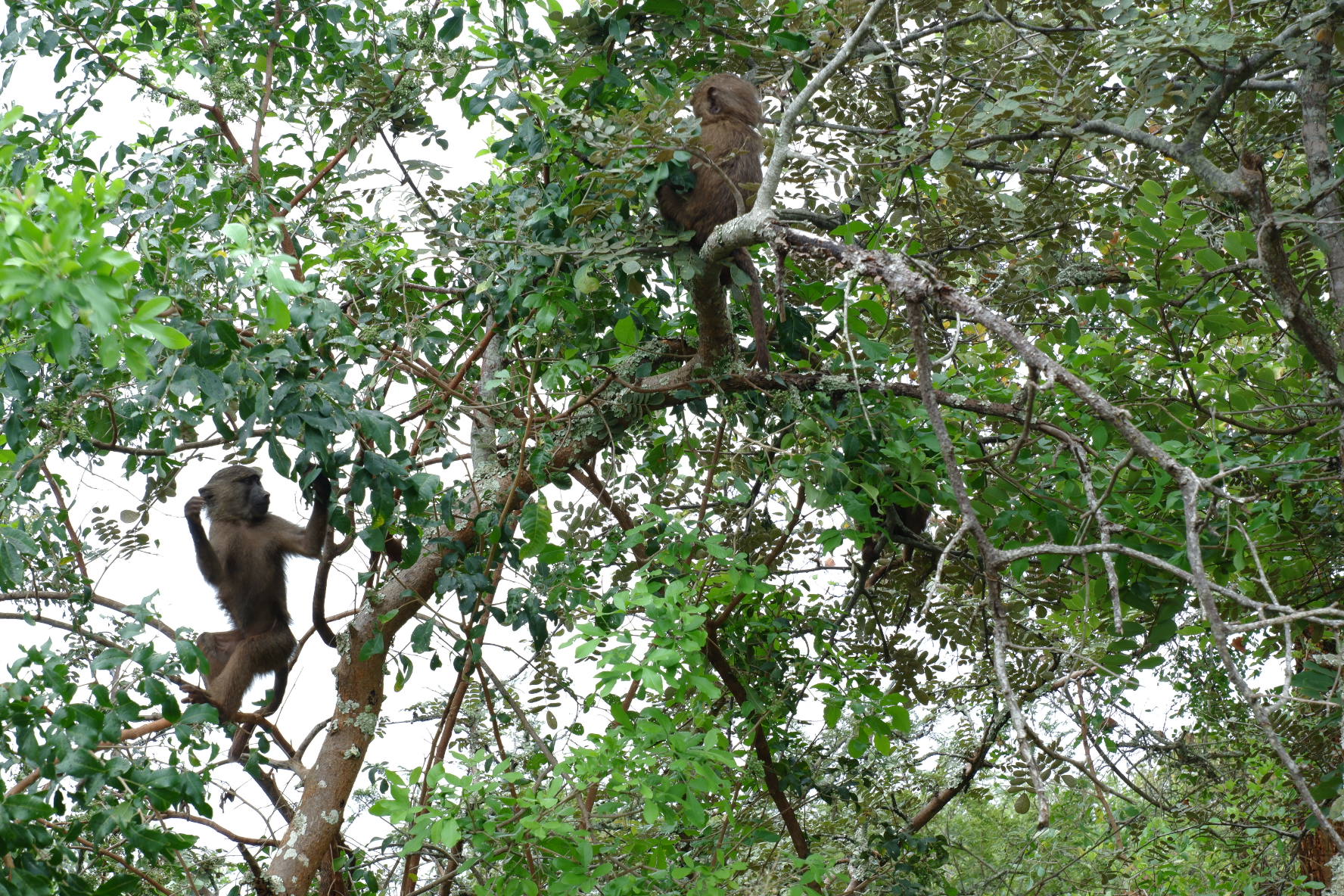
Baboons (playing) 
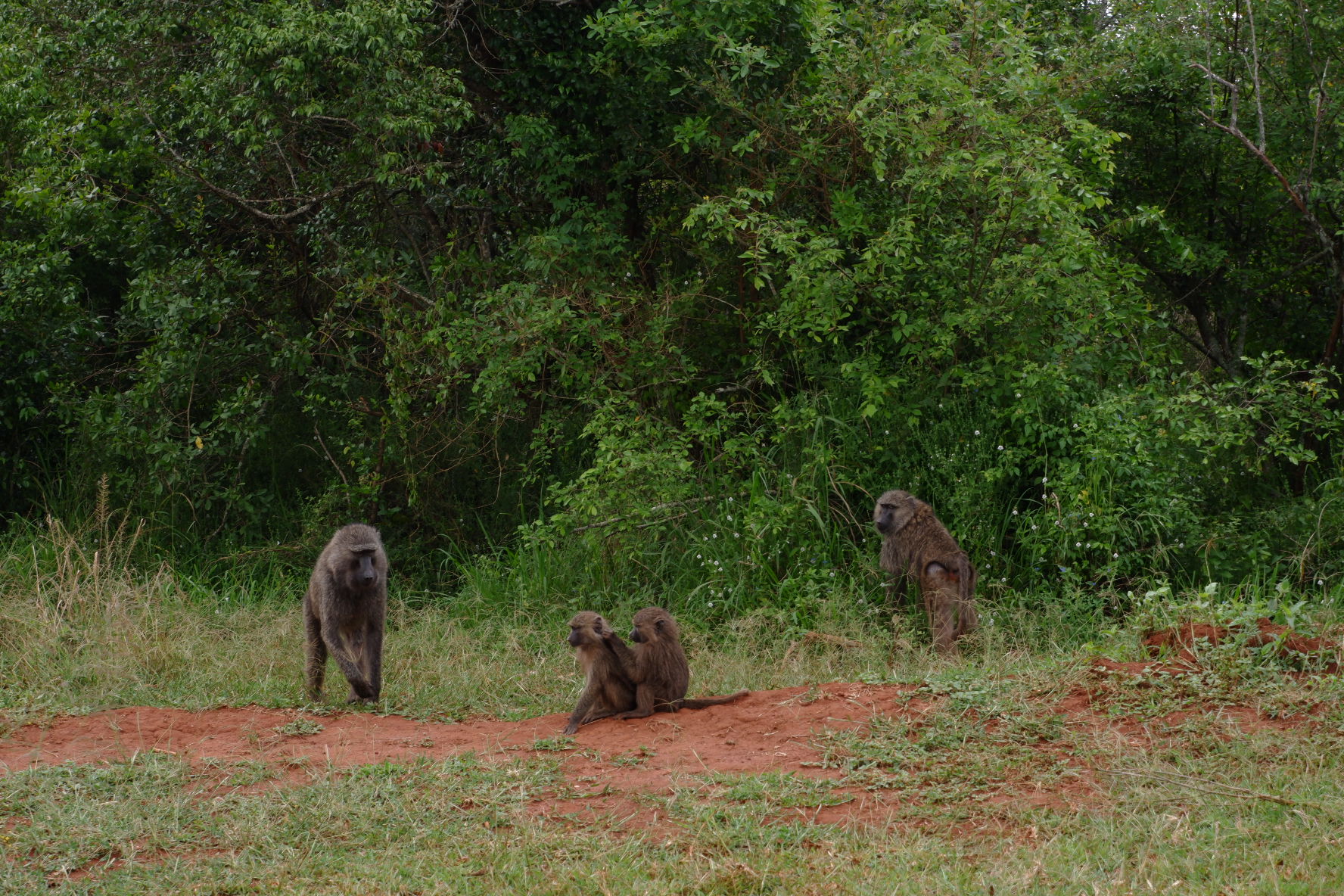
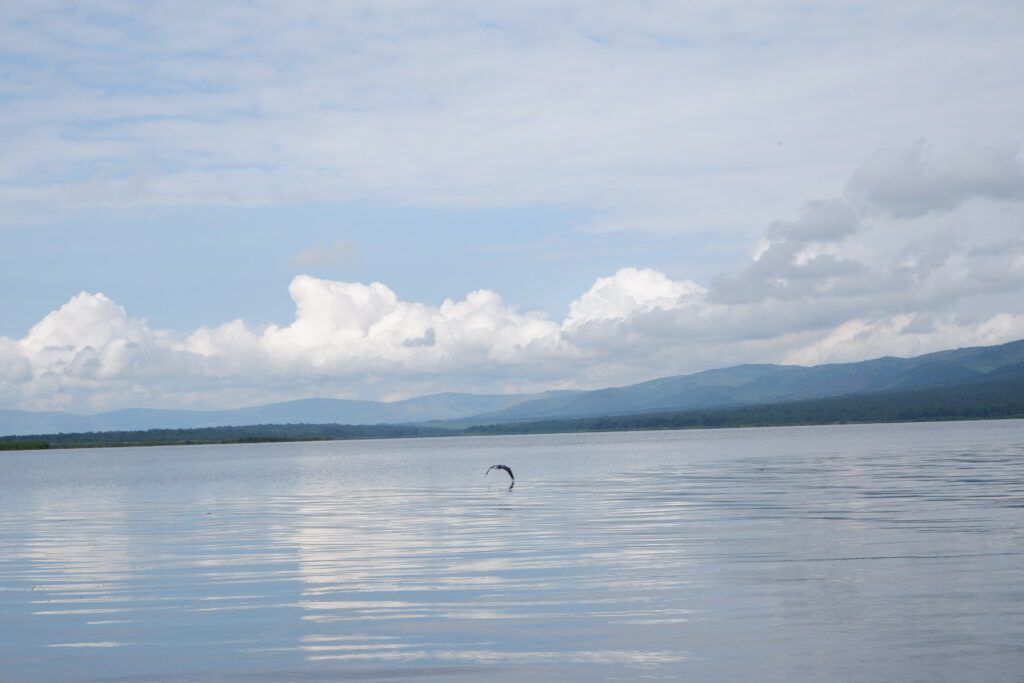
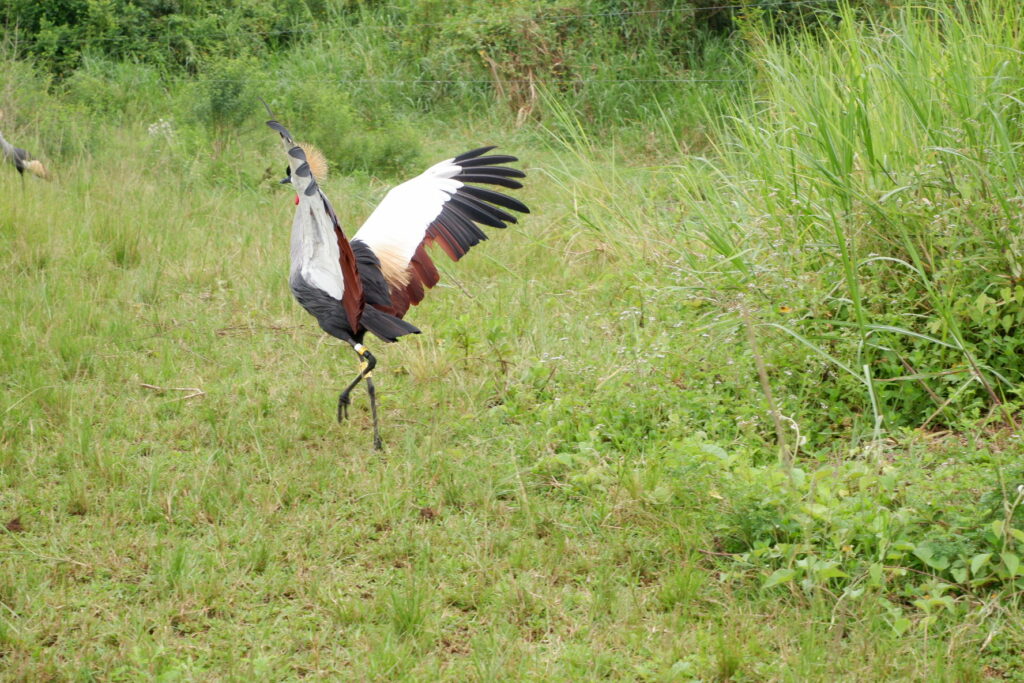
Baboons (grooming) Magically, the air is torn apart by the unforgettable duetting of a pair of fish eagles, asserting their status as the avian monarchs of Africa’s waterways. Lining the lakes are some of the continent’s densest concentrations of waterbirds.
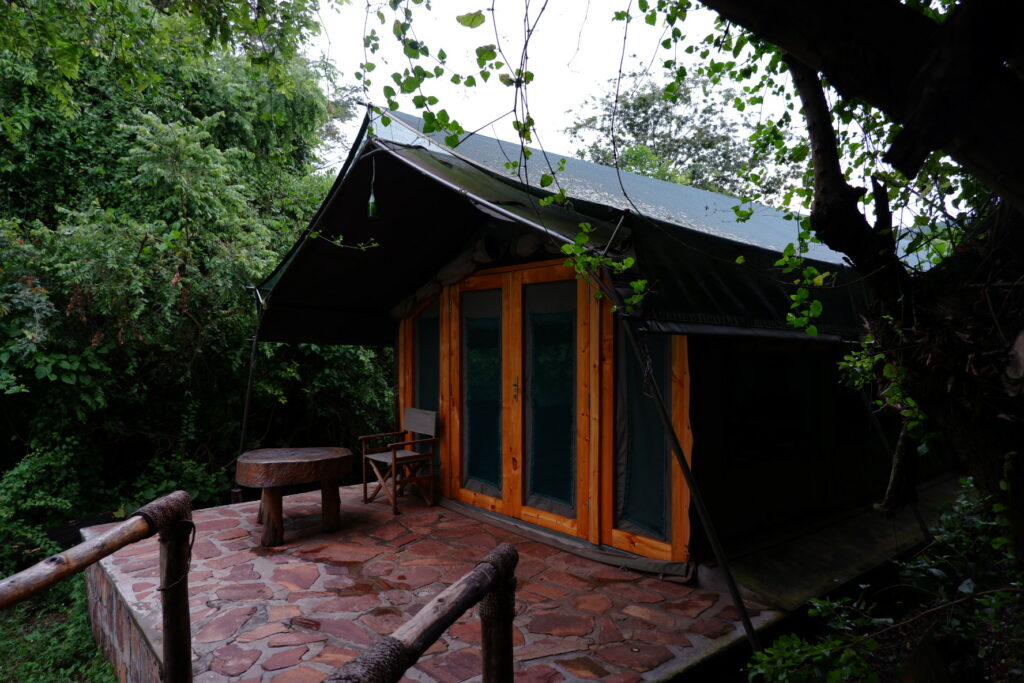
Camping alongside the picturesque lakes of Akagera is a truly mystical introduction to the wonders of the African bush, Ruzizi tented lodge, where we stayed for two nights (and never wanted to leave). Our tent was set in the middle of the forest, surrounded at all times by blue monkeys and the sounds of smaller (and larger) animals.
The safari
We arrived on a late Friday afternoon and decided to relax for the remaining of the day, drinking a beer on the lodge deck and reading a book. On hindsight, we could probably have gone for a 5:30 pm night drive through the southern part of the park, so as to have the next day for a full day game drive or another night drive (as to double our chances to see the nocturnal wildlife).
The game drive
On Saturday we woke up at 5.30 (quite early, but given that the tents are in the middle of the forest, the sounds of nature will wake you up shortly after anyway), had our breakfast on the deck at 6 and left for the half day game drive at 7. We were picked up from our lodge by our guide Felix and our driver for the day, Leopold, on a battered, roof-less Toyota Land Cruiser. This amazing duet took us through the park and showed us the secrets of Akagera. The drive took around 5 hours, enough to get you to the lakes half way through the park, but not to the northern, more savannah-like, part. If you want to get to the top of the park you definitely need to go for the full game drive, 8 hours. We were honestly very happy with the experience and being able to admire the animals that nature gave us in their natural habitat, and we wouldn’t have gone for a full day anyway, too long (and maybe a bit boring after a while).
Here is the video reportage of our game drive.
The night drive
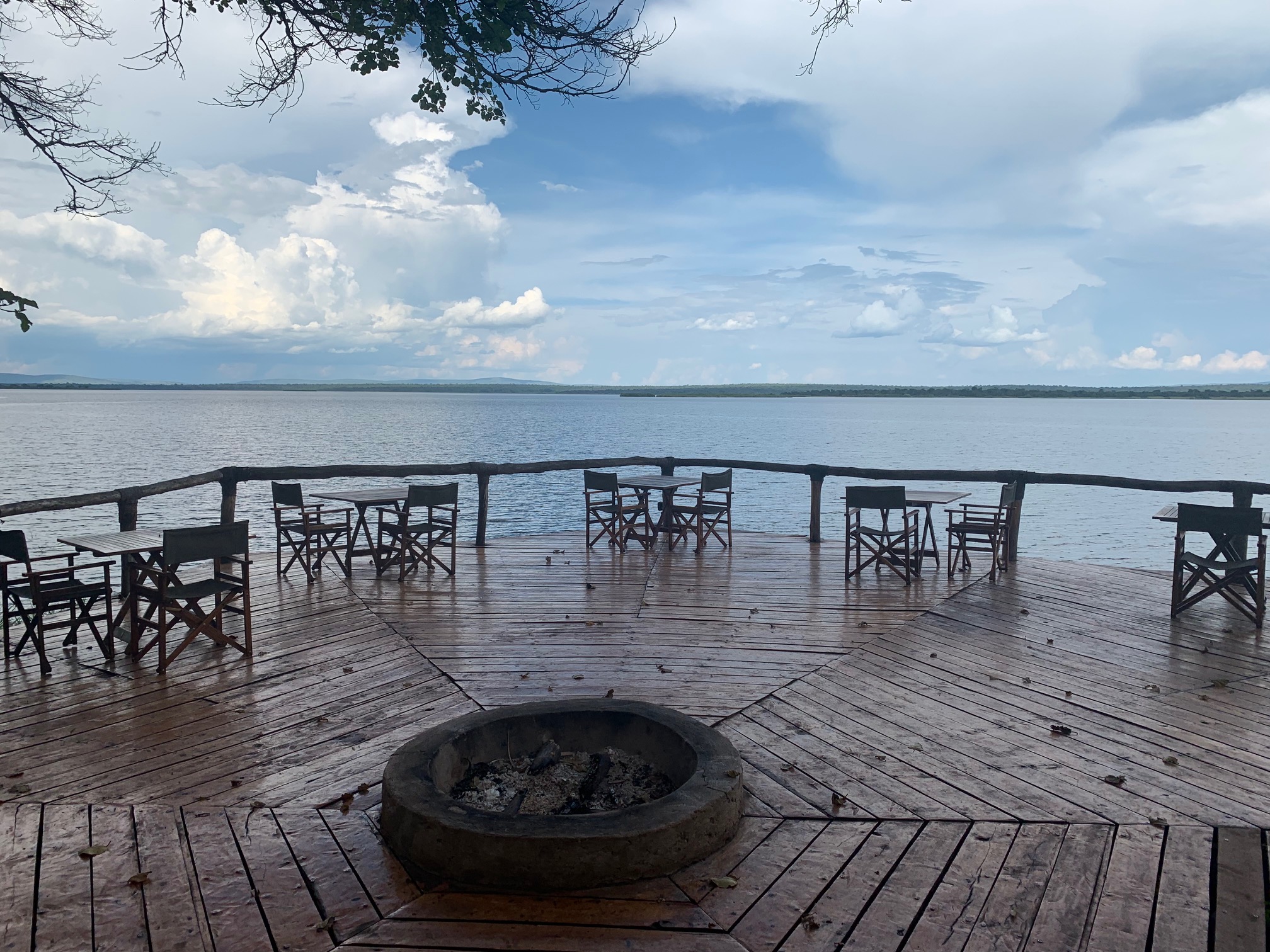
We got back to the lodge around 1 pm, had our lunch on the deck and some relax before the night game drive at 5.30 pm. Can’t really explain how it can be different to spot a giraffe or a zebra in their natural habitat instead of seeing them behind bars in a zoo. The thrilling part is knowing that the park is huge and no one knows where the animals may be at any time. In this sense the night drive was the most exciting part, with the thrill of trying to spot the reflection of the car spotlight against the eyes of the wild animals. We unfortunately didn’t see any nocturnal animals, but we were lucky enough to admire two families of elephants drinking by the water pond. We watched in awe as the parents drove the two cubs away from our car, always careful not to disturb them or feel threatened since elephant charges as not so rare after all. During the drive we were constantly on the tips of our toes, hoping to spot a lion or a leopard among the trees; our expectations were increased by Videl, a 8 years old Swedish boy and his contagious excitement. The drive lasted 2.5/3 hours and took us back to the lodge in time for a dinner on the deck warmed by the campfire.
The boat ride
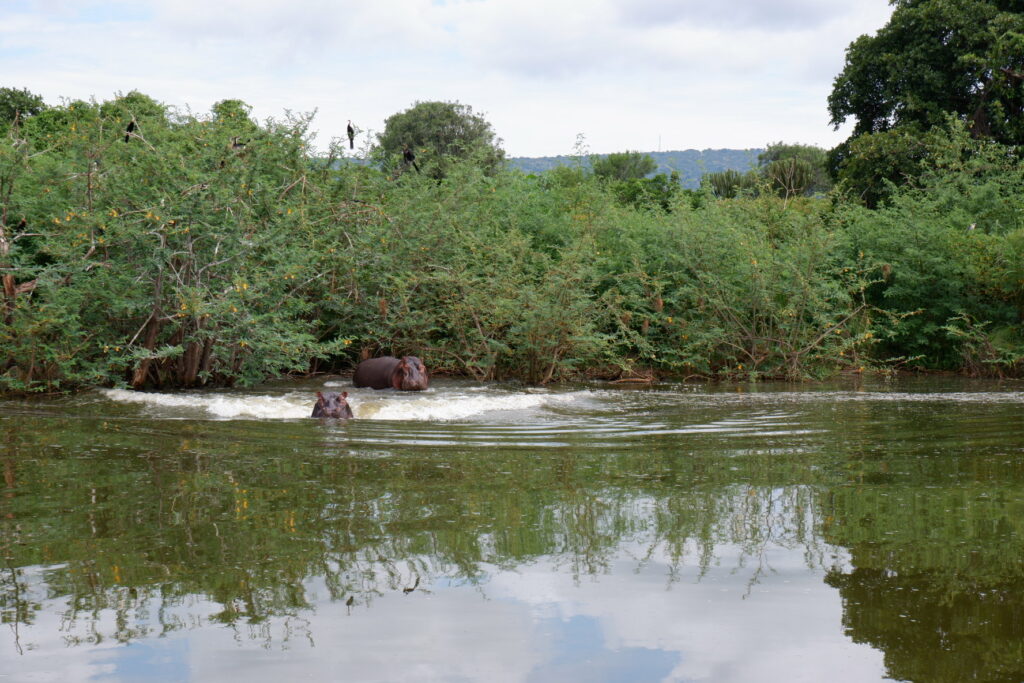
After another early wake up, on Sunday, our last day, we went for a bot drive at 9. It was only an hour long, but enough to take you around the Ihema lake, see hippos and crocodiles. Pods of 50 hippopotami grunt and splutter throughout the lake, while outsized crocodiles soak up the sun with their vast jaws menacingly agape.
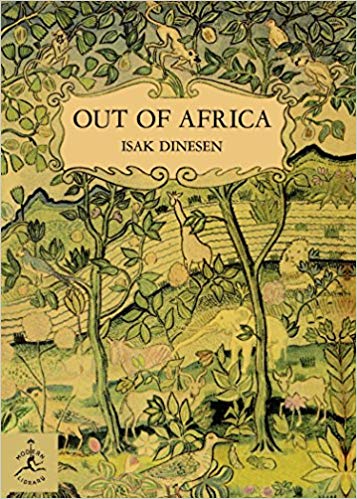
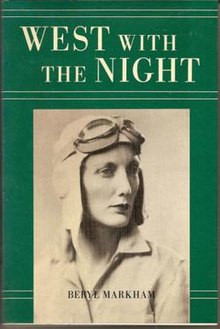
Suggested reading
-
Ruzizi Tented Lodge
May 4, 2019 /In the riverine forest on the edge of lake Ihema is a small, private lodge offering nine spacious, en-suite tents, dotted along the forested lakes’ edge. Sheltered by large trees and swaying palms, Ruzizi tented lodge is a quiet retreat in the spectacular setting of Akagera National Park.
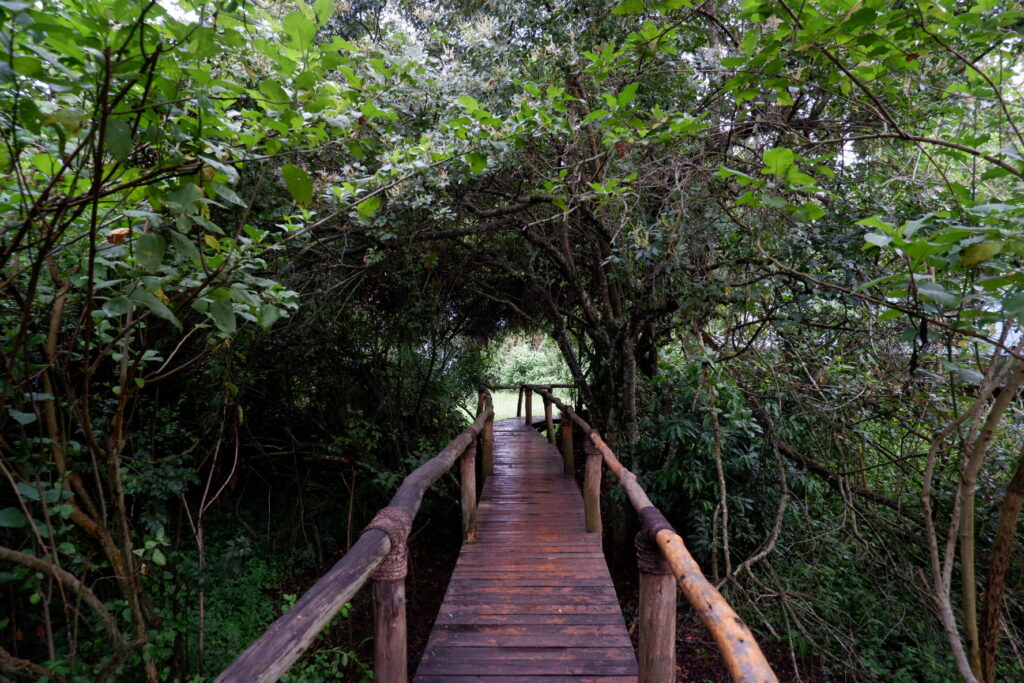
The tents are located along a boardwalk stretching either side of a thatched lounge and dining area. A raised deck overlooks the lake; dinner on the deck feels like enjoying a sundowner around a cozy campfire.
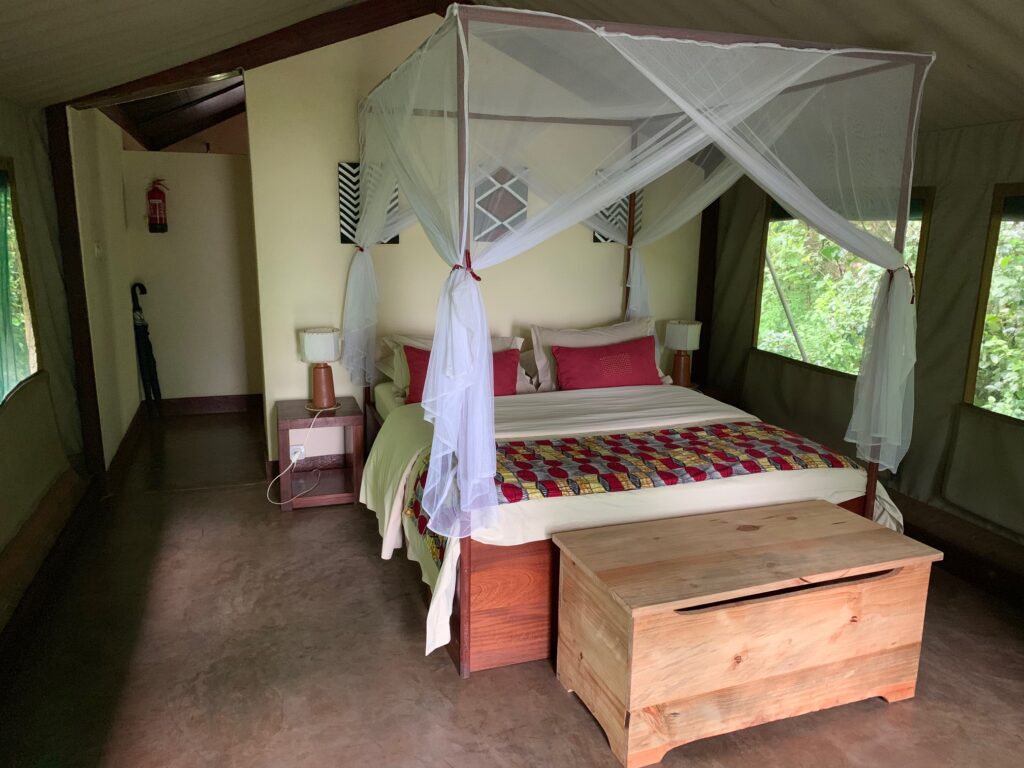
Inside each tent is a comfortable queen (or large twin) beds and a private bathroom.
Owned and managed by the park, 100% of the profits from the lodge go back into the total management of the park supporting law enforcement and conservation initiatives. The lodge is entirely powered by solar panels.