Africa

  • Adventures,  Africa,  Kilimanjaro,  Places

    Kilimanjaro

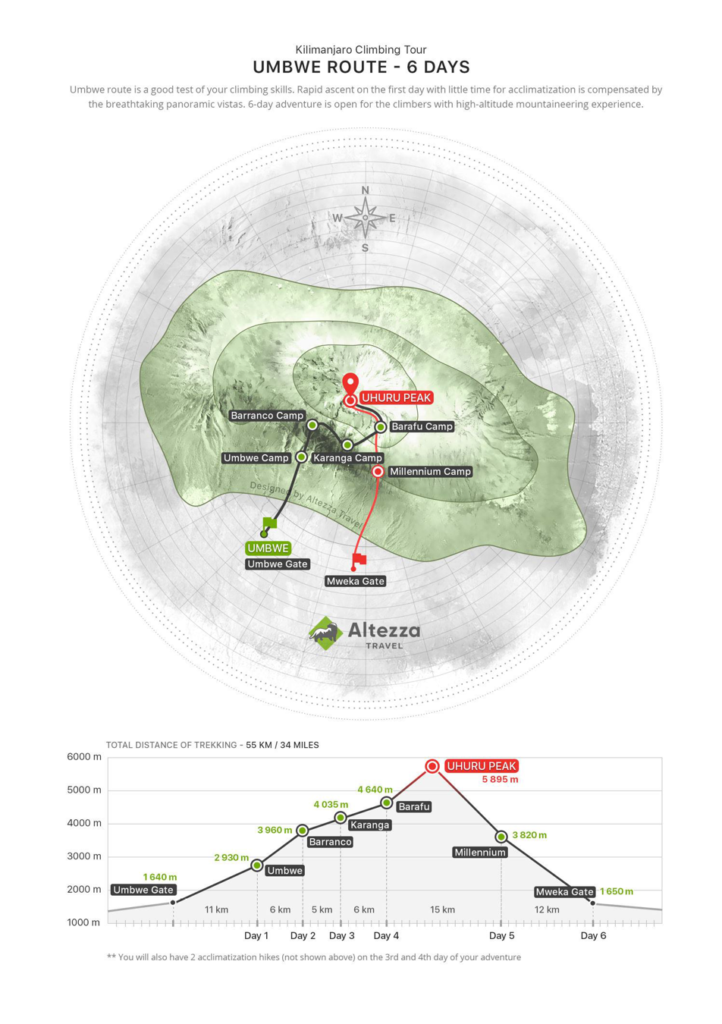
    If you have the experience in numerous high-altitude climbs over 4000-4500 m, you might try the Umbwe route. It is one of the most challenging routes due to the short duration and steeper incline. It goes along the southern slope but is less frequented than other southern routes because of the challenge it poses. The first day poses one of the biggest challenges – the route starts quite low from Umbwe Gate (1,640 m) and continues with a lengthy trek to the first camp on your way – Umbwe camp (2,930 m).

    When the trail reaches Barranco camp, it will merge with Lemosho and Machame and therefore you might meet more people at the camps. The camps are not crowded at all, you might meet 3-4 other groups in the peak season (July-September as an example)

    Trail map of Whinlatter Forest Park

    Day 2: TREKKING FROM UMBWE GATE TO UMBWE CAMP

    A guide and a mountain support crew will arrive at the hotel in the morning in order to meet you and hold a quick briefing, after which you will travel by vehicle to the entrance to Kilimanjaro National Park: Umbwe Gate (1,640 m). After the quick formality of acquiring climbing permits and registering with the search and rescue service, the group will start trekking up to your first camp: Umbwe Camp (2,930 m). This will be a long trekking day that includes an important increase in altitude, so don’t hurry. It is important to find the right pace for your group and stick with it for the rest of the trip. You should also remember to take your raincoats: this route includes passage through a rainforest, where tropical showers are highly probable.


    Change in Elevation: Umbwe Gate (1,640 m) — Umbwe Camp (2,930 m)

    Hiking distance: 11 km

    Hiking time: 5-7 hours

    Day 3: TREKKING FROM UMBWE CAMP TO BARRANCO CAMP

    Early wakeup, breakfast and the start of trekking to Barranco Camp. The rainforest will quickly give way to brush, and if it is not too cloudy you will be able to see Meru Volcano for the first time. Trekking for this day will be of a moderate length, and around lunchtime you will reach Barranco Camp (3,960 m), which is nestled inside a huge volcanic fault. Lunch will be provided here, and then you have the opportunity to relax for the rest of the day, which significantly facilitates the acclimatization process.


    Change in Elevation: Umbwe Camp (2,930 m) — Barranco Camp (3,960 m)

    Hiking distance: 6 km

    Hiking time: 4-5 hours

    Day 4: TREKKING FROM BARRANCO CAMP TO KARANGA CAMP

    Early wakeup, breakfast and the start of summiting Barranco Wall (we recommend you leave the camp as early as possible to avoid crowds of the other groups). Hiking up the gorge wall is not difficult and only takes around an hour. After the climb you can have a rest and take photos in front of the Kibo volcano. Then you start a more difficult hike to Karanga Camp, which features numerous ascents and descents during the route, but don’t worry: our guides are experts at choosing an optimal pace for the group. After reaching the camp you will be offered warm lunch. After a couple of hours you will have to complete an acclimatization hike in the direction of Barafu Camp with a 200-meter gain in altitude, and then descent back down to the camp.

    The acclimatization hike is an easy trek with a slight gain in altitude done in order to speed up the acclimatization process.

    You should take the acclimatization hikes very seriously. They help increase your chances of successfully summiting Kilimanjaro and save you from the consequences of altitude sickness.


    Trekking from Barranco Camp to Karanga Camp:

    Change in Elevation: Barranco Camp (3,960 m) — Karanga Camp (4,035 m)

    Hiking distance: 5 km

    Hiking time: 4-5 hours

    Acclimatization hike:

    Change in Elevation: Karanga Camp (4,035 m) — Destination point en route to Barafu Camp (4,270 m)

    Hiking distance: 2.5 km

    Hiking time: 1-2 hours

    Day 5: TREKKING FROM KARANGA CAMP TO BARAFU CAMP

    In the morning after breakfast you begin your way to Barafu Summit Camp (4,640 m), the starting point for a night summiting Uhuru Peak (5,895 m). Our team will set up a camp for you ahead of time, including tents and sleeping bags, so you can relax.

    After regaining strength, you have to complete an acclimatization hike towards the intermediate Kosovo Summit Camp (4,800 m) and then back to Barafu Camp, where you will be served a hot dinner. It is better to spend the remainder of the day resting and sleeping before night summiting.


    Trekking from Karanga Camp to Barafu Camp:

    Change in Elevation: Karanga Camp (4,035 m) — Barafu Camp (4,640 m)

    Hiking distance: 6 km

    Hiking time: 4-5 hours

    Acclimatization hike:

    Change in Elevation: Barafu Camp (4,640 m) — Kosovo Camp (4,800 m)

    Hiking distance: 2 km

    Hiking time: 1-2 hours

    Day 6: ASCENT TO UHURU PEAK AND DESCENT TO MILLENNIUM CAMP

    Departure from Barafu Camp (4,640 m) at night and the start of summiting Kilimanjaro: Uhuru Peak (5,895 m). Technically the climb is relatively simple; however, the most challenging part is the high altitude. Each pair of climbers will get a personal guide for the entire ascent to monitor your physical and mental conditions. After your successful ascent to Uhuru Peak, you can descend to the nearest glacier if desired. Then you will return to Barafu Camp and after a 2 hour rest continue your descent to Millennium Camp (3,820 m).

    Don’t forget that 90% of all accidents occur during the descent, including all broken arms and legs. Please pay attention to your feet, as there is a high risk of damaging your toenails.


    Change in Elevation: Barafu Camp (4,640 m) — Uhuru Peak (5,895 m) — Millennium Camp (3,820 m)

    Hiking distance: 15 km

    Hiking time: 8-12 hours

    Day 7: DESCENT FROM MILLENNIUM CAMP TO MWEKA GATE

    The camp is situated in a tropical rainforest. When you wake up, you will feel relief from the reduction of the height and the satisfaction of reaching the summit. After a warm breakfast, you will head for the park’s exit: Mweka Gate (1,640 m). After your descent the whole group will gather to congratulate you, followed by offering you a chance to share your opinions on the climb in the guestbook. Lastly, we will present you with your commemorative certificates in our office and provide you a transfer back to the hotel.


    Change in Elevation: Millennium Camp (3,820 m) — Mweka Gate (1,640 m)

    Hiking distance: 12 km

    Hiking time: 4-5 hours

  • Africa,  Alexandria,  Egypt,  Places

    Alexandria

    Alexandria was founded over 16 villages, encompassed between lake Marouthe and the Mediteranean sea. The Egyptians living here were fishermen and farmers at the time, while wealthier Egyptians preferred to stay closer to the river Nile. For such reason, all the Egyptian statues of kings and queens that you may find in Alexandria were just brought here at a later point in time, as no noble lived here in ancient Egypt. Later on, when the Greeks and Romans came, they cherished Alexandria and its port because of the closeness to the Mediterranean and their homeland.

    Alexander the Great came to Egypt in 331 BC and went to Memphis for 1 year, to control the whole Egypt. As he was going towards Libya, he stopped at one of the 16 villages, where later on the catacombs were created, and from there he made of Alexandria his capital. Alexandre died at the age of 33, whether poisoned or from a fever, before he could see his capital finished. He was succeeded by his general Ptolemy I, who gave rise to the Ptolemaic dynasty that continued until Cleopatra VII. At the time of Cleopatra the 7th, Alexandria was still the capital and remained such for 7 more centuries. Cleopatra and Julius Cesar’s extramarital love produced an heir, Cesarion, that was later adopted by Marc Anthony as he married Cleopatra while going at war with his co-consul Octavian. With the defeat of Marc Anthony and the death of Cleopatra, Cesarion never gained the throne and Alexandria passed under the control of the newly founded Roman Empire.

    The cohabitation of Egyptians, Greek and Romans under the Empire was made easier by their polytheism and the mutual adoption of the ancient Egyptian gods, while with new names, and continued till the Arab invasion. 

    Catholicism was introduced in Alexandria by Saint Mark, who from Libya arrived in Egypt. In the year 60 AC, when polytheism was still diffused all over Egypt, he was walking the streets of Alexandria and his sandals tore. The legend says he stopped at a shoemaker who, while mending his sandals, hurt himself: St Mark invited him to pray Jesus and the wound healed. That shoemaker and his family were the first to be baptized and he later became the first pope of the Coptic church (that is the reason why the Coptic Pope up to today is called the Pope of Alexandria).

    Catacombs

    “Cata” means “under” and “comb” means “tomb”, so these are literally underground tombs. So when you reach the site, don’t get fooled by the sarcophagi waiting for you before the entrance, as these were carried here later to create atmosphere! But do pay attention to the grass on your left: this was the level of the ground covering the tombs when they were discovered in the 1900’s. At that time, when nobody knew of the existence of the tombs, a donkey carrying a heavy load fell into the shaft as the terrain collapsed. After excavation, multiple mummies, skeletons and ashes were found, a proof of the multicultural use of these tombs. Only poor people were cremated; rich Greek and Romans were mostly mummified, an Egyptian inheritance as a way of preserving the body for the afterlife. Less wealthy people could get mummified but with less layers of lines and less intricate wrappings. Another difference was that mummification lasted 70 days for rich people, as they were immersed in tar (the word “mummy” comes from the Persian word “mumiat” that means “asphalt”), while only 40 days for commoners. This is the reason while today, muslins and orthodox go to pray at day 40 after a passing.
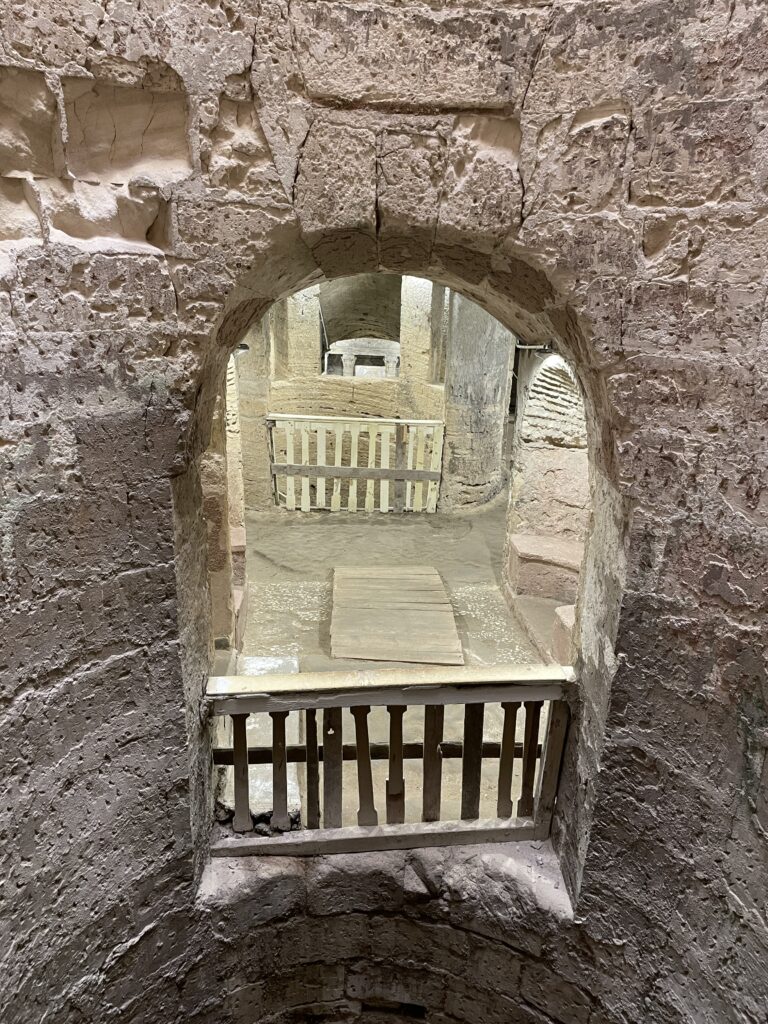
    The Catacombs seen from the shaft
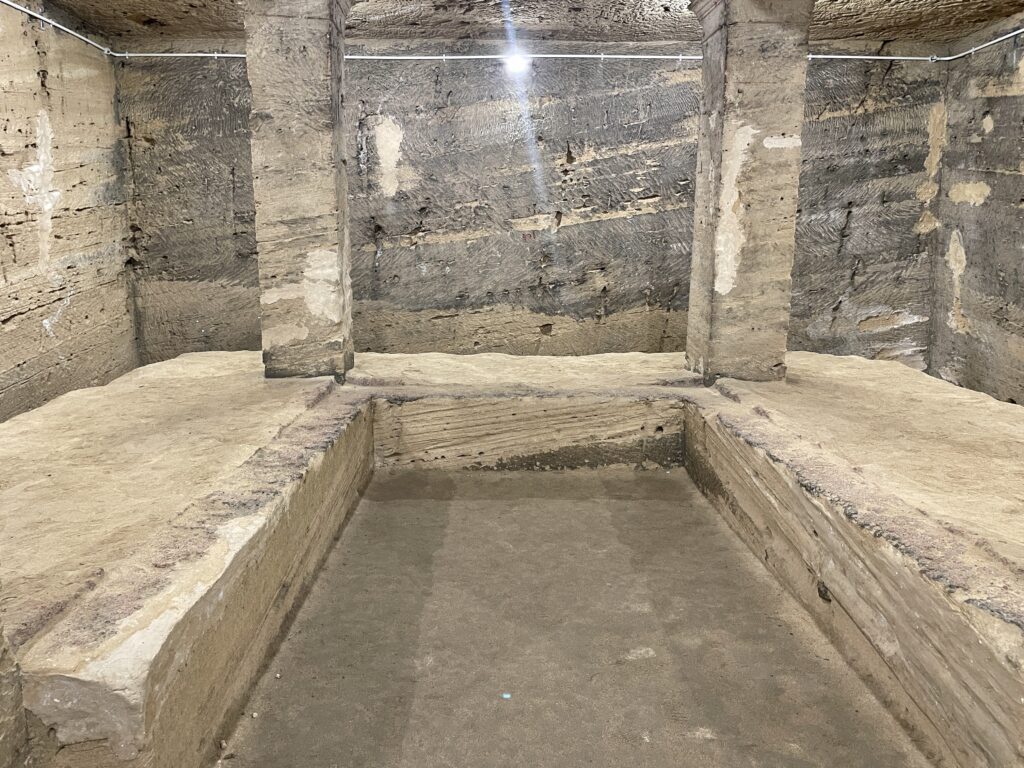
    The triclinia

    The catacombs are carved in the rock except for the shaft, and even the stairs are original. They date to the II century AC, used by the polytheistic Romans for at least 3 centuries.

    The shaft was built mainly to lower the sarcophagi

    The tomb has 3 floors, the second one being the main one as it shows perfectly the mixture of cultures and art (Egyptian, Greek and Roman) that was Alexandria. 

    While you enter the tombs on the first floor, note the benches that used to provide rest for the visitors, and the half shell on their top, coming from the Venus tradition of the Romans. Far ahead to your right, an area opens with 3 stone benches. This room, known as the Hall of Banquets, was reserved for mourners to visit their deceased. The benches are triclinia, where the families used to eat and drink; the remaining’s of the feast were stored in plain jars and thrown on the floor to avoid bad luck (till now, Greeks before dancing throw plates on the floor, Jews break glasses after weddings).

    The next room hosts the loculi, square holes where bodies were buried one on top of each other. Note that the loculi on the lower level have a round portion for the head, these were probably reserved for wealthier people to be buried alone.

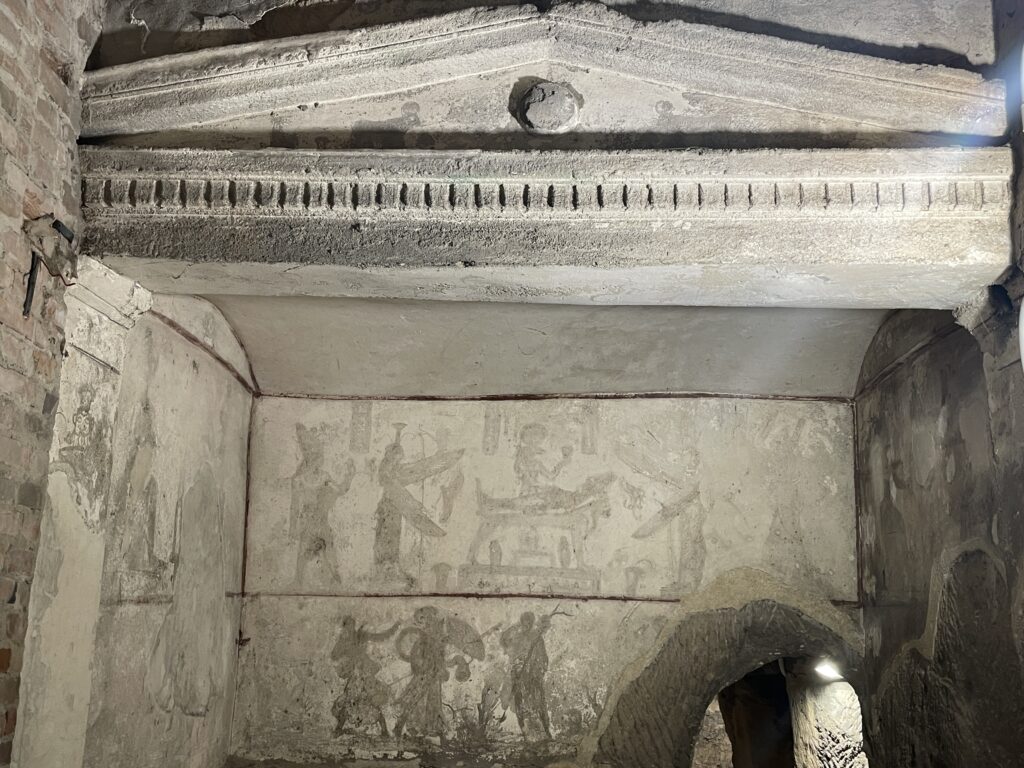
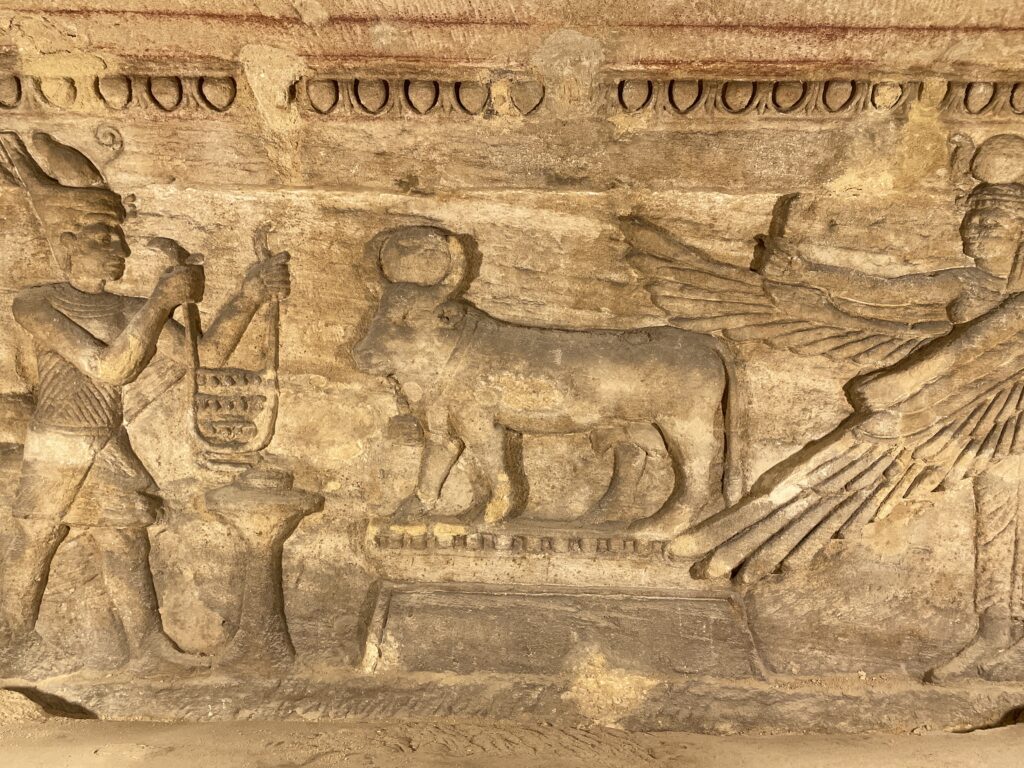
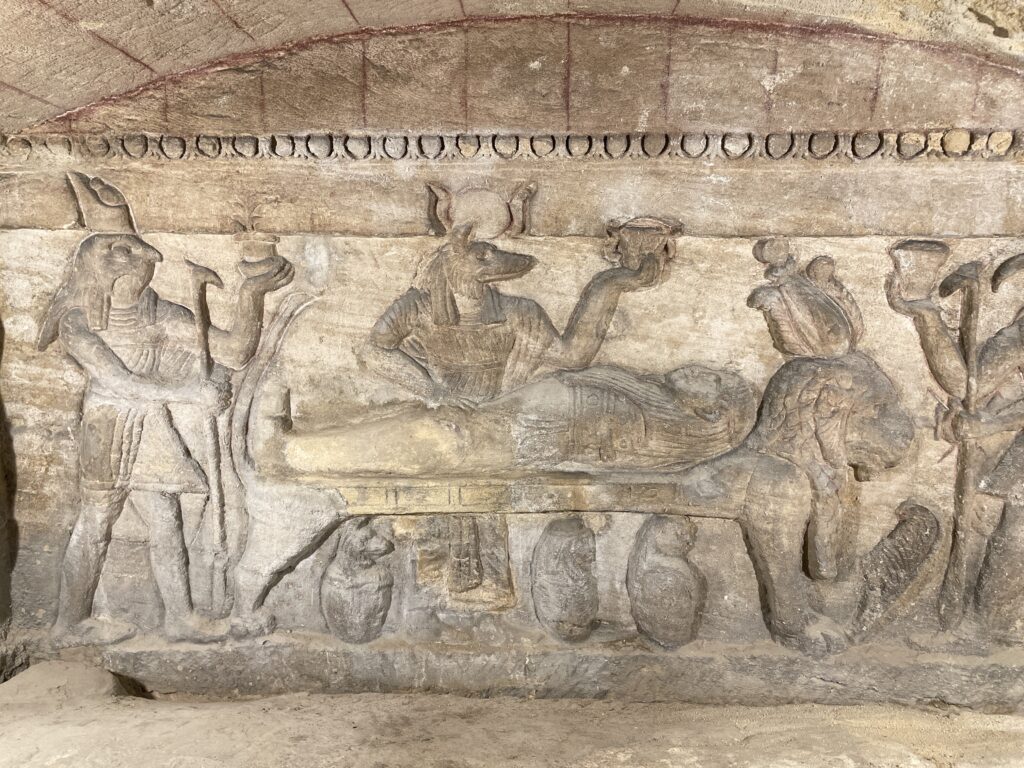
    The second floor was used in the beginning by a rich family and was housing their sarcophagi; later the tomb was enlarged and multiple loculi were added. Here you are welcomed by a pure mix of the 3 cultures: note above your head the circle with wings, symbolizing Ra, the columns carved in the Greek way but with leaves of papyrus, and the 2 statues facing each other, a man and a woman with Roman features but Egyptian dresses. By the door of the burial chamber, a Medusa head overhangs a fanged snake with a Aesculapian symbol next to it. Enter the burial chamber, you will see that the noble family sarcophagi are carved in one piece to prevent tomb robbers from opening them. Above them, the goddess Isis with winged arms looks at her brother Osiris, here in the form of a bull. Over the central tomb, the god Anubi is presiding over a mummification. Three canopii containing the deceased organs are at his feet.
    Vault to the Hall of Caracalla

    On the right side of the second level, you enter into the Hall of Caracalla. The roman emperor was not particularly loved but he was very smart, and to put an end to his multiple enemies among the young Romans inhabiting Alexandria, he indicted a horse race just above the Hall. While his young enemies were racing, the terrain gave way and they all fell and died in the catacombs, together with their horses whose bones you can still see under glass. The Hall is surmounted by a triangular vault (Greek in style) with the Ra disc in the middle, and paintings both Egyptians and Romans in style.

    You can walk down to the third floor but there is nothing to see here.

    Pompey’s Pillar

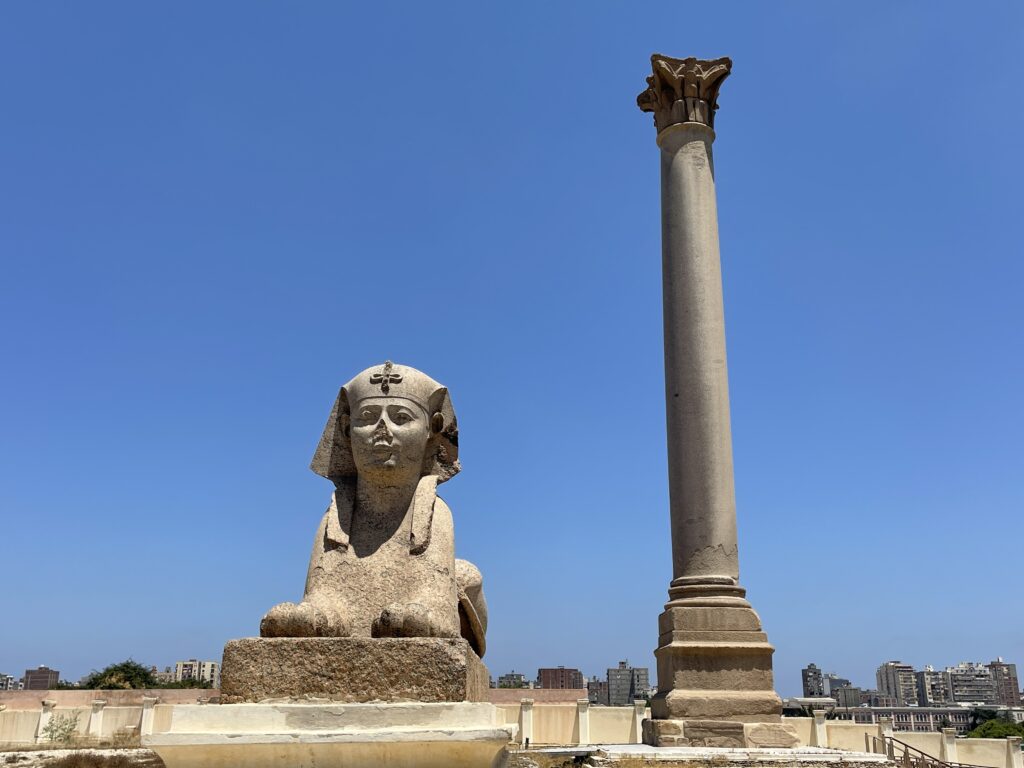
    In this area rose a Greek temple with 400 columns, a 90×80 m square built in the III century BC and used both by Greek and Egyptians. When the Romans came, they continued to use the temple to worship their deities. During the times of Diocleziano in 297 AD, to get the approval of the people of Alexandria, he built the pillar that now is standing alone. As such, the name “Pompey’s pillar” is a misnomer, as it was built 300 years after the death of Pompey and it’s technically not a pillar (square) but a column. The Pompey name comes from one of the triumviri, Gneo Pompeo, that broke the allegiance with Cesar and was thus killed: his head was delivered to Cesar in a golden bowl and the body cremated and the ashes lost. After the pillar’s erection, a jar with the ashes was discovered by Romans and placed on top of the pillar as a way for the name “Pompey” to be remembered.

    The pillar is 500 tons and 30 meters high. It was carved from the granite in Assuan and transported by water through the flooded Nile: Romans followed the Egyptian ways of transporting heavy loads by river, they tied the pillar to wooden boats on every side. 
    The Pompey pillar
    Api, the bull form of the Egyptian god Osiris

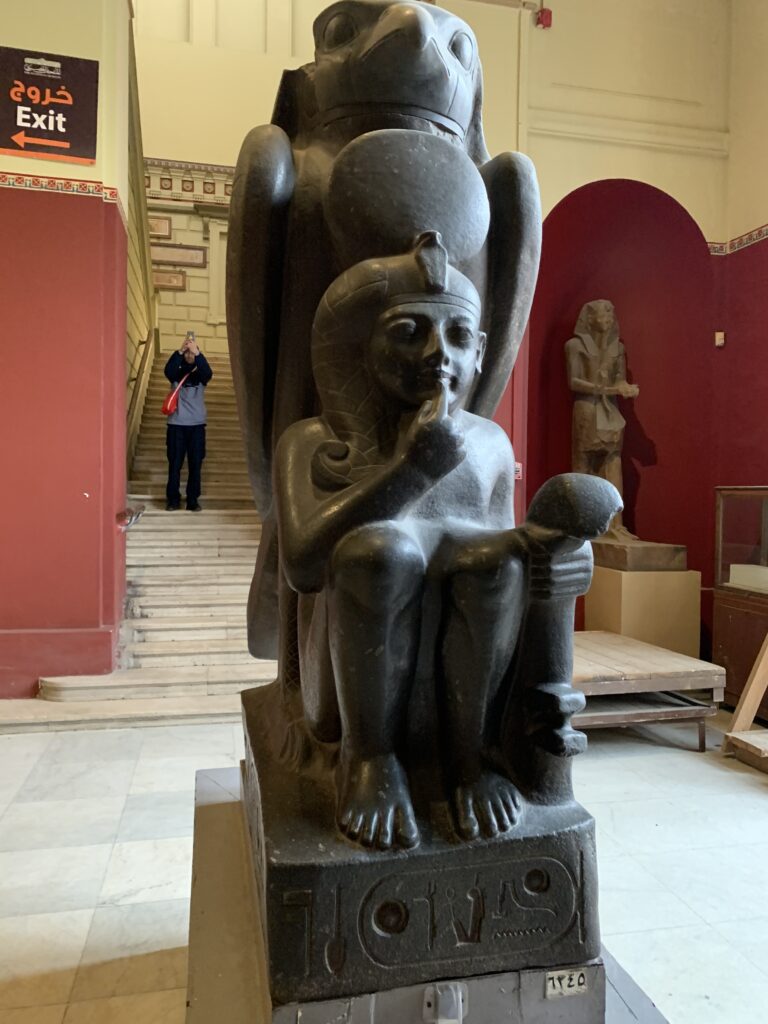
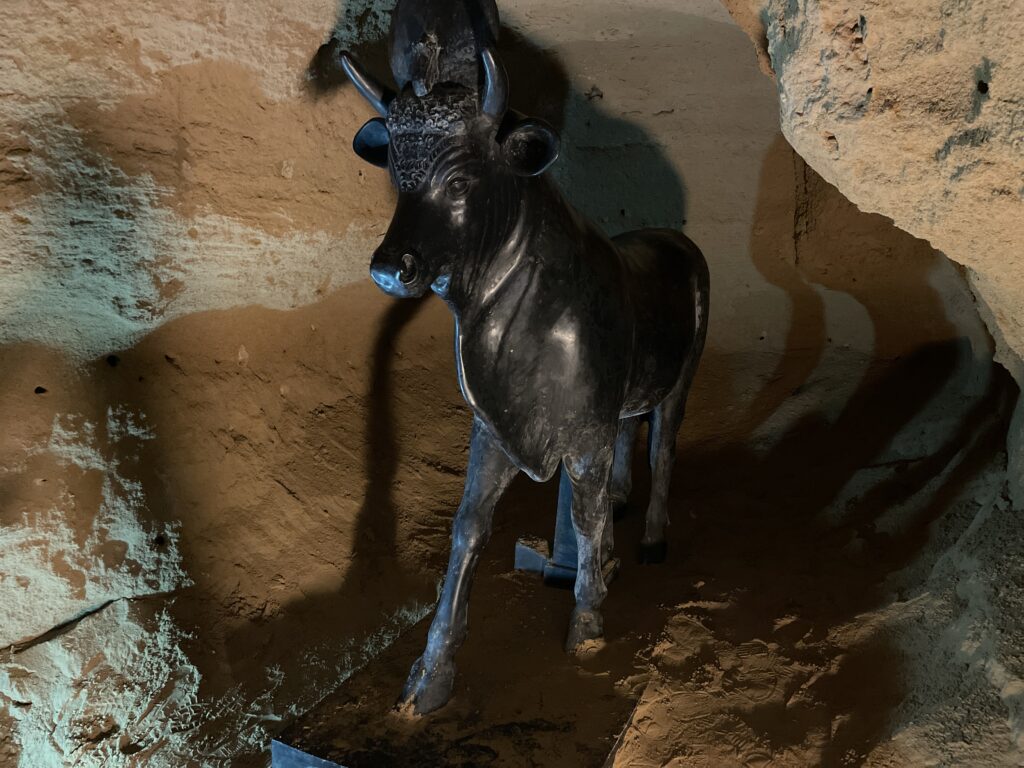
    The two sphynxes that guard the pillar are in honor of 2 of the successors of Ptolemy I. Around the pillar, ruins of the original temple that was destroyed by an earthquake in the VI century AD. The temple was known as the Serapium Temple: the suffix “-ium” means “massive”, while Serap is the name of the god Osiris. Osiris had human form, or could assume the form of the bull Api, and from the word “Osirapi” the Greek got the name Serap. When the Greeks invaded Egypt, they adopted the same gods as the Egyptians but with a condition: no forms of animals and no forms of birds. As such, the Egyptians dropped the Api-bull form of Osiris, and the Greek adopted him as Zeus; Horus, son of Osiris, did not have the head of a falcon anymore but the form of a child. 

    While walking to the pillar, look to your left and go down few stairs that lead to the original sanctuary of the temple: here you will admire a replica of the Api-bull with the Ra-disc between the horns.

    On the right side, a sign points towards the library but there is not a lot to see here.

    Bibliotheca Alexandrina

    It was not Alexander the Great who built the original library, as he died few years before his capital was completely finished. His generals took power and they gave rise to the dynasty of the Ptolemy. The idea of a magnificent library was put in Pt I mind by his statesman Dimitrios, governor of Athens, and philosopher. The library was completed in 288 BC and it was under  Ptolemy II that the library flourished so much that because of the numbers of scroll a second satellite was built.

    The decline of the library started with the war of Alexandria, when Cleopatra VII battled on of her brothers Ptolemy XIII for the throne of Egypt and a large portion of the library was destroyed by accident. The final destruction of the library happened when Julius Cesar was at war with Pompey. At the time, Cesar and Cleopatra VII were lover, and so Cleopatra’s brother (the good one, not the one with which she had battled) in an attempt to satisfy Cesar killed Pompey and had his head delivered to his brother in law. Cesar, still a man of honor, wanted to kill Pompey in fair battle and as a revenge he burned Cleopatra’s brother fleet. The fire however extended from the sea to the library and many scrolls were burned. Some of them were rescued, but a second fire by arson in 392 AD burnt the remaining scrolls. Only one scroll survived, ironically, the classification of the all lost scrolls… And it’s kept in Vienna, not even in the new library!
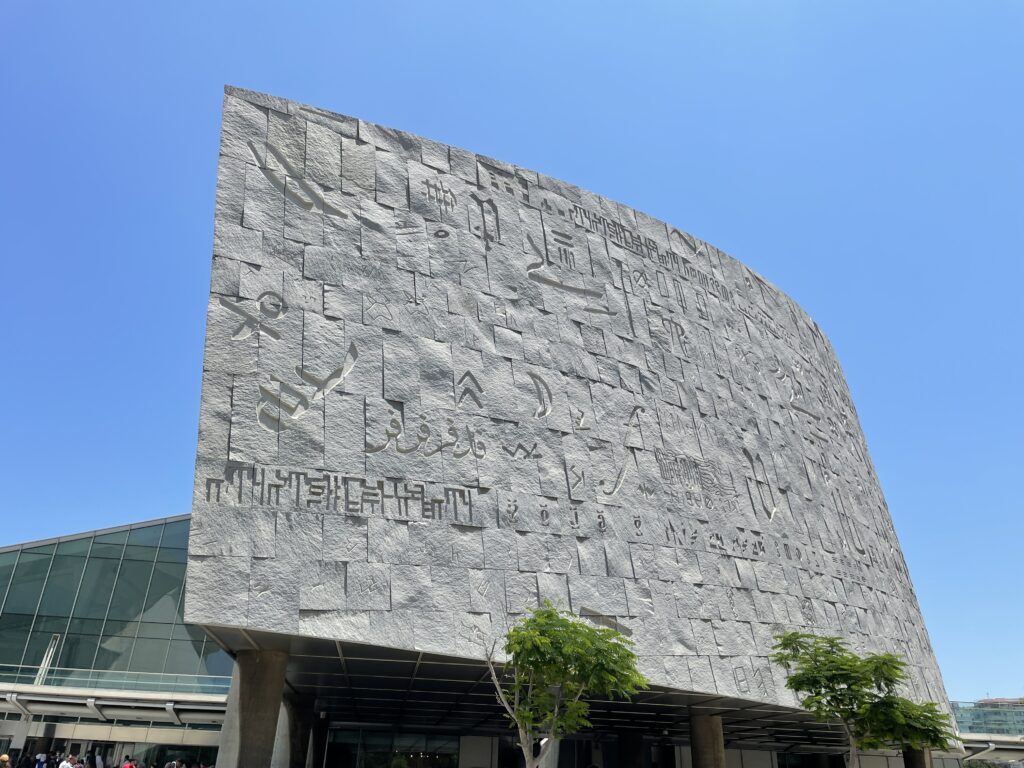
    The Bibliotheca Alexandrina

    The reconstruction started in 1972 with an idea suggested by the Chief of Department of  History of Alexandria. The Bibliotheca Alexandrina as we see today was started in 1995 with a competition won by a Norwegian architectural firm and finished in 2001; the official opening with books was in 2002.

    The BA has the shape of an incomplete rising sun to symbolize how knowledge can spread; the wall is made of 6000 granite blocks coming from Assuan, on them we find 4200 letters engraved from 120 languages. The library now hosts sections for children 6-11, for young adults 12-16 yo and for adults over 16 years of age there is the main reading area.

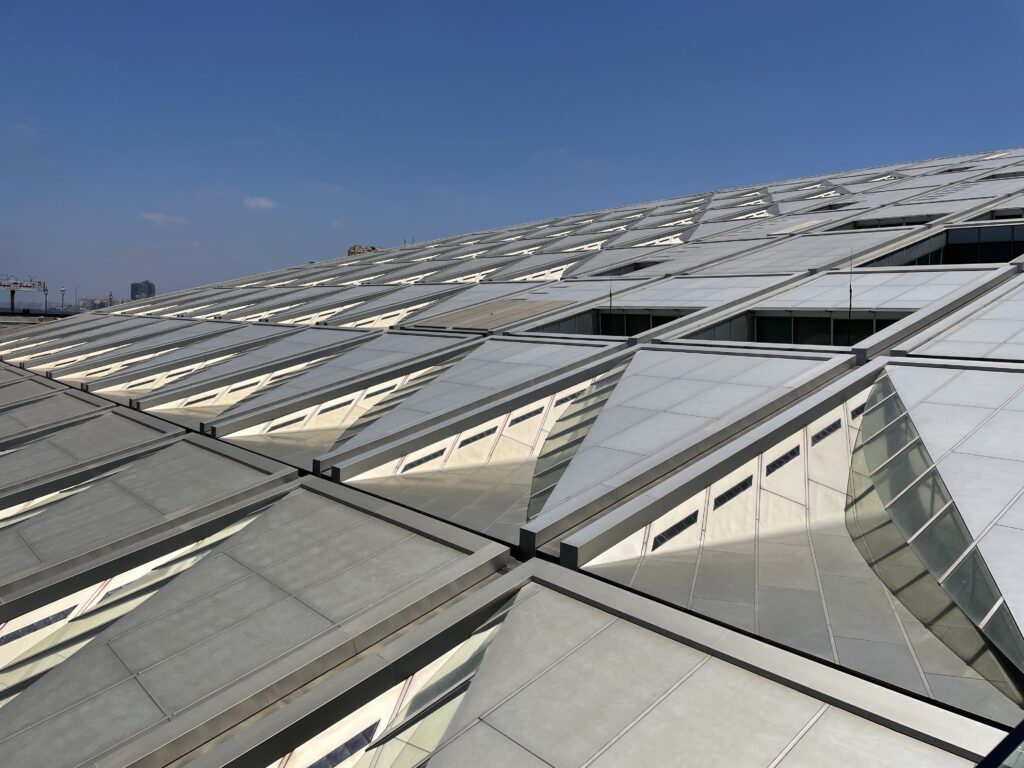
    The main area is the biggest open reading space in the world, accommodating 2000 people at a time. It hosts 2.5 million books in various languages. Each floor of the open area is specialized in a particular subject: ancient maps (with 7000 maps), arts and multimedia, rare books (15000 manuscripts dating back to the late 1400), francophone library, braille library. The ceiling has an inclination of 16 degrees to limit the damage to the books from direct sunrays; the multiple glass panels covering the ceiling take the shape of an eyelid from the inside and eyelashes from the outside to prevent accumulation of water and dust. Green and blue led lights, symbolizing the earth and the sea, provide relaxation for the readers.
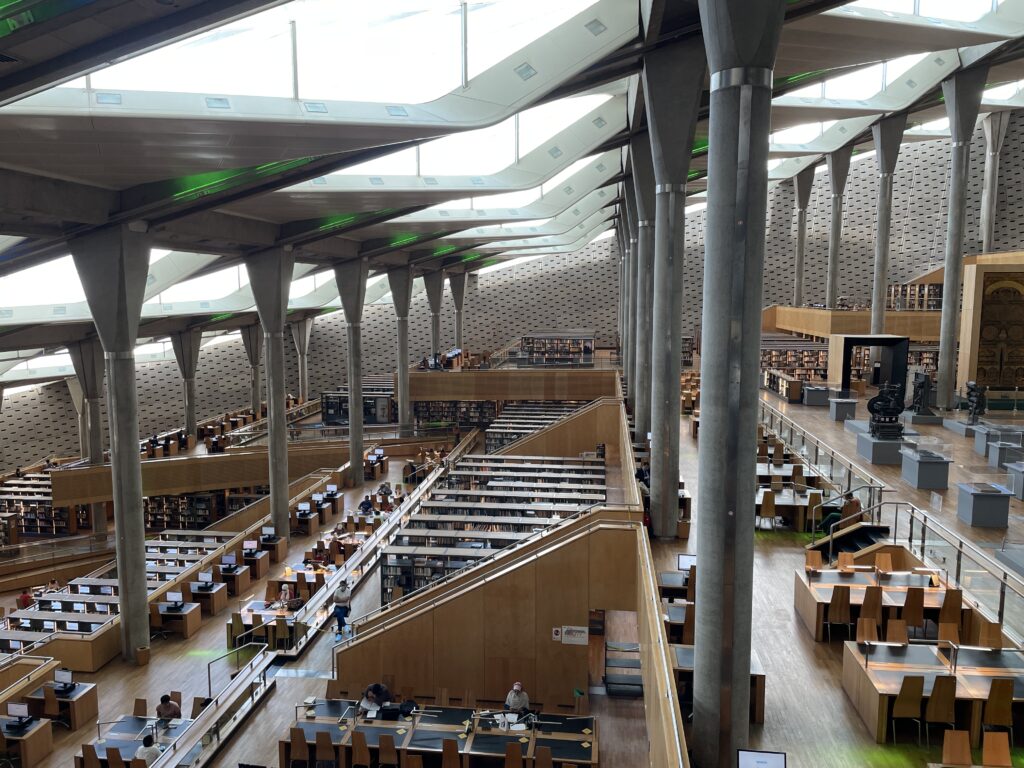
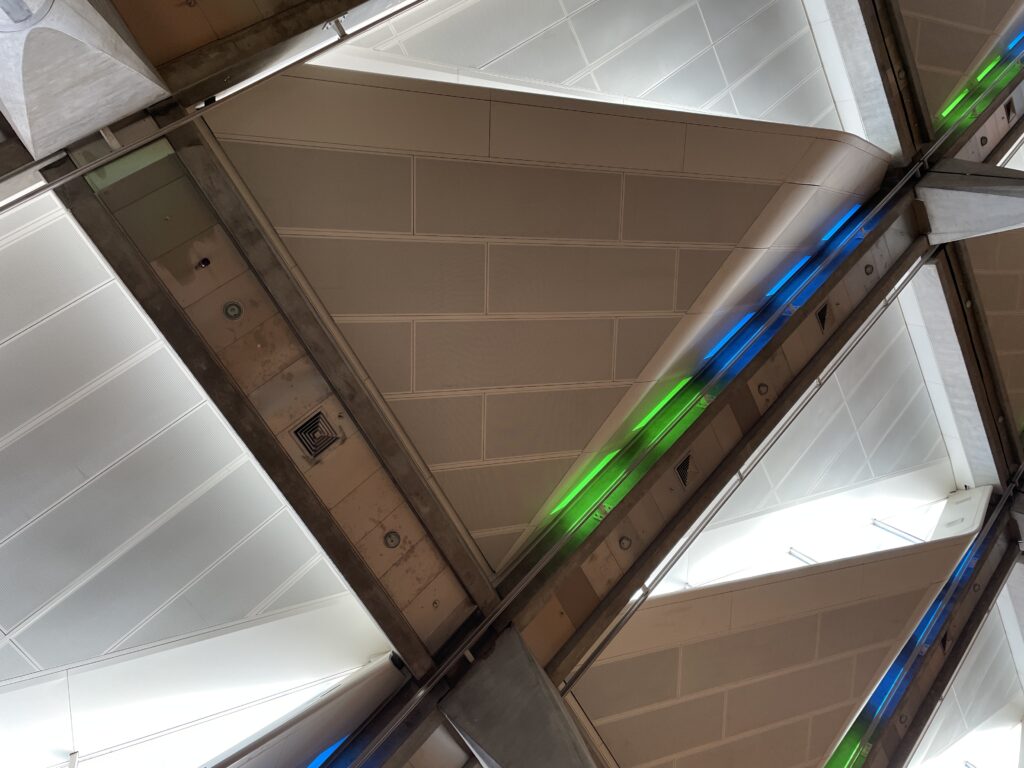
    The walls are covered in concrete walls that reduce the sound and absorb the echo.

  • Africa,  Cairo,  Egypt,  Places

    Cairo
    Day 1 - Giza, Memphis and Saqqara

    Before the year 3000 BC, Egypt was divided into Upper Egypt (the southern part) and Lower Egypt (the norther part), according to the flow of the river Nile. It was finally united and with its uninion the Egyptian Dynasties were born (30 overall). The symbol of this unification is in the crown worn by most pharaohs in their statues, the red elongated one that symbolizes lower Egypt and the round white one that stands for the upper Egypt. Egyptian history is divided in Old, Middle and New Kingdom; what Cairo will let you discover is the Old Kingdom.

    The capital of the Old Kingdom was Memphis, now at the edge of Cairo. The name Memphis comes from “mem” which meant “stable” and “nefer” that stands for beautiful (as in “Nefertiti” or Nefertari”). During the Middle Kingdom the capital was moved to Abu XX, in the south. The Middle Kingdom was the time when Egypt was ransacked by the Hittities who spread chaos in the country till King Amon Moses defeated them and moved the capital to Luxor, giving a start to the New Kingdom.

    All these historical facts are reflected in tombs-construction and pyramids. Pyramids are characteristics of the Old Kingdom, whilst in the New Kingdom pharaohs were buried in the Valley of the Kings.

    The Three Pyramids of Giza

    When the Egyptian started building pyramids (with the III Dynasty), they usually built them on the west bank of the river Nile. West is were the sun sets, and were the sun god Ra will get the soul of the dead pharaoh to escort him to the after life. And of course the pyramids needed to be set on a flat area and slightly elevated to survive the (numerous) floods of the river. The Ghiza plateau served all these purpose and for this reasons the pharaohs of the IV Dynasty decided to erect their resting places here.

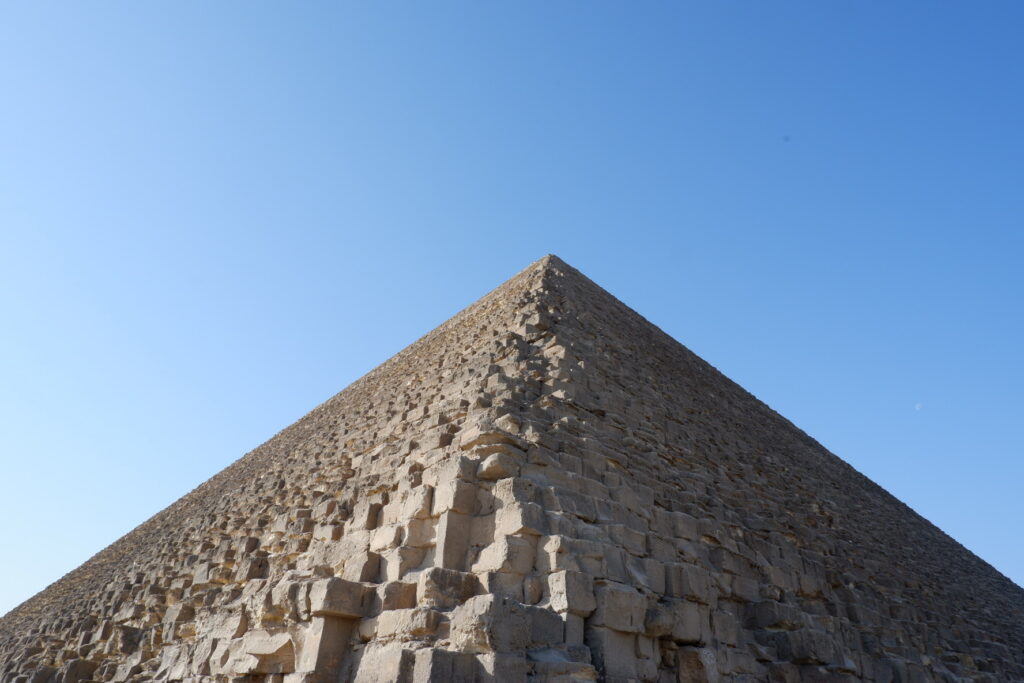
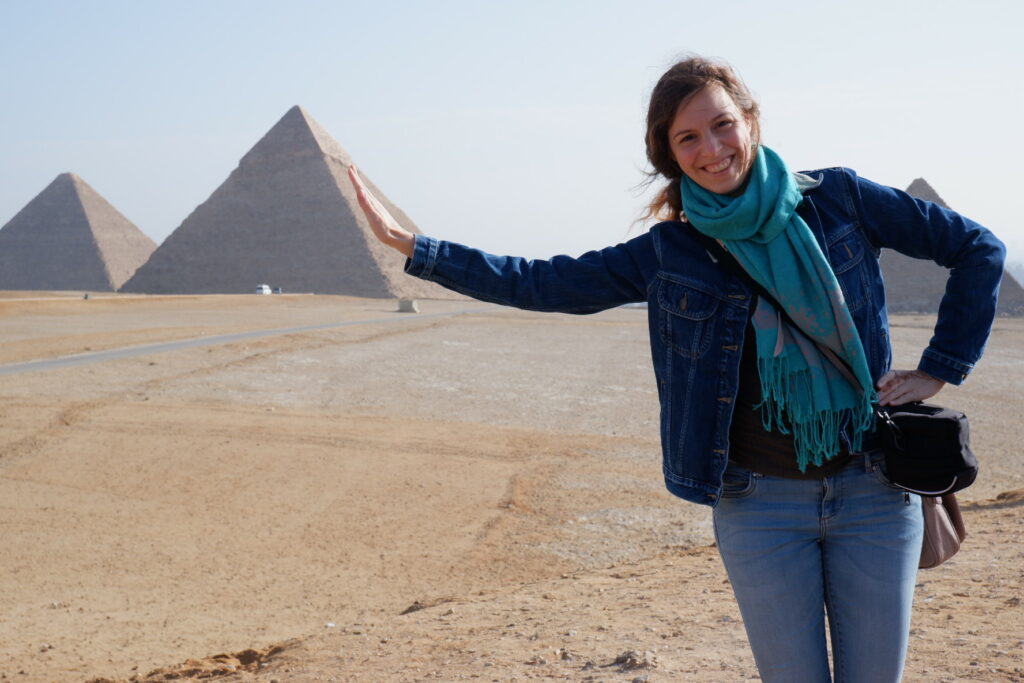
    Despite 6 pyramids in this area, your attention will be immediately caught by the big pyramid of Cheope (2500 BC). It was build over the course of 20 years with over 2 millions block of limestone coming from a quarry on the mountains east of Cairo. It’s surface was originally smoothened by more whitish-looking limestone that was either raided in the centuries or just degraded, and it’s top adorned by a small gilded triangle (raided, it goes without saying). Do not believe the stories spread by Hollywood and by comics of slaves being forced to build pyramids. It has been estimated that 20.000 persons worked actively at its constructions, joined by 80.000 seasonal workers (those farmers that could not work during the Nile floods). And every single person was doing this work voluntary, as an offer the the living god, the pharaoh. And recompensed with beer.

    The main entrance is not the one through which hordes of tourists enter today, but the one above, sealed by a a massive block of granite. This was after all a burial building, there was no need to reopen that door once the pharaoh had been mummified and buried. The entrance to the tomb is around 15$ per person, but we followed the advice of our guide and did not go inside. Aside from the massive flow of people swirling those corridors, the tomb is completely empty. There are mush better pyramids to visit inside in Sakkara. However, a stop in front of the map gave us an idea of the inside. There are three burial chambers: one is incomplete, one is falsely named the Queen burial room (the Queen has her own pyramid just behind) and the main one. However, when the tomb was opened, the archeologists found the sarcophagus with no lid and the mummy still inside; for this reason they were led to believe that there still is an hidden chamber.

    Weathered stone flank of a pyramid at Giza against a clear blue sky
    Traveller posing in front of the three pyramids of Giza

    Just behind the pyramid of Cheope there are three smaller ones, for his mother, his Queen and his sister. When the archeologists were working on the pyramid of the mother, they accidentally found an hidden pit (preserved by the sand from the tomb raiders) with the furnitures of her royal chambers.

    In 1950 on the North side of the pyramid, another pit was discovered hiding the wooden remains of a boat; this boat, that symbolizes the sun boat through which the soul and body of the pharaoh would cross the river to the afterlife, has been recently restored and can be visible in the Museum.

    On the east side there can be found the mutabahs. Only pharaohs could be buried in a pyramid, but the nobles and the ministers could build smaller and flat tombs around the pyramid of the pharaoh they served. Those cannot be accessed but later during the day there is a treat waiting for you!

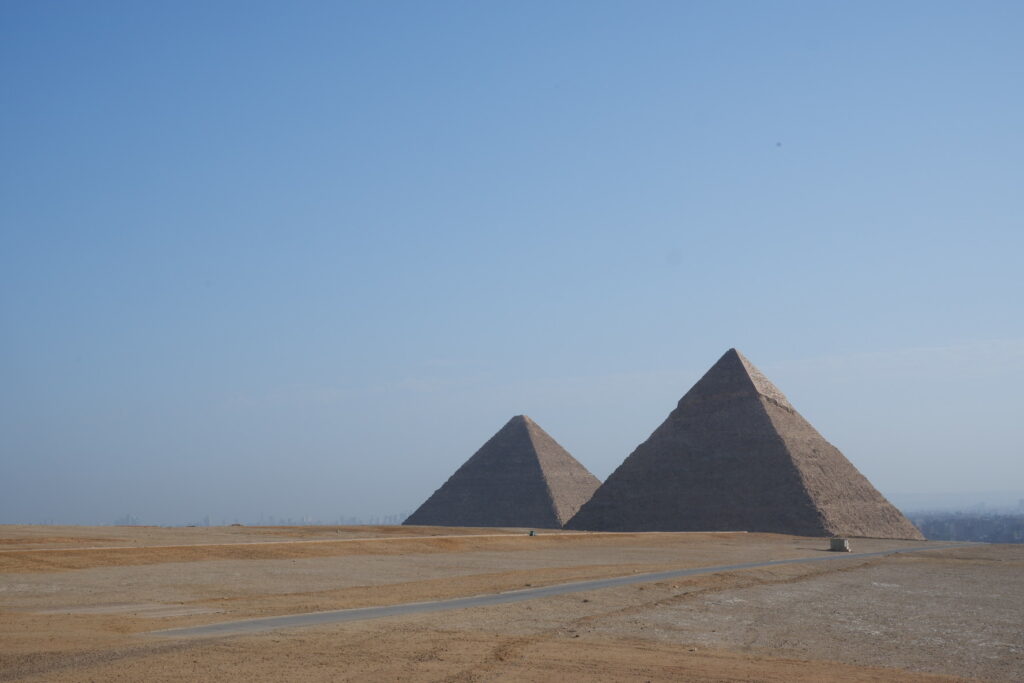
    Two of the Giza pyramids seen across the desert plateau

    Cheope’s second son, Chefren, built 50 years later a smaller (but still impressive) pyramid right behind the big one of his fater. The best view is following the paved street till the viewpoint with the parking lot: from here the 130 m of the pyramid of Chefen will appear to you much more than the ones of Cheope, but it’s simply because it’s built on a higher plane. Look at the tip of the pyramids and you will understand how they were looking in the ancient times, with that whitish limestone cover that made their surface smooth. It’s the only tomb in the Ghiza plateau that has a funerary temple (more to come about it!). Just to the left, the grandson of Cheope, Micerino, built his pyramid 70 years later

    The Sphynx

    Even before reaching the Sphynx, you will notice the harbor at its feet. Before the construction of dams the Nile flooded once a year and its water used to cover the 7 kms to Giza and were used to carry the blocks of limestone from the quarry to this area.

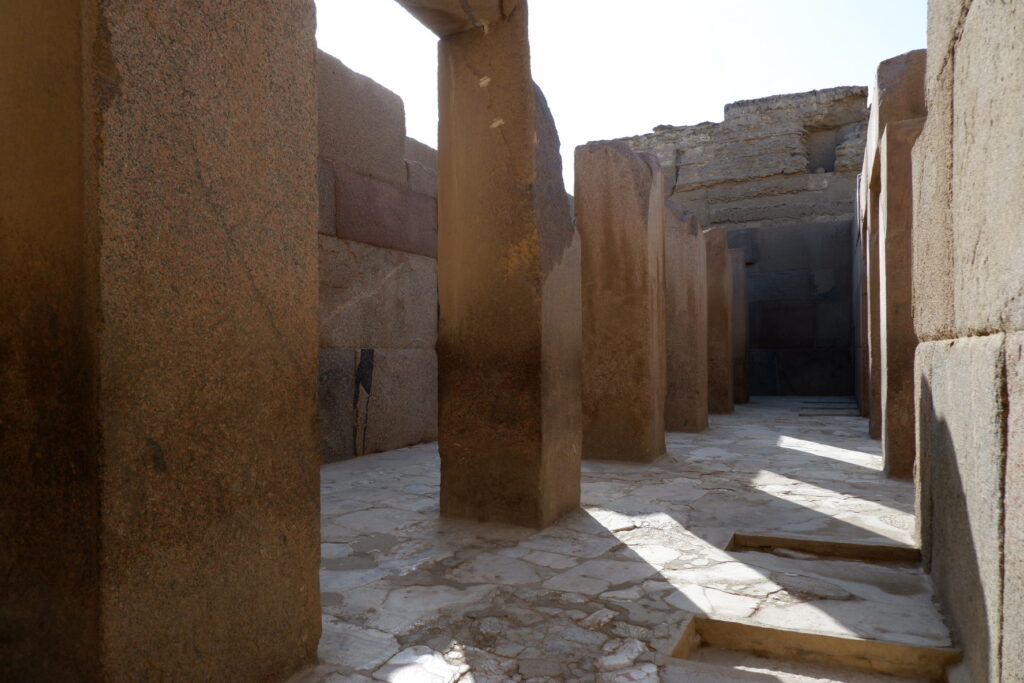
    Granite pillars inside the Valley Temple beside the Sphinx at Giza

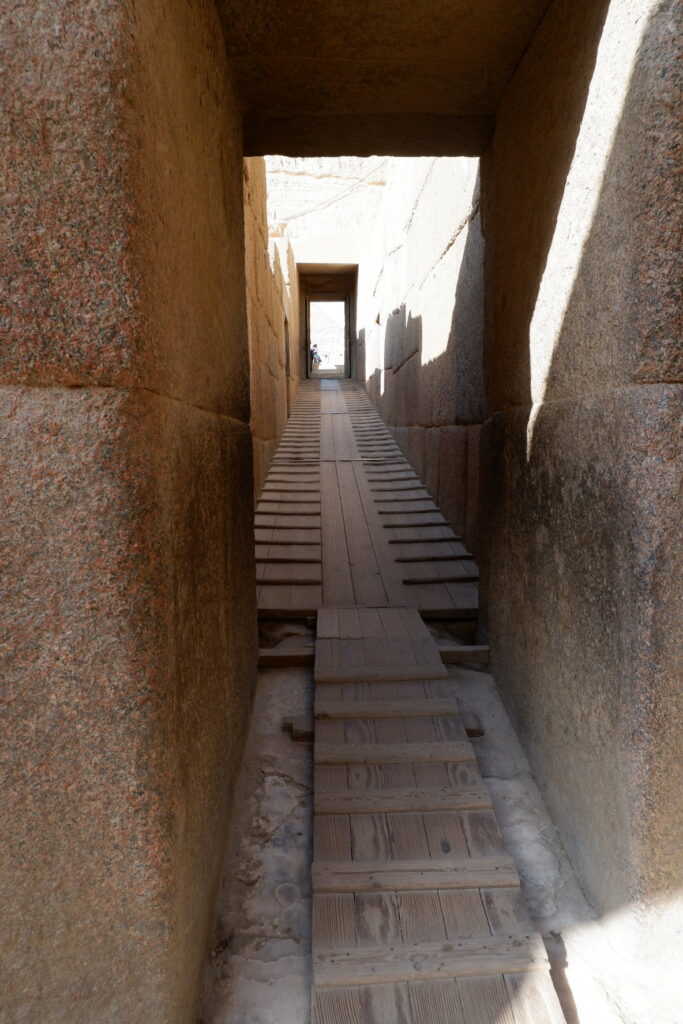
    Just to the right of the harbor, the entrance to the valley of the funerary temple of Chefren opens for you: this funerary construction is made of external limestone, but the walls are made of granite and the floor is alabaster. There used to be a granite roof as well but his son Micerino recycled the material to build his own pyramid…

    This area were you are standing was were the whole process of mummification was taking place. The body of the deceased pharaoh was brought here and the priests washed him with Nile water. His face was then dressed with the jackal mask of Anubis, the deity of the afterlife, the inner organs were removed and put in small jars (canopi) but not the heart, that was embalmed and resealed in the chest cavity. The body was the immersed in salt water to let the skin dry, washed with essential oils and covered with linen bandages. The bandages were glued together and the mummy was carried along the ramp that you see in front of you up to the pyramid.

    Narrow passage between massive granite blocks in the Valley Temple, Giza

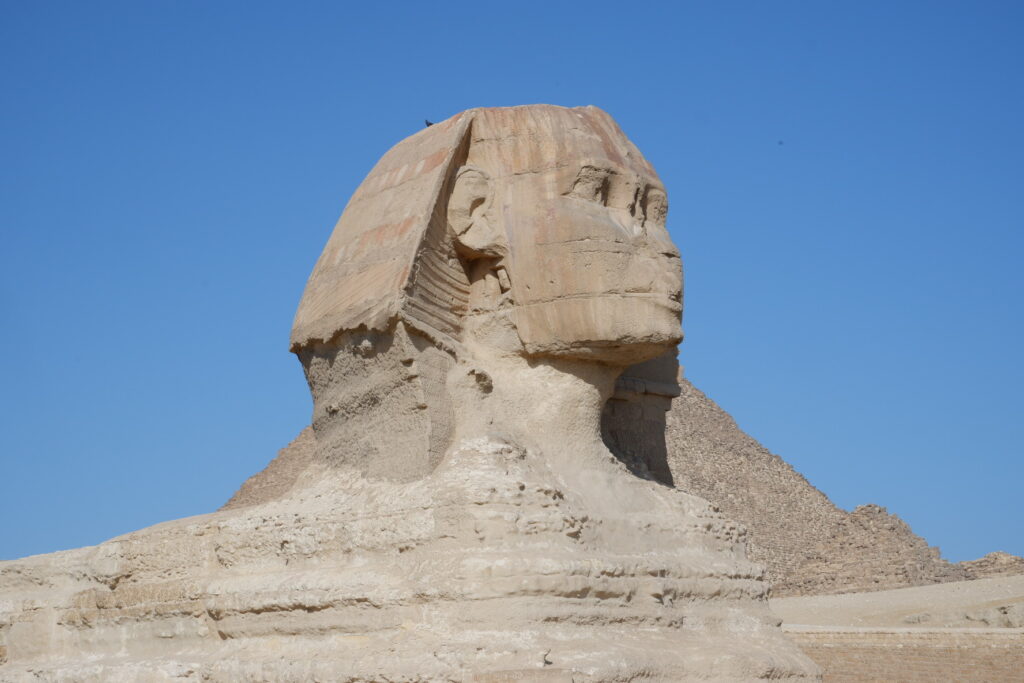
    Now follow that same ramp that the dead pharaohs were taking and reach the marvelous sphynx. The name sphynx comes from the ancient sheseban (image of a god). Its origin dates at the time of the construction of the pyramid of Chefren: that area was being used as a quarry for the limestone and one massive piece was left untouched because of its poor quality. The workers carved it with the body of a lion and the face of Chefren. For years it lay covered by layers of sand; in 1750 BC an Egyptian prince that was visiting the pyramids fell asleep on the sand and in his dreams the Sphynx spoke to him asking him to unbury her and become a true king. Upon waking up, the prince started digging and brough the Sphynx back to light, thus becoming pharaoh Thutmose IV. During the centuries the sphynx was worshipped by the Greeks and the Romans conquerors who built small temples in front of her. The nose is missing due to an Arab fanatic in the Middle Ages that believed the Sphynx was a malevolent spirit. 

    On your left while you are standing on the ramp, look for the village where the pyramid builders used to live.

    The Great Sphinx of Giza seen in profile

    Memphis

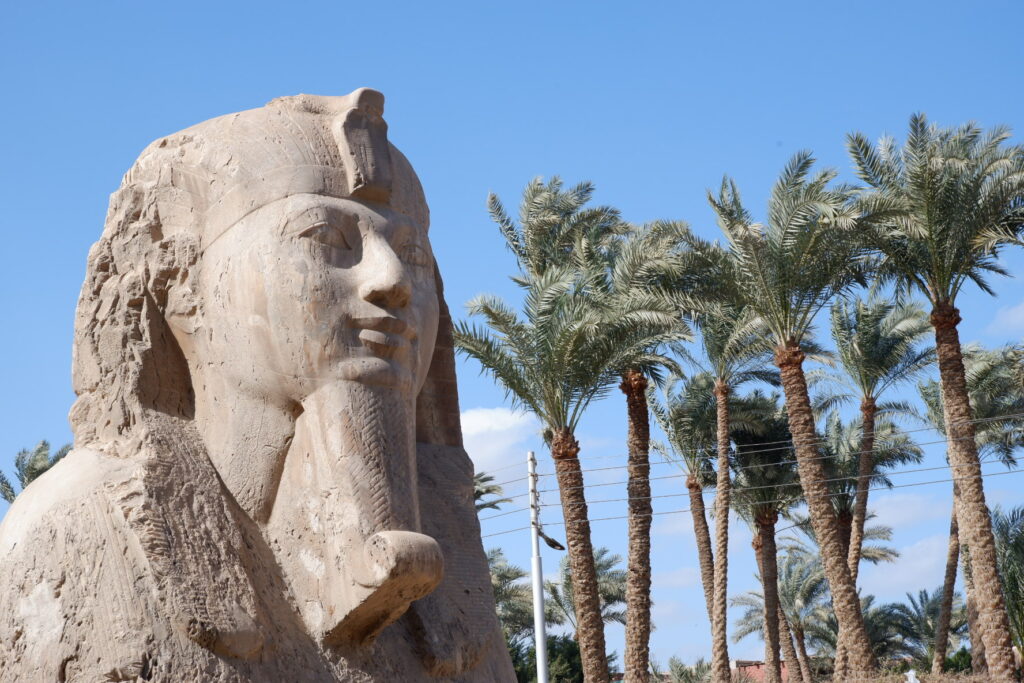
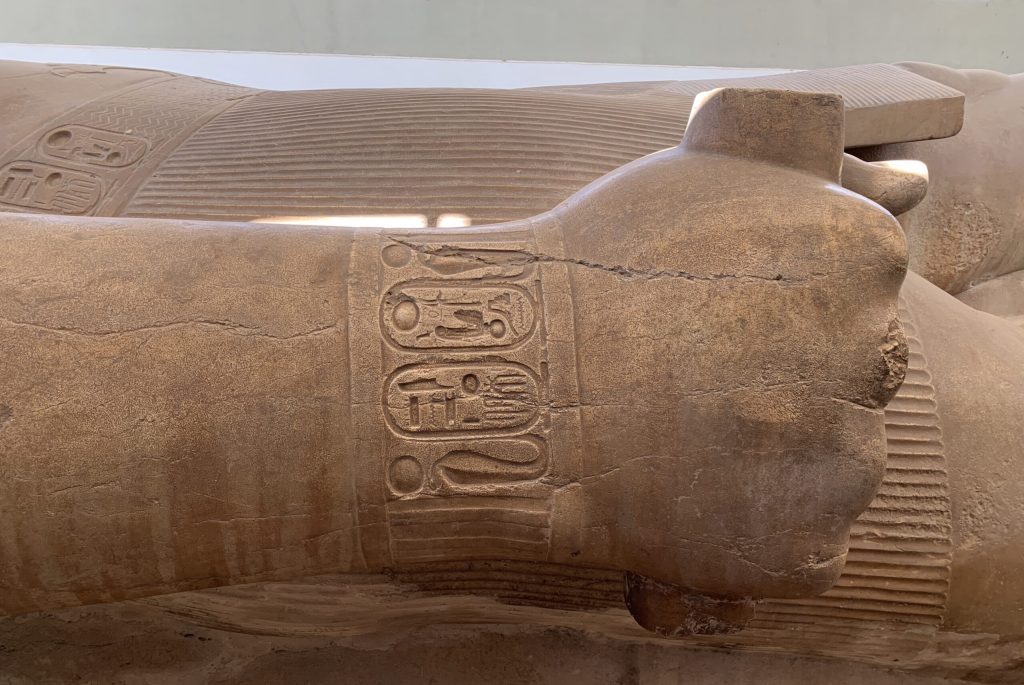
    Even during the New Kingdom, when Luxor was capital, the famous Ramses II resided in Memphis during the year. Here he built his palace, whose ruins now cover the whole neighborhood, and a temple dedicate to the god Ptah, deity of creation. The ruins of the temple are nowadays an open air museum in the middle of Memphis. Statues of the god are everywhere, either depicted as he is molding clay or holding a sceptre. You will notice that differently from Giza, where the ruins have been well preserved by the dry soil, here almost all the statues are ruined because of the clay’s presence. Only two are still in one piece, the sphynx (depicting either a pharaoh, or his XXX) and the granite statue of Ramses II. Ramses is depicted with symbols of Upper and Lower Egypt, and his left leg forward, since he his actions are commanded by his heart. Inside the museum there is a bigger limestone statue of Ramses II, found lying there on the left side; for fear that the materials would get damaged, the whole museum was built around it. Ramses II or Ramses the great ruled from the age of 26 for 67 years, and he had 40 wives and over 200 children. All the statues of the pharaohs are depicting some hieroglyphs that carry their birth name and the coronation name inside an oval (cartouche). As every hieroglyph, they can be read either from right to left or from left to right, depending on where the faces of the humans or the beaks of the birds are oriented. But of course such a difficult and elaborate way of writing could not be used in everyday life, and the more simple demoticon was used for contracts, marriage licenses etc. 

    Colossal head of Ramesses II among palm trees at Memphis, Egypt
    Hieroglyphic cartouche carved on the arm of the fallen colossus of Ramesses II, Memphis

    Saqqara

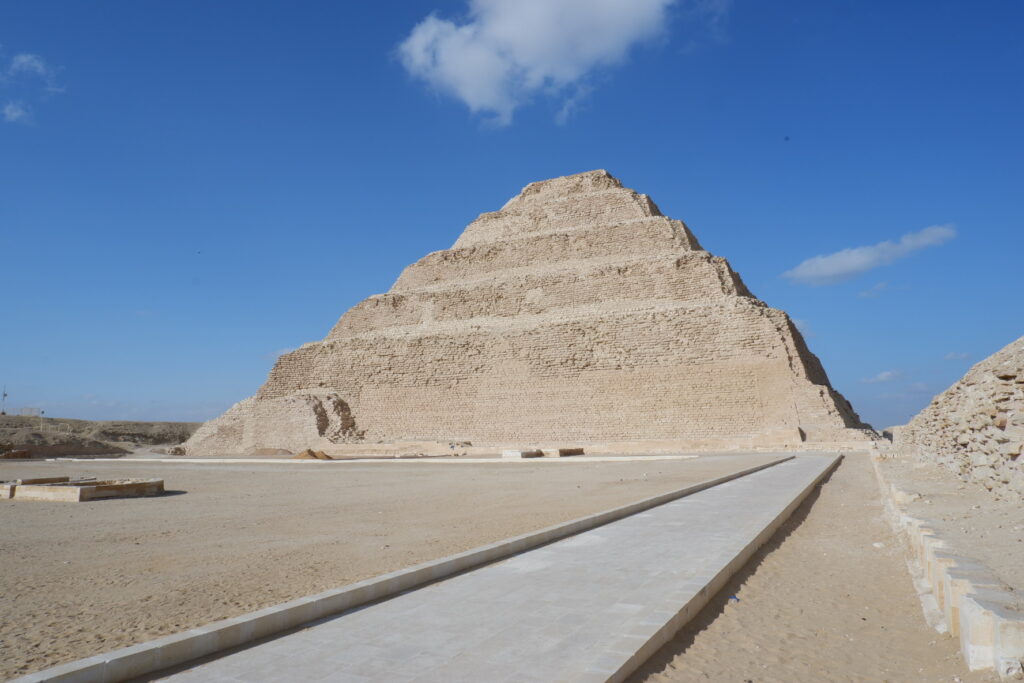
    When driving around Memphis it’s stunning to see the plush vegetation of palms and other trees, but it’s even more impressive the abrupt stat of the desert once you reach Saqqara. Seems like the exact place where the water of the Nile reached at the time of its floods is marked by a line of trees that suddenly turn into sand. Saqqara gets its name from the god with the face of a dog that was hereby worshipped. In Saqqara you will see the first pyramid, called the “step pyramid” (2700 BC).

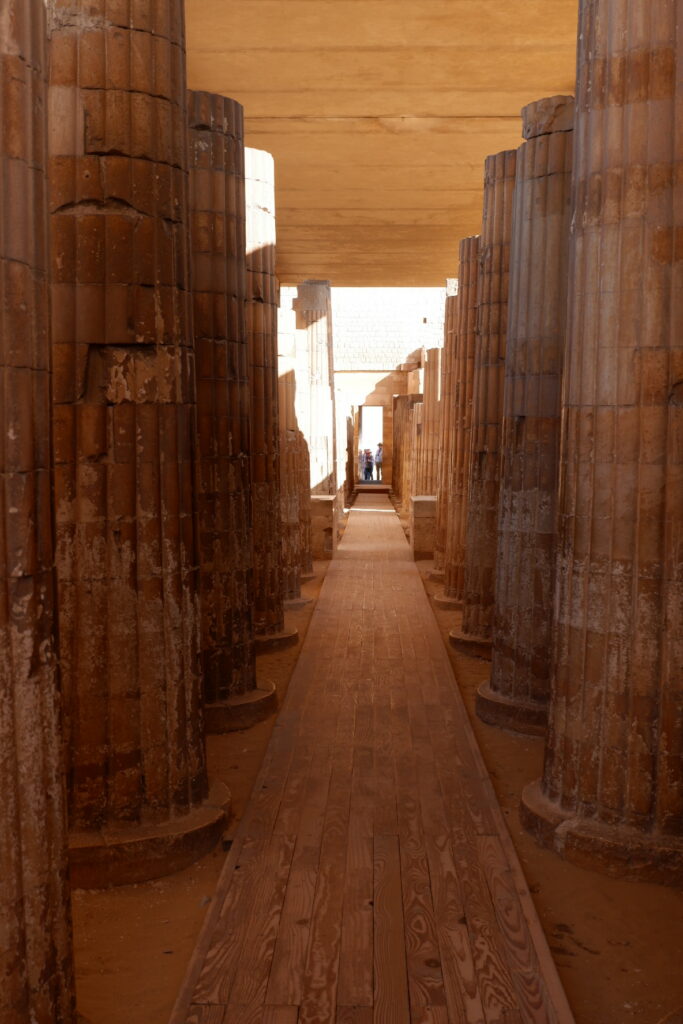
    Colonnaded entrance corridor of the Step Pyramid complex at Saqqara

    The First and Second Dynasties of pharaohs were buried in mud mastabaha that of course did not survive the injuries of time. The first pharaoh of the Third Dynasty, Djozer, was the first one to commission to his architect Imhotep a stone tomb that would survive for centuries. Now, we all know the name Imhotep from movies such as The Mummy; the truth is that after this first building he became so famous that he was nearly revered as a god. First of all, Imhotep built a colonnade entrance with 42 columns shaped like papyrus plants, that symbolizes the 42 provinces of Egypt (there is also a small wall separating the Upper from the Lower Egypt. He was still not confident enough to believe that the columns would held the weight of a granite roof of papyruses trunks so he attached them to the wall. 

    The Step Pyramid of Djoser at Saqqara, Egypt

    You walk the colonnade and reach an open court, symbolically delimited on your left by a mastabah and on your right by the step pyramid. The first idea of Imothep was to simply build a stone rectangular mastabah; upon seeing it Jozer asked him to make it longer, the to add a send mastabaha on top, then one more, and so on. This is why the pyramid has this appearance of steps. Djozer’s son got the idea from his father but his pyramid crumbled to pieces. It was Djozer’s nephew Neferu that carried on the pyramid idea, first building a very audacious 56 degrees steep angle pyramid that he had to adjust towards the tip (bent pyramid of Dashur) and the building the first real pyramid ad we know them in red limestone (red pyramid in Dashur).

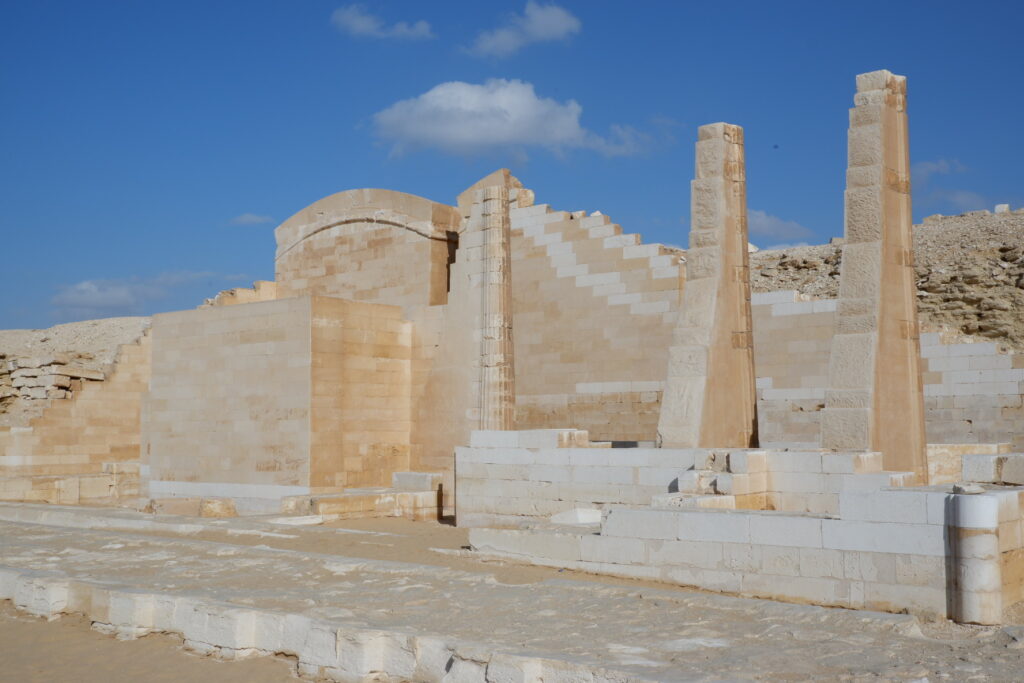
    Ruined temple walls and columns in the Saqqara necropolis

    While walking the open court look for an opening to your right: this is the area where the hepstat festival was held. The hepstat was sort of a reconfirmation of the pharaoh every 30 years, where he was to battle with a bull to prove he still ha the strength to rule. Later on in the dynasties, this became a rule every 5 years cause rarely the pharaohs ruled up to those 30 years.

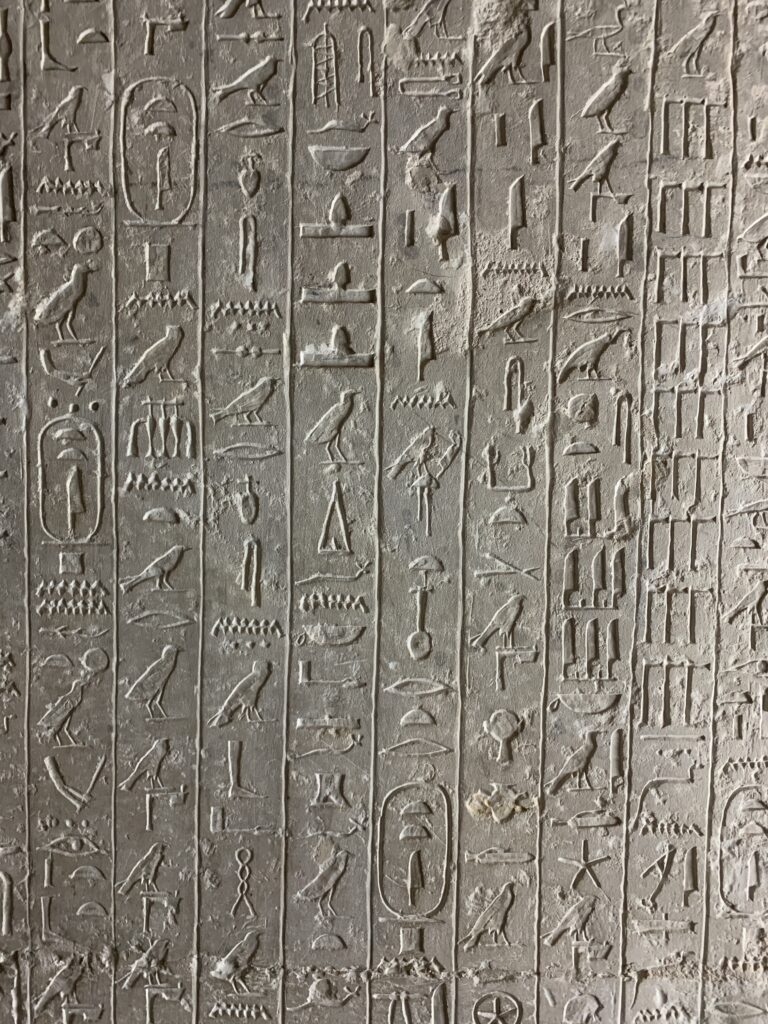
    After the brief excursus to Memphis for the Fourth Dynasty, the Fifth Dynasty went back to Saqqara for their pyramid building. Don’t be discouraged by their appearance from their outside: yes, they do look just like mounds of sands, but that simply because the blocks of limestones had been “recycled” by the 4 following Dynasties of the Middle Kingdom when the economy was not doing well. The Fifth Dynasty pyramids were the first to have hieroglyphical carvings inside. Those were either prayers or spells that the dead pharaoh could use to pass through various chambers or alcoves of the afterlife. This habit was lost in the Middle Kingdom, and was resumed in the New Kingdom where the walls of the tombs were carved with hieroglyphics and papyri guiding the pharaoh through the afterlife journey. What came to be known as “The Book of the Dead”.

    In Saqqara you will encounter the pyramid of Teti, the one pyramid which we visited inside. Through a small and long tunnel you will reach two burial chambers, where the roof is covered with carving of stars and the walls of hieroglyphs; look for the cartouche of Teti XXX. In the main chamber you will be awed by the size of the sarcophagus around which the whole pyramid was built, cause there would be no way of making it fit through the small corridors.

    Wall of carved hieroglyphs at Saqqara

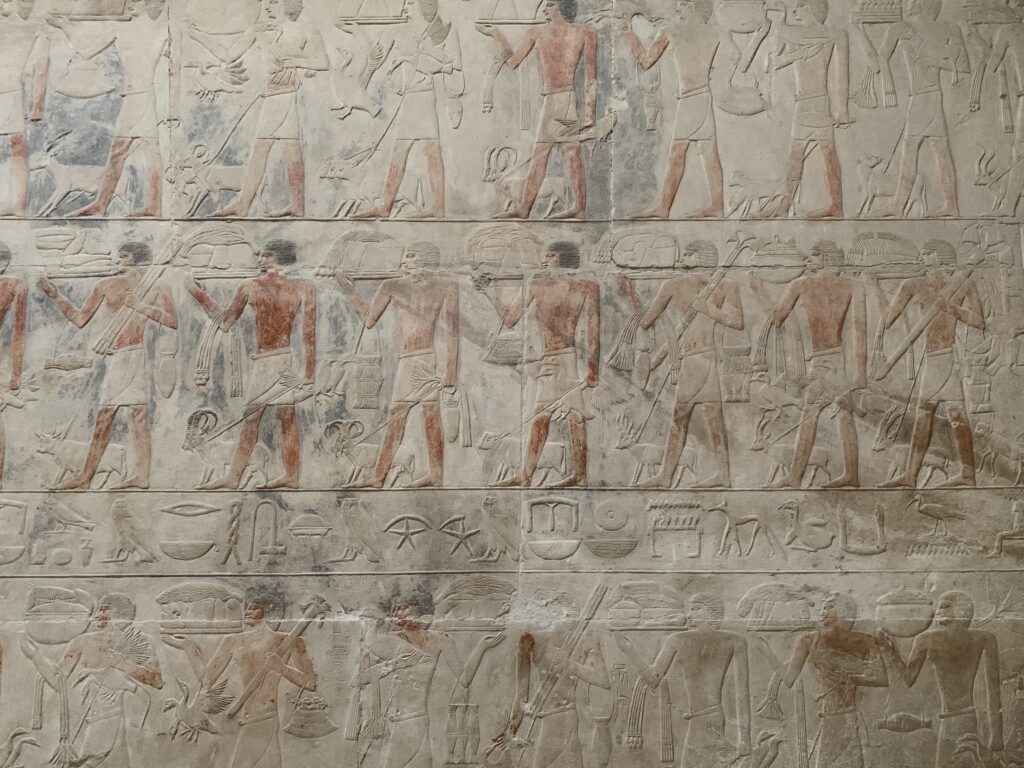
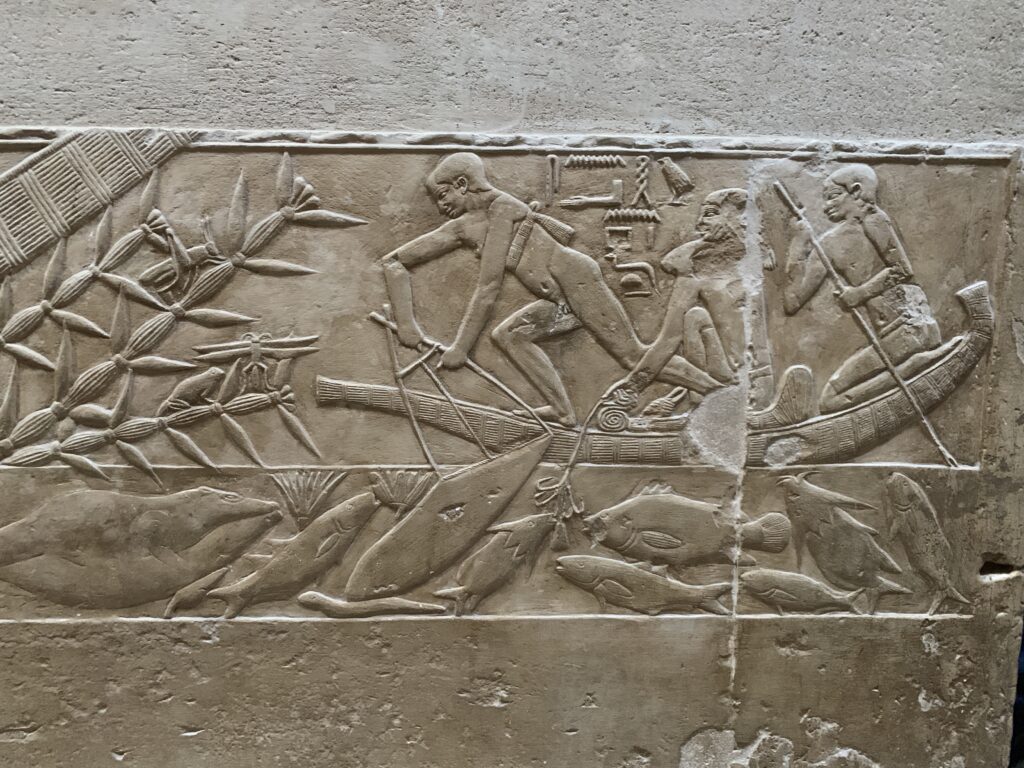
    Just out of the pyramid, the real jewel is the mastabah of Teti’s prime minister and brother-in-law. The inferior part of the wall was covered thought the years by sand and it’s just perfectly preserved. As you walk through the chambers, various altrelief depict scenes of everyday life, hunting scenes, and some colors are also preserved.

    Painted relief scenes on a tomb wall at Saqqara
    Relief of men in papyrus boats carved on a tomb wall at Saqqara

    Day 2 - The Egyptian Museum

    The Egyptian Museum was first meant to rise on the West Bank of the Nile, but the French who were leading the project soon realized it was too dump and they started to build it in 1897 on the East Bank instead. The facade is strongly pink, with statues of Isis wearing greek tunics and the latin names of the Egyptian dynasties. Lotus and papyrus plants (symbols of Lower and Upper Egypt) decorate the garden. 

    The lower floor is mainly dedicated to the three Kingdoms and the upper floor to the Tutankhamun collection. The first feeling when you walk inside is that someone is moving out, boxes on the sides of the rooms, walls half painted, tape and scaffolds, and plastic sheets over some of the antiquities. Fortunately the new museum (over which 1 billion dollars was spent, with donations from all over the world -300 millions from Japan-) seems to be almost ready to open and host the entire collection by the end of 2020.

    In front of the entrance on the right hand side there is a copy of the Rosetta stone (the original is at the British Museum). It dates to the era of Ptholomeus V and reports the same thing in hieroglyphic, demotic and ancient greek. Thanks to this a French linguistic by the name of Champollion was able to interpret hieroglyphics for the first time.

    Dark stone triad statue of three figures at the Egyptian Museum in Cairo
    Visitor beside a large stone statue in the Egyptian Museum, Cairo

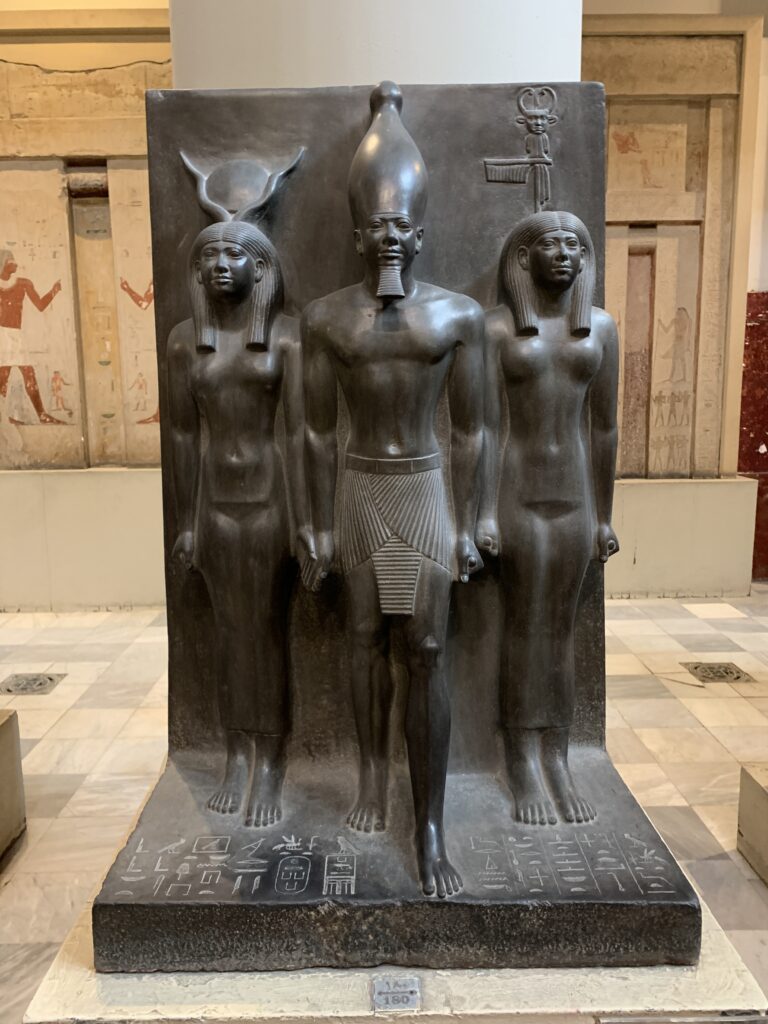
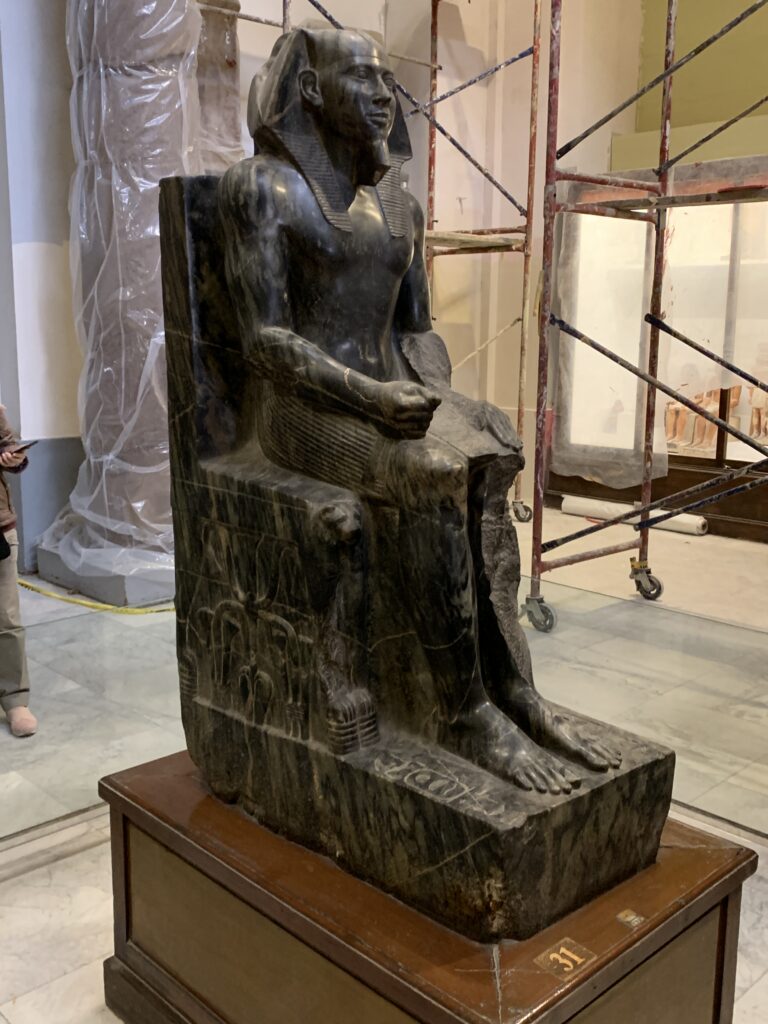
    On the left corridor you will encounter artifacts of the pharaohs who commissioned the pyramids from our Day 1 visit: Djozer (the most ancient statue of the museum dating 2700 BC, his right hand closed on the chest to symbolize power and the left resting on the leg in a sign of peace) and Mykerinos (depicted in 3 steles with the horned goddess Hakkur and a second female figure representing one of the 42 provinces of Egypt, which started the belief that there were a total of 42). In the cases take a look at the small heads that were buried in the sarcophagus in case the mummy was destroyed, to allow the soul to find the right body at the time of resurrection. On the walls dozens of false doors catch your attention, those were found in the tombs and only the soul was able to pass through them. 

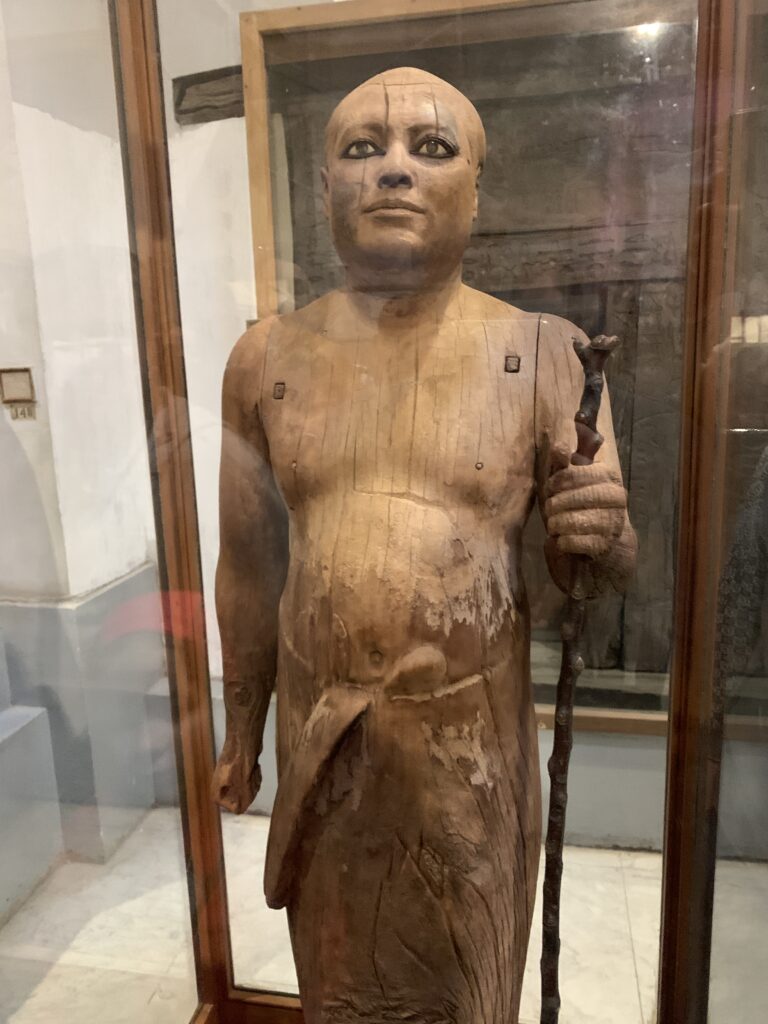
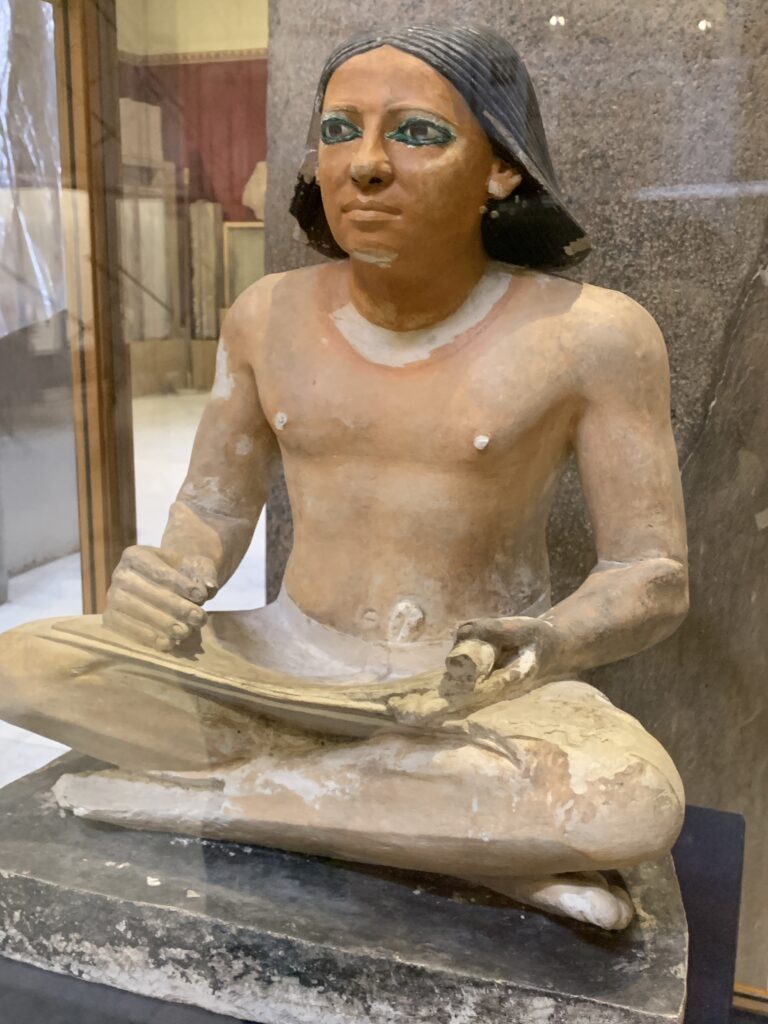
    At the end of the corridor turn right and then right again. This room hosts a few masterpieces. In the centre of the room, the durite bust of Chepren, with a falcon protecting his neck from behind. On the left one of the very few wooden statues (made of sycamore wood) representing a high priest. The eyes are the particularity: the white is made of quartz, and the eye is crystal with a nail in the centre to mimic the pupil. The same eyes are found in the limestone statue of a scribe in an adjacent case. Here the eyes outline is made of copper, that due to oxidation has acquired a green hue, making  it look like make up.

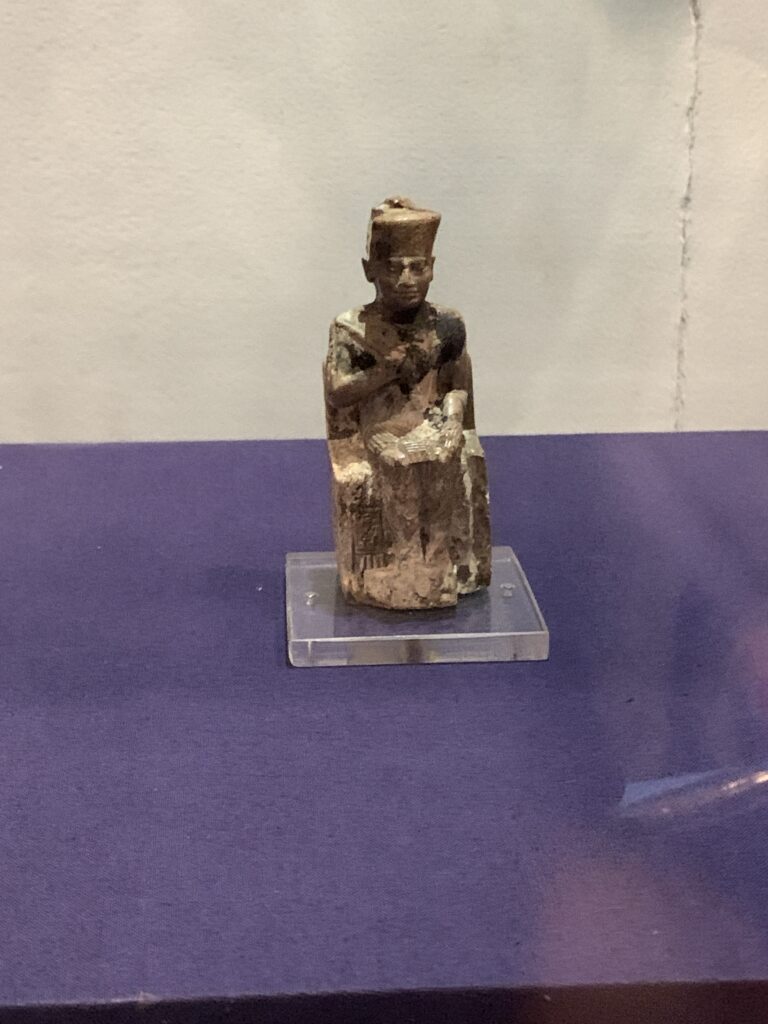
    Remember the smaller pyramid in Giza, behind Cheope’s, belonging to his mother? The alabaster sarcophagus, the canopis, the furnitures (bed, chairs, walking throne) that were found in the shaft next to her pyramid are all displayed in the next room. Here a case displays a tiny ivory statue, the only remaining image of Cheope. Cheope’s brother and his wife are depicted in two statues with amazing colors: note how the skin coloration of the men is always darker compared to the females’ (who were rarely under the sun). Cheope’s brother was the general of the army, so both his fists are clenched. 

    Large seated statue wrapped for transport in the Egyptian Museum, Cairo
    Wooden statue of a standing figure holding a staff, Egyptian Museum, Cairo
    Detail of a painted wooden statue in the Egyptian Museum, Cairo
    Small dark stone statue displayed at the Egyptian Museum, Cairo

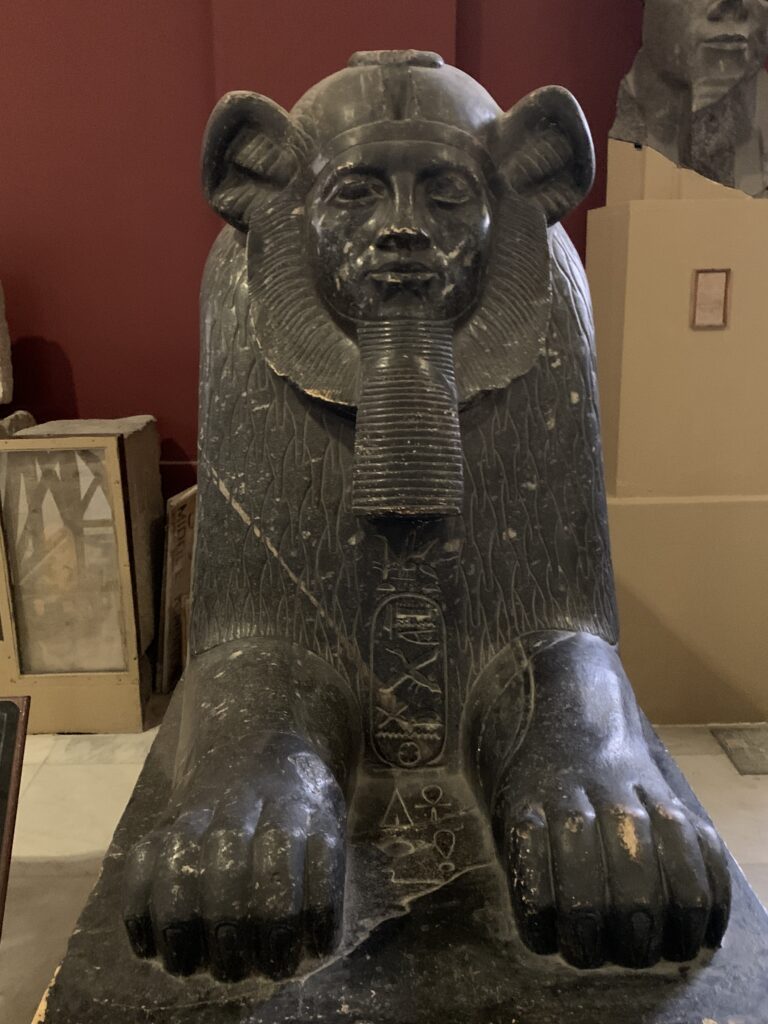
    Out of this room begins the Middle Kingdom. Here the sarcophaguses are inlaid with sacred hieroglyphics inside since pyramids were no longer being built. The Middle Kingdom only lasted 2 Dynasties before the Hittites occupied the country for 200 years. This long period of occupation is reflected in the sphynx that you see along the corridor with the face of a lion, far from the Egyptian style. But look closer and you will see between her paws a cartouche: once the Egyptians took their reign back, they carved all the Hittites statues.

    Seated statue wearing the royal headdress, Egyptian Museum, Cairo
    Close-up of a colossal carved stone face in the Egyptian Museum, Cairo

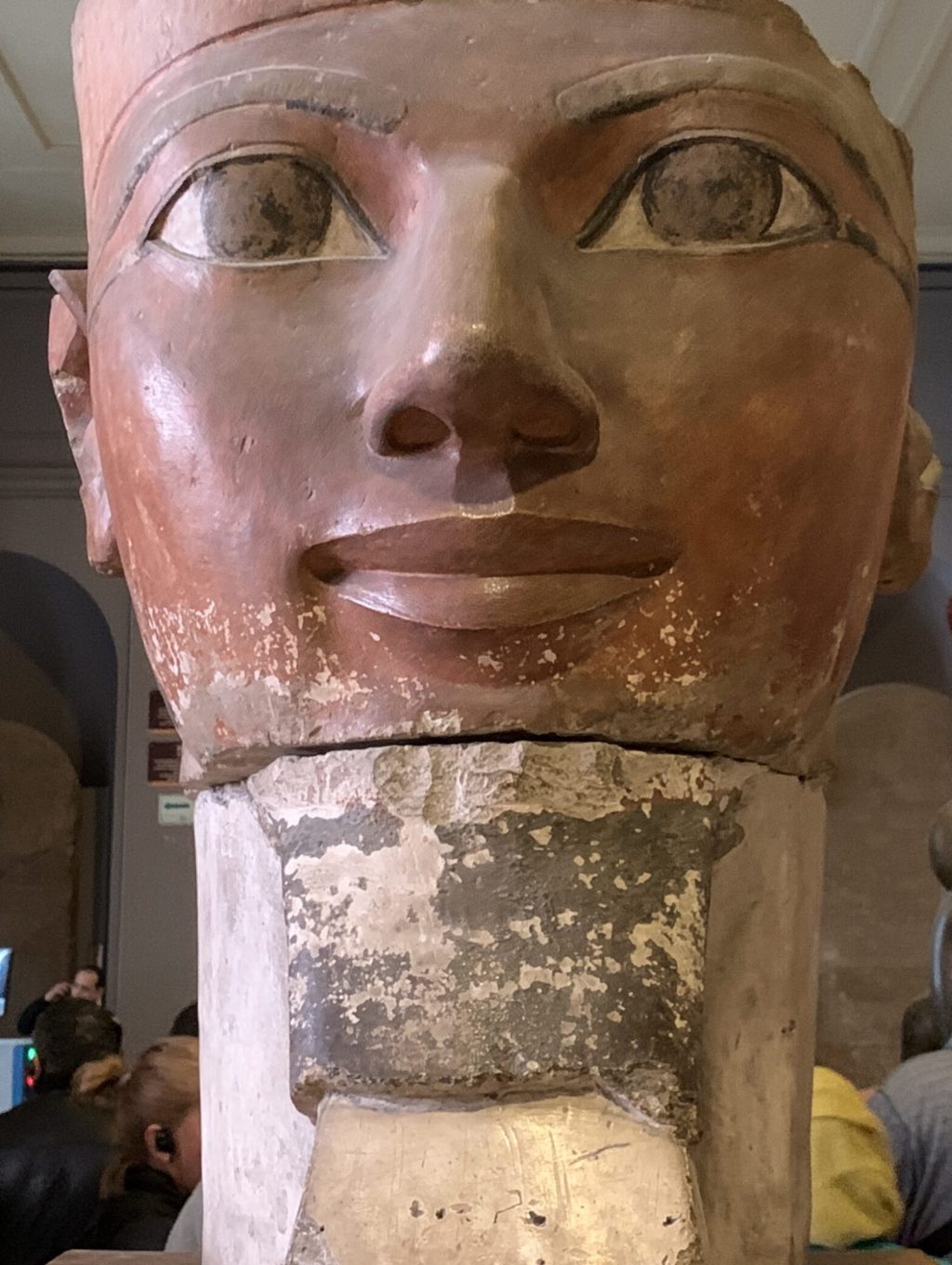
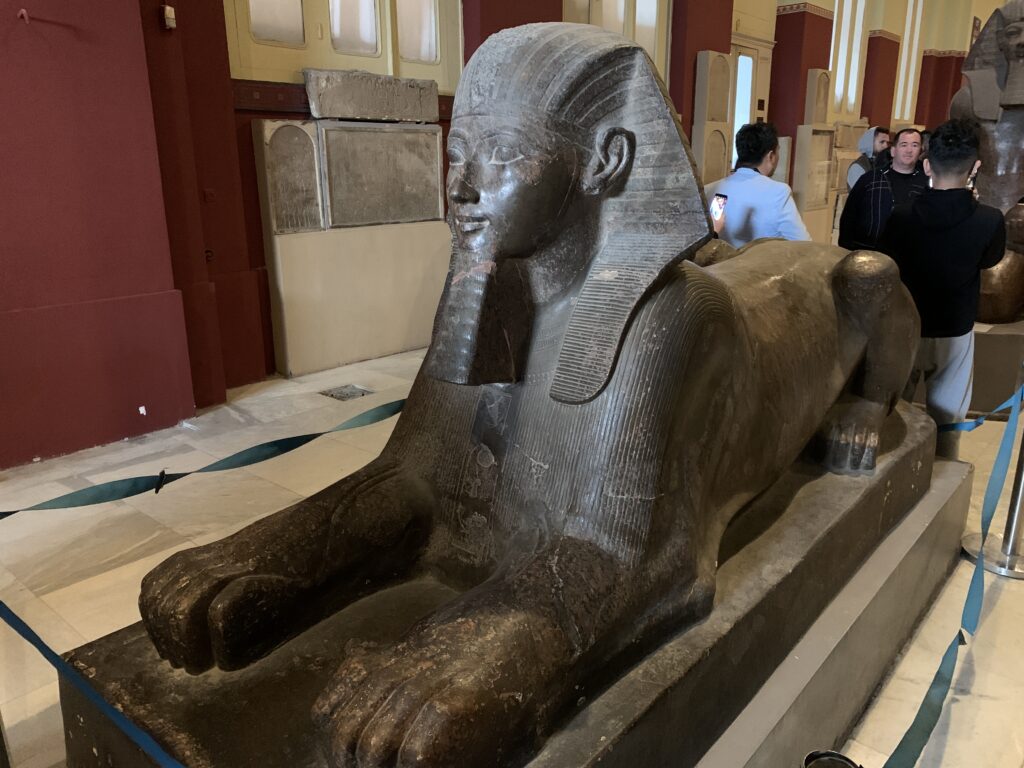
    Once the Hittites were chased, the New Kingdom started, the pharaohs were now identified as gods. Art changed, with carved faces on sarcophaguses, statues with longer and curved false beards, as you can see in Hatshepsut’s bust. But, wait! Hatshepsut is a woman, how can a woman be pharaoh? Hatshepsut was the royal daughter of King Tuthmosis I. She married her half brother and together they had Tuthmosis III, future heir of the throne. After her husband died, since her son was too young to rule, she proclaimed herself pharaoh and kept the power even when Tuthmosis III reached the adult age. According to testimonies she had a strong personality and was a great ruler, exploring Africa and being depicted with the darker skin of a man. Around the bust you will see some statues of her and a sphynx with her appearance, none of those carry her cartouche since her son after her death removed all of them as a sign of contempt for the mother who stole his throne.

    Large stone sphinx displayed in a hall of the Egyptian Museum, Cairo
    Colossal statue of Akhenaten in the Egyptian Museum, Cairo

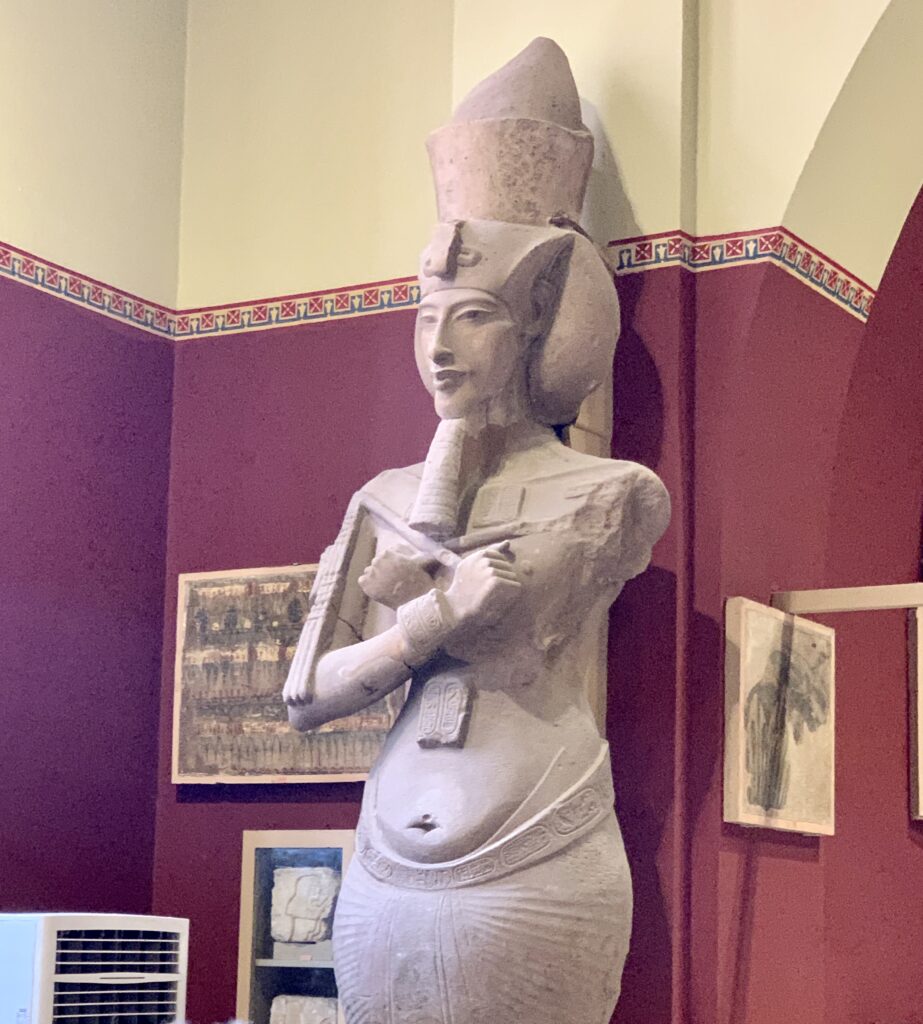
    Continue along the corridor and on your left a room is dedicated to Amenophis. With the New Kingdom, Luxor became the capital and its protecting local god, Amon, started being identified with the sun thus becoming Amon Ra. During the Eighteen Dynasty, King Amenophis III started professing the existence of a single god, Atten god of the solar disc. He forbade the worshipping of any other god, closed all temples and made himself intermediary between the people and the god, taking the name of Akhenaten. This was the first ever attempt to a monotheistic religion. Two important facts can shed more light to this religious change. The arrival of Joseph into Egypt according to the Bible dates around this period. Secondly, the parents-in-law of Amenophis III (whose wife was Nefertiti) carried very non-Egyptian names, Yuya and Tuyah, with a strong jew influence. In any case who was very unhappy with this monotheistic religion were the priest who fomented the crowds and overthrew the pharaoh, making his young son Tutankhamun king. In the room dedicated to Amenophis III the cartouche is missing from all the statues, removed by the priest to condemn him from eternity (the soul was not able to find its body without it). Amenophis III revolutionized art, his statues are androgynous since the pharaoh as an intermediary to the god was bot male and female. He was one of the few pharaohs that allowed representations of scenes of everyday royal life with his wife, Nefertiti (whose beautiful face you will see in a casa on the left), and his son Tutankhamun.

    Now climb the stairs to the upper floor, admiring the long papyri with the book of the dead that accompany your ascent.

    The upper exhibition starts with the story of how Tutankhamum tomb was found. Tutankhamum was 9 when his reign started and 19 when he died. Compared to other pharaohs he definitely played a minor role in the history of ancient Egypt, but he came to be very famous in the modern world since his tomb was the only found intact (up to now).

    Carter, an english archeologist had been digging in the area for years and never found anything. The tomb of Tutankhamun was just next to the one of the one of Ranses IX and no one thought there could be another one in the vicinity. For this reason the tents of the workers and the other archeologists were laid on top of the site where the tomb was buried by layers of sand. It was discovered on the 4th of November 1922 by chance, a local child was playing in the area and tripped on a hidden step. The step lead to a corridor at the end of which a door was hiding around 5000 antiquities in perfect state.

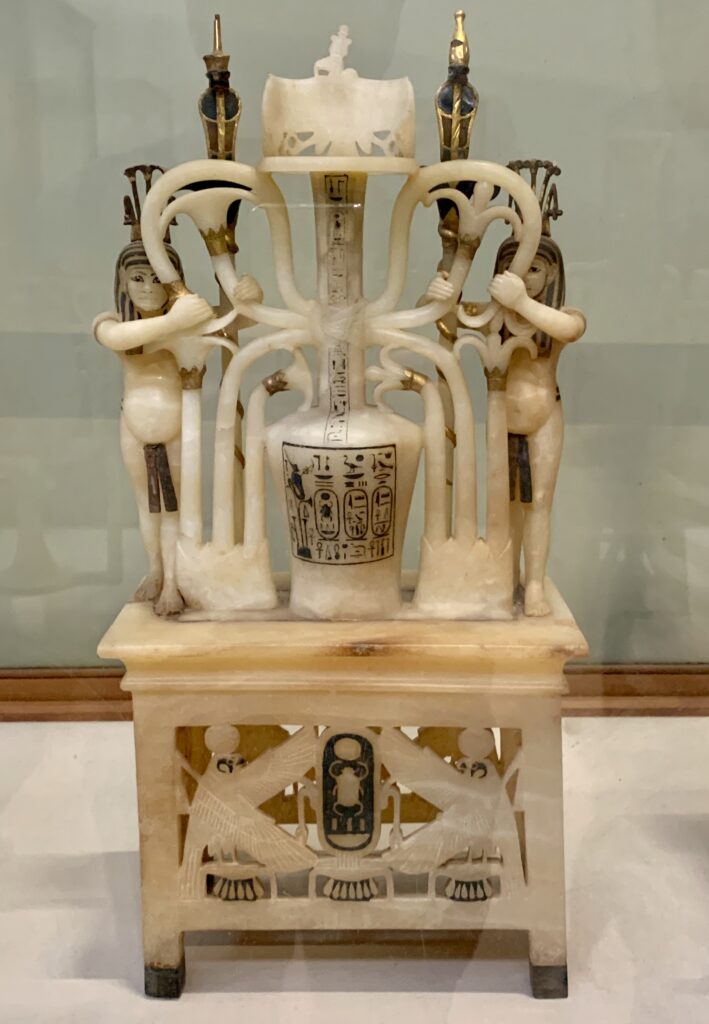
    Ornate carved alabaster vessel on display at the Egyptian Museum, Cairo
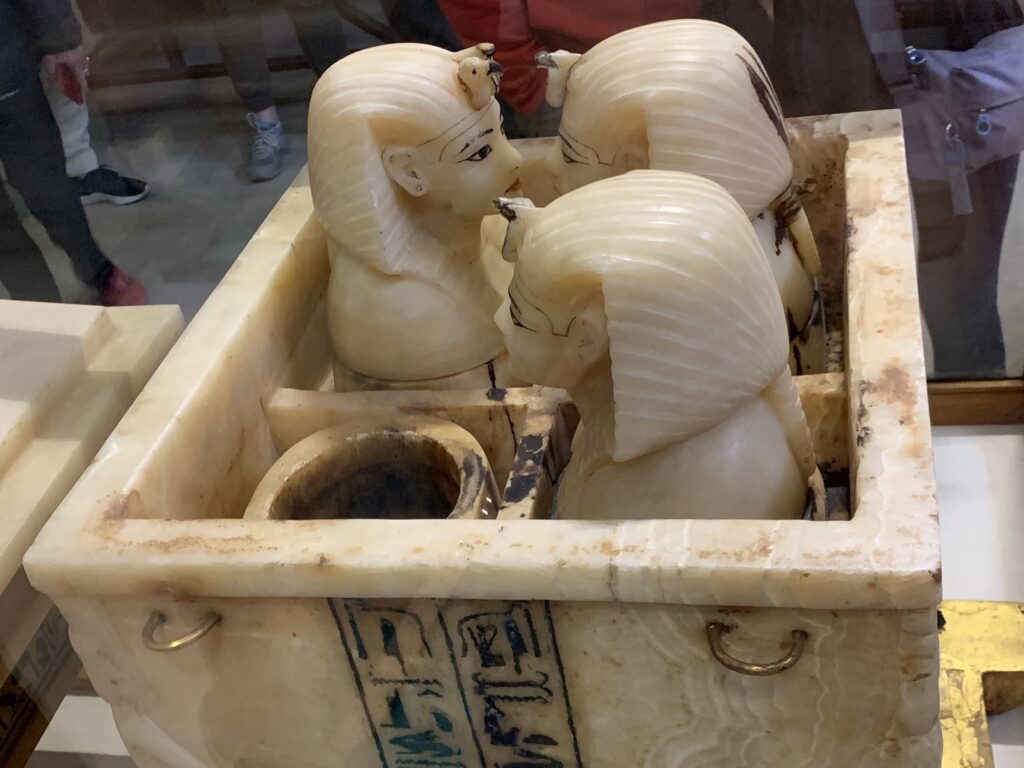
    Alabaster canopic chest with four carved stoppers, Egyptian Museum, Cairo

    Amongst the treasures there were thrones, canopis, jars with essential oils, foldable beds, festival chair and a lot more. Interesting is to notice that two different cartouches appear engraved on his throne, one that translates into Tutankatten, his birth name (given to him by his dad Amenophis III to honor the only god Atten) and one that translates to Tutankamon, the name he took to please the priests. This may be one of the reasons why the high priests honored his death with so many gifts and gold. According to Carter’s photos and testimonies, in the main chamber two statues guarded a wall behind which laid the actual shrine of the pharaoh. The four huge gold shrines exhibited in the corridor, one slightly bigger than the other, were arranged as a matryoshka and in the smaller one (guarded by statues of deities) the mummy was kept into three sarcophagus. 

    The external sarcophagus is in Luxor, the middle on in gilded wood is kept in a smaller room on the right side together with the innermost gold sarcophagus and the burial mask of Tutakhamun. The mummy is at the museum in Luxor. What the historians wonder is, if there was so much gold and treasures in the tomb of a pharaoh that barely ruled for 10 years without leading any war, conquering anything, what was there in the burial chambers of the more important pharaohs?

    One exhibition that we really enjoyed was the room dedicated to the animal mummies. Animals were mummified for three main reasons: to be buried with the pets you were attached to during your life; as food readily available inside the tomb at the moment of resurrection; and as votive animals inside temples. All sorts of animals can be found there, from crocodiles, to baboons, cats, dogs and a huge fish as well.

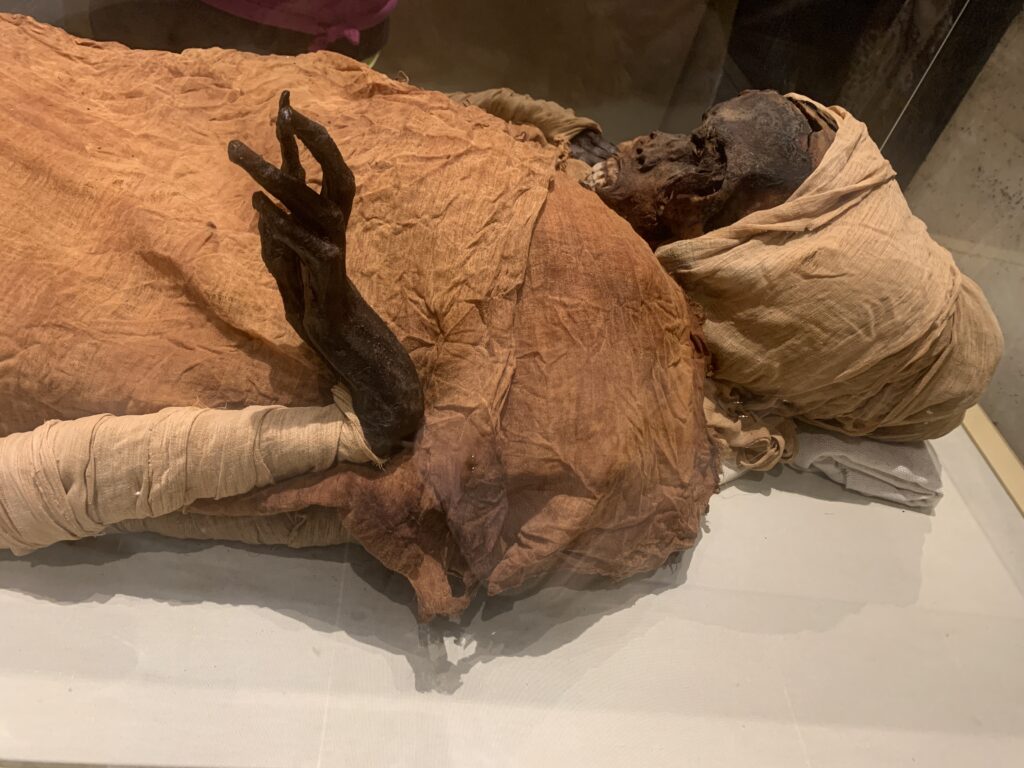
    In the two rooms at the two opposite ends of the first floor there is the royal mummies exhibit. A separate ticket has to be purchased to see them, but it’s definitely worth the price. Here you will find the mummy of Ramses II (look at his nails and hair perfectly preserved), of Hatshepsut, of Thutmosis, of pharaohs who died in the battle and got their skulls crashed. The skin is black due to the preserving fluid they employed. It’s nice, in a way, to finally be able to put a “face” to all these stories (pardon the black humor).

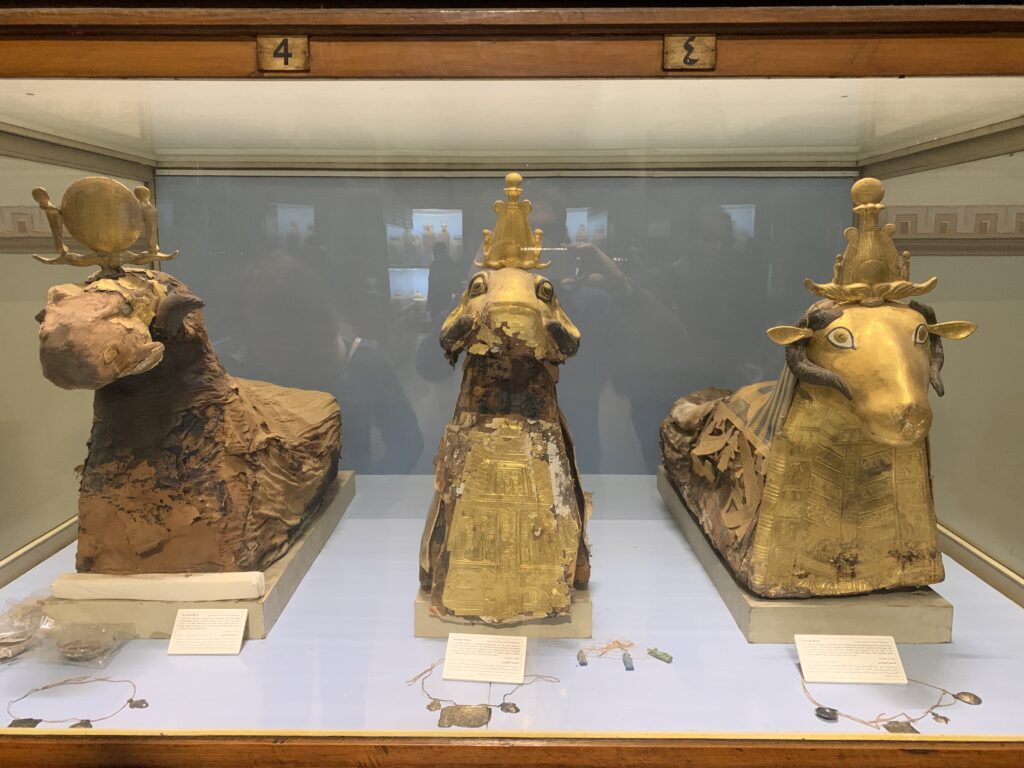
    Gilded funerary figures in a display case at the Egyptian Museum, Cairo
    Mummy displayed in a glass case at the Egyptian Museum, Cairo

    Always on the upper floor, a wing is dedicated to the treasures of the tombs of Yuya and Tuhya, the parents of Nefertiti. Their richness is manifested in the gilded artifacts and in the beauty of their sarcophaguses, with their mummies inside in pristine conditions. In the smaller, adjacent room an exhibition of utensils (from combs to spires, from tweezers to arc, from agricultural tools to mirrors, from dices to carving tools) will allow you to understand how the Egyptians were living their everyday life and conquered so much with so little

    Day 3 - Old Cairo and the Citadel

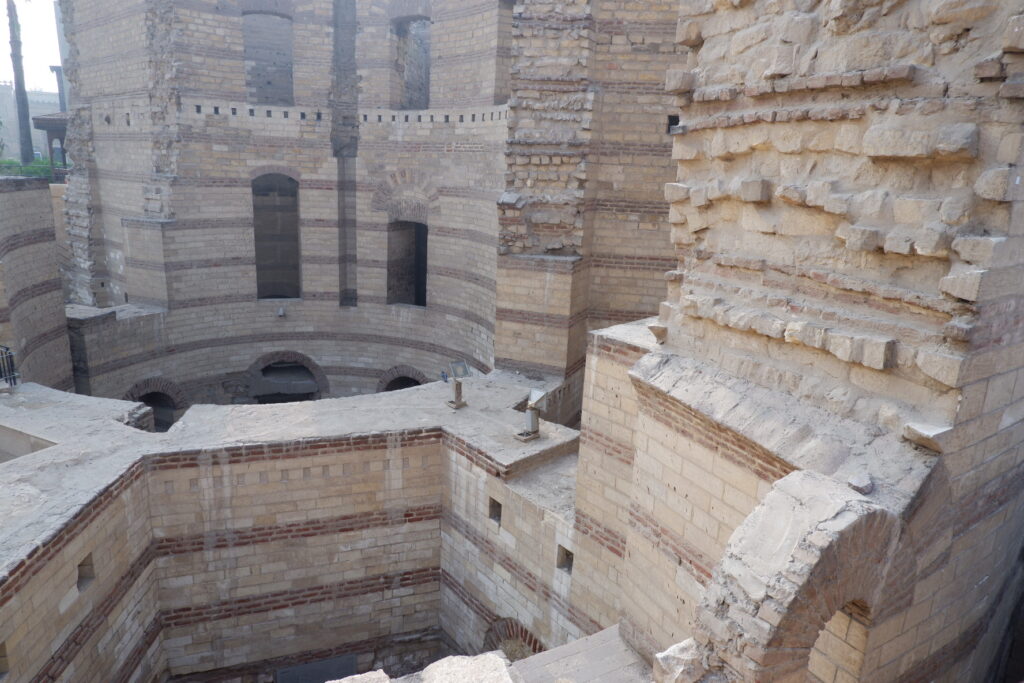
    Today we made a jump forward in history. The ancient Egyptian Dynasties ended when Alexander the great conquered Egypt and the greek culture pervaded the country. During the Ptolemaic Kingdom, the Roman Empire expansion to Egypt was made famous by Cleopatra, her liaison with Julius Caesar and later with Marc Anthony that she followed to was against Octavianus Augustus, a war that was lost thus delivering Egypt to the Romans. At the time, the capital of Egypt was still Alexandria, the city founded by Alexander the Great, and the Romans built the first nucleus of Cairo which was a fortress named Babylon (900 ac). 

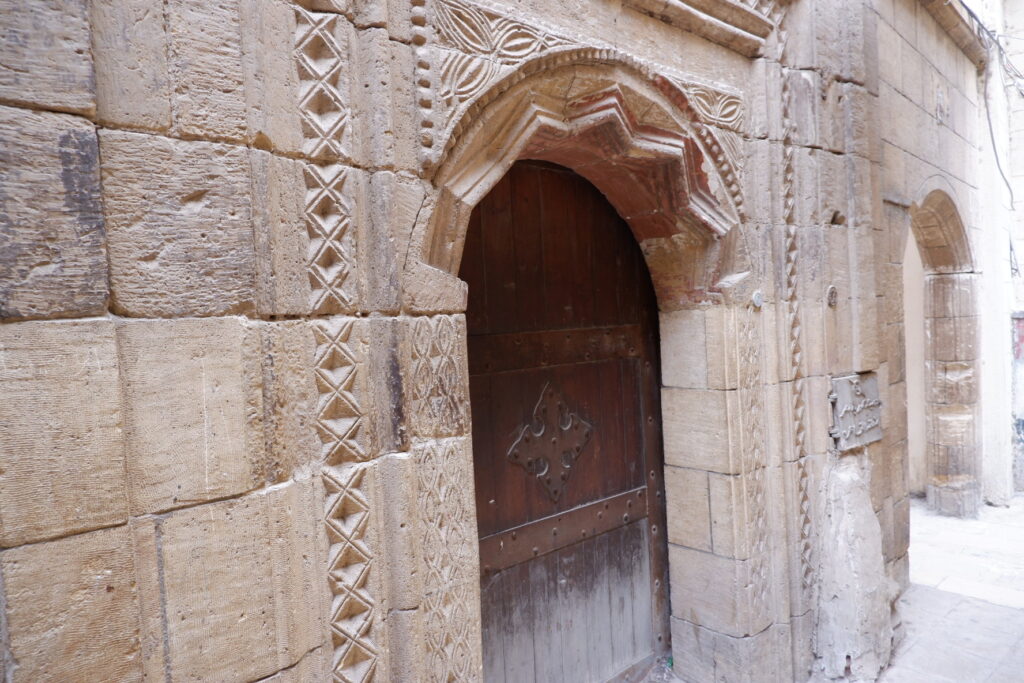
    Carved stone doorway of a historic building in Old Cairo

    While walking towards the stairs that will take you to the heart of Babylon, notice Cairo Metro line on your right. It was built where once a canal of the Nile river was running, a natural passage to the Red Sea (a sort of primitive Suez Canal) and made the commerce blooming in this area. This was the reason behind the Roman decision to build the fortress on this site as a protection for the traders.

    When, under Emperor Constantine, the Christian religion became the official religion of the Roman Empire and the persecution stopped, churches started to sprout in the fortress that today represents old Cairo. Helen, mother of Constantine, ordered the construction of numerous churches in this area. This site was considered particularly holy for the Christians because, according to the Bible, the Holy Family stalked by Herodes intent on killing the newborn king, seek shelter in a cave in this area for three months. On the site of the cave the Christian built the Cave Church, or Church of Saint Sergius. As the majority of the religious places that you will visit today, this church that dates III century has a basilica-style layout with three aisle separated by Corinthian columns. Differently from Catholic churches, coptic churches have icons all around their walls and an “iconostasis”, an ebony wooden wall that separates the transept from the main seating area and through which the worshipper takes the Eucharist. The “coptic” term through which Egyptian Christians are referred with, comes from the greek name Egyptos that the arabs that followed the Romans could not pronounce. Coptic Christians have their own cross with 4 arms, the trinity symbol at the end of each arm the cross of David in the center and symbol of Christian fishes between the arms. Coptic Christians also have their own language, derived from Greek with the addition of seven letters (this was an additional help to Champollion in deciphering hieroglyphics). 


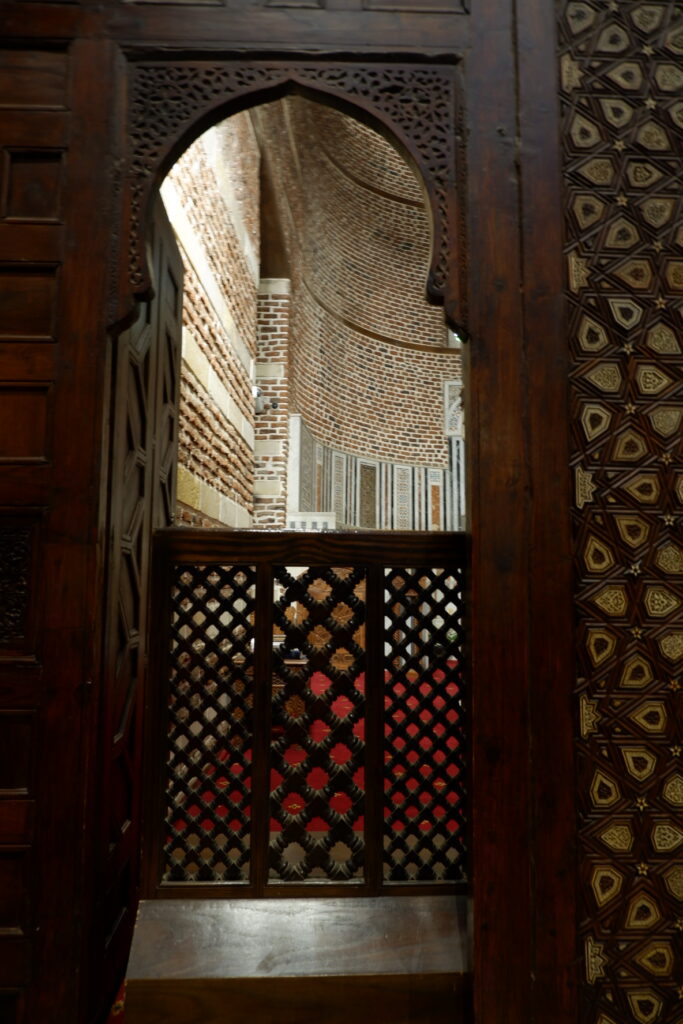
    Mashrabiya wooden lattice screens inside a house in Old Cairo

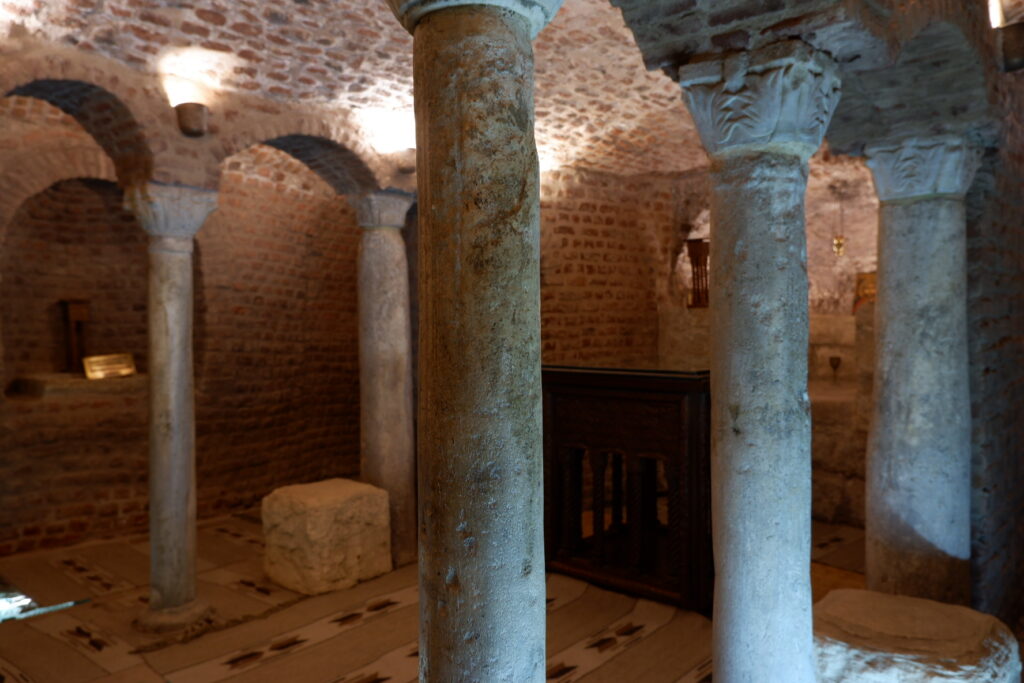
    A ramp of stairs will take you to the Church crypt where you can admire the cave where according to tradition the Holy Family hide for 3 months and the well from which they drank. Here the first church was built in the I Century.

    Stone columns in the underground crypt of a church in Coptic Cairo

    Follow the road outside of the Cave Church and you will reach the Ben Ezra Synagogue, an old church that in the X century was sold to the Jew Ben Ezra to cover some of the Christians debts. Once again, the location is not casual: according to the tradition, the daughter of the pharaoh found the basket with baby Joseph inside just in the nearby canal. Nowadays the Synagogue is not being used due to the paucity of Jews in Egypt: it takes at least 10 man to preach a liturgy and there are less than 200 Jews in all Egypt. that has not always be the case, the population was over 200.000 before Israel was created, but the majority of them moved to the new country and the relationship between Israel and Egypt has never been too good. Egypt never supported the creation of Israel; in 1967 president Nasser was so aggressive against Israel that the Israeli retaliated by invading Sinai and keeping it until 1973, when the Egyptian army declared war to get the region back. A cease-fire from the United Nations brought the two countries to a peace treaty with which Israel gave Sinai back to Egypt as long as the region was kept a demilitarizing zone.

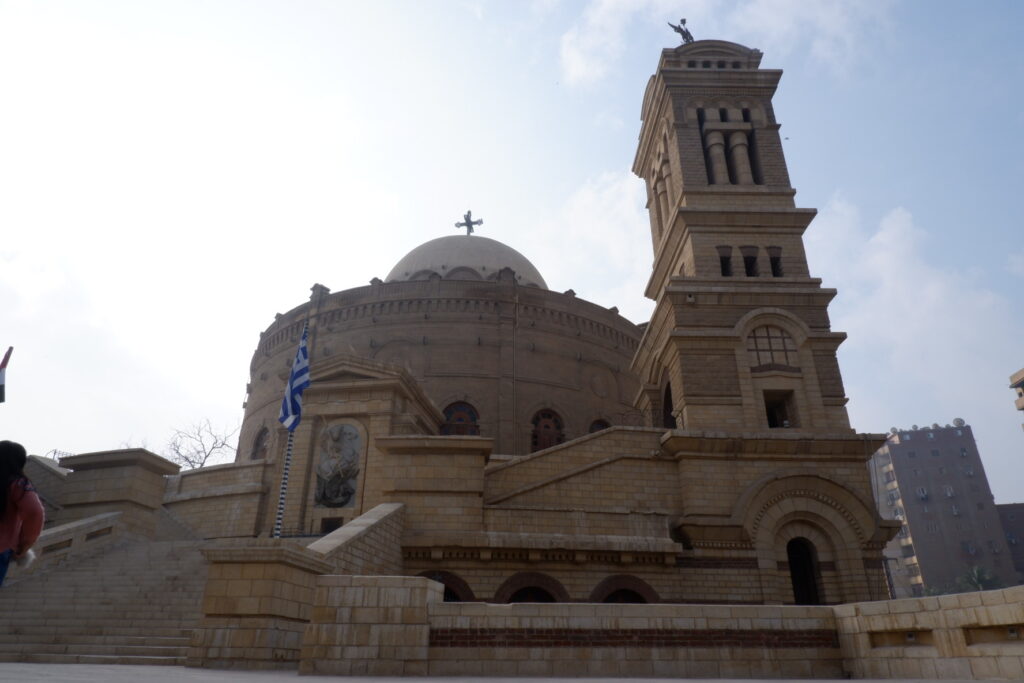
    Retrace your steps and walk the stairs up to the convent of Saint George, a greek orthodox church with 25 monks living inside. Next to the convent, the greek cemetery hosts the body of the previous orthodox pope who died in a plane crash. The convent is beautiful from the outside, but the inside was completely rebuilt inside after the fire of 1967; only the marble columns are original.

    Domed church and bell tower in Coptic Cairo
    Massive stone ramparts of the Citadel of Cairo

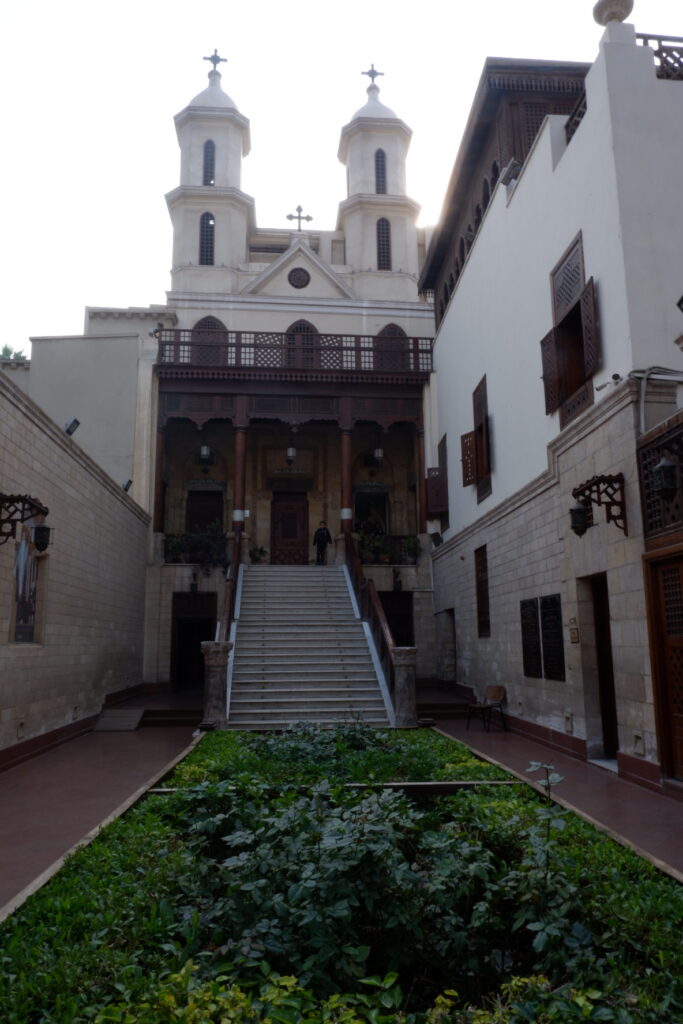
    Right after the convent, just by the side of the road on your left, stop to have a look at the remains of one of the turrets of the fortress. This will help you understand how the next church on the itinerary is a true rarity, the Hanging Church. You will immediately notice that the church is located on top of a ramp of stairs, elevated from the level of the street: this is because it has no fundaments, it was built using 2 adjacent turrets as support and bridging them with palm trunks. Once you reach the top of the stairs, the corridor to access the church displays on the right the photos of some of the 118 coptic popes and on the left of the King Farouk (last King of Egypt before the presidential republic in 1952), and the following presidents (Nasser and Mubarak among the most famous).

    The church is dedicated to Saint Mark; originally from Tunisia, Saint MarK started following Jesus as an apostle (this is why the Coptic religion is “apostolic” and has its own pope). According to tradition, the Last Supper was held in his house. After the Resurrection, Saint MarK went to Europe and only years later started preaching the Bible in Alexandria and the whole Egypt. Persecuted by the Romans, he was finally beheaded and his head was sent to Rome: only in 1967 it was brought back to Cairo where it is still kept inside the cathedral. Inside the church, some of the numerous icons represent Saint Mark; notice how is skin is dark, despite him coming from a land of fair-skinned people he was often depicted with a darker tan since his worshipper wished he was Egyptian. Next to his icon, in the right corner, you can find a Madonna of the XVIII century referred to as the “Egyptian Monna Lisa” due to her eyes following you. 


    Courtyard and staircase of a historic house in Old Cairo

    Now raise your heads to the ceiling, it’s entirely made of wood and in the shape of a boat, symbol of salvation. The pulpit is made of 15 columns, one in front symbolizing Jesus, 12 for the apostles and 2 for Saint Mark and Saint Luc (evangelists). If you wish to better understand what lies beneath your feet, go to the room on your right hand side. Here you can appreciate looking through a glass floor the round shape of one of the two towers, the palm trunks and the lack of foundations. 


    The church is dedicated to Saint MarK; originally from Tunisia, Saint MarK started following Jesus as an apostle (this is why the Coptic religion is “apostolic” and has its own pope). According to tradition, the Last Supper was held in his house. After the Resurrection, Saint MarK went to Europe and only years later started preaching the Bible in Alexandria and the whole Egypt. Persecuted by the Romans, he was finally beheaded and his head was sent to Rome: only in 1967 it was brought back to Cairo where it is still kept inside the cathedral. Inside the church, some of the numerous icons represent Saint Mark; notice how is skin is dark, despite him coming from a land of fair-skinned people he was often depicted with a darker tan since his worshipper wished he was Egyptian. Next to his icon, in the right corner, you can find a Madonna of the XVIII century referred to as the “Egyptian Monna Lisa” due to her eyes following you. Now raise your heads to the ceiling, it’s entirely made of wood and in the shape of a boat, symbol of salvation. The pulpit is made of 15 columns, one in front symbolizing Jesus, 12 for the apostles and 2 for Saint Mark and Saint Luc (evangelists). If you wish to better understand what lies beneath your feet, go to the room on your right hand side. Here you can appreciate looking through a glass floor the round shape of one of the two towers, the palm trunks and the lack of foundations. 

    The Arabs conquered Egypt in 641 ac, defeating the Romans. They were not used to living by the sea, so they changed the capital from Alexandria to Cairo, and built the first mosque right outside the Roman fortress that forms Old Cairo. Only the posterior section is original, the rest of the mosque has now been reconstructed since it was originally built in mud bricks that did not survive through the centuries. The following Arab dynasties started employing Christian architects that introduced them to the use of bricks.

    After getting Jerusalem back from the crusaders, Salah ad-Din conquered Egypt in the XII century and built at the edge of Cairo the Citadel to host his court. A little car ride will take you to this vast fortress on a plateau at the borders of Cairo. From the Citadel the Sultan’s slaves, the Memluk, rebelled in the XIII century and took control of the country keeping the power until the Ottomans defeated them in 1517. We did not visit the Citadel inside, but from the outside you can admire the Alabaster Mosque of Mohamed Ali. Built in the style of the Blue Mosque in Istambul, it was commissioned by Mehmet Ali, an Albanian serving in the Turkish army that in 1805 took the power and founded a royal dynasty that continued up to King Faruk in 1952. Inside the Citadel, Mehmet built a royal palace that was used by his successors up to his nephew that took the court to the royal palace in downtown Cairo.

  • Africa,  Kigali,  Places

    Kigali

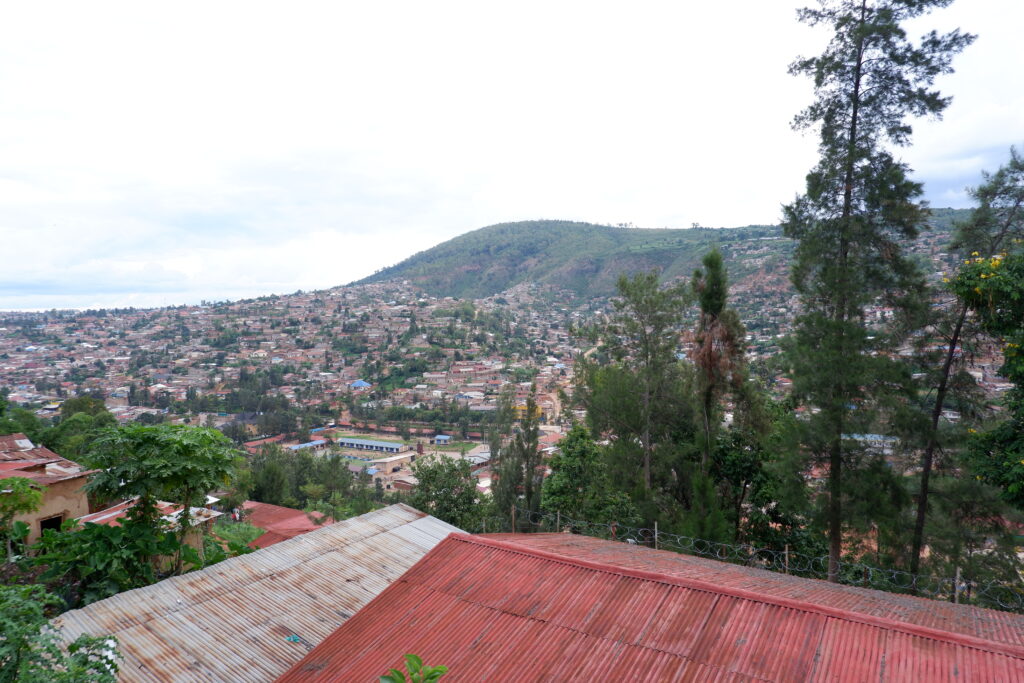
    View over the hills and red rooftops of Kigali, Rwanda

    Established as the capital after Rwanda gained independence from Belgium in 1962, Kigali is located roughly at the country’s geographical center. It’s a natural gateway for visitors and an excellent base for exploring Rwanda’s best attractions.

    Kigali is a very different city to some other urban center of the rest of East Africa. If you have time, plan to spend at least a few days in the city itself rather than simply passing through. In the quarter-century since Kigali was devastated by the Rwandan Genocide, it has been reborn as one of the cleanest and safest capitals in Africa. It is very clean, in part as a result of a complete ban on plastic, it is hilly, very well organized, with perfectly maintained infrastructure and streets lined with gorgeous trees. It is also a very safe city. Unlike other African cities, there is also a fair amount of things to do in Kigali so you should not skip it on your way to Akagera National Park.


    Skyscrapers and start-up companies provide a surprising contrast to the lush scenery of the surrounding hills while contemporary art galleries, coffeehouses, and restaurants add to Kigali’s cosmopolitan atmosphere.

    Kigali Genocide Memorial

    No trip to Kigali or Rwanda is complete without spending some quality time at the Kigali Genocide Memorial. This is the best place to learn about the worst human tragedy to affect the country and one of the most awful historical times for Africa. If you only have a few hours, the best thing to do in Kigali is visiting the Genocide Memorial.

    The Genocide Memorial is the right place to start your Rwanda travel because it will also set straight a lot of the traditions, customs and way of life in modern day Rwanda. It also provides an explanation and foundation for everything that you will see and notice as you travel across the country. Talking about the Rwandan Genocide is really difficult. The history is tragic and the many ignored signs that warned the international community about it make one feel frustrated and helpless.


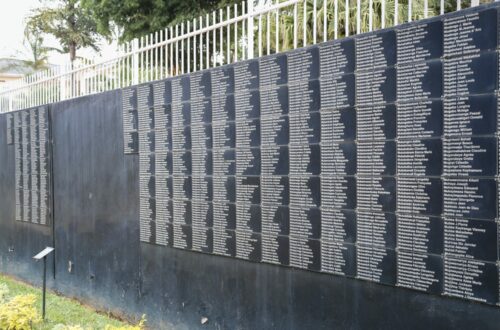
    In April 1994, members of the Hutu majority government of Rwanda initiated genocide against the Tutsi people after decades of conflict between the two ethnic groups. By mid-July of the same year, approximately one million people had been slaughtered, and 259,000 of them are buried in mass graves at the Kigali Genocide Memorial.

    You should spend at least 2h at the Kigali Genocide Memorial to make sure that you have enough time to listen to all the audio guide recordings, read the text at the exhibits and walk the outdoor areas.

    Entrance arch of the Kigali Genocide Memorial
    Wall of victims' names at the Kigali Genocide Memorial
    Mass grave terraces and gardens at the Kigali Genocide Memorial

    The Memorial also hosts three permanent exhibitions, the largest of which is dedicated to commemorating the events and victims of the Rwandan Genocide.

    The visit starts at the reception where there is an introductory video featuring a few Rwandans whose lives were forever changed by the Genocide. You then proceed to the main building where several exhibits and an audio guide will follow a chronology of events across the museum from the time of Belgian colonialism to today’s reconstruction efforts.

    Inside the museum there are also some halls devoted to the victims of the genocide where over 100 photos of people are displayed. There is also a section about other genocides around the world and a last hall devoted to the children.


    After gaining an emotional insight into the horrors that shaped Rwanda’s recent history, take a moment to reflect on what you have learned in the Memorial’s tranquil gardens. Outside the main museum there are gardens and the actual memorial where the remains of thousands of Rwandans are buried. This is a real cemetery and so it is visited by the family and friends of the many victims who come to pay their respects. If you are visiting on a weekend, you will notice the many Rwandans visiting.

    The outdoor areas also include a rose garden and a burning flame memorial that reminds the viewer of all those who died. There is also a library with research documents, a cafe and a small souvenir shop.


    Nyamirambo Women's Center

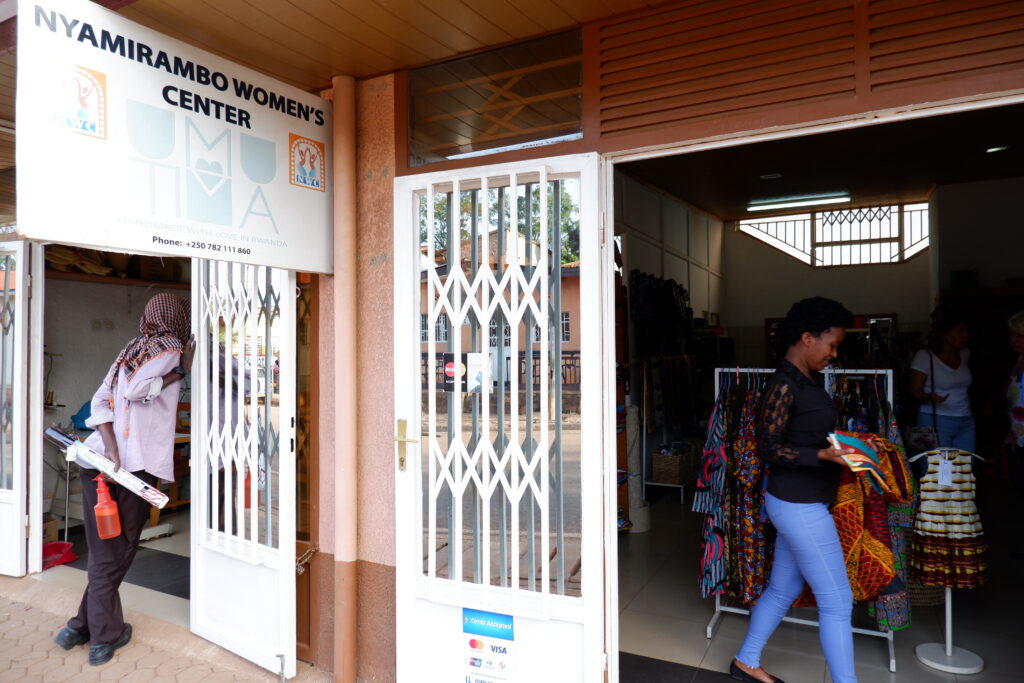
    Entrance to the Nyamirambo Women's Center in Kigali

    A great place to explore is the buzzing and vibrant neighborhood of Nyamirambo, a multicultural and extremely interesting part of the city. Nyamirambo is the heart of Kigali, with cool shops, markets, bars, and restaurants. It’s a primarily Muslim neighborhood, so don’t come here looking for akabenz, but you will find tasty brochettes and fish offered. There are a few tours through the area if you don’t fancy exploring by yourself.

    Located in Kigali’s multicultural Nyamirambo district, the Nyamirambo Women’s Center is a non-profit initiative intended to provide Rwandan women with the education and training needed to find employment.

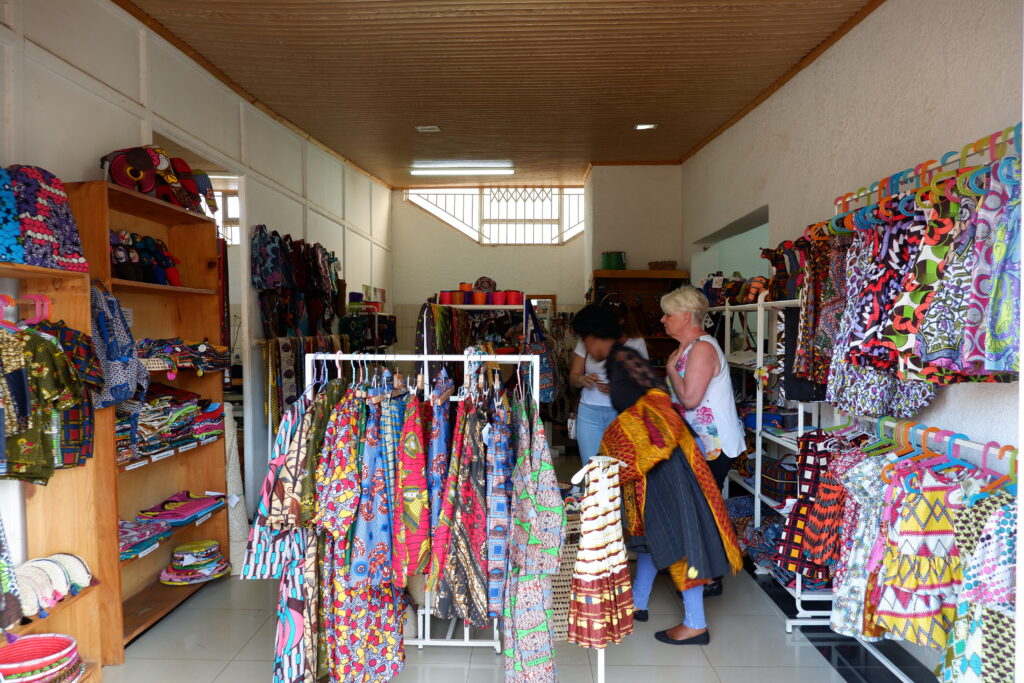
    Handmade fabrics and clothing in the Nyamirambo Women's Center shop
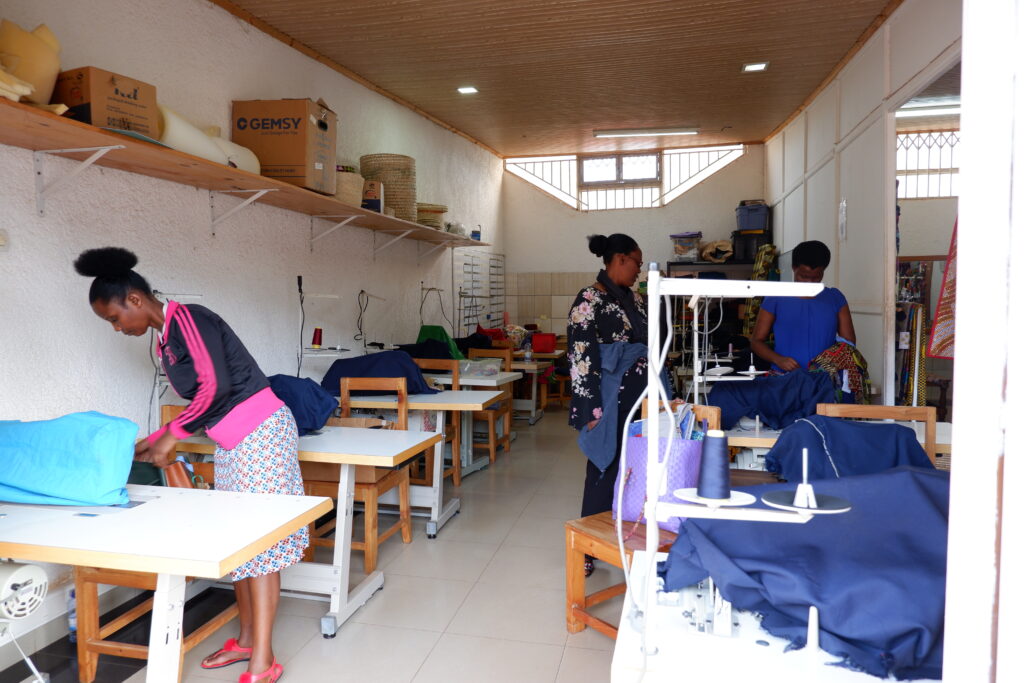
    Women sewing in the workshop of the Nyamirambo Women's Center

    The ladies that work here use their skills to create high-quality children’s clothing, accessories, and home decor products out of traditional kitenge fabrics—all of which make stunning souvenirs while funding the center’s community programs.

    Make sure to sign up for one of their popular walking tours, too. After a traditional snack and a lesson in Kinyarwanda, you’ll follow a local guide on a tour of Nyamirambo’s houses, independent businesses, and mosques. Afterward, enjoy a traditional lunch at one of the ladies’ homes.

    Inema Art Center

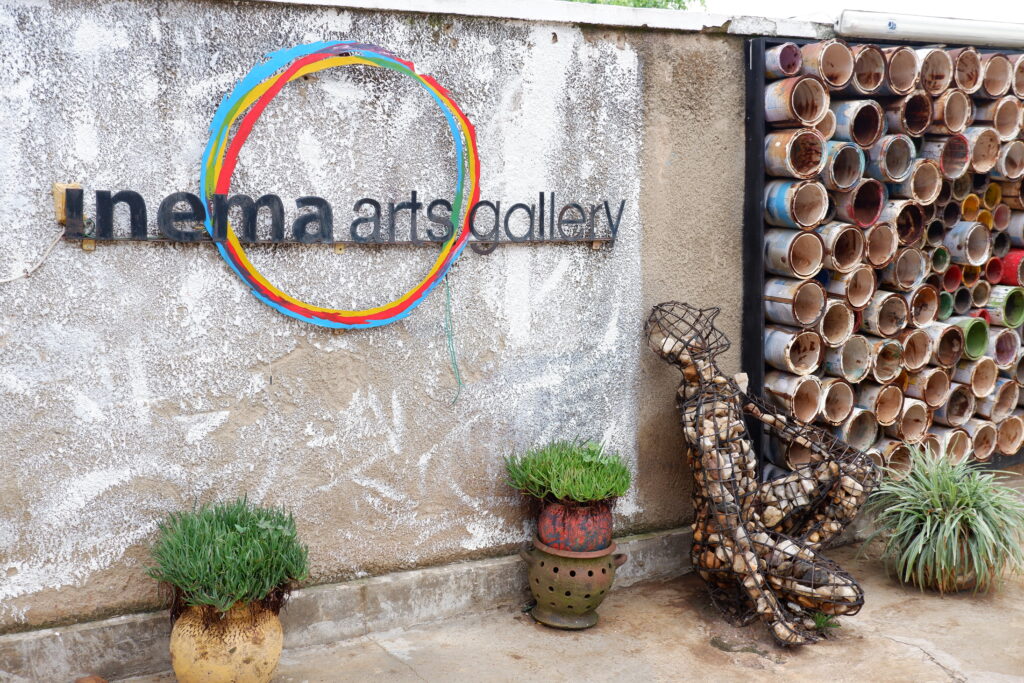
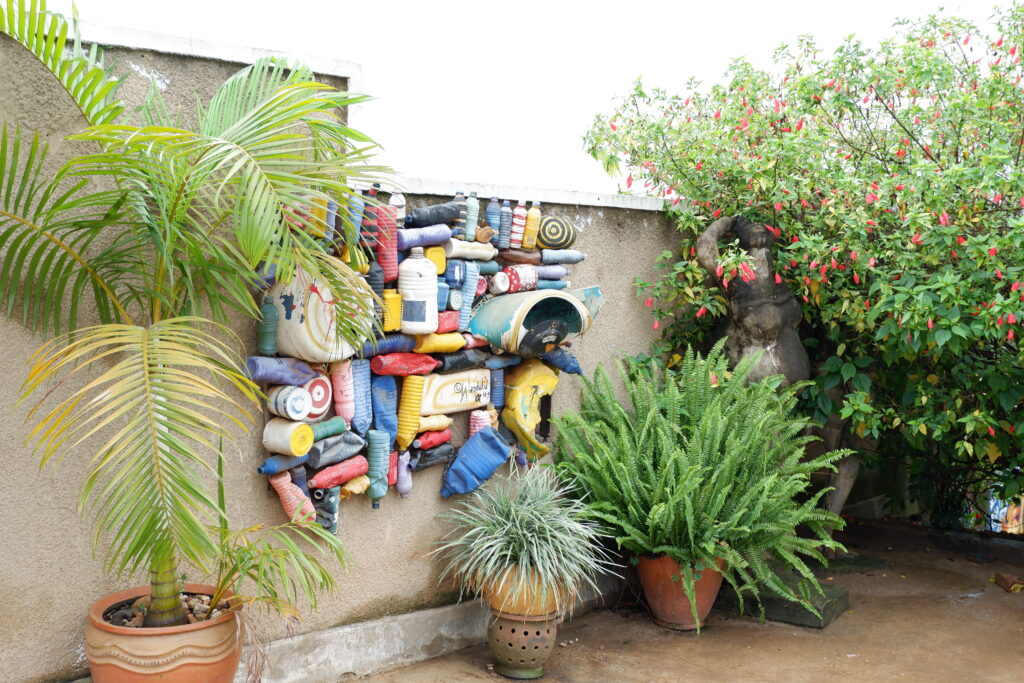
    Kigali today is an explosion of color, art and creativity. This can be seen in the many local designer shops, the art galleries popping up at every corner and the hip and chic restaurants and cafes. One of such places is the Inema Arts Center, a mixed purpose building where concerts, art exhibitions, workshops and performances are held.

    The center was founded in 2012 by brothers and self-taught painters Emmanuel Nkuranga and Innocent Nkurunziza to bring Rwandan art to light. Inema Art Center is now one of the best contemporary galleries in the city. It features the work of 13 resident artists working across a broad spectrum of different mediums. 


    Sign and sculpture wall at the Inema Arts Center in Kigali
    Garden courtyard with sculptures at the Inema Arts Center, Kigali

    In addition to beautiful pieces, happy hours (check them out on Thursday!), yoga classes, and other events can be found in their creative space.

    It also hosts workshops and training programs for the next generation of Rwandan creatives, including weekly workshops for orphans with artistic abilities, traditional dance programs for children and a crafts program for women.

    Visitors can peruse (and purchase) the artworks in the gallery, or shop for jewelry, linens, and leatherwork created by the center’s students at the gift shop. Keep an eye out for regular music and dance performances too.

    Hôtel des Mille Collines

    Once the grandest hotel in the capital, Hôtel des Mille Collines was immortalized by the 2004 movie Hotel Rwanda. The film followed the story of Hutu manager Paul Rusesabagina, who sheltered hundreds of Tutsi refugees here during the Rwandan Genocide. The hotel is quite an institution, not just because of the movie, and sits handsomely on one of the hills that make Kigali. 

    Although Rusesabagina’s role is the subject of controversy, the hotel itself is a fascinating piece of Rwandan history. Its pre-1994 glory has faded over time, but it remains a glamorous place to come for afternoon drinks at the poolside bar. While sipping your cocktail amidst the garden greenery, consider that the pool was once the only source of water for the refugees trapped inside the hotel.

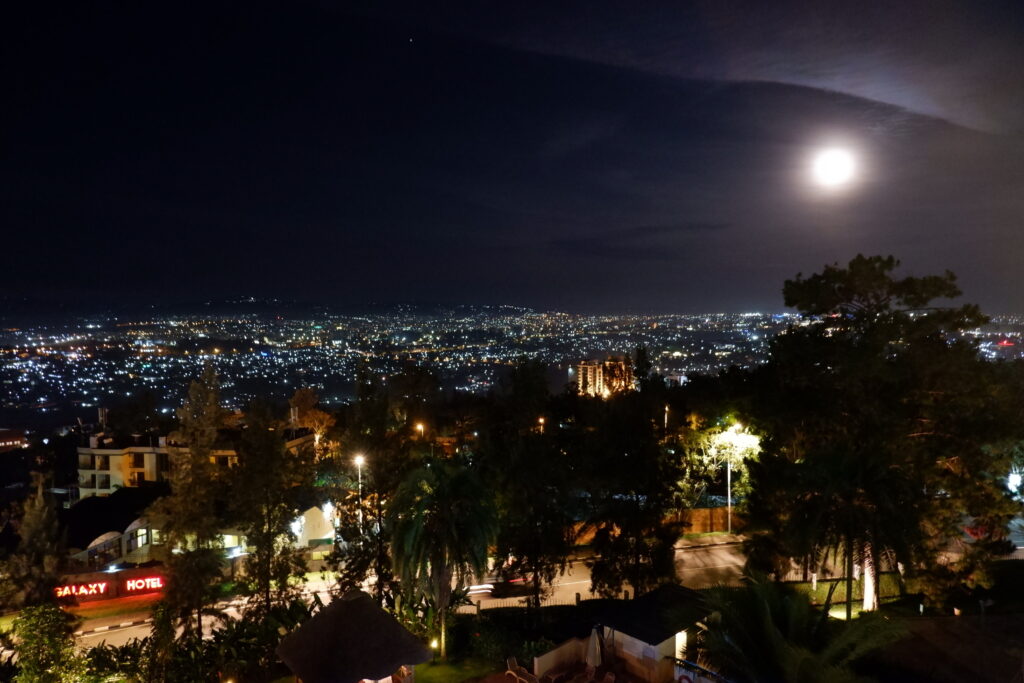
    Aside from being one of the interesting places to see in Kigali and the most famous and oldest luxury hotel to open in Rwanda, Hotel des Milles Collines is also one of the nicest places to eat in Kigali. At night when Le Panorama, the 4th-floor restaurant, opens, you can enjoy the city lights from a vantage point. Although Le Panorama serves refined fine dining with a strong French influence, some of the local produce, like tilapia, is incorporated in the menu.

    Kigali skyline at night, seen from the Hôtel des Mille Collines

    Kandt House Museum of Natural History

    Richard Kandt was the first German colonial Resident of Rwanda. He was appointed to the position in 1908 after leading the exploration northwest of German East Africa between 1897 and 1907.

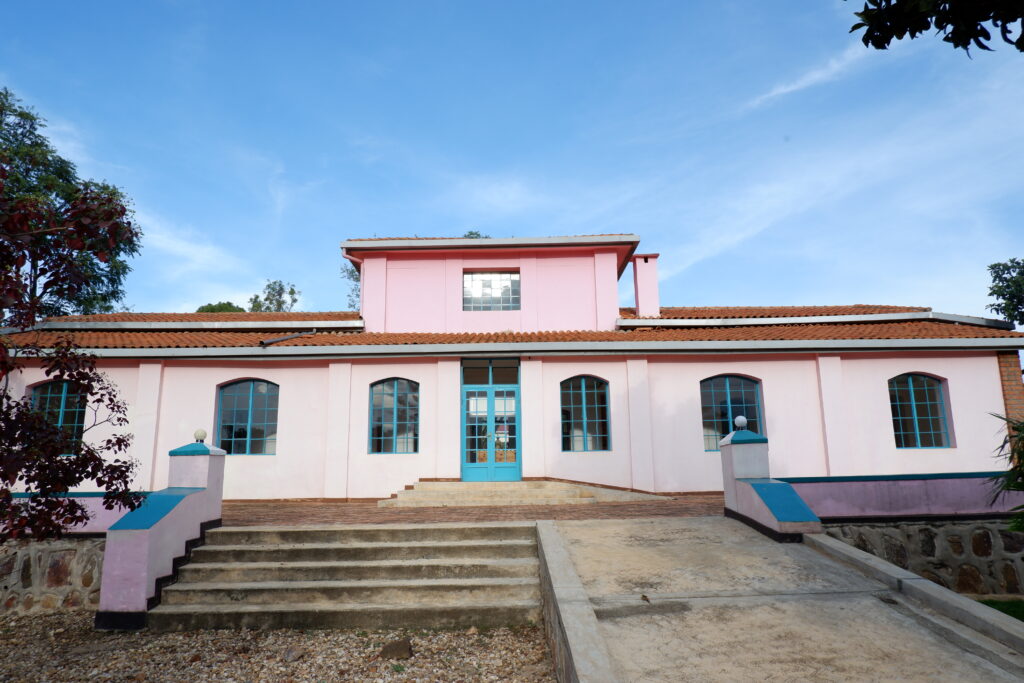
    About 500m from downtown Kigali is the Kandt House Museum. It is the former Natural History Museum, which was changed to Kandt House Museum in December 2017. One of the first things you see when you walk into the compound was the bronze life-size statue of Richard Kandt, clad in German military regalia with a walking stick in his left hand and a peaked military cap in his right.

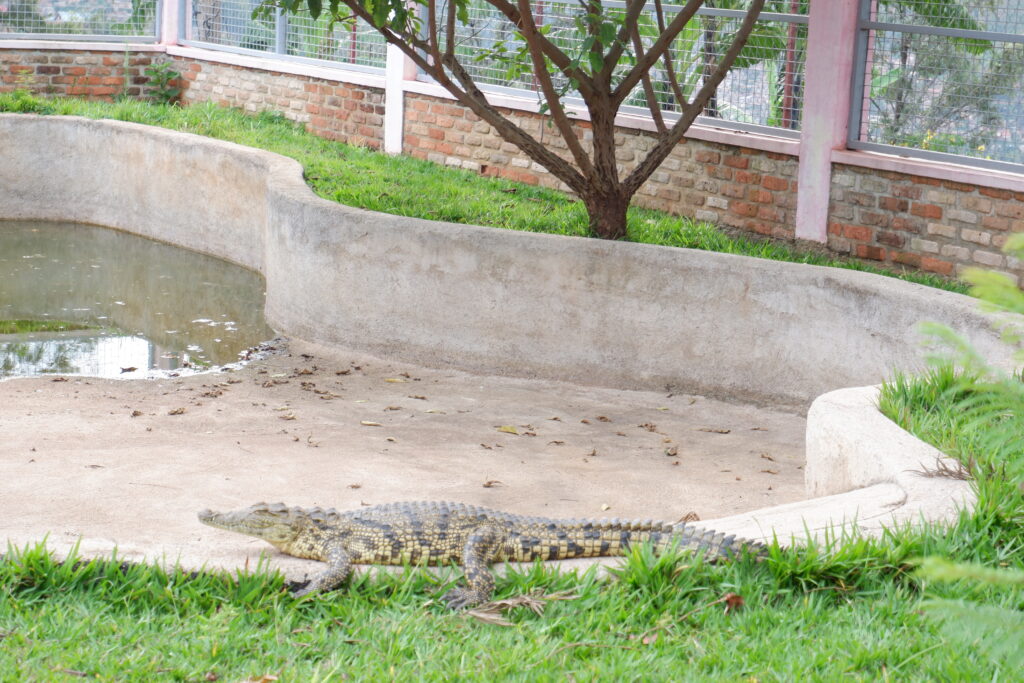
    There are two main places to see in the museum — the main house, which contains much of Rwanda’s history, and the reptile park, which has snakes and crocodiles.

    Pink colonial facade of the Kandt House Museum of Natural History, Kigali

    The house has three main exhibits.

    The first part presents Rwandan life in all its aspects – social, economic, and political – before the colonial period.

    The second part traces the experience of the Rwandan people during the colonial period. Following the Berlin Conference in 1884, the Germans ruled Rwanda until 1916, when the Belgians took over under the League of Nations Mandate after World War I. Richard Kandt’s life and deeds in Rwanda are covered here.

    The third part covers the history of Kigali, before, during and after the colonial era. Kigali was made the capital upon independence in 1962.

    Crocodiles in the enclosure at the Kandt House Museum, Kigali
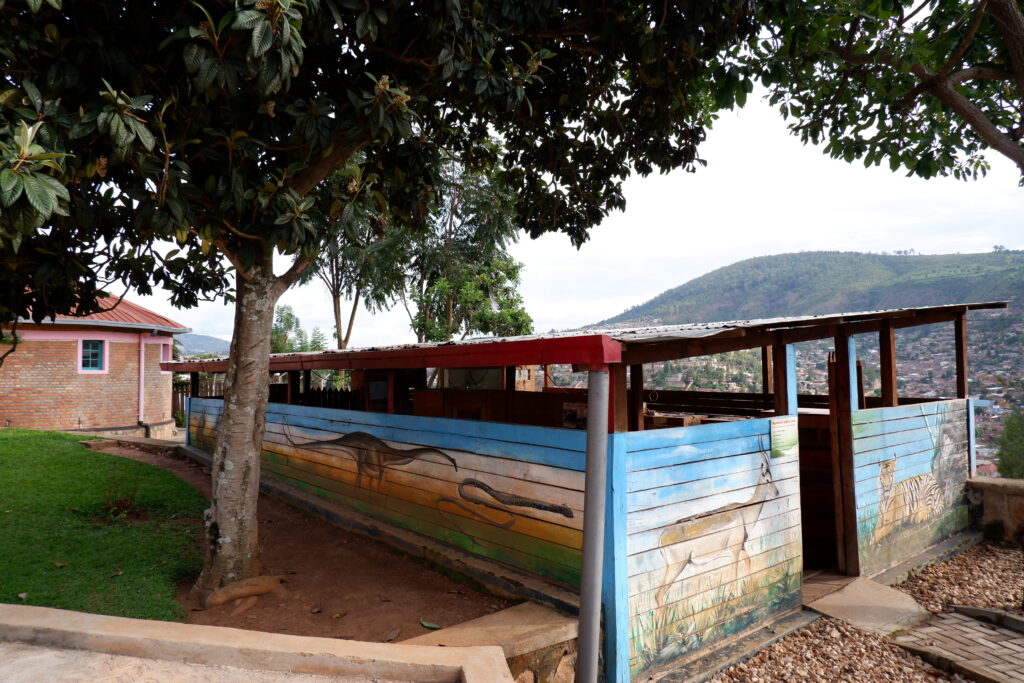
    Shaded outdoor exhibit area at the Kandt House Museum, Kigali

    The guide then takes you outdoors where there is a large statue of a gorilla and an enclosure with a baby Nile crocodile — about one and a half meters long — soaking up the sun. They then lead you to a small room of made of wood, which has snakes in glass enclosures. Inside lay some of the deadliest of African snakes. They seemed well fed and did not require a lot of space. We had never been so close to the Black Mamba, Gabon viper, python and the spitting cobra.

  • Adventures,  Africa,  Akagera National Park,  Places,  Safari

    Akagera National Park

    Rwanda can be a bit chaotic: traffic, tons of people on the streets, accidents. But there are certainly ways to escape all these for a few days. One, is to go to Akagera National Park, Rwanda’s largest, just two hours drive from Kigali.

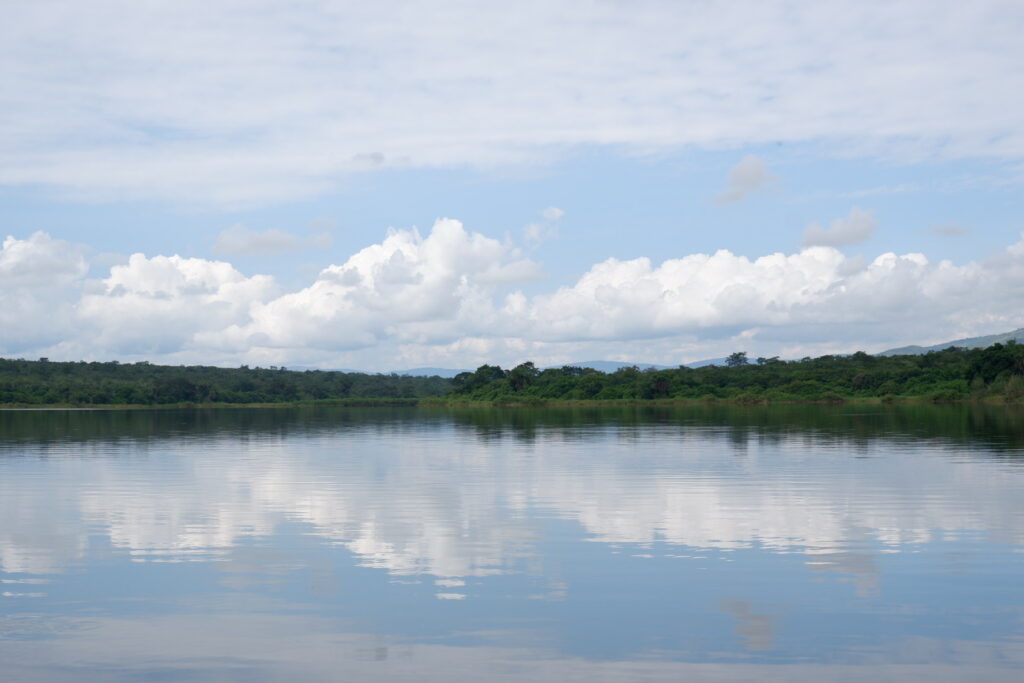
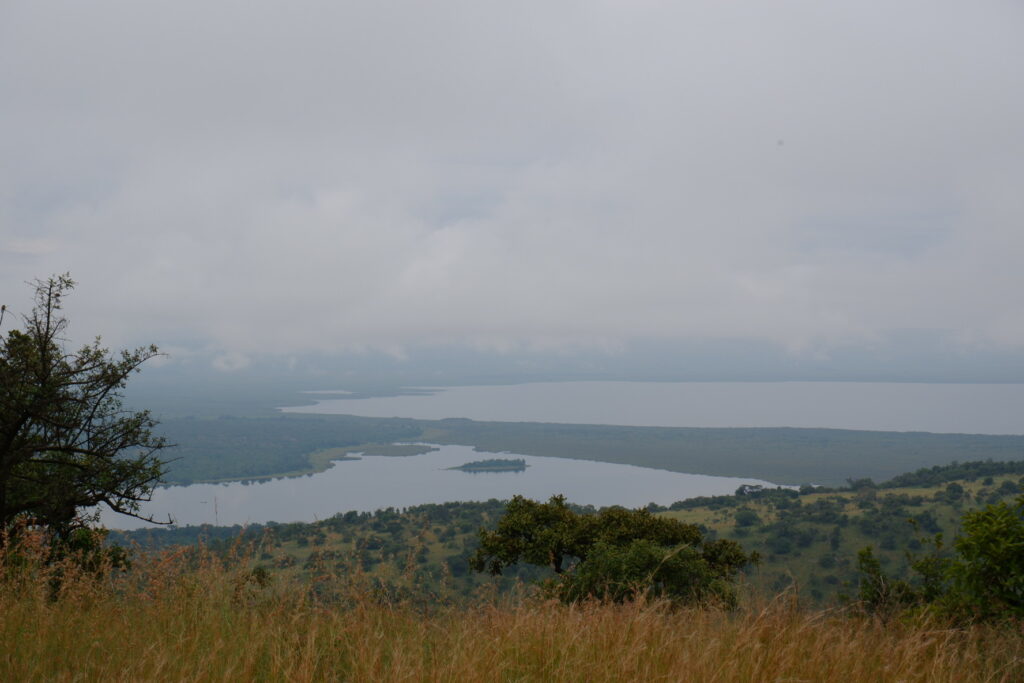
    Set at a relatively low altitude on the border with Tanzania, Akagera National Park could scarcely be more different in mood to the breezy cultivated hills that characterize much of Rwanda. Covering an area of 1,120 kms the park is named for the Akagera River that flows along its eastern boundary and feeds into a labyrinth of lakes.

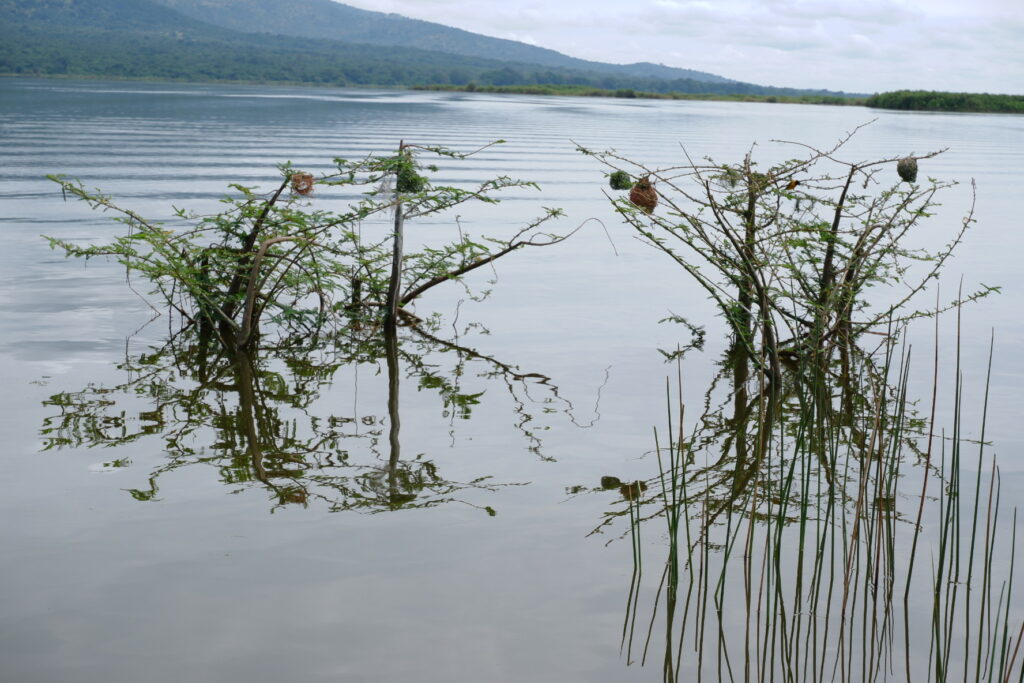
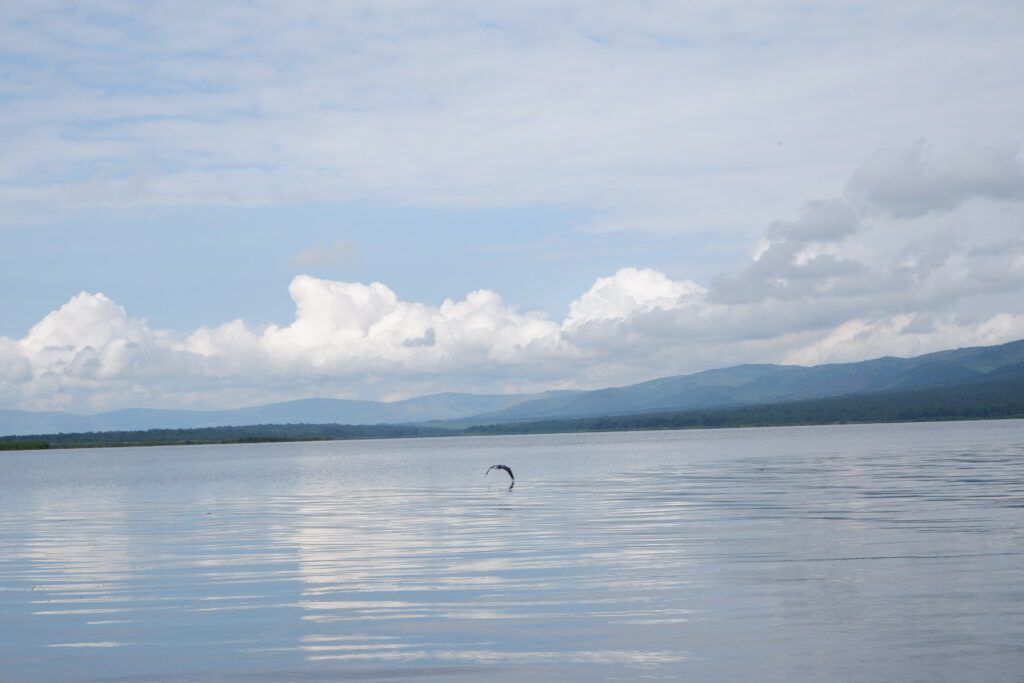
    Rolling hills of Acacia bush, panoramic views across scattered grasslands, patches of thick forest and a mosaic of swamp-fringed lakes along the meandering Akagera watercourse all contribute to this park unrivalled scenic beauty.

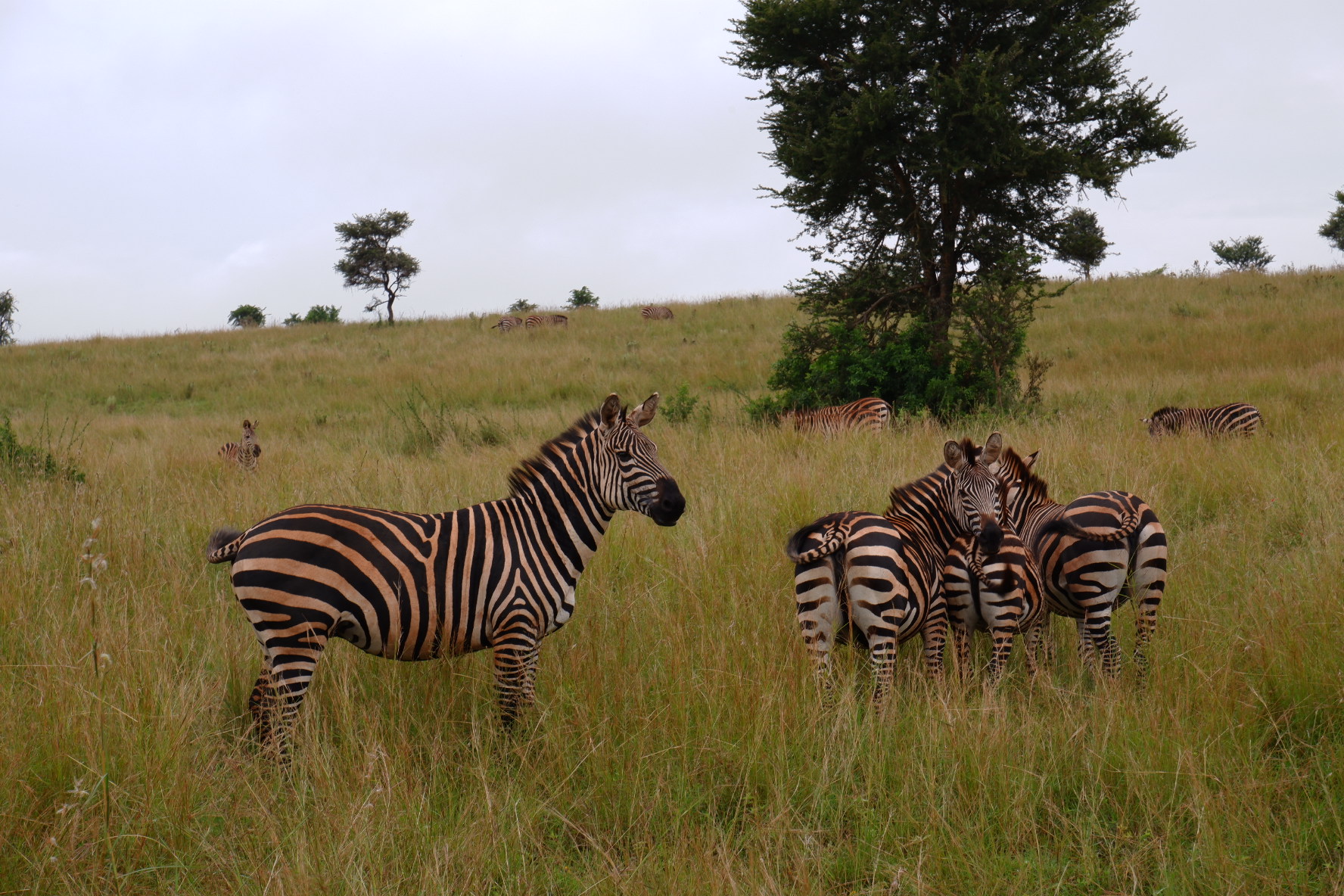
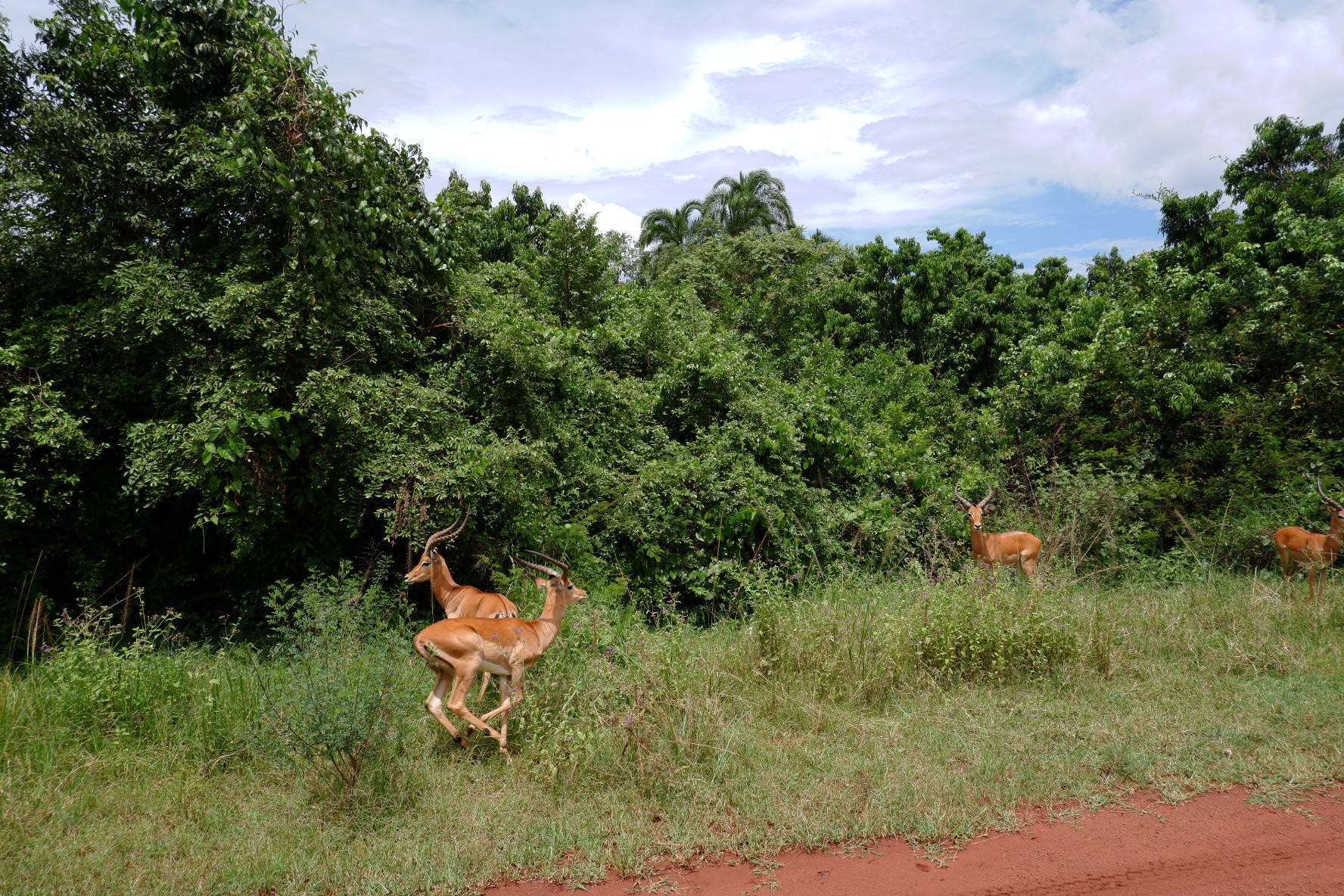
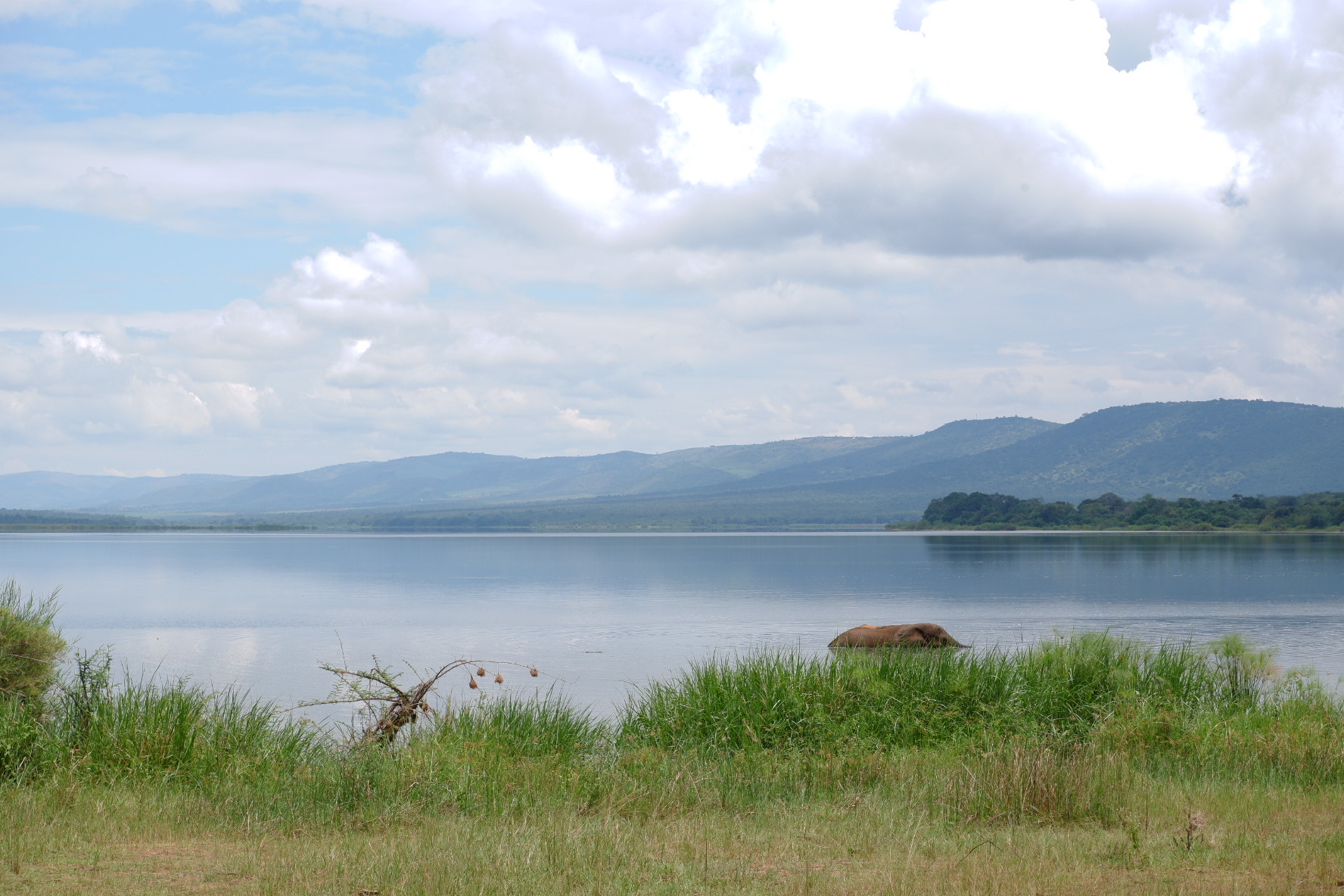
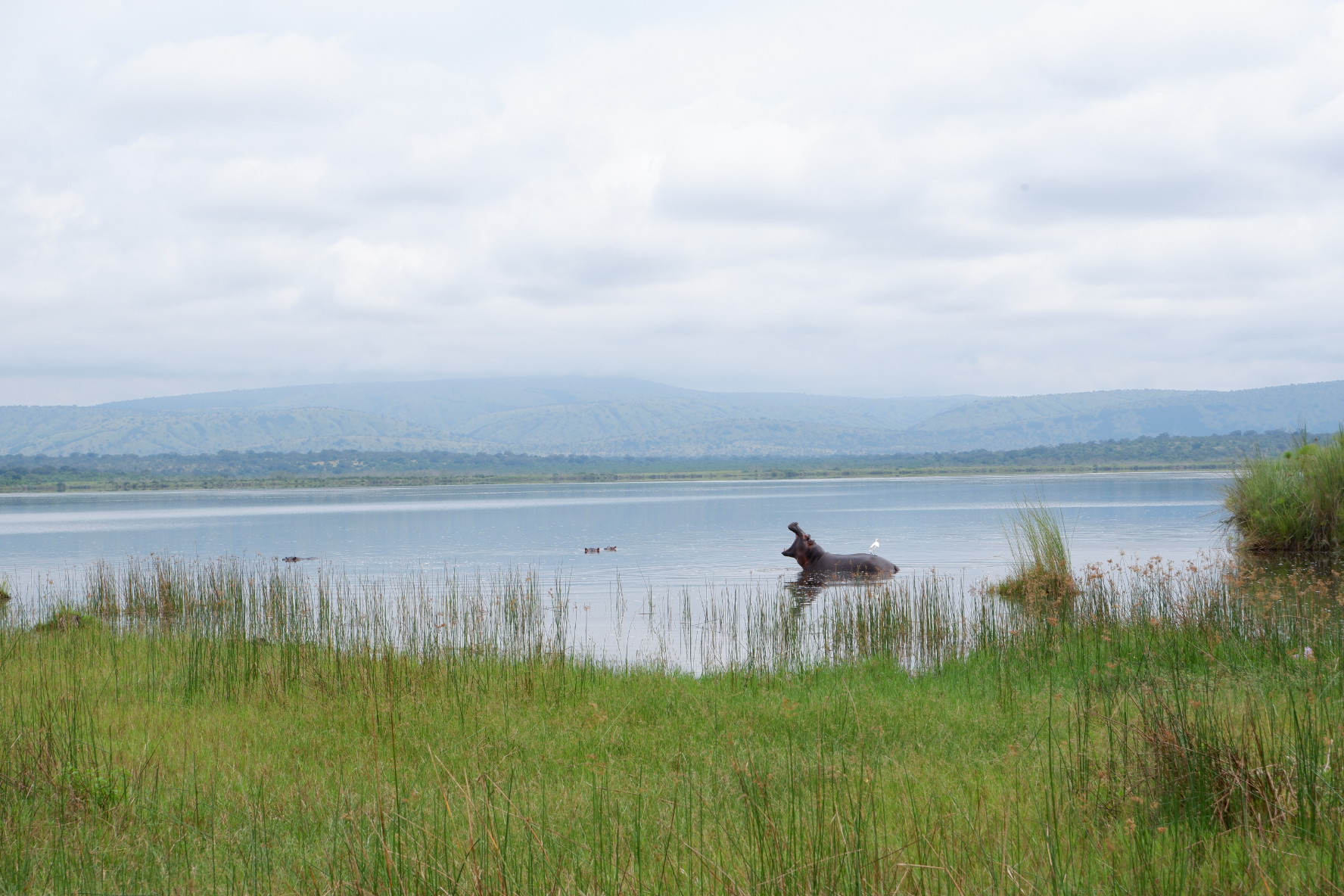
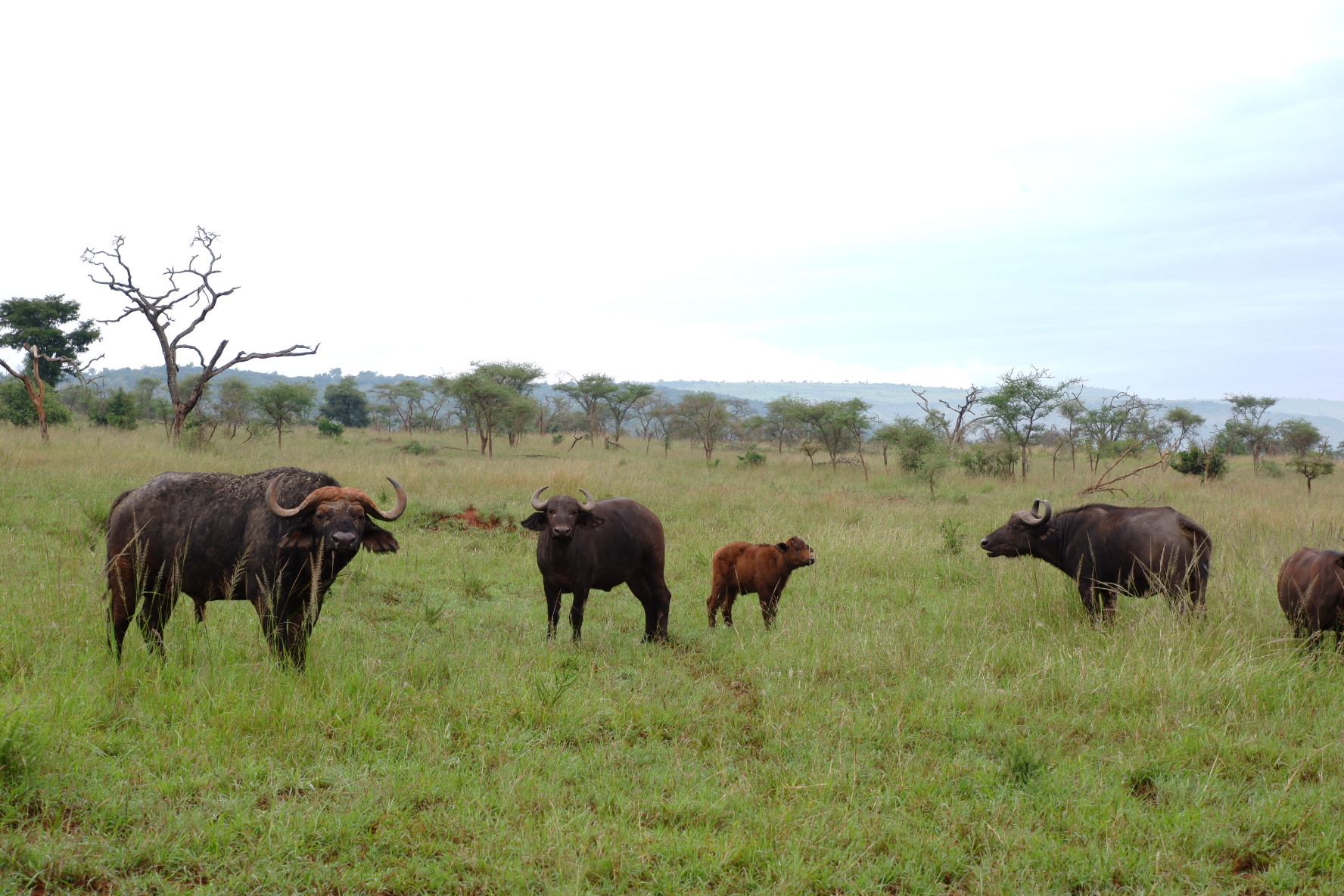
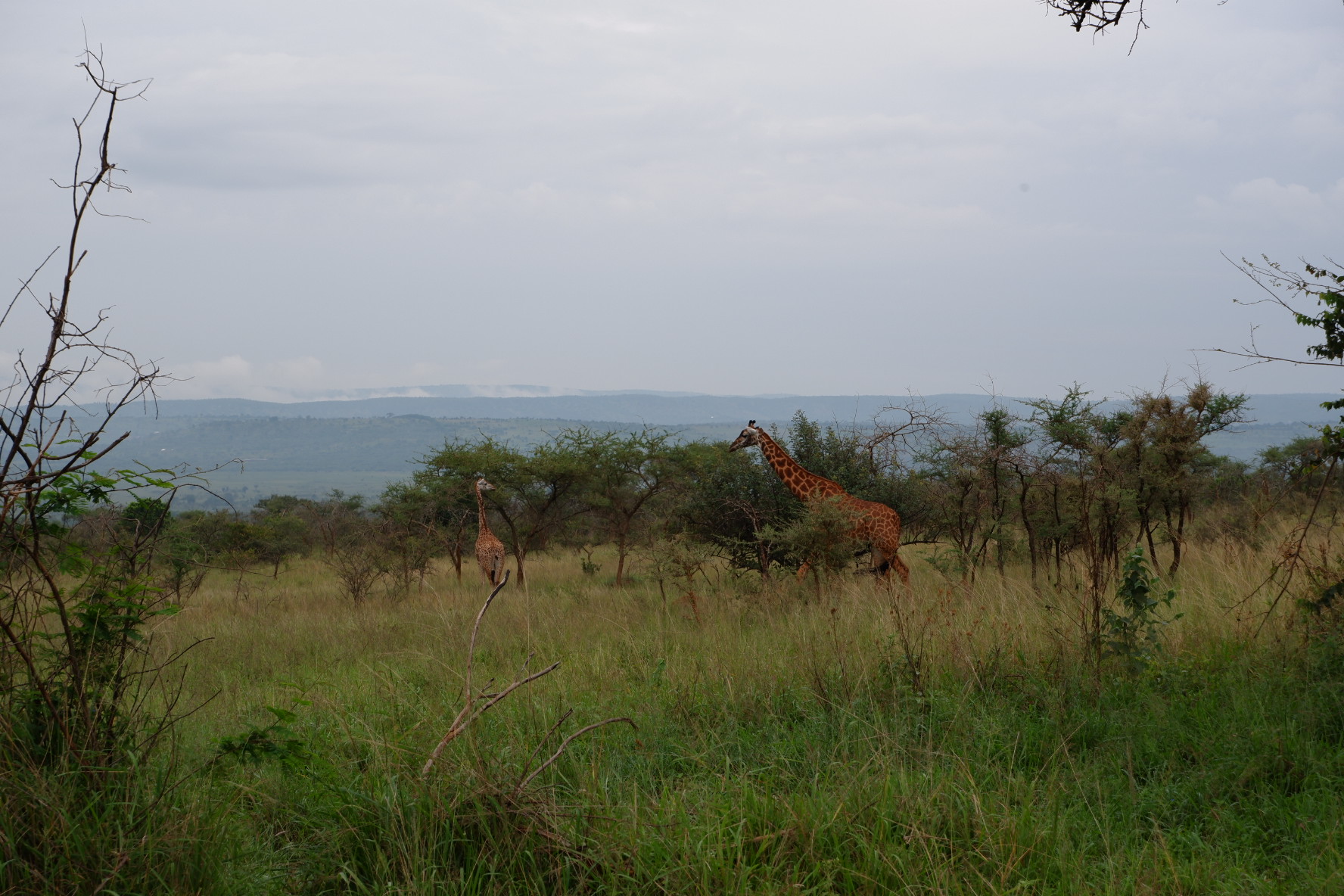
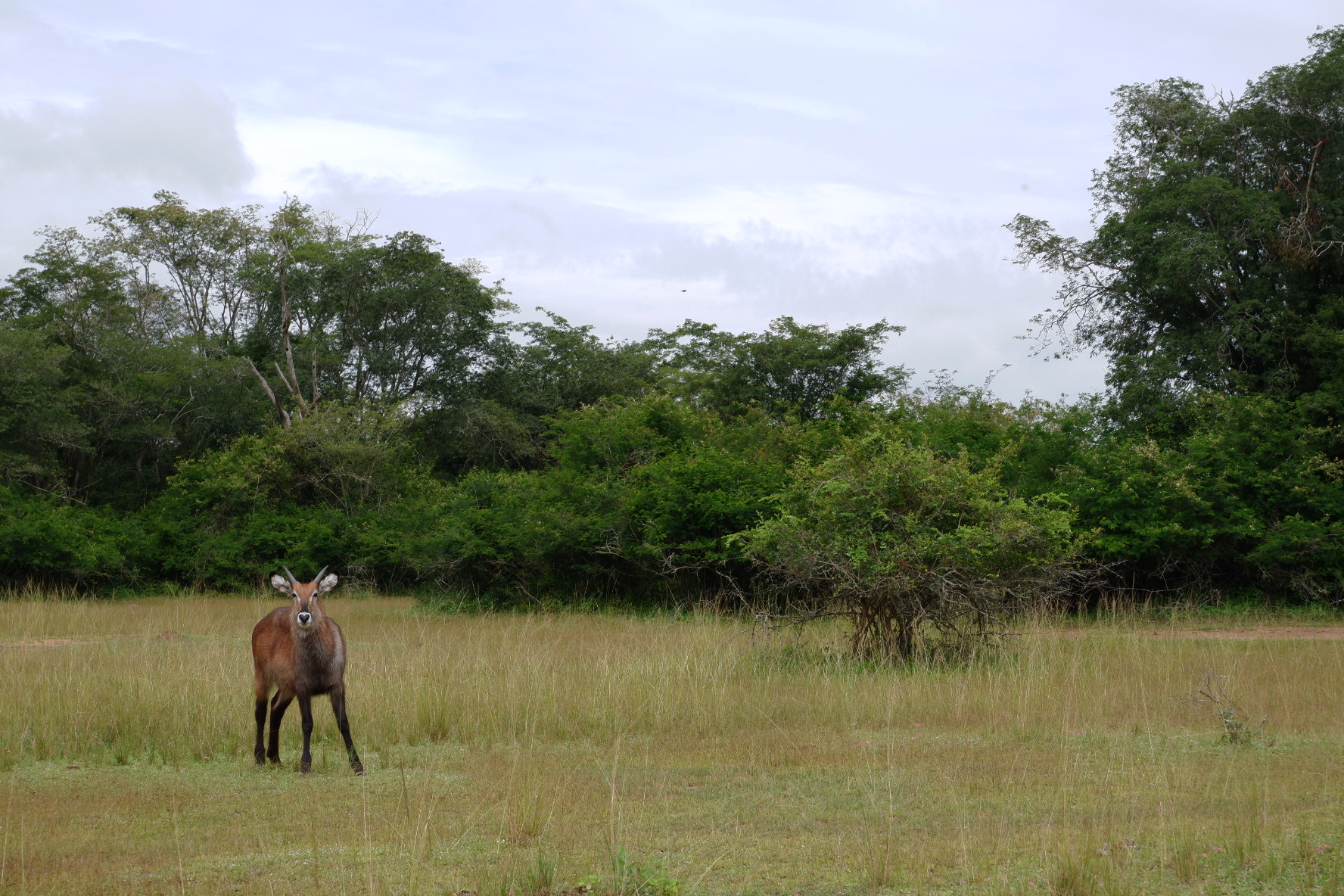
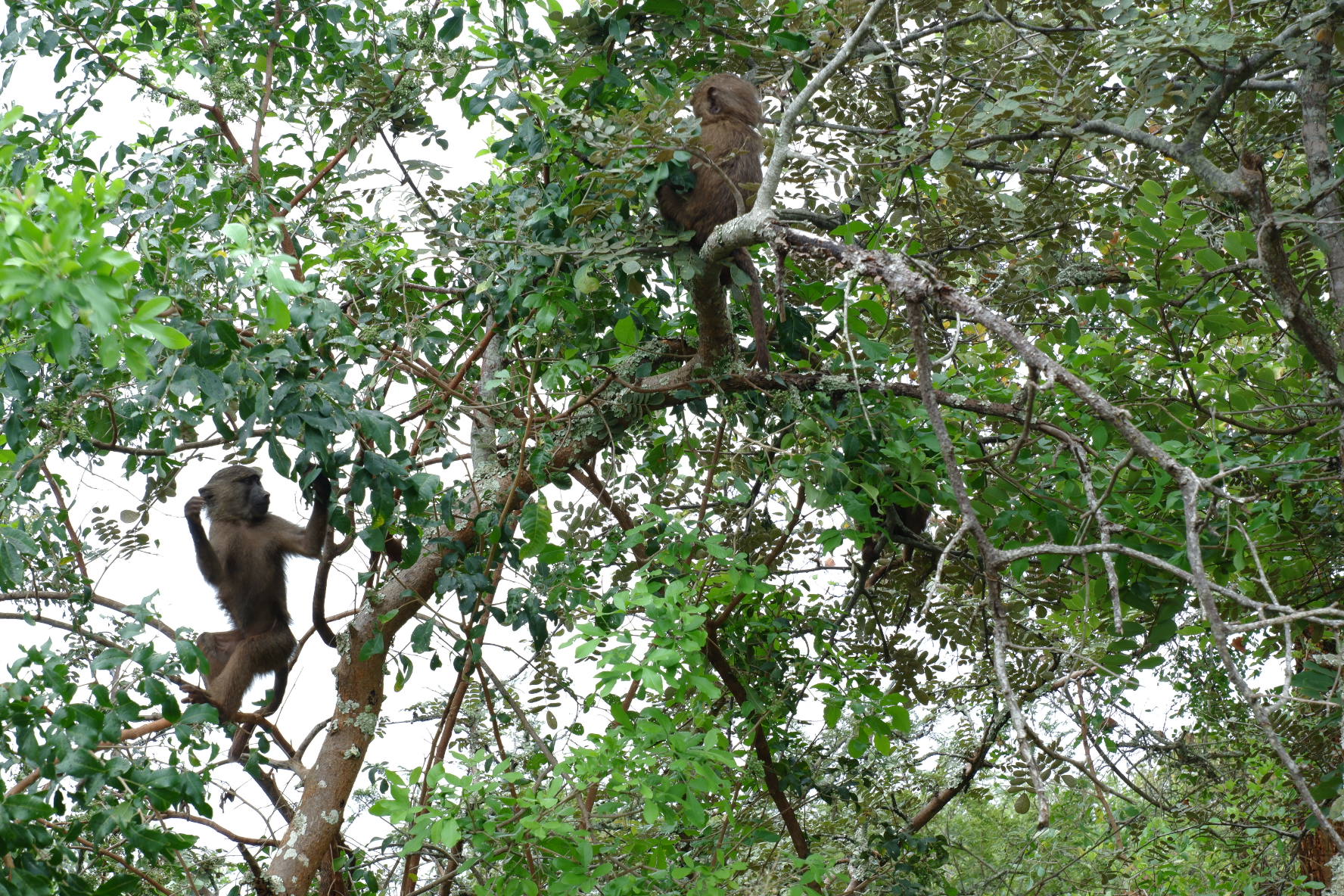
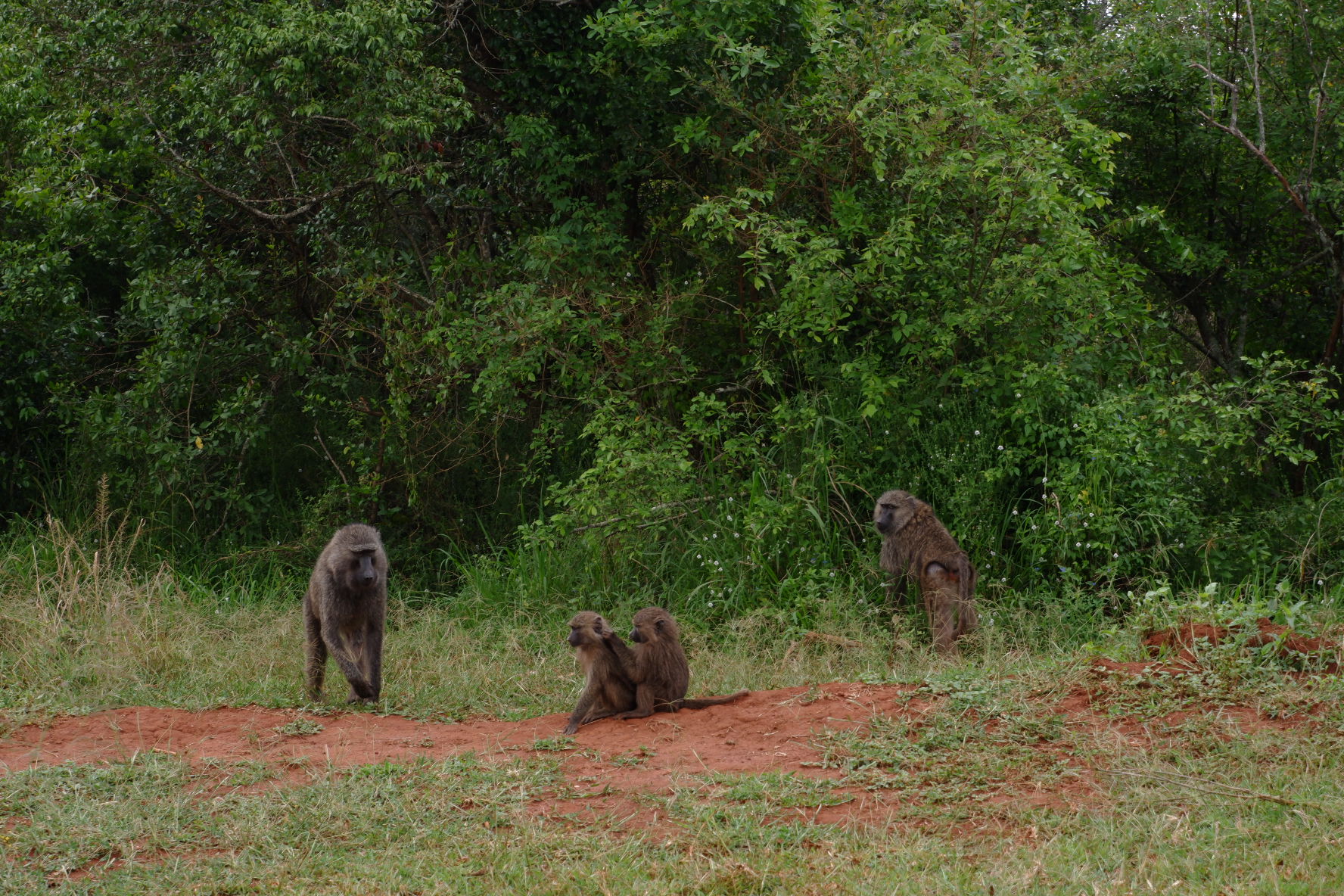
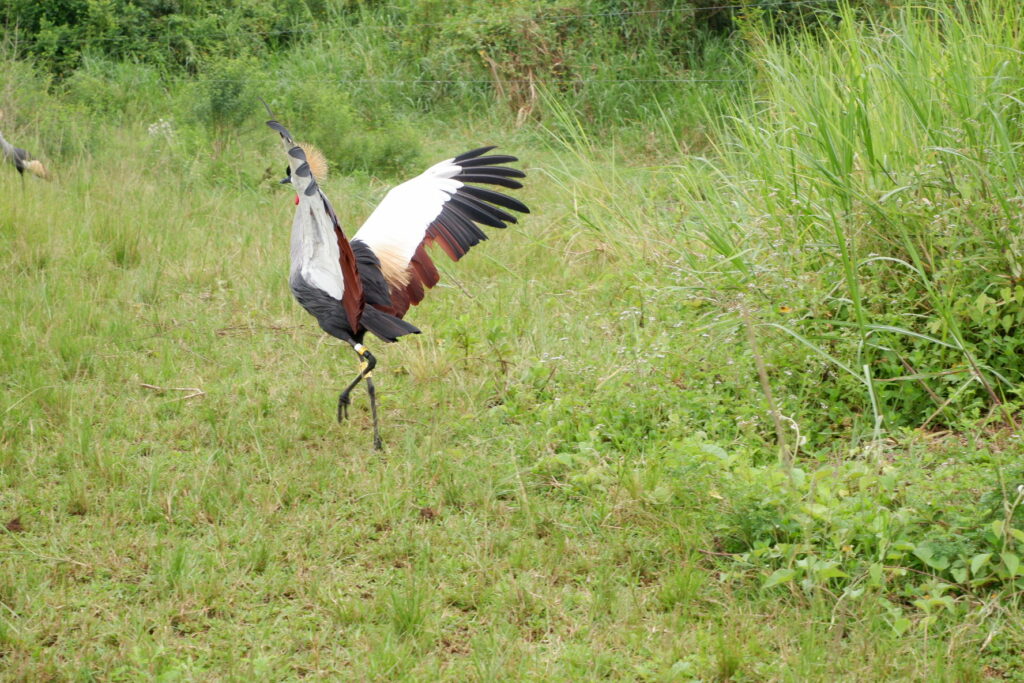
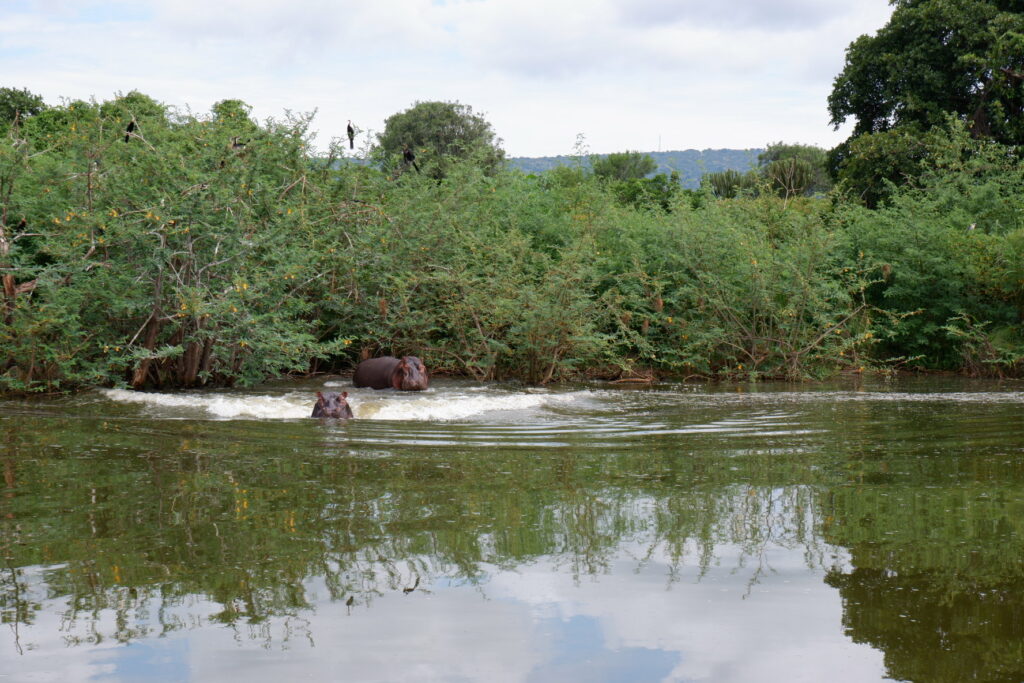
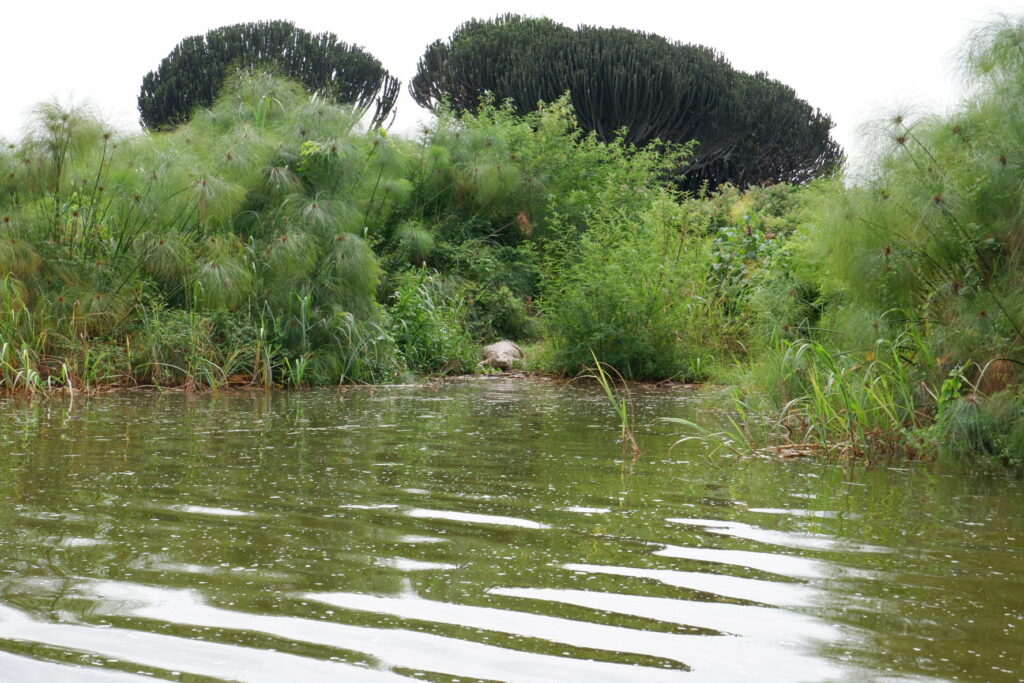
    Akagera is unique in Rwanda as the only savannah environment in the country and is home to the country big game. Large herds of buffalo, zebra, impala and giraffe are seen on the open plains while smaller antelope such as oribi, bushbuck and reed buck exist widely throughout the park. Elephants tend to stay around the lakes, which are inhabited by large numbers of hippos and crocodiles. Baboons and vervet monkeys are commonplace, less so is the secretive blue monkey. Leopard, hyena and jackal are also residents and may be seen on a night drive along with genet, serval, bushbabies, porcupine and other nocturnal wildlife. An important population of sitatunga lives in the papyrus swamps along with other rarities such as shoebill and other papyrus endemic bird species.    

    Magically, the air is torn apart by the unforgettable duetting of a pair of fish eagles, asserting their status as the avian monarchs of Africa’s waterways. Lining the lakes are some of the continent’s  densest concentrations of waterbirds.

    Camping alongside the picturesque lakes of Akagera is a truly mystical introduction to the wonders of the African bush, Ruzizi tented lodge, where we stayed for two nights (and never wanted to leave). Our tent was set in the middle of the forest, surrounded at all times by blue monkeys and the sounds of smaller (and larger) animals.

    The safari

    We arrived on a late Friday afternoon and decided to relax for the remaining of the day, drinking a beer on the lodge deck and reading a book. On hindsight, we could probably have gone for a 5:30 pm night drive through the southern part of the park, so as to have the next day for a full day game drive or another night drive (as to double our chances to see the nocturnal wildlife).

    The game drive

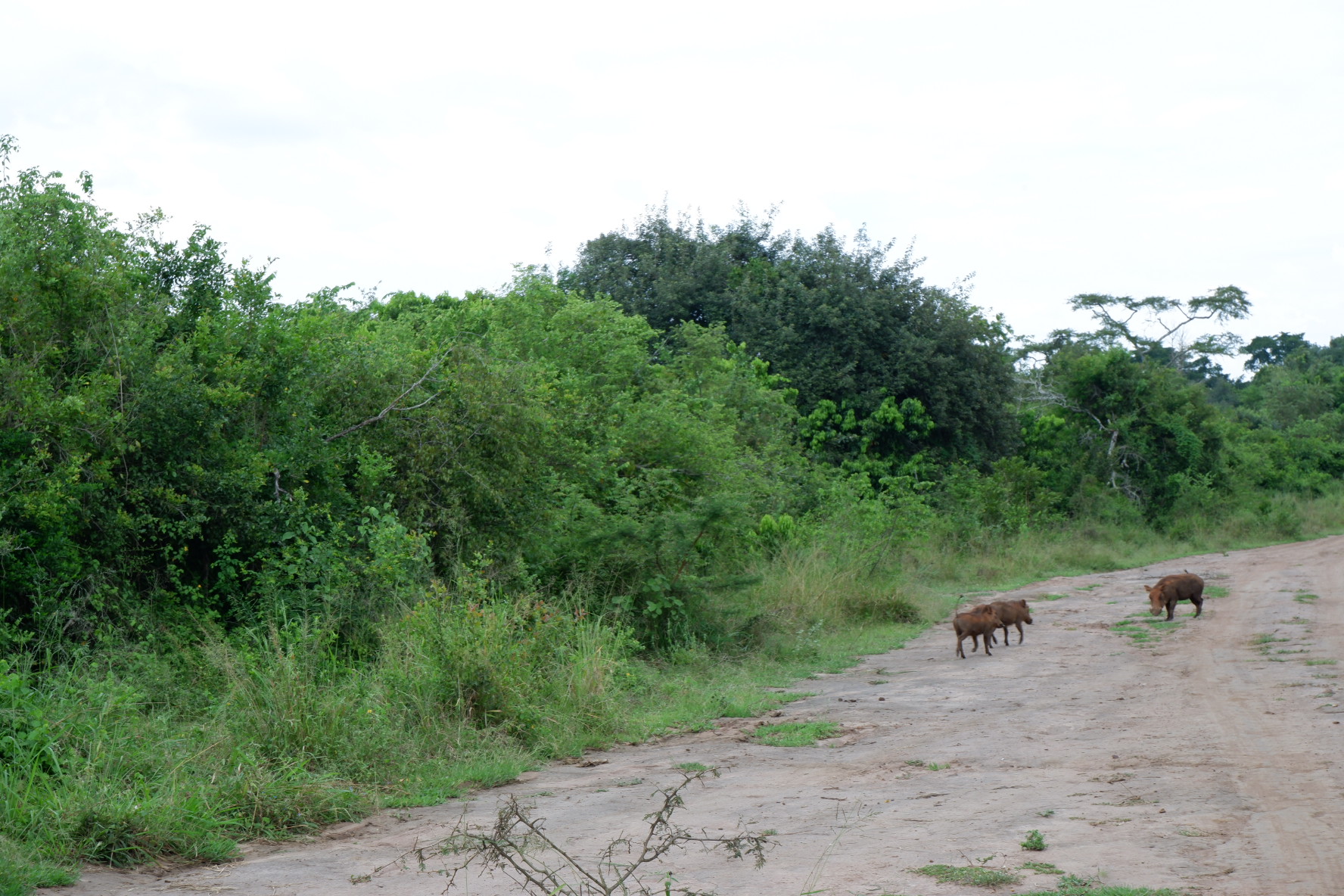
    On Saturday we woke up at 5.30 (quite early, but given that the tents are in the middle of the forest, the sounds of nature will wake you up shortly after anyway), had our breakfast on the deck at 6 and left for the half day game drive at 7. We were picked up from our lodge by our guide Felix and our driver for the day, Leopold, on a battered, roof-less Toyota Land Cruiser. This amazing duet took us through the park and showed us the secrets of Akagera. The drive took around 5 hours, enough to get you to the lakes half way through the park, but not to the northern, more savannah-like, part. If you want to get to the top of the park you definitely need to go for the full game drive, 8 hours. We were honestly very happy with the experience and being able to admire the animals that nature gave us in their natural habitat, and we wouldn’t have gone for a full day anyway, too long (and maybe a bit boring after a while).

    Here is the video reportage of our game drive.

    The night drive

    We got back to the lodge around 1 pm, had our lunch on the deck and some relax before the night game drive at 5.30 pm. Can’t really explain how it can be different to spot a giraffe or a zebra in their natural habitat instead of seeing them behind bars in a zoo. The thrilling part is knowing that the park is huge and no one knows where the animals may be at any time. In this sense the night drive was the most exciting part, with the thrill of trying to spot the reflection of the car spotlight against the eyes of the wild animals. We unfortunately didn’t see any nocturnal animals, but we were lucky enough to admire two families of elephants drinking by the water pond. We watched in awe as the parents drove the two cubs away from our car, always careful not to disturb them or feel threatened since elephant charges as not so rare after all. During the drive we were constantly on the tips of our toes, hoping to spot a lion or a leopard among the trees; our expectations were increased by Videl, a 8 years old Swedish boy and his contagious excitement. The drive lasted 2.5/3 hours and took us back to the lodge in time for a dinner on the deck warmed by the campfire.

    The boat ride

    After another early wake up, on Sunday, our last day, we went for a bot drive at 9. It was only an hour long, but enough to take you around the Ihema lake, see hippos and crocodiles. Pods of 50 hippopotami grunt and splutter throughout the lake, while outsized crocodiles soak up the sun with their vast jaws menacingly agape.

    Suggested reading

    Comments Off on Akagera National Park
  • Accomodations,  Adventures,  Africa,  Lodges,  Places,  Safari

    Ruzizi Tented Lodge

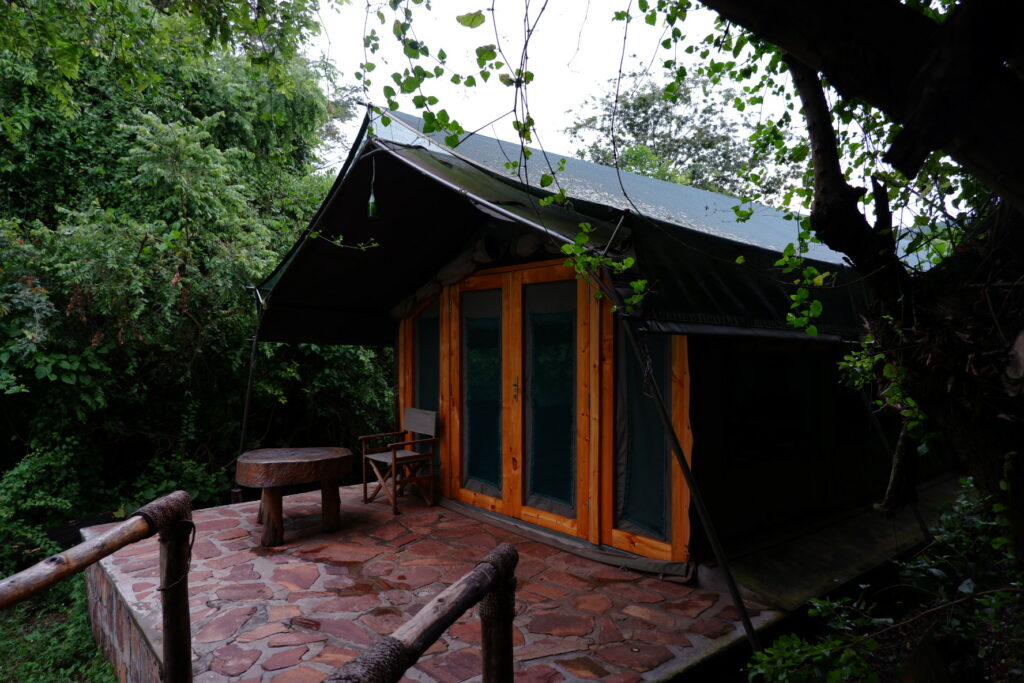
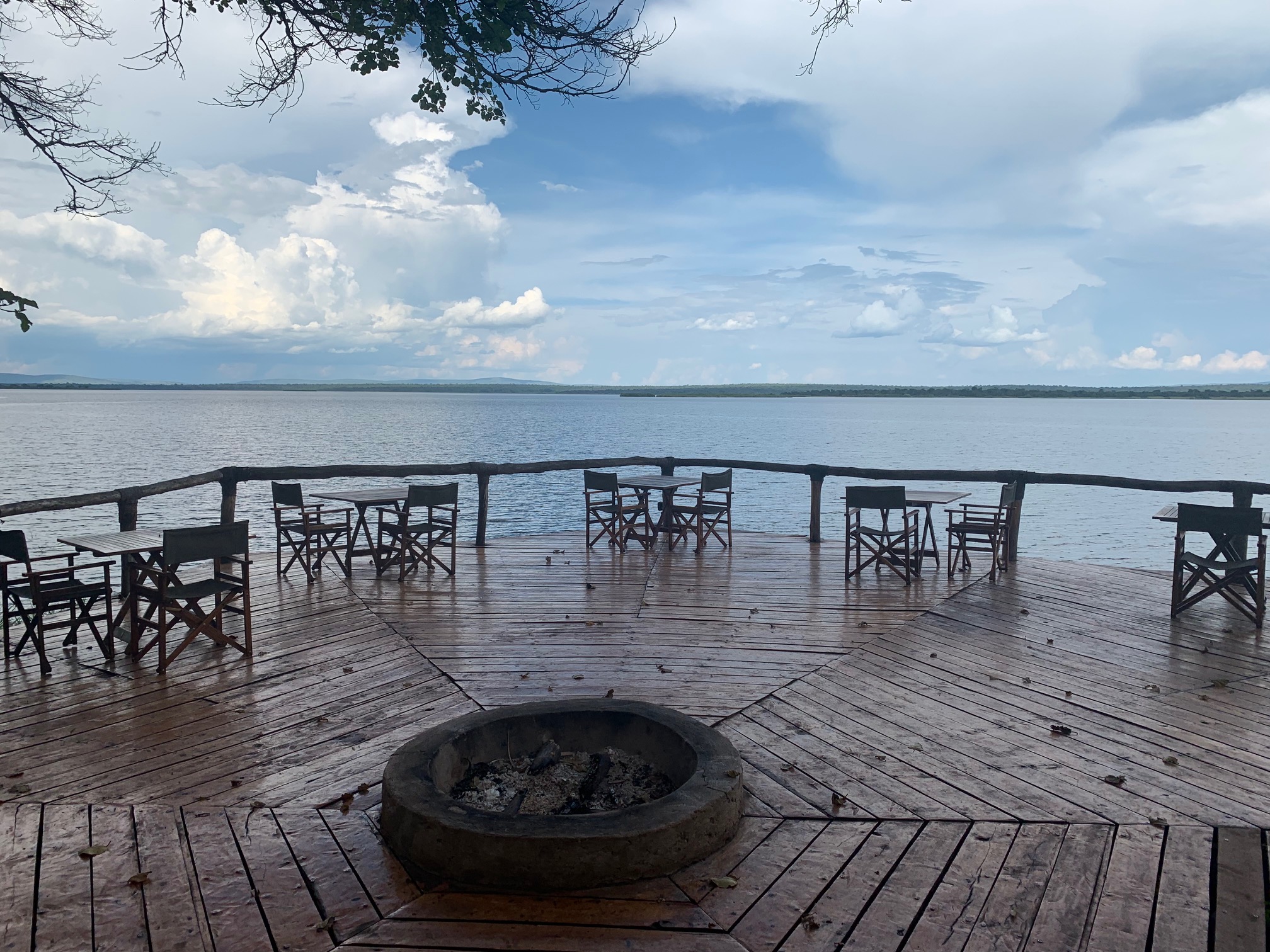
    In the riverine forest on the edge of lake Ihema is a small, private lodge offering nine spacious, en-suite tents, dotted along the forested lakes’ edge. Sheltered by large trees and swaying palms, Ruzizi tented lodge is a quiet retreat in the spectacular setting of Akagera National Park.

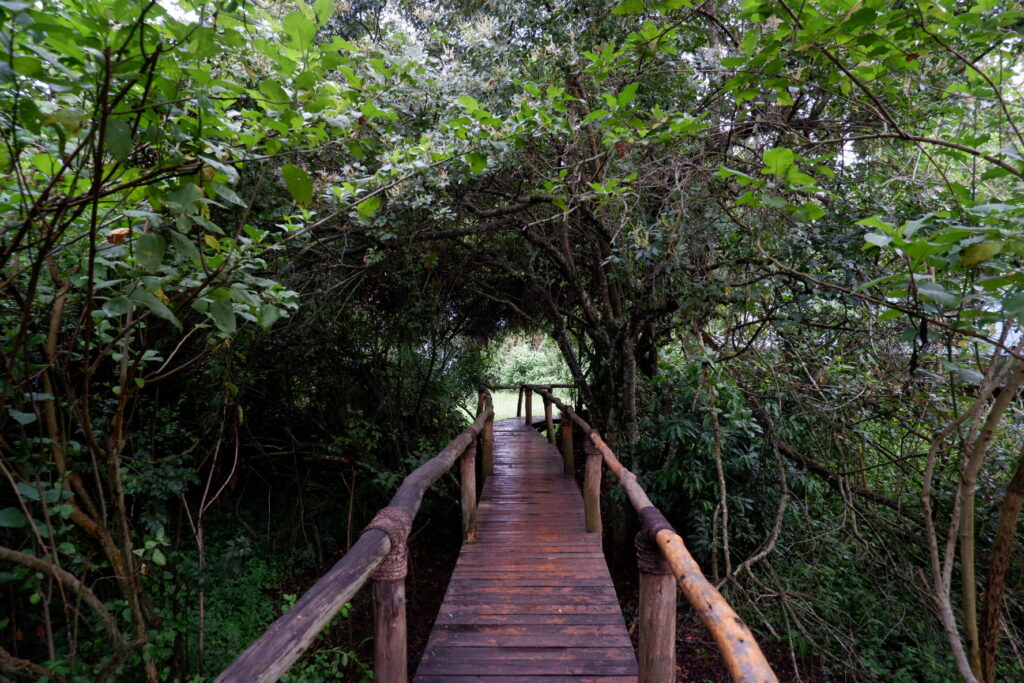
    The tents are located along a boardwalk stretching either side of a thatched lounge and dining area. A raised deck overlooks the lake; dinner on the deck feels like enjoying a sundowner around a cozy campfire.

    IMG_2230

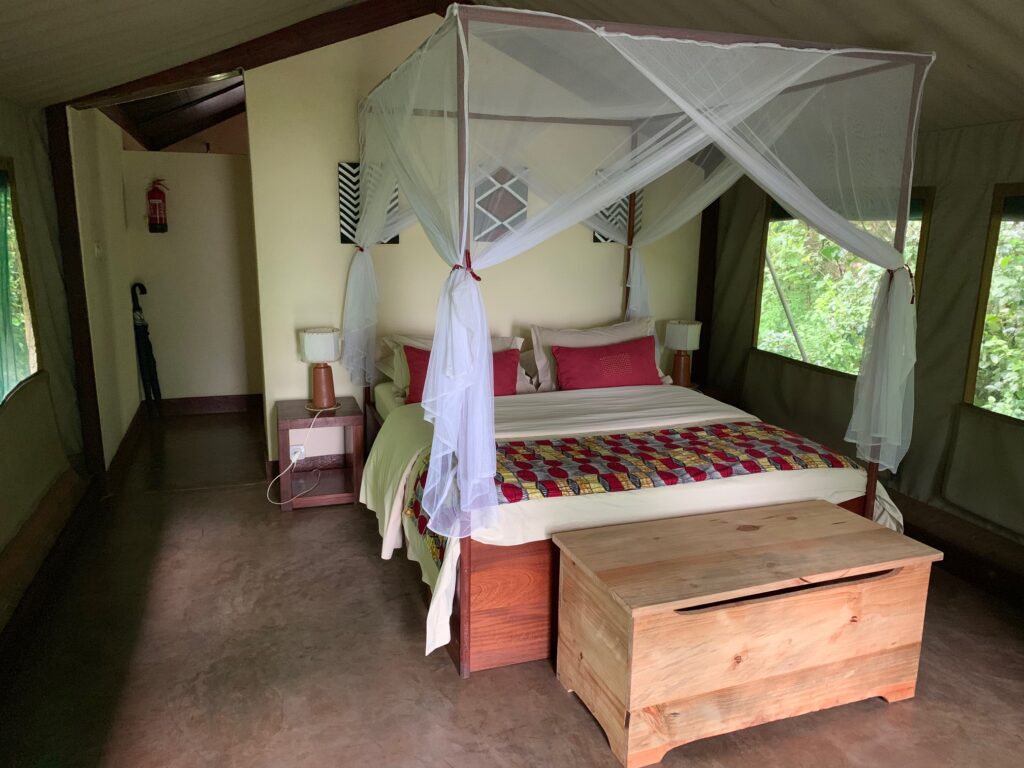
    Inside each tent is a comfortable queen (or large twin) beds and a private bathroom.

    Owned and managed by the park, 100% of the profits from the lodge go back into the total management of the park supporting law enforcement and conservation initiatives. The lodge is entirely powered by solar panels.

    Comments Off on Ruzizi Tented Lodge