Rio de Janeiro
-
Rio de Janeiro
June 25, 2025 /Rio de Janeiro isn’t just beaches and samba. It’s a spectacular city where nature collides with urban life in the most dramatic way—mountains plunging into the sea, jungle meeting pavement, and colonial facades framed by graffiti and bougainvillea. In just four days, you can capture the essence of the Cidade Maravilhosa, from sunrise on mountaintops to nights dancing in centuries-old streets.

To really appreciate Rio de Janeiro, you have to picture it first. The city unfurls along Brazil’s southeastern coast in a spectacular tangle of granite mountains, golden beaches, and deep tropical forests. The southern part of Rio is where most visitors spend their time: neighborhoods like Copacabana, Ipanema, and Leblon hug the Atlantic shoreline, framed by dramatic peaks like the Dois Irmãos and Pedra da Gávea. Between the mountains, a narrow river was dammed to form the Lagoa Rodrigo de Freitas, a mirror-like lagoon ringed by bike paths and overlooked by the towering Christ the Redeemer.
To the north lies the historic city center, the Centro, where colonial churches, financial buildings, and samba bars crowd together. Nearby, the massive Maracanã Stadium rises like a temple to Brazilian football. On the eastern edge of the city, Sugarloaf Mountain (Pão de Açúcar) juts out into the bay like a giant sentinel, offering some of the most iconic views in South America.
And across the 13-kilometer-long Rio–Niterói Bridge, you reach Niterói, a quieter, charming city with beaches, modernist architecture (including Oscar Niemeyer’s spaceship-like museum), and a spectacular view looking back at Rio’s skyline—one of the rare places where you can actually see all of Rio at once.
Founded by the Portuguese in 1565 as a strategic port to defend against French colonists, Rio later became the capital of the Portuguese Empire in exile, and then Brazil’s own capital until 1960. But more than political history, what defines Rio is its energy: vibrant, chaotic, sensuous. The rhythm of samba pulses beneath your feet, even when the streets are still. Over the next four days, we’ll explore its peaks and promenades, beaches and backstreets—always with music in the air and ocean at your side.
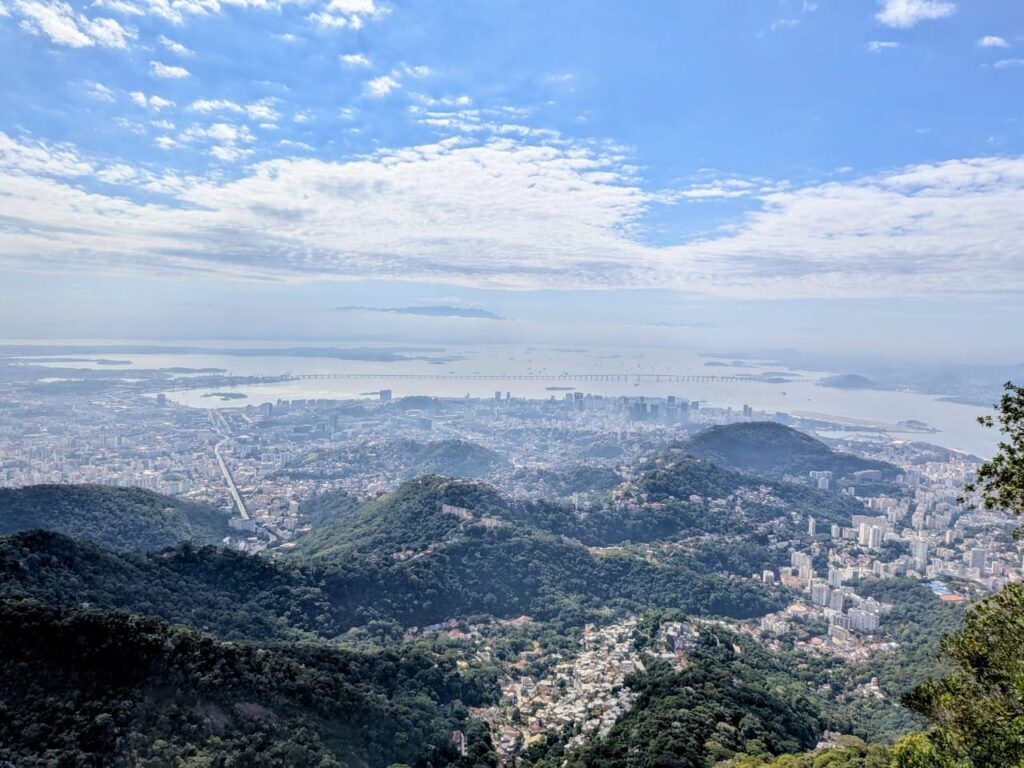
North Rio 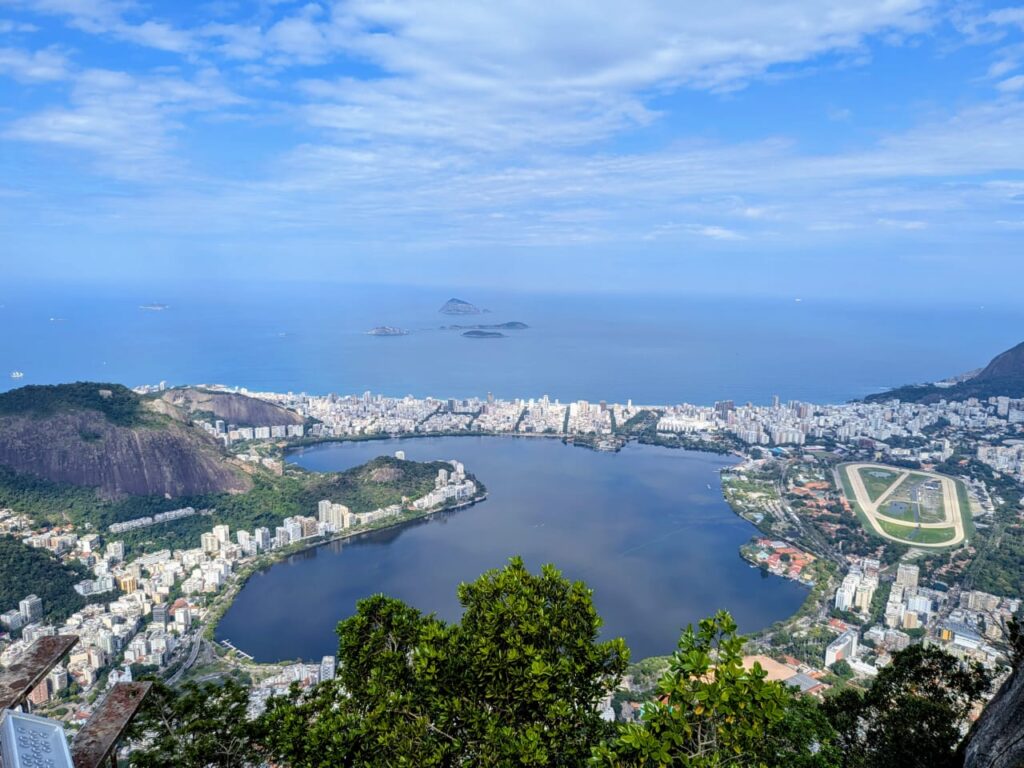
South Rio Day 1 - Postcards and Promenades: Sugarloaf and the Beaches
Your first morning in Rio starts with one of the city’s most iconic sights: Sugarloaf Mountain (Pão de Açúcar). The name dates back to colonial times when blocks of refined sugar were shaped like rounded cones—just like this towering granite peak. Two separate cable cars take you first to Morro da Urca and then to the summit, where the city stretches out beneath you: beaches, favelas, jungle, sea. It’s especially magical in the early morning light, before the crowds and the haze roll in.
After descending, head toward Copacabana. The long curving beach, with its classic black-and-white tiled promenade, is pure Rio. You’ll see locals jogging, playing beach volleyball, or sipping fresh coconut water at street kiosks. Continue west and you’ll hit Ipanema—stylish, elegant, with art galleries tucked between modernist apartment buildings. If time allows, end the day at Posto 9, where locals gather to watch the sun set behind the Dois Irmãos hills. The sky turns pink, music drifts on the breeze, and the rhythm of the city starts to slow.
Day 2 - Christ the Redeemer and Colonial Corners
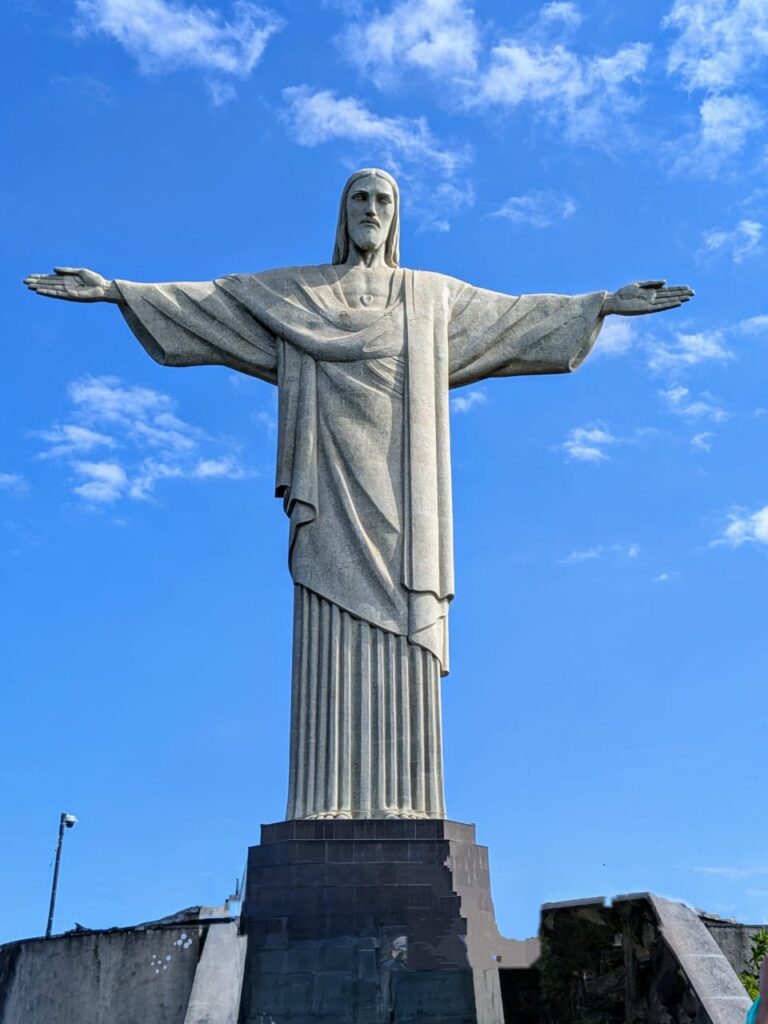
No journey through Rio would be complete without visiting Christ the Redeemer, nestled atop Corcovado within Tijuca National Park, the largest urban forest in the world. The best route is the charming cog train that travels through dense rainforest—this historic rail, originally built in the late 19th century, became a gateway to the statue once slaves were freed, intended as a gesture of gratitude to Christ .
Construction of the monument began in the 1920s and it was unveiled in 1931. It’s built of reinforced concrete, covered entirely in soapstone tiles mined in Minas Gerais. Interestingly, the head and hands were sculpted in France under sculptor Paul Landowski’s direction—and it’s said the hands were modeled after a Brazilian woman’s, bringing a touch of local humanity to the piece.
Today, you ride through the heart of the forest, glimpsing the lush canopy restored during Emperor Pedro II’s era—reforested by freed slaves to protect the city’s water sources between 1861 and 1887—and now alive with waterfalls, monkeys, and toucans.
From the summit, you stand beneath the vast arms of Christ and gaze upon all of Rio—from sparkling beaches to the tangled hills speckled with favelas. It’s a powerful fusion of human history, engineering, nature, and faith. For safety, stick to the train path, avoid hiking the trail after dark, and skip quieter paths that edge into less secure areas.
After your morning at Christ the Redeemer, spend the afternoon wandering through Santa Teresa, a bohemian enclave perched on the hills above downtown Rio. The neighborhood originated in the 1750s around a Carmelite convent built on Morro Desterro, named in honor of St. Teresa of Ávila. In its early days, the area attracted upper-class families seeking refuge from yellow fever—elegant French-inspired villas still line the winding, cobbled streets above lush valleys .
Santa Teresa’s charm comes alive with the iconic bonde tram, the historic yellow streetcar that, since the late 1800s, has climbed over the majestic Carioca Aqueduct (Arcos da Lapa) and snaked through the neighborhood along ancient tram lines. The aqueduct itself once carried clean water to the city but eventually became obsolete—and even turned into a source of sewage overflow—until repurposed for urban transport.
By the mid-20th century, Santa Teresa declined, but in the 1970s and 1980s a new generation of artists, poets, and musicians began buying up the grand villas. Their studios and galleries turned the area into “Rio’s Montmartre,” a creative pulse that still beats today in places like Parque das Ruínas, where a once-abandoned mansion now hosts concerts framed by sweeping city views.
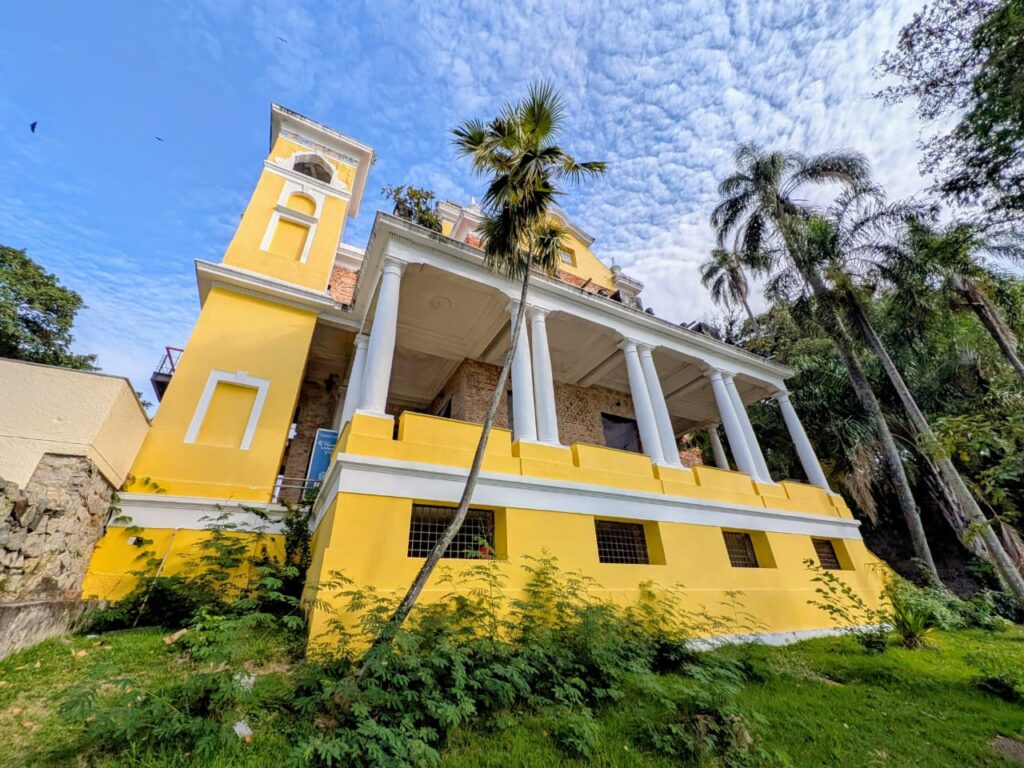
One of the neighborhood’s cultural treasures is the Glória Maria Municipal Park, formerly known as Parque das Ruínas. Once the grand mansion of socialite and Belle Époque patroness Laurinda Santos Lobo, the estate became a gathering place for artists and intellectuals in the early 1900s. The house was later abandoned until the 1990s, when the city restored the ruins and reimagined them as a cultural center with galleries, concert spaces, and an open-air theater.
This spot is more than a ruin—it’s a panoramic vantage point offering sweeping views of Guanabara Bay and the Centro, framed by the skeletal remains of ornate walls and contemporary steel beams. In 2023, it was renamed in honor of beloved journalist Glória Maria, and now features walls painted by Brazilian street artist Kobra, a vibrant homage that blends past and present in technicolor.
After your morning at Christ the Redeemer, spend the afternoon wandering through Santa Teresa, a bohemian enclave perched on the hills above downtown Rio. The neighborhood originated in the 1750s around a Carmelite convent built on Morro Desterro, named in honor of St. Teresa of Ávila. In its early days, the area attracted upper-class families seeking refuge from yellow fever—elegant French-inspired villas still line the winding, cobbled streets above lush valleys .
Santa Teresa’s charm comes alive with the iconic bonde tram, the historic yellow streetcar that, since the late 1800s, has climbed over the majestic Carioca Aqueduct (Arcos da Lapa) and snaked through the neighborhood along ancient tram lines. The aqueduct itself once carried clean water to the city but eventually became obsolete—and even turned into a source of sewage overflow—until repurposed for urban transport.
By the mid-20th century, Santa Teresa declined, but in the 1970s and 1980s a new generation of artists, poets, and musicians began buying up the grand villas. Their studios and galleries turned the area into “Rio’s Montmartre,” a creative pulse that still beats today in places like Parque das Ruínas, where a once-abandoned mansion now hosts concerts framed by sweeping city views.
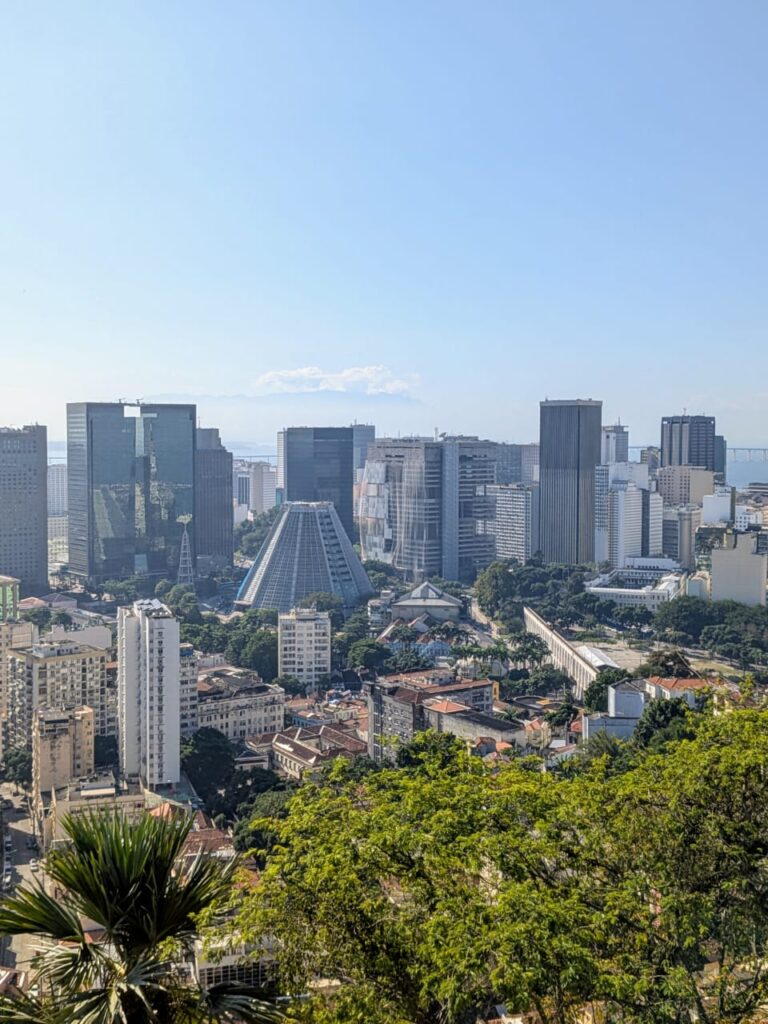
After visiting Parque Glória Maria, make your way downhill toward one of Rio’s most astonishing—and emotional—works of public art: the Escadaria Selarón. This 125‑meter staircase of 215 steps connects Lapa and Santa Teresa, its every tile a story.
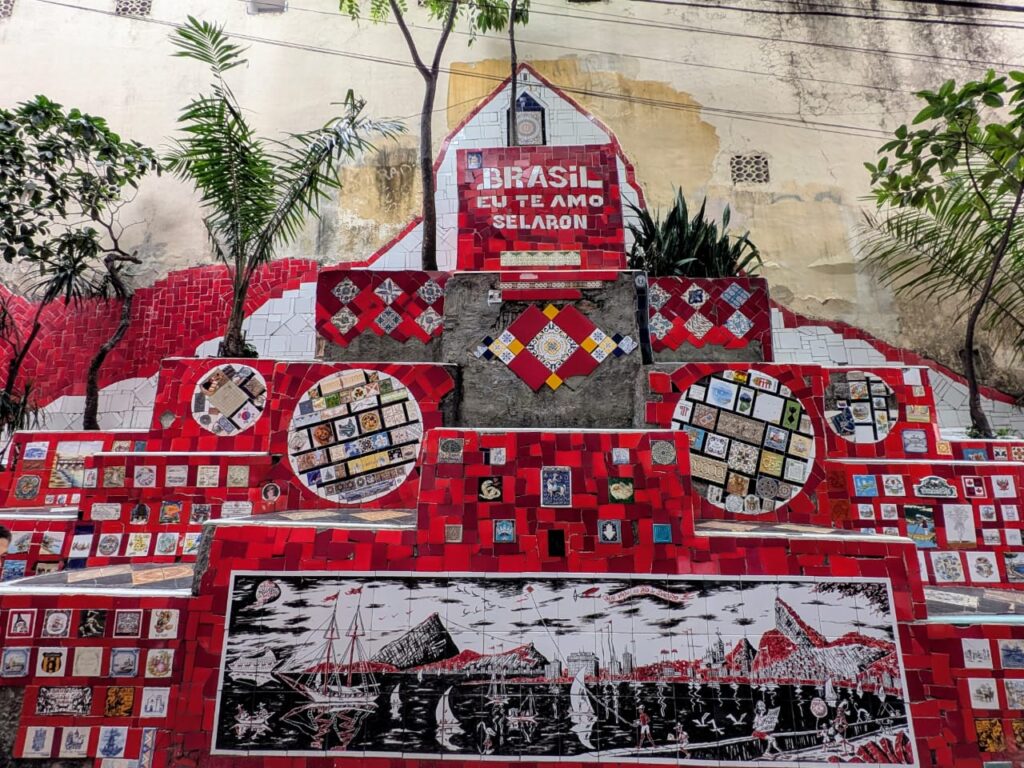
Chilean-born artist Jorge Selarón began tiling the steps in 1990 as a modest tribute to his adopted home, Brazil, splashing the steps in green, yellow, and blue—the colors of the Brazilian flag. Neighbors scoffed, but Selarón, who had already roamed more than 50 countries, remained devoted. Sourcing broken tiles from local dump heaps and discarded building sites, he first covered his doorstep, then steadily expanded—never stopping, declaring his work “a crazy and unique dream” that would only end the day he died.
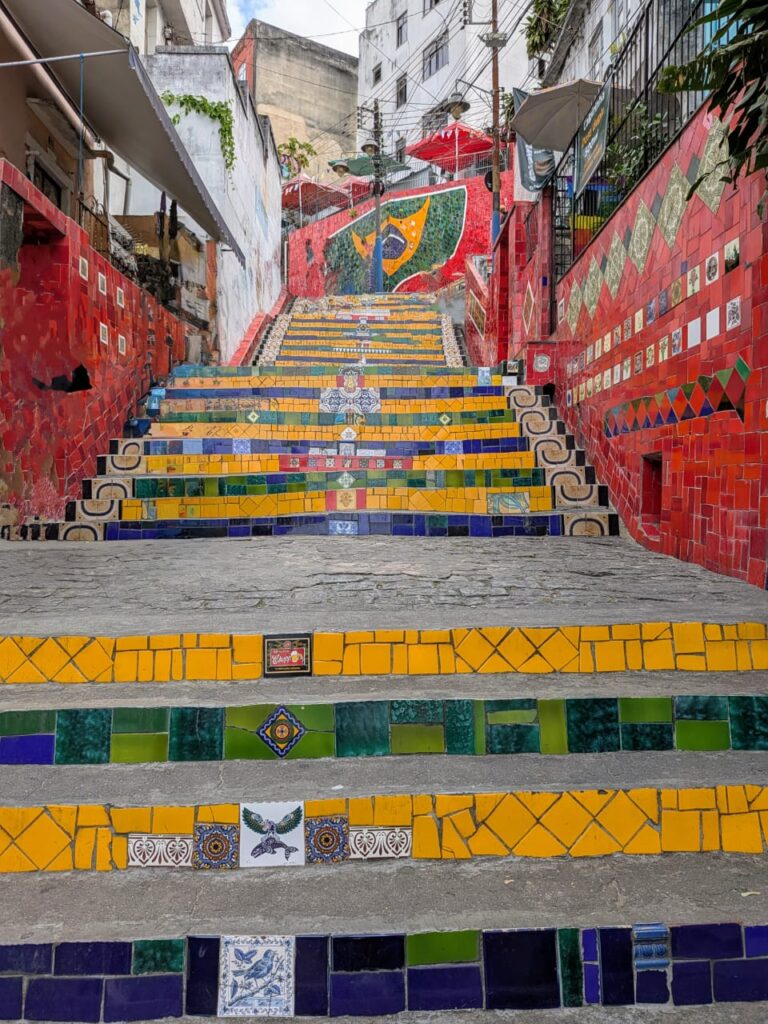
Over time, visitors began donating tiles from around the world. The steps now feature over 2,000 distinct tiles from more than 60 countries, a living mosaic that evolves as Obsessively as the city itself. Selarón continually replaced tiles—breaking and rearranging sections—to keep the installation fresh, likening it to a living artwork with “never complete” status.
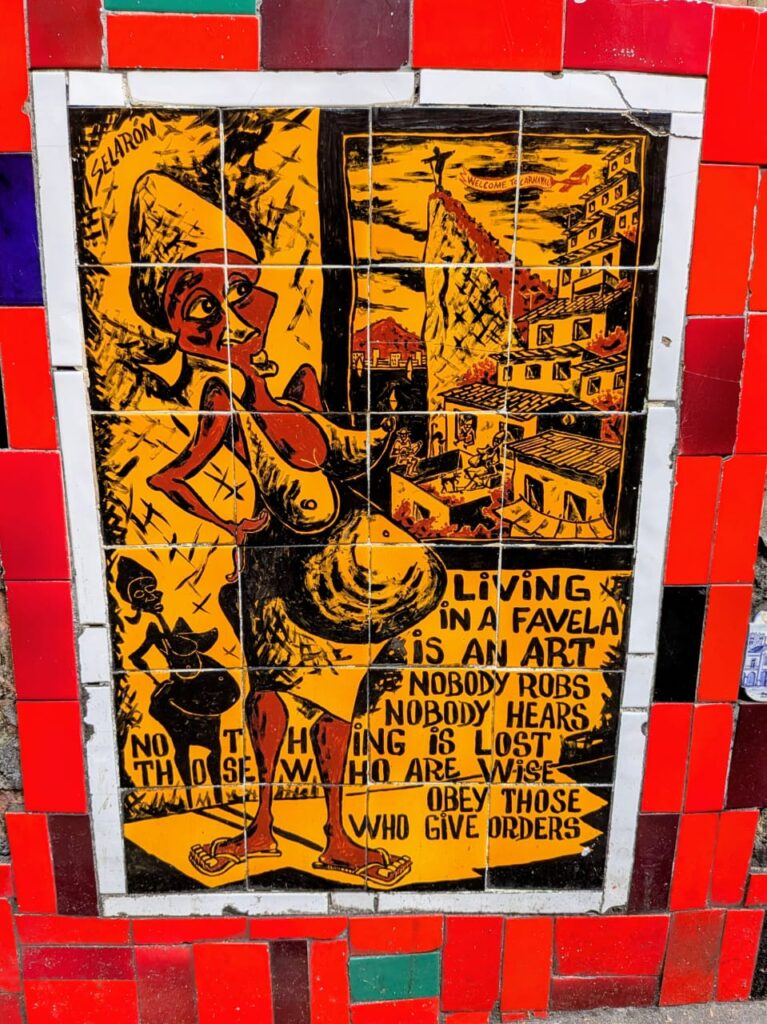
Among the most haunting motifs are nearly 300 hand-painted tiles of a pregnant Black woman. The image first appeared in his paintings from 1977 and carried into the steps, a figure Selarón said represented “a personal problem from my past”. Some scholars connect this image to his late wife, who died while pregnant—an echo of grief embedded in mosaic.
Selarón lived at the base of the steps and became part of the scene: painting by day, chatting with visitors by night. He funded his work by selling portraits—often of the pregnant woman—and postcards, fueling his obsession with color and narrative. In 2005, in recognition of his cultural contribution, the city officially declared the stairs part of Rio’s heritage and made him an honorary carioca.
Tragically, on January 10 2013, Selarón was found dead on his own stairs, burned—some suspecting suicide, others suspecting foul play after he’d received threats. His final act, it seems, was closing the full circle of his “never‑ending” creation—and as he predicted, the staircase did end the day he died.
Today, the steps pulse with life: tourists hunting for tiles from their countries, musicians filming videos (U2, Snoop Dogg), and locals stepping through color and memory. This is no static monument—it’s a testament to devotion, memory, diaspora, and grief… and an unforgettable, surreal Rio moment.
Day 3 - A Tropical Jungle Within the City
Few cities in the world can boast a rainforest within city limits, but Rio can. The Tijuca National Park is a miracle of reforestation—once cleared for coffee plantations in the 19th century, today it’s a thriving ecosystem and the lungs of the city. You could spend an entire day hiking here. One popular route leads to Pedra Bonita, a rocky summit with sweeping views of the beaches and the statue of Christ in the distance.
Along the way, you might encounter waterfalls, howler monkeys, or flashes of bright toucans. For those who prefer something less strenuous, a guided jeep tour offers a comfortable but immersive option. Later in the day, cool off at the Jardim Botânico, founded in 1808 by the Portuguese king João VI. With its towering imperial palms, orchid pavilions, and giant water lilies, the garden is a peaceful escape from the heat and traffic—a place to slow down and breathe.
Day 4 - Football, Museums, and a Final Sunset
Begin your final day at Maracanã, one of the most storied football stadiums in the world. Even if you’re not a sports fan, the tour is worth it—walk through the locker rooms, stand at pitch-side, and imagine the roar of 78,000 fans. It’s not just a stadium, but a temple to Brazilian identity.
In the afternoon, if you’re in the mood for more culture, head to the futuristic Museum of Tomorrow (Museu do Amanhã), built on the former docks with sweeping lines and science-driven exhibits on climate, cities, and the future of humanity. Or if you prefer something slower, explore the refined streets of Leblon, the city’s most upscale neighborhood, where you can browse bookstores, sip a quiet espresso, or do some last-minute shopping.
As the sun begins to sink, join locals at Mureta da Urca. It’s not a formal bar or even a restaurant—just a stone wall by the bay where people gather with cold beer, conversation, and a view of the boats bobbing in the harbor. It’s humble, authentic, and oddly perfect—just like Rio.