
Places

  • Middle East,  Places,  United Arab Emirates

    Abu Dhabi

    OK, so it’s finally happening. After all that bragging and boasting on the phone the time has arrived to show off the brilliant UAE capital to all our friends and family.

    There is a lot to consider as we prepare to play tour guide in the city; never fear, though, there is so much to be proud of in our amazing emirate and enough activities to fill a lifetime of holidays. The hardest thing might be deciding what not to do. Let’s embrace our visitors and treat them to an unforgettable getaway – Abu Dhabi style.

    Whether you’re here on holiday, you’re new to the country or you’ve been here a while, your time in Abu Dhabi still requires some careful planning. There’s just so much to do here you can’t possibly experience absolutely everything that’s cool about this city in only seven days. So to help you make the most of your stay, here are our top tips for the perfect week in the capital.

    Day 1 - Corniche, Emirates Palace and Heritage village

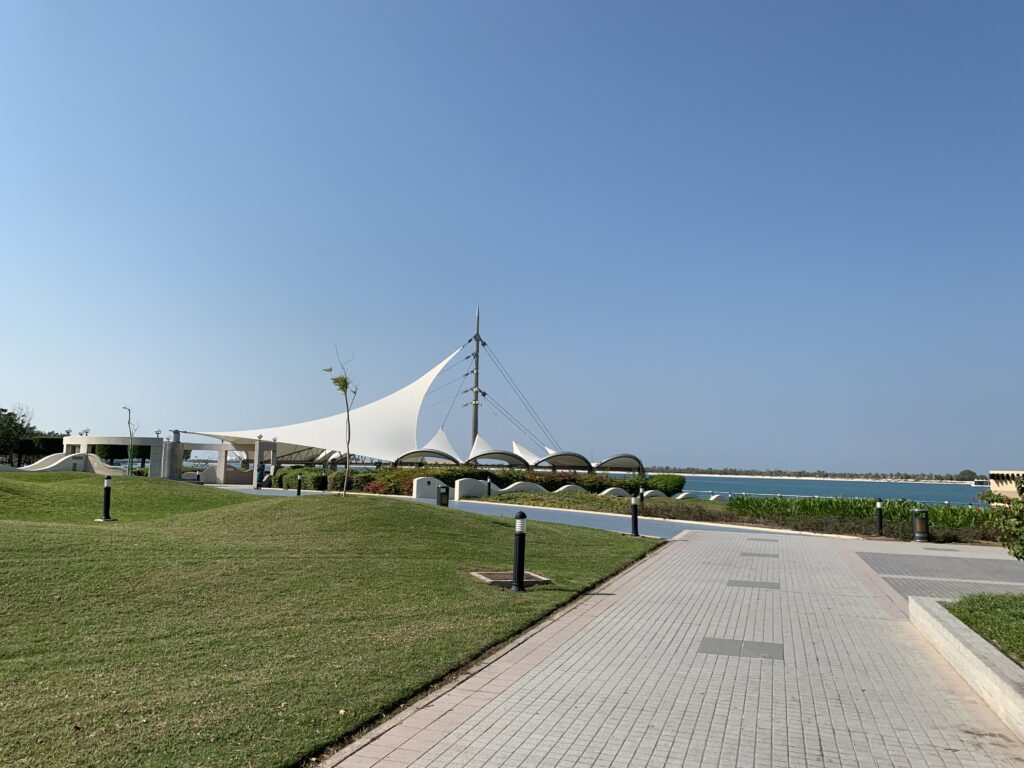
    Let’s start the day by enjoying a scenic stroll through the Corniche. The Corniche is one of the most beautiful stretches in the UAE, made up of an eye-catching 8 km of manicured waterfront lined with cute cafes, play areas and an award-winning beachfront. Part of the appeal of a holiday in Abu Dhabi is the lovely weather, so why not kick off your week with a good old-fashioned sunbathing session? The city has so many brilliant beaches to choose from, but the huge Corniche is a great place to start. It doesn’t cost a single dirham to access and the pathway to of the Corniche Park are perfect for jogging, walking or cycling on. It boasts a huge inflatable waterpark, an outdoor gym, yoga classes and loads of food trucks.

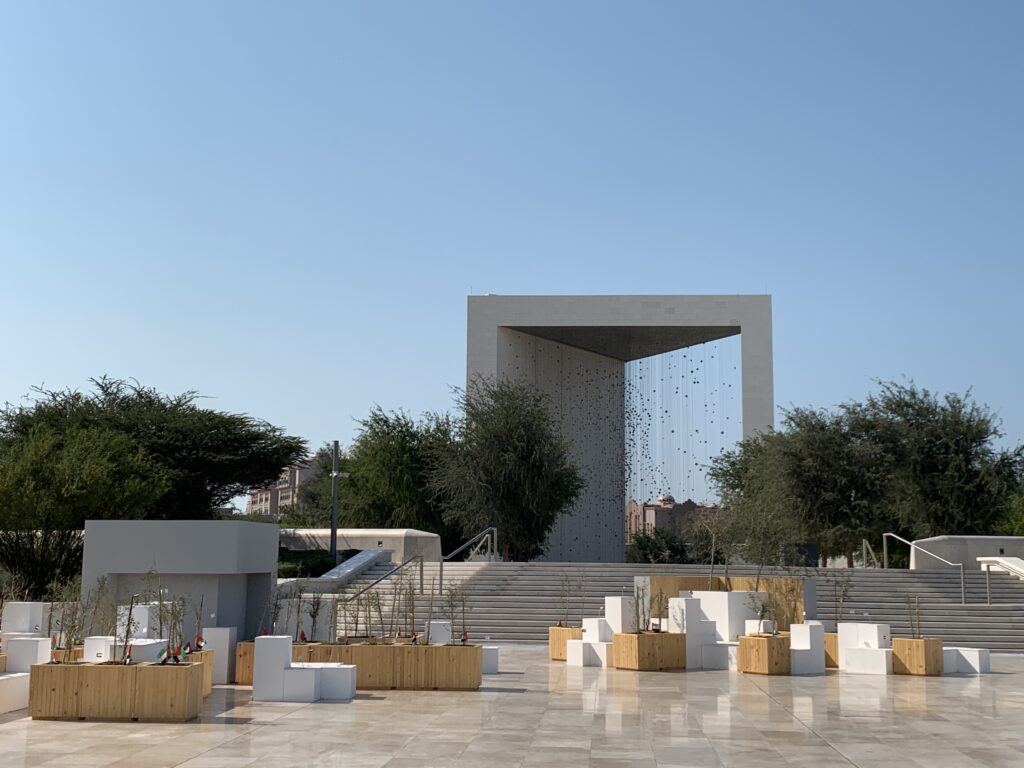
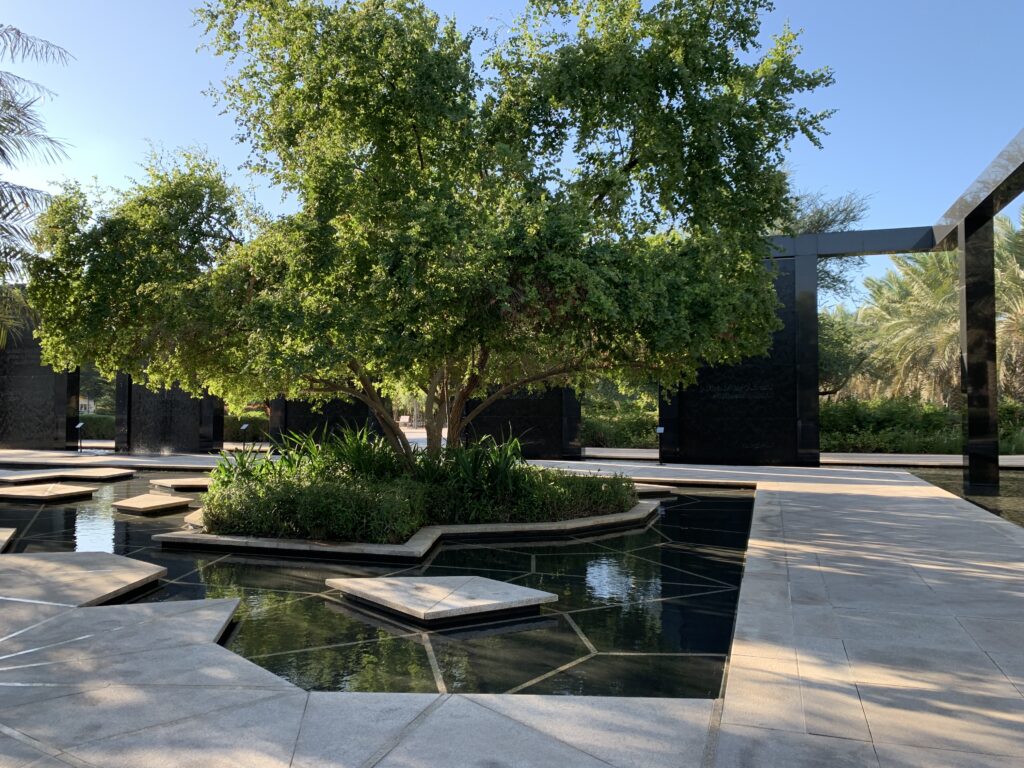
    While walking along the Corniche it’s impossible to miss the Founder’s memorial is a permanent tribute of the late Sheikh Zayed bin Sultan Al Nahyan, the founding father of the UAE and a great place to learn about him through art, nature, words, stories and multimedia experiences. The centerpiece of the memorial is a public artwork named The Constellation, a dynamic 3D portrait of Zayed that can be experienced differently from around the city.

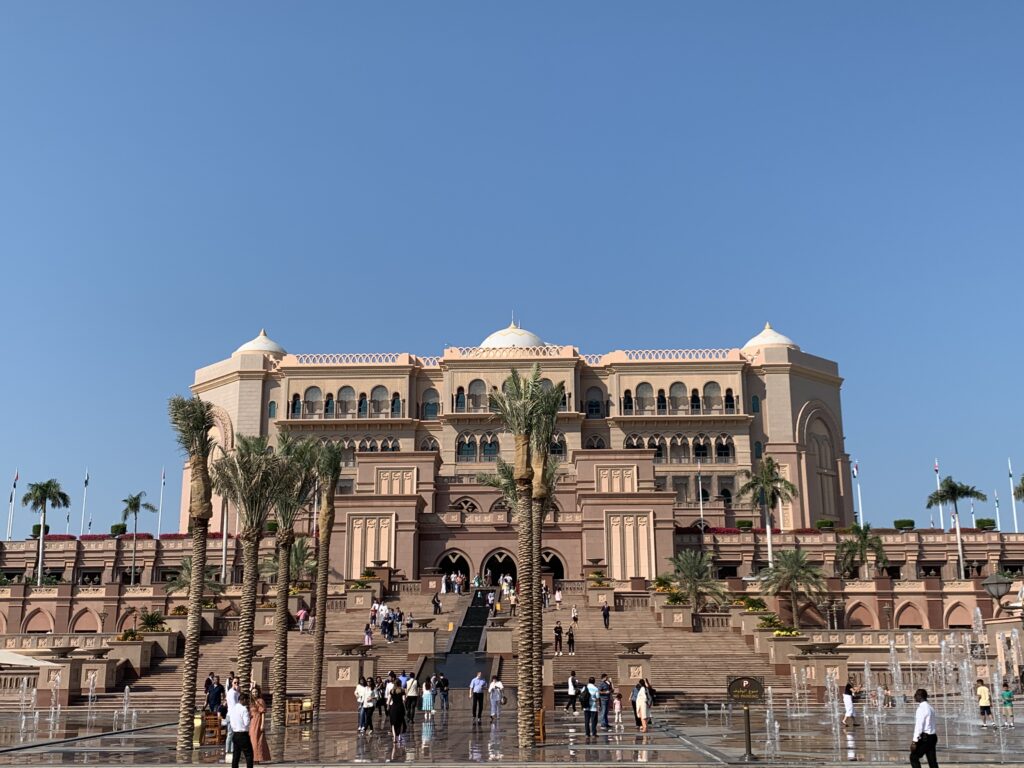
    From the end of the Corniche, a 5 minutes walk will take you to Emirates Palace, possibly the most opulent of Abu Dhabi’s hotels. It’s worth a visit just to see the beautiful building and amazing grounds. But if you can keep a couple of hours free in your afternoon for the most majestic, gasp-inducing of afternoon tea experiences, make a royal appointment at Emirates Palace. The Royal Afternoon Tea Affair is a step above the usual cucumber sandwich fare, too, with luxurious bites such as 24k gold-crusted salmon sandwiches on pumpernickel bread, king crab on brioche, plus freshly baked scones and decadent dessert.


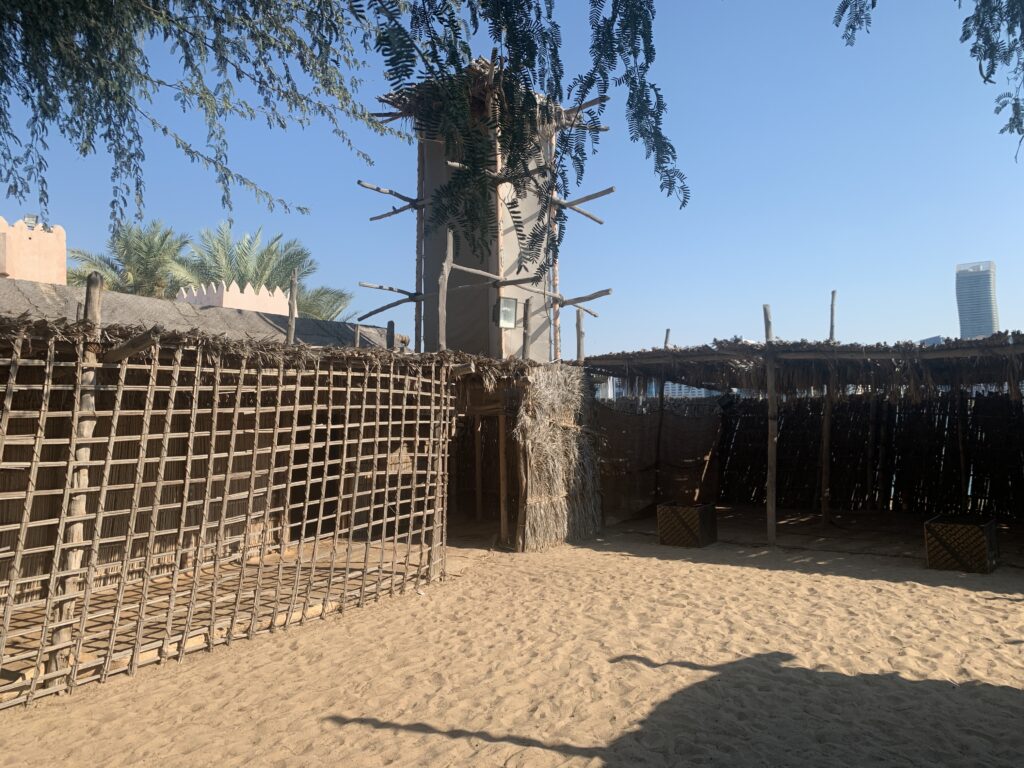
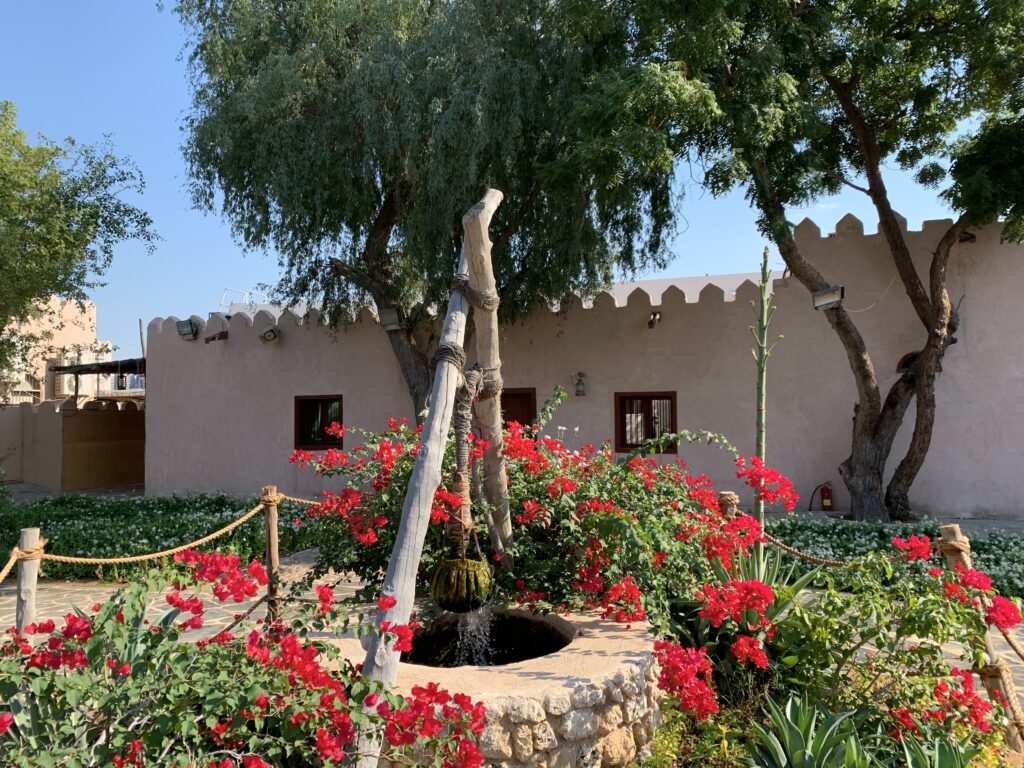
    With your belly full, take a taxi to  the Heritage Village fora blast with the past. Embracing the vibrant, progressive and thoroughly modern Abu Dhabi is brilliant, but it is nice to take a glimpse into the past now and again, too. Modern-day Abu Dhabi is glitzy, lively and buzzing with excitement. But it’s fascinating to see what it was like before it was transformed into the bustling metropolis that it is today. You can retrace the steps of the emirate of a bygone era at Heritage Village, a faithful reconstruction of a traditional oasis on the Corniche breakwater. Replicating everyday life in the pre-oil era of the UAE, this walled complex contains a fort (used to repel invaders from the sea), a souk (for trading goats and other goods), and a mosque. Check out the open museum to get up close with traditional aspects of the desert way of life, from a goat’s hair tent to a campfire with coffee pots. Visitors can also get a first-hand look at a series of workshop where craftsmen showcase skills such as metalwork, glass blowing, pottery, weaving, spinning and pottery before picking up mementos at the spice shop, which offers a wide range of dried herbs, handmade soaps and treasured trinkets. This is a fun way of learning about the history of the city, and it doesn’t cost a thing.

    Day 2 - Louvre, Manarat, Mangroves national park

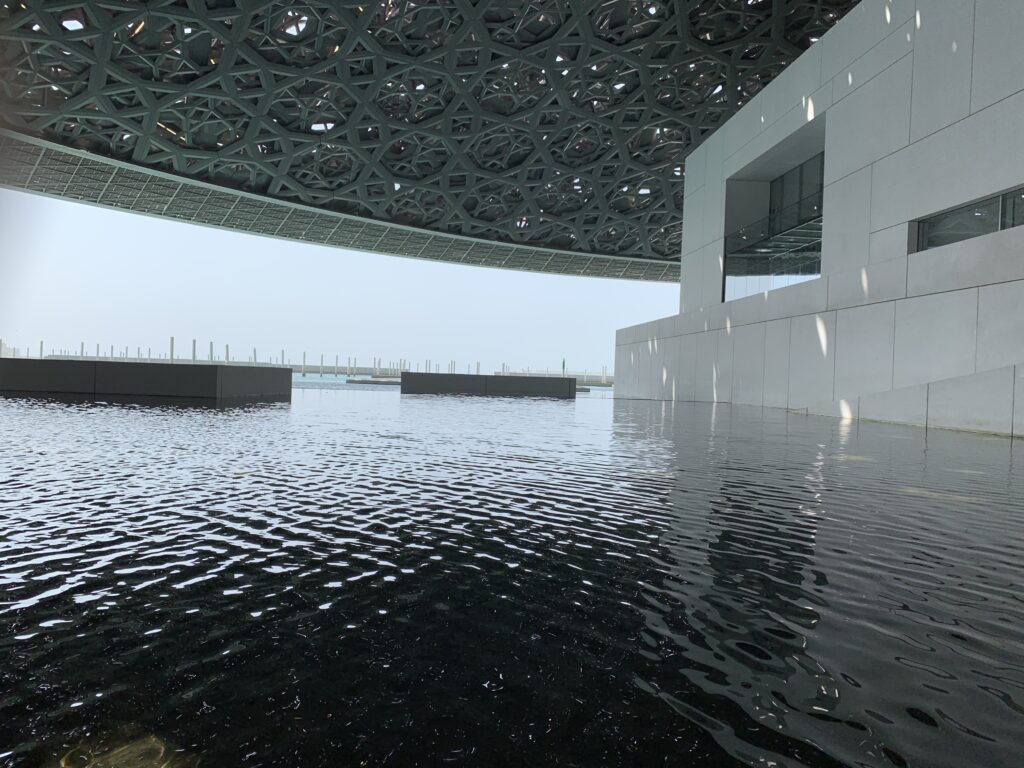
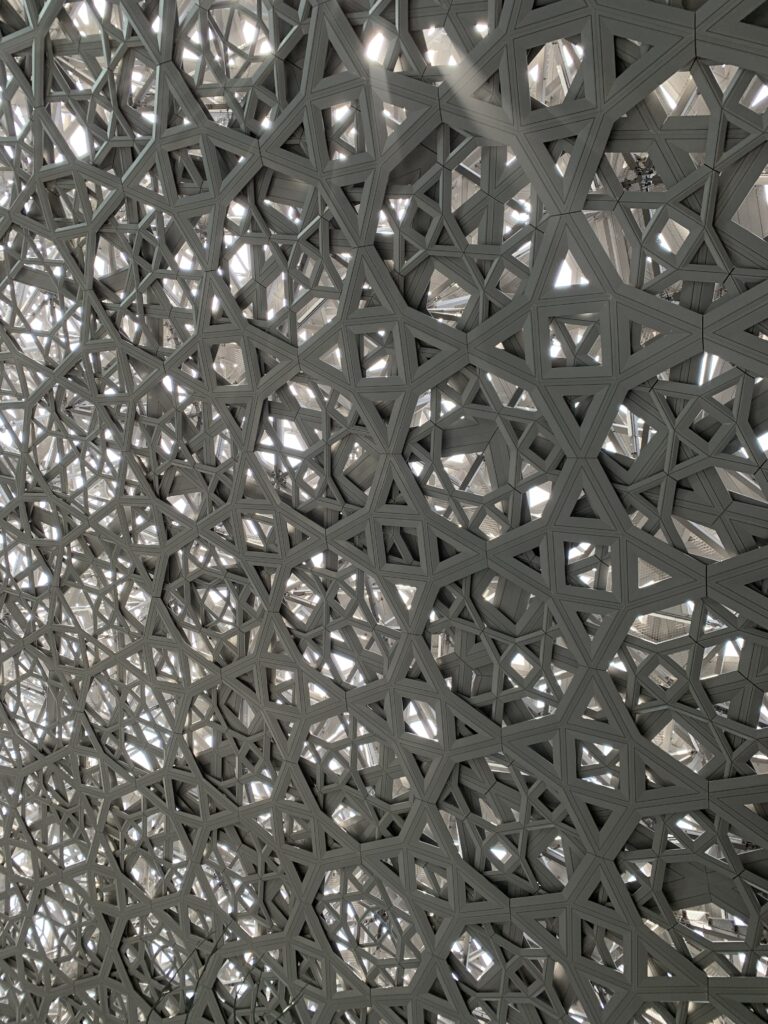
    Since opening in November 2017, the Louvre Abu Dhabi has been named one of the Seven Urban Wonders of the World. This dream development that was more than a decade in the making has proved well worth the wait. The structure of the museum really is beautiful. Before you even start to examine the amazing objects that are housed inside, you’ll be totally wowed by the building. Designed by French architect Jean Nouvel, this is the kind of building that was made for Instagram. The Rain of Lightroof is made from thousands of metal stars, and when the sun filters through the gaps, the effect is absolutely stunning. Just walking around the promenade, looking out over the water and photographing the cool tree statue and other striking piecese of art is a brilliant experience on its own. Then when you get inside, the collection of more than 900 incredible artworks and artefacts is out-of-this-world amazing. The landmark venue is home to hundreds of incredible works of art, spanning centuries and civilizations, from artistic visionaries such as Van Gogh and Andy Warhol to Leonardo da Vinci. 

    However, Louvre Abu Dhabi is not he sole artistic hub of Saadiyat Island. A short taxi ride will take you to Manarat Al Saadiyat. There’s always so much going on at this arty hub. Whether you’re into music, cinema. Art, or just want to work on your own creative skills, you’ll find something to capture your interest at Manarat Al Saddiyat. This establishment was the first piece in the Saadiyat Cultural district jigsaw, and its program is always full of workshop, gigs, art fairs and other special events. Head to the drop-in studio to have a go at creating your own work of art for 30 dirhams. All the materials are provided and art instructors are on hand to offer inspiration. Meanwhile, the Cinema Space is a legendary Abu Dhabi institution. Free screenings of restored classics and contemporary world films are shown every Monday and Saturday.

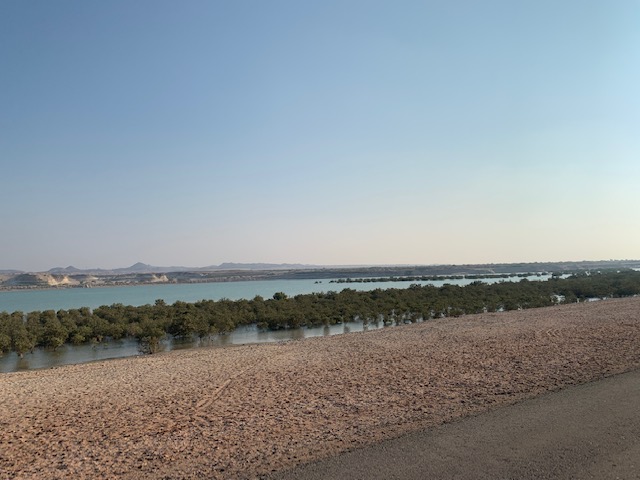
    Before you arrived in Abu Dhabi, you might have imagined that it was a place made up entirely of skyscrapers and sand. But many people don’t realize the city is home to so many areas  of natural beauty as well. The Mangrove National Park contains thousands  of mangrove trees and a huge variety of wildlife. There are still plenty of gorgeous views of the lush mangroves to take in, but you won’t see them at such sedate pace from the land. A taxi ride from Saadiyat to downtown Abu Dhabi will take you to the Mangroves Anantara hotel where you can rent a kayak to explore the natural park. Have yourself an “oar-some” time by picking up a paddle and taking to the azure waters for a fine kayaking session. There aren’t many better ways to explore the vast mangrove forests, and you can even journey to some of the emirates vast network of idyllic islands while doing so.

    Although you can still see the towering buildings of the Downtown area from the water, it feels far removed from all the hustle and bustle of the city. Head here a few hours before sunset and hire yourself a couple of kayaks. Then you are free to explore the waterways between the trees, hunt for wildlife and rest on the secluded beaches at your leisure. Afterwards you can grab a coffee from one of the many food outlets along Eastern Mangroves Promenade, then sit back and relax as you watch the sun go down.

    Day 3

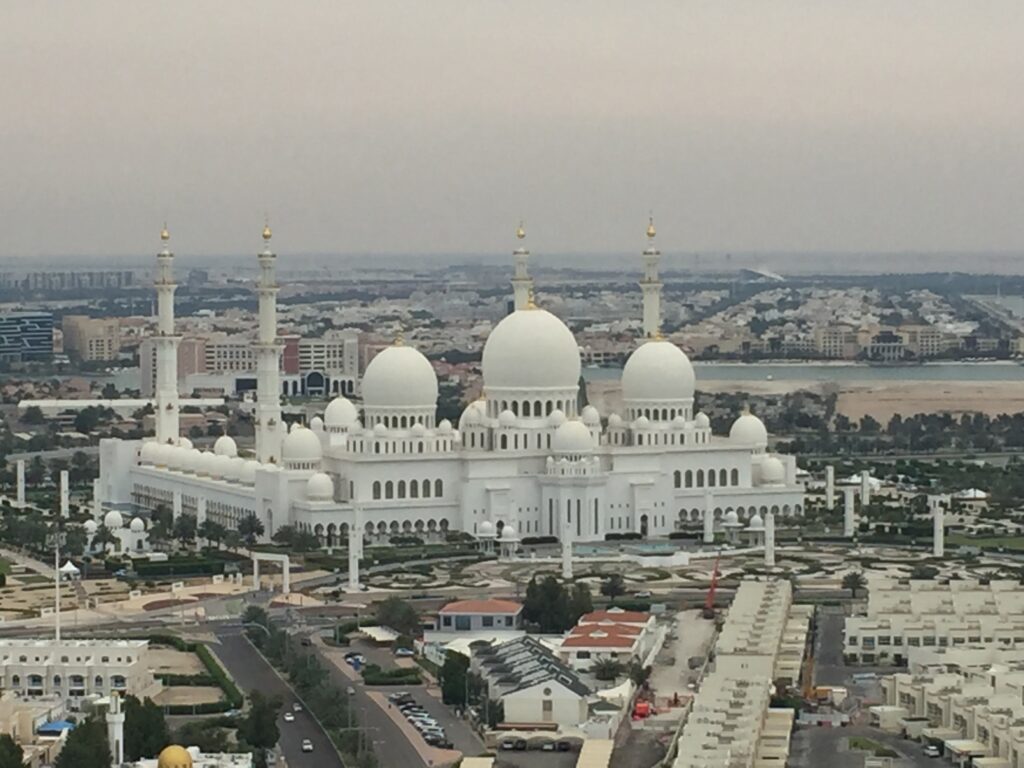
    Take a tour of the Sheikh Zayed Grand Mosque. Mere words cannot do this magnificent landmark justice. Put simply, it is an awe-inspiring architectural marvel that you must visit. Voted the world’s second favorite landmark (ranking above iconic tourist attractions such as the Taj Mahal and the Sydney Opera House), the gleaming white structure boasts 82 domes, the world’s largest hand-woven carpet and a chandelier bedded with one million crystals. Free guided tours are held during the week, with knowledgeable staff on hand to answer questions and boost your understanding of Islamic culture. The bold vision of His Highness Sheikh Zayed bin Sultan Al Nayhan is a fitting legacy to his leadership.

    The Sheikh Zayed Grand Mosque is one of the most important things to see while you are staying here in the capital. Just driving past it for the first time is enough to make your jaw drop. With countless gold-embellished white domes, it really is a beautiful creation (and one of the biggest of its type in the world). The structure can hold up to 40.000 people, and it was inspired by designs from Turkey, Morocco, Pakistand and Egypt. The iconic prayer hall holds the world’s largest chandelier, and the experience of wandering bare foot around the immaculate passage ways is totally humbling.

    Stroll around Umm Al Emarat Park. Abu Dhabi is blessed with many picturesque green spaces and Umm Al Emarat Park in the Mushrif area is one of the best. One of the largest and oldest park in the city it is home to an animal barn, amphitheater, botanical garden, children’s garden and many other wonderful features. Take a picnic, go for a jog or just enjoy walking around. On a Saturday afternoon, you can also experience the Ripe Market. This community event features more than 100 awesome stalls full of fruit, vegetables and other local produce. So whether it’s fresh food you want or a little something to spruce your home, you can be sure the Ripe Market has the answer. But it’s not all about splashing the cash, there’s live music, entertainment, workshops and activities also on offer.

  • Adventures,  Camping,  Liwa Oasis,  Middle East,  Places,  United Arab Emirates

    Liwa Oasis

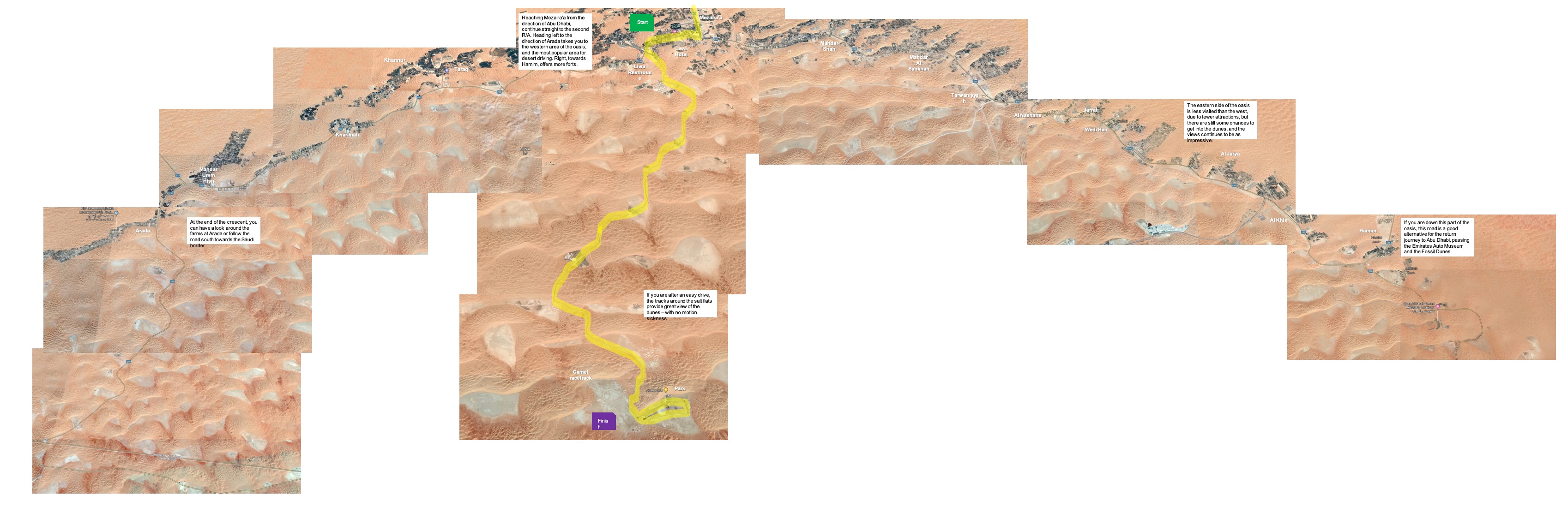
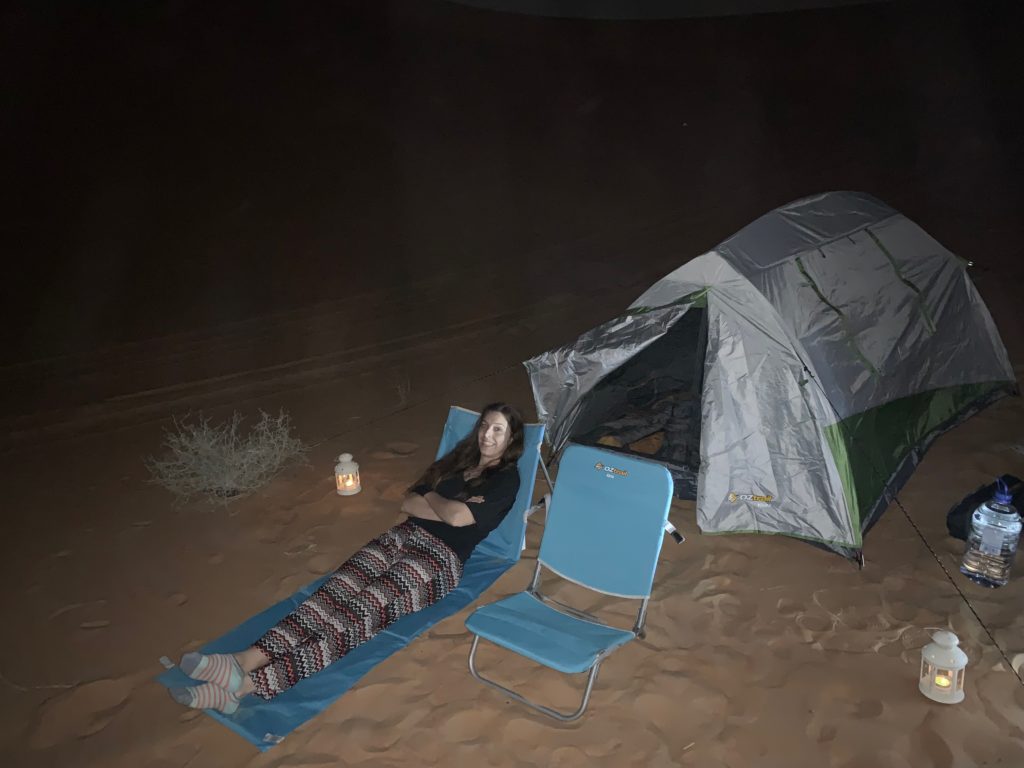
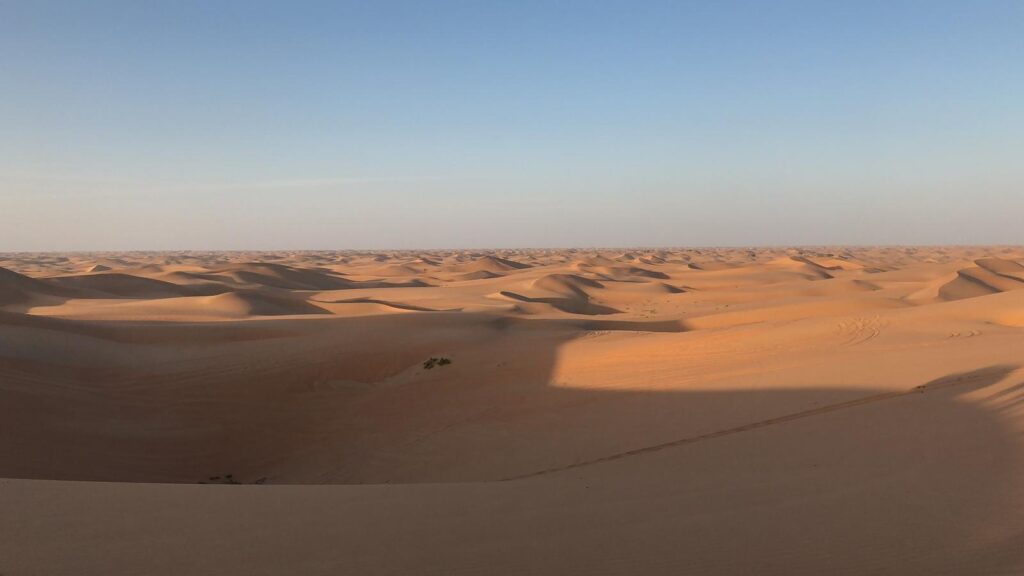
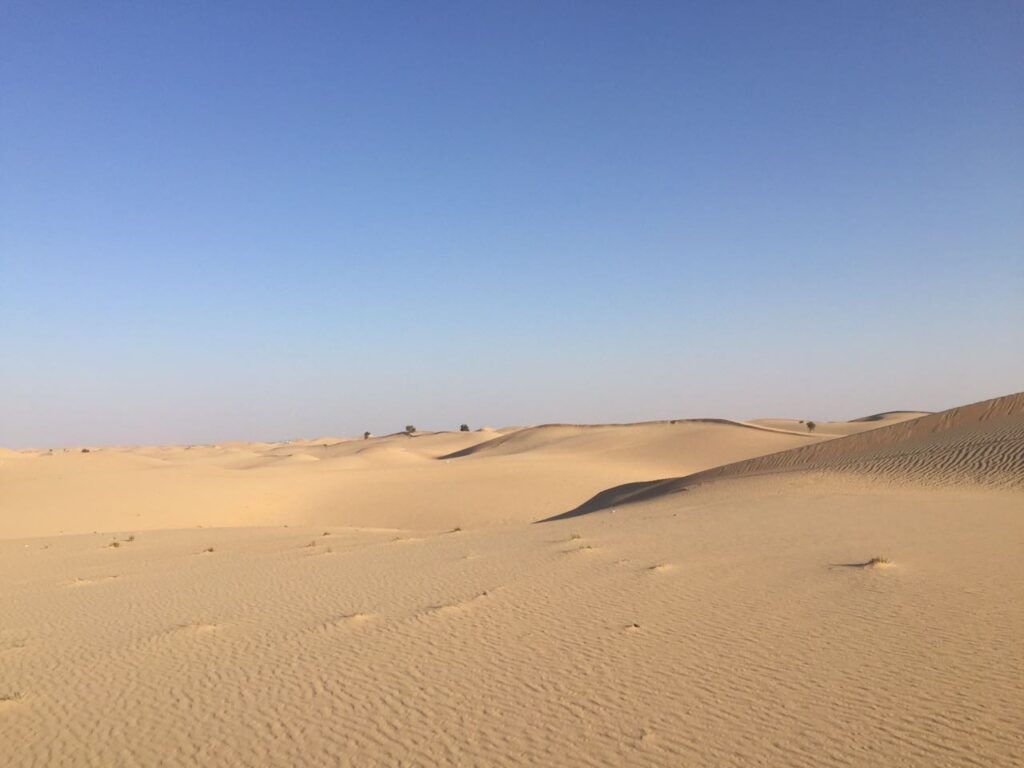
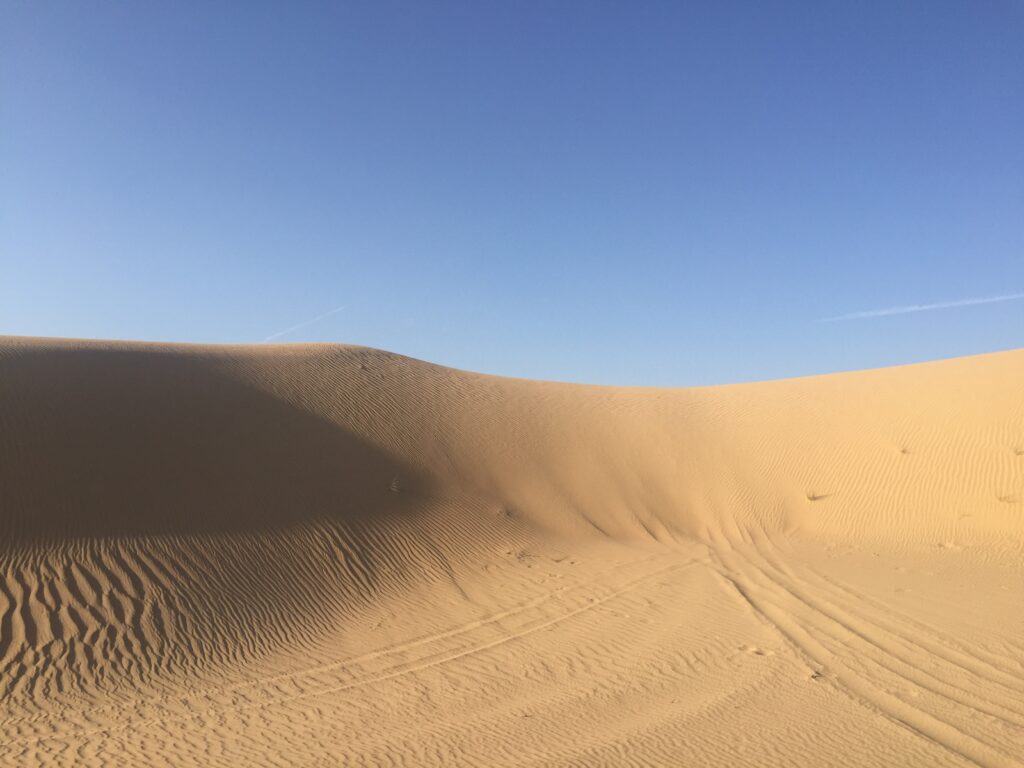
    A trip to Liwa in the Empty Quarter (or Rub Al Khali) is a must for any off-roader during their time in the Middle East. It’s the biggest sand desert on the planet. The sheer scale of the scenery and the size of the dunes has to be seen to be believed. This epic route is more of an expedition than just a spot of camping, so go prepared for the experience of a lifetime.

    Home to the Bani Yas tribe, ancestors of the current ruling family of Abu Dhabi, the fertile Liwa “crescent” stretches over 150 km, and is dotted with small villages. Mezaira’a, at the center of the crescent, is the largest settlement and if you are heading into the desert, the shops and the petrol station here will be your last chance to buy provisions and fuel, so stock up. Extra jerry cans of petrol are essentials and it’s better to take too much food and water than too little. Four our camping night we took 10 L of water that we used for drinking, washing and cooking.
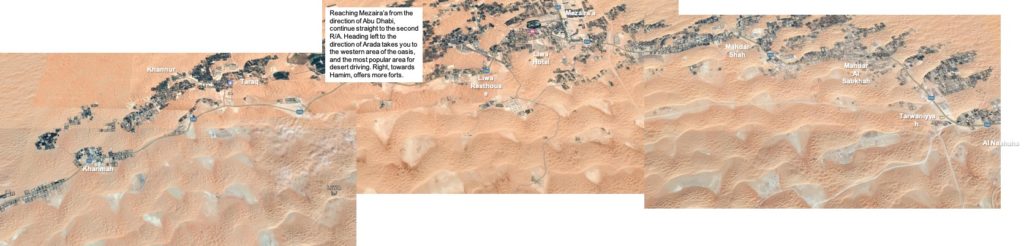
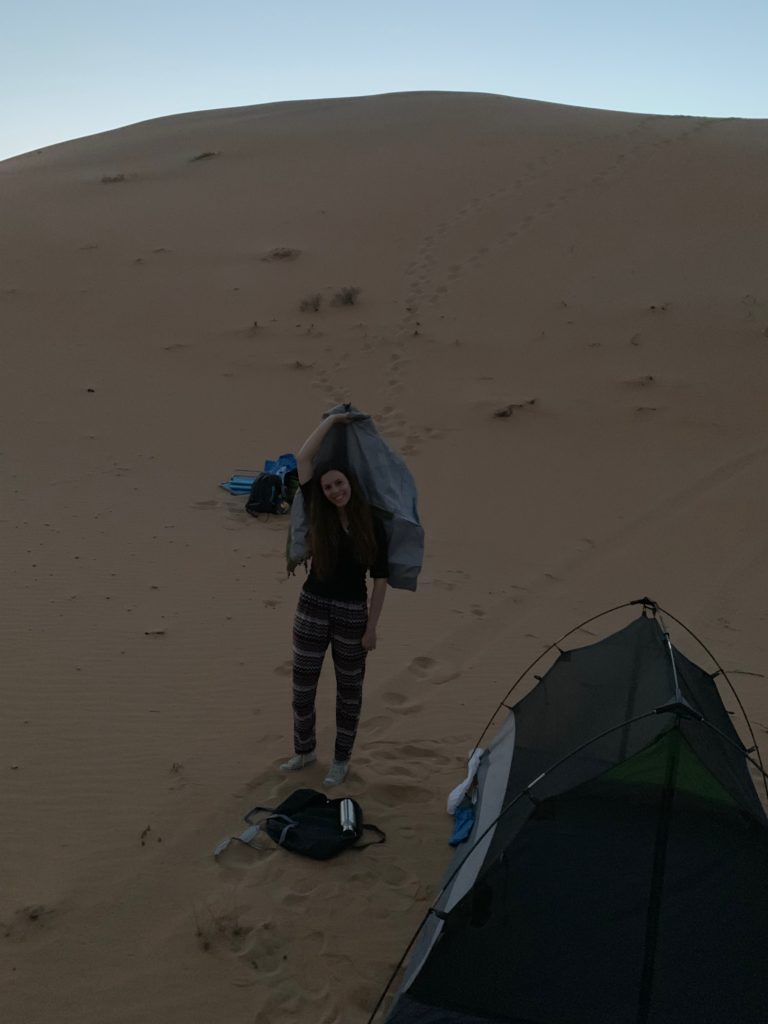
    An essential part of any Liwa adventure, camping in the desert is the most popular way to spend the night and can be a truly unforgettable experience.

    Waking up to miles of sand rolling into the distance or the sight of the snaking silvery dunes under the moonlight is quite magical. This area provides some of the best desert views in the UAE.
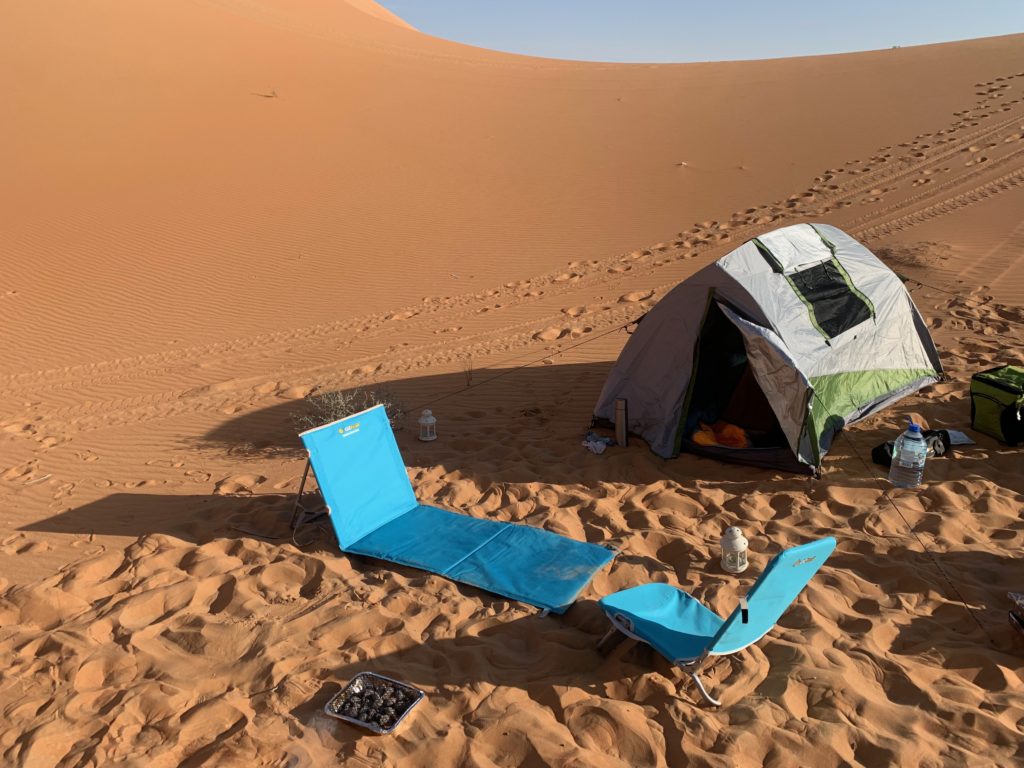
    You can camp just about anywhere, so take any of the roads and tracks into the desert off the main road through the oasis. Just make sure you drive far enough from roads, habitations and activity to find a peaceful spot and get settled, long before the sun goes down.

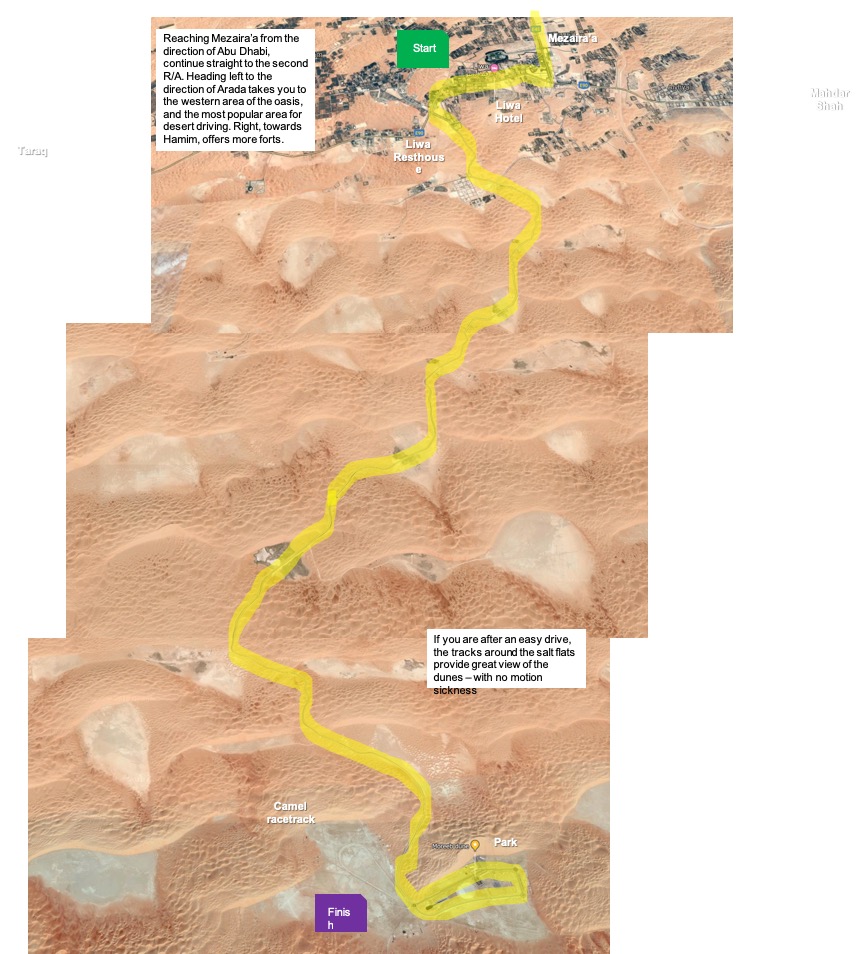
    One particular good area is on the road to Moreeb Hill, passing the Liwa Resthouse.
  • Africa,  Cairo,  Egypt,  Places

    Cairo
    Day 1 - Giza, Memphis and Saqqara

    Before the year 3000 BC, Egypt was divided into Upper Egypt (the southern part) and Lower Egypt (the norther part), according to the flow of the river Nile. It was finally united and with its uninion the Egyptian Dynasties were born (30 overall). The symbol of this unification is in the crown worn by most pharaohs in their statues, the red elongated one that symbolizes lower Egypt and the round white one that stands for the upper Egypt. Egyptian history is divided in Old, Middle and New Kingdom; what Cairo will let you discover is the Old Kingdom.

    The capital of the Old Kingdom was Memphis, now at the edge of Cairo. The name Memphis comes from “mem” which meant “stable” and “nefer” that stands for beautiful (as in “Nefertiti” or Nefertari”). During the Middle Kingdom the capital was moved to Abu XX, in the south. The Middle Kingdom was the time when Egypt was ransacked by the Hittities who spread chaos in the country till King Amon Moses defeated them and moved the capital to Luxor, giving a start to the New Kingdom.

    All these historical facts are reflected in tombs-construction and pyramids. Pyramids are characteristics of the Old Kingdom, whilst in the New Kingdom pharaohs were buried in the Valley of the Kings.

    The Three Pyramids of Giza

    When the Egyptian started building pyramids (with the III Dynasty), they usually built them on the west bank of the river Nile. West is were the sun sets, and were the sun god Ra will get the soul of the dead pharaoh to escort him to the after life. And of course the pyramids needed to be set on a flat area and slightly elevated to survive the (numerous) floods of the river. The Ghiza plateau served all these purpose and for this reasons the pharaohs of the IV Dynasty decided to erect their resting places here.

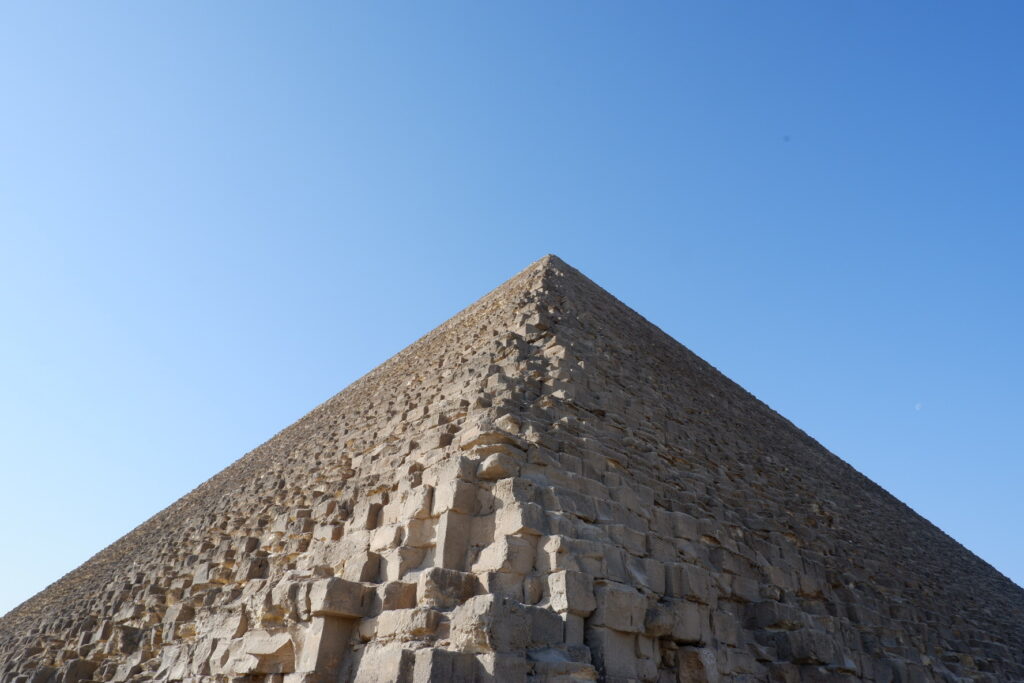
    Despite 6 pyramids in this area, your attention will be immediately caught by the big pyramid of Cheope (2500 BC). It was build over the course of 20 years with over 2 millions block of limestone coming from a quarry on the mountains east of Cairo. It’s surface was originally smoothened by more whitish-looking limestone that was either raided in the centuries or just degraded, and it’s top adorned by a small gilded triangle (raided, it goes without saying). Do not believe the stories spread by Hollywood and by comics of slaves being forced to build pyramids. It has been estimated that 20.000 persons worked actively at its constructions, joined by 80.000 seasonal workers (those farmers that could not work during the Nile floods). And every single person was doing this work voluntary, as an offer the the living god, the pharaoh. And recompensed with beer.

    The main entrance is not the one through which hordes of tourists enter today, but the one above, sealed by a a massive block of granite. This was after all a burial building, there was no need to reopen that door once the pharaoh had been mummified and buried. The entrance to the tomb is around 15$ per person, but we followed the advice of our guide and did not go inside. Aside from the massive flow of people swirling those corridors, the tomb is completely empty. There are mush better pyramids to visit inside in Sakkara. However, a stop in front of the map gave us an idea of the inside. There are three burial chambers: one is incomplete, one is falsely named the Queen burial room (the Queen has her own pyramid just behind) and the main one. However, when the tomb was opened, the archeologists found the sarcophagus with no lid and the mummy still inside; for this reason they were led to believe that there still is an hidden chamber.

    Weathered stone flank of a pyramid at Giza against a clear blue sky
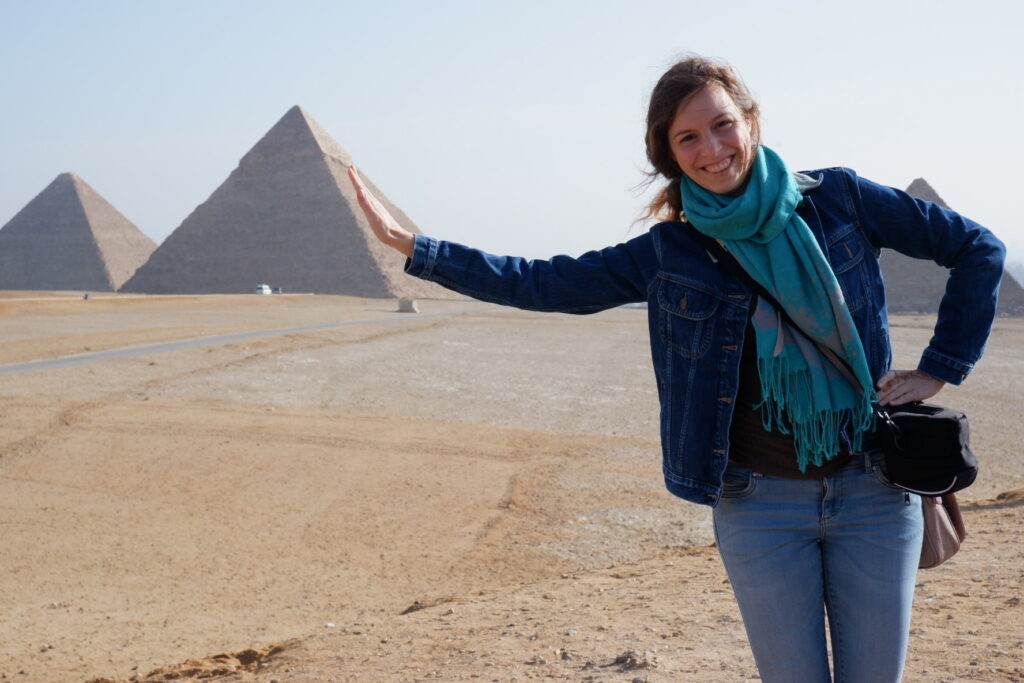
    Traveller posing in front of the three pyramids of Giza

    Just behind the pyramid of Cheope there are three smaller ones, for his mother, his Queen and his sister. When the archeologists were working on the pyramid of the mother, they accidentally found an hidden pit (preserved by the sand from the tomb raiders) with the furnitures of her royal chambers.

    In 1950 on the North side of the pyramid, another pit was discovered hiding the wooden remains of a boat; this boat, that symbolizes the sun boat through which the soul and body of the pharaoh would cross the river to the afterlife, has been recently restored and can be visible in the Museum.

    On the east side there can be found the mutabahs. Only pharaohs could be buried in a pyramid, but the nobles and the ministers could build smaller and flat tombs around the pyramid of the pharaoh they served. Those cannot be accessed but later during the day there is a treat waiting for you!

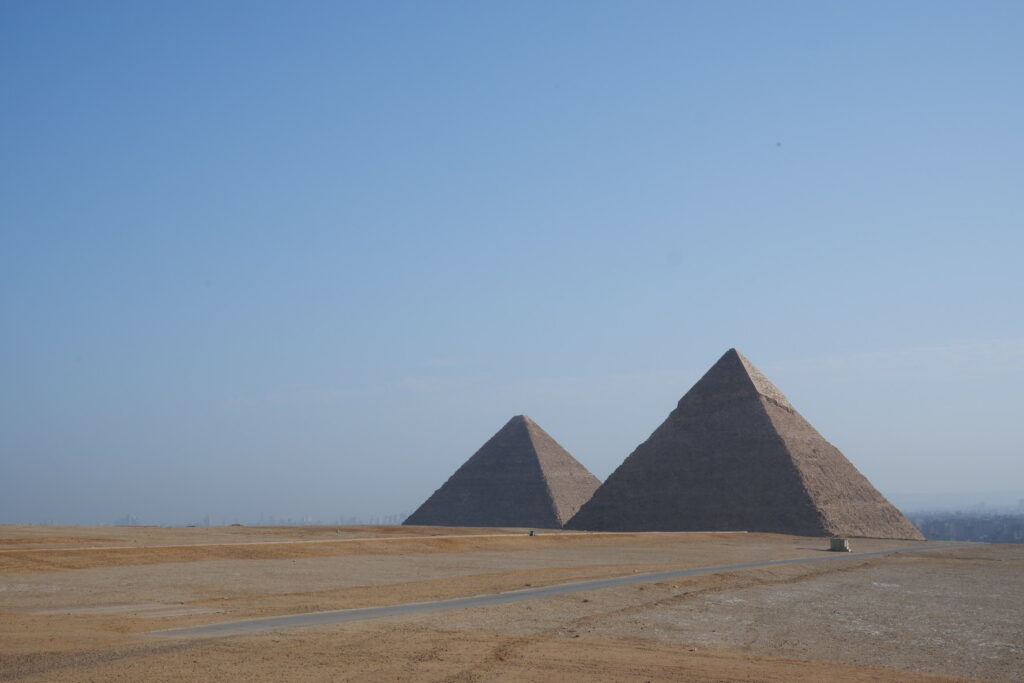
    Two of the Giza pyramids seen across the desert plateau

    Cheope’s second son, Chefren, built 50 years later a smaller (but still impressive) pyramid right behind the big one of his fater. The best view is following the paved street till the viewpoint with the parking lot: from here the 130 m of the pyramid of Chefen will appear to you much more than the ones of Cheope, but it’s simply because it’s built on a higher plane. Look at the tip of the pyramids and you will understand how they were looking in the ancient times, with that whitish limestone cover that made their surface smooth. It’s the only tomb in the Ghiza plateau that has a funerary temple (more to come about it!). Just to the left, the grandson of Cheope, Micerino, built his pyramid 70 years later

    The Sphynx

    Even before reaching the Sphynx, you will notice the harbor at its feet. Before the construction of dams the Nile flooded once a year and its water used to cover the 7 kms to Giza and were used to carry the blocks of limestone from the quarry to this area.

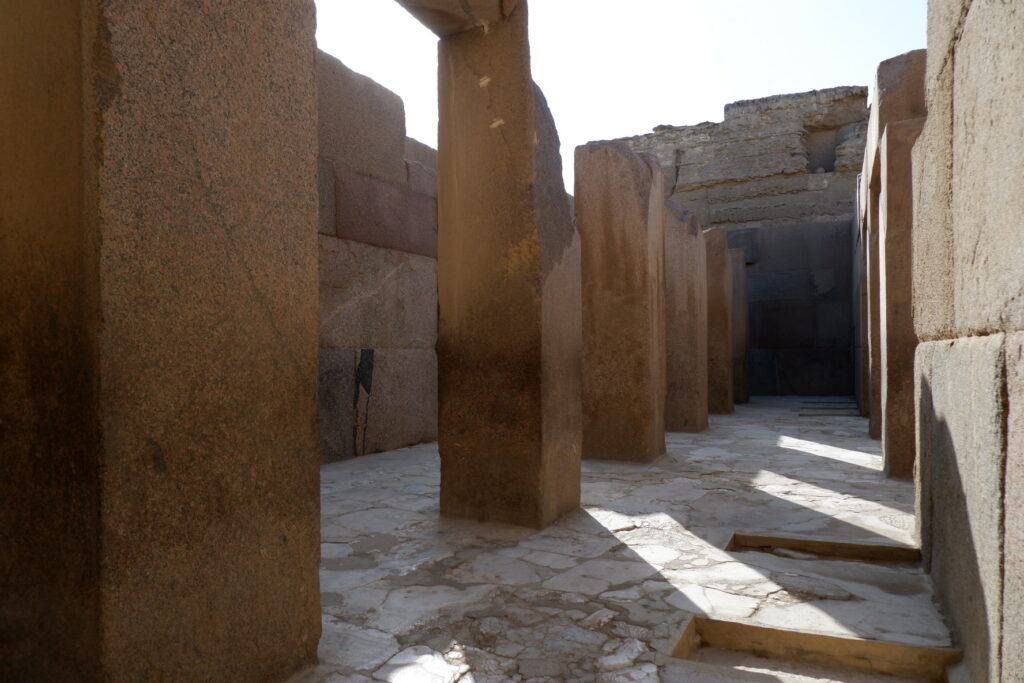
    Granite pillars inside the Valley Temple beside the Sphinx at Giza

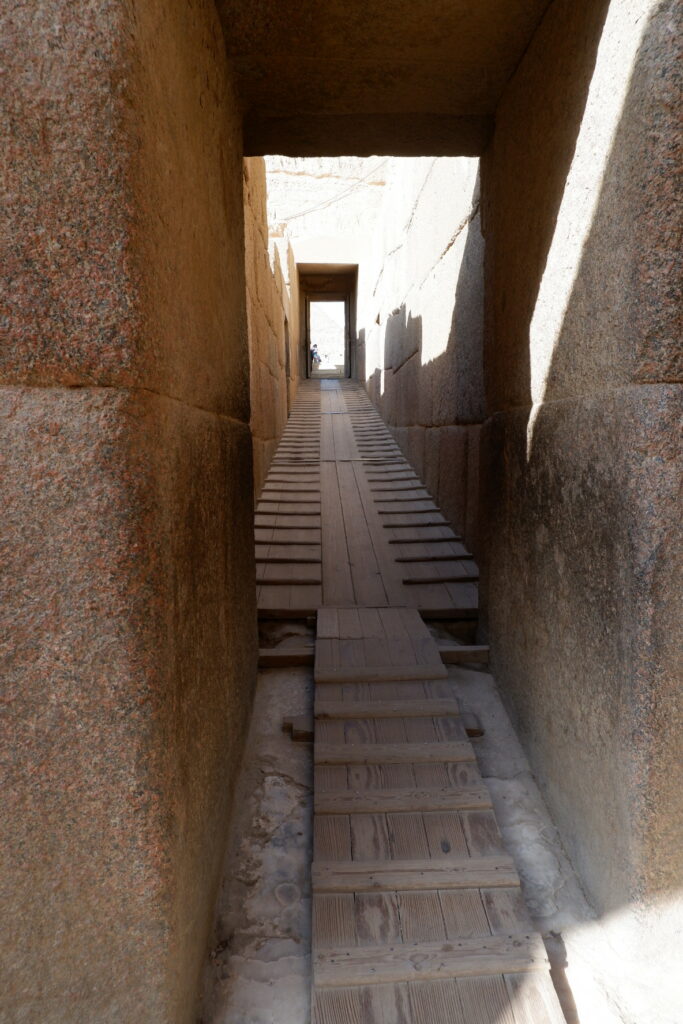
    Just to the right of the harbor, the entrance to the valley of the funerary temple of Chefren opens for you: this funerary construction is made of external limestone, but the walls are made of granite and the floor is alabaster. There used to be a granite roof as well but his son Micerino recycled the material to build his own pyramid…

    This area were you are standing was were the whole process of mummification was taking place. The body of the deceased pharaoh was brought here and the priests washed him with Nile water. His face was then dressed with the jackal mask of Anubis, the deity of the afterlife, the inner organs were removed and put in small jars (canopi) but not the heart, that was embalmed and resealed in the chest cavity. The body was the immersed in salt water to let the skin dry, washed with essential oils and covered with linen bandages. The bandages were glued together and the mummy was carried along the ramp that you see in front of you up to the pyramid.

    Narrow passage between massive granite blocks in the Valley Temple, Giza

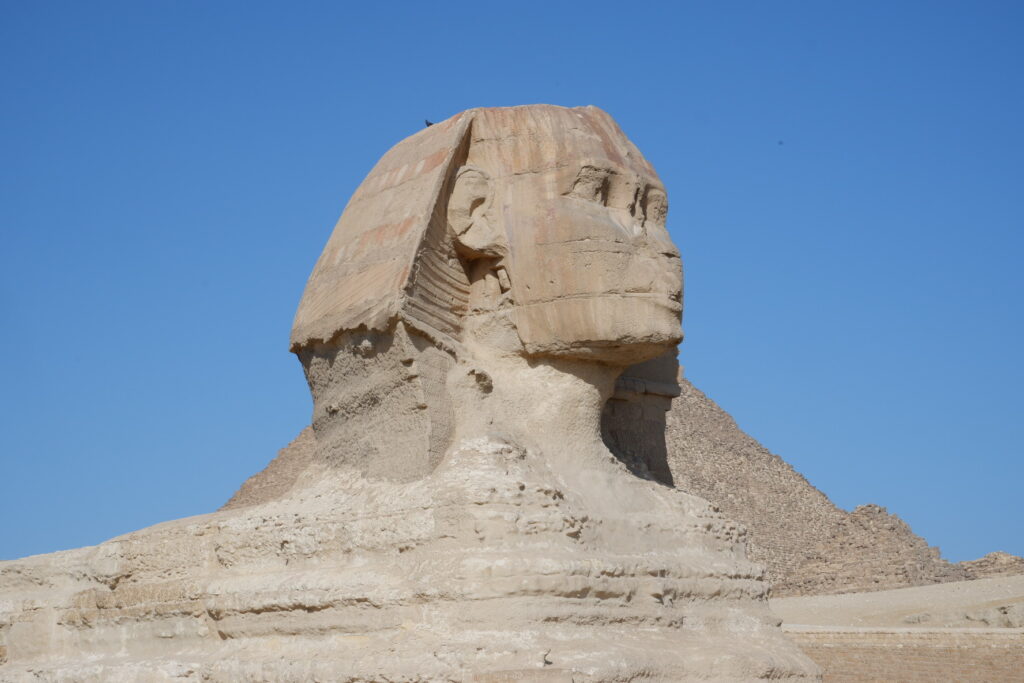
    Now follow that same ramp that the dead pharaohs were taking and reach the marvelous sphynx. The name sphynx comes from the ancient sheseban (image of a god). Its origin dates at the time of the construction of the pyramid of Chefren: that area was being used as a quarry for the limestone and one massive piece was left untouched because of its poor quality. The workers carved it with the body of a lion and the face of Chefren. For years it lay covered by layers of sand; in 1750 BC an Egyptian prince that was visiting the pyramids fell asleep on the sand and in his dreams the Sphynx spoke to him asking him to unbury her and become a true king. Upon waking up, the prince started digging and brough the Sphynx back to light, thus becoming pharaoh Thutmose IV. During the centuries the sphynx was worshipped by the Greeks and the Romans conquerors who built small temples in front of her. The nose is missing due to an Arab fanatic in the Middle Ages that believed the Sphynx was a malevolent spirit. 

    On your left while you are standing on the ramp, look for the village where the pyramid builders used to live.

    The Great Sphinx of Giza seen in profile

    Memphis

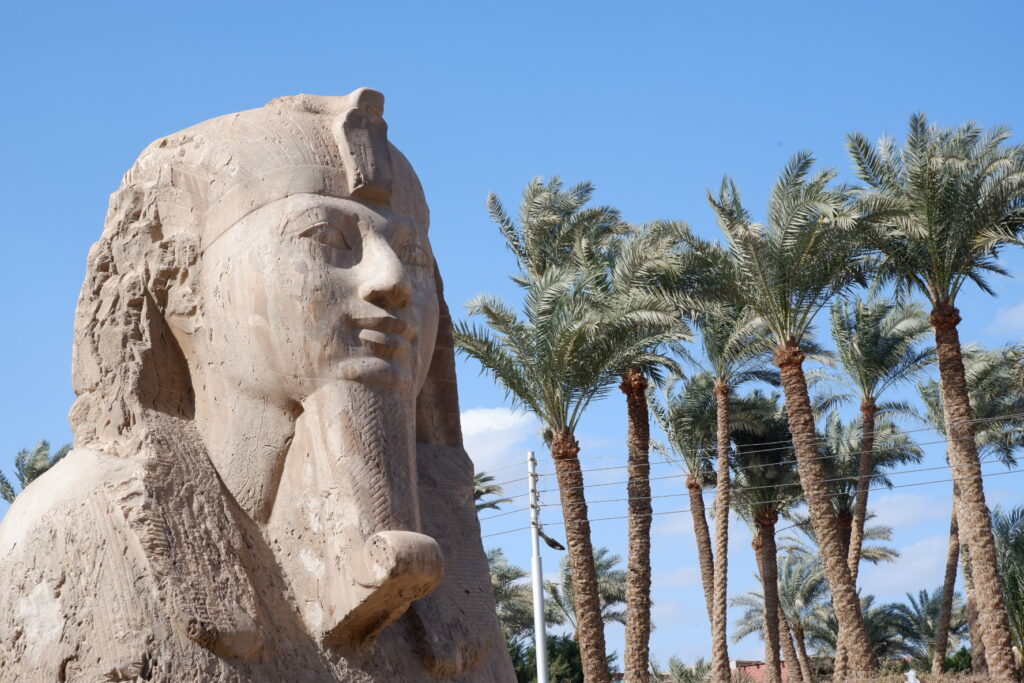
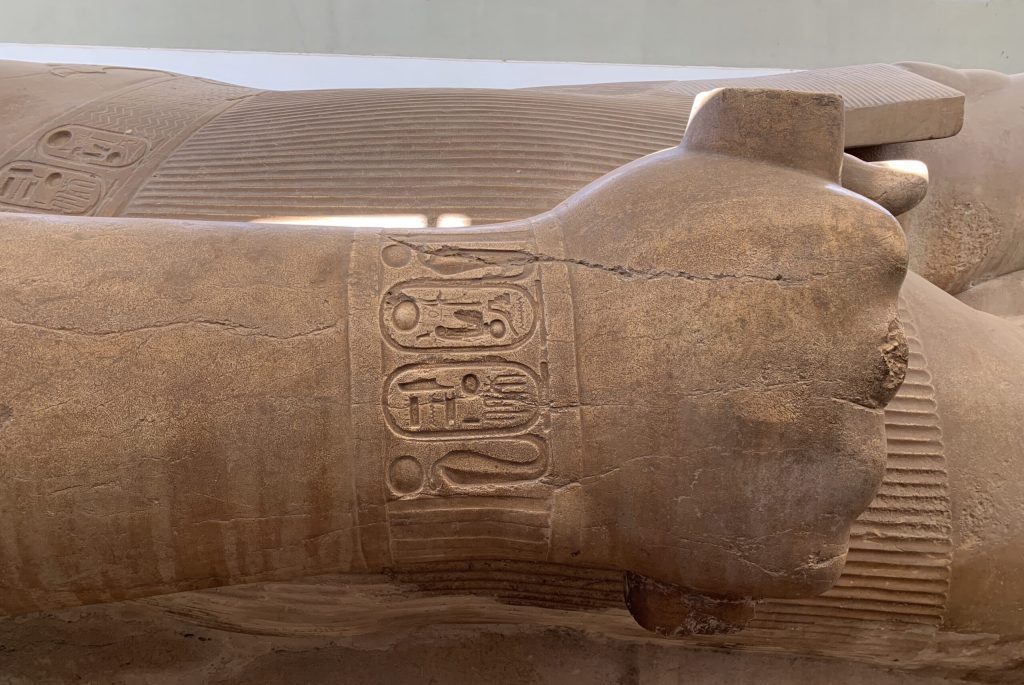
    Even during the New Kingdom, when Luxor was capital, the famous Ramses II resided in Memphis during the year. Here he built his palace, whose ruins now cover the whole neighborhood, and a temple dedicate to the god Ptah, deity of creation. The ruins of the temple are nowadays an open air museum in the middle of Memphis. Statues of the god are everywhere, either depicted as he is molding clay or holding a sceptre. You will notice that differently from Giza, where the ruins have been well preserved by the dry soil, here almost all the statues are ruined because of the clay’s presence. Only two are still in one piece, the sphynx (depicting either a pharaoh, or his XXX) and the granite statue of Ramses II. Ramses is depicted with symbols of Upper and Lower Egypt, and his left leg forward, since he his actions are commanded by his heart. Inside the museum there is a bigger limestone statue of Ramses II, found lying there on the left side; for fear that the materials would get damaged, the whole museum was built around it. Ramses II or Ramses the great ruled from the age of 26 for 67 years, and he had 40 wives and over 200 children. All the statues of the pharaohs are depicting some hieroglyphs that carry their birth name and the coronation name inside an oval (cartouche). As every hieroglyph, they can be read either from right to left or from left to right, depending on where the faces of the humans or the beaks of the birds are oriented. But of course such a difficult and elaborate way of writing could not be used in everyday life, and the more simple demoticon was used for contracts, marriage licenses etc. 

    Colossal head of Ramesses II among palm trees at Memphis, Egypt
    Hieroglyphic cartouche carved on the arm of the fallen colossus of Ramesses II, Memphis

    Saqqara

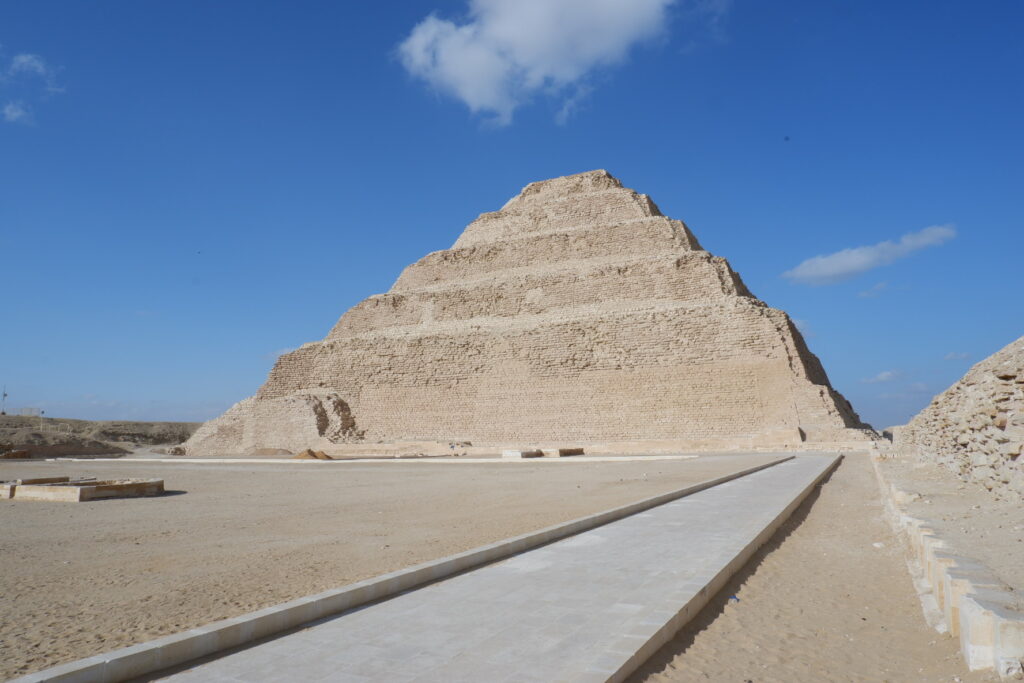
    When driving around Memphis it’s stunning to see the plush vegetation of palms and other trees, but it’s even more impressive the abrupt stat of the desert once you reach Saqqara. Seems like the exact place where the water of the Nile reached at the time of its floods is marked by a line of trees that suddenly turn into sand. Saqqara gets its name from the god with the face of a dog that was hereby worshipped. In Saqqara you will see the first pyramid, called the “step pyramid” (2700 BC).

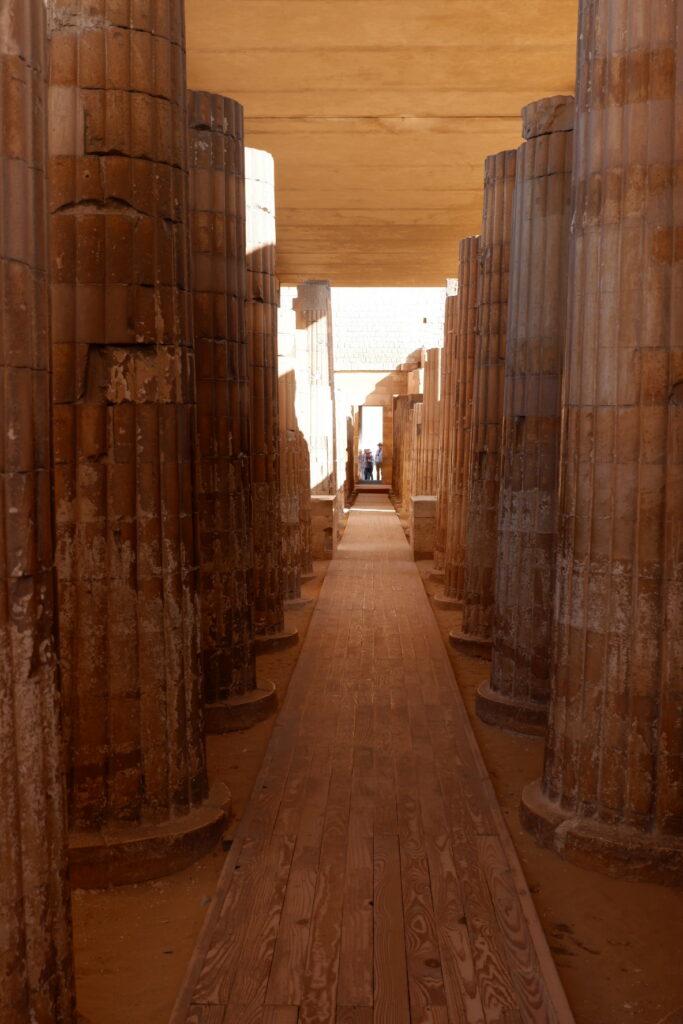
    Colonnaded entrance corridor of the Step Pyramid complex at Saqqara

    The First and Second Dynasties of pharaohs were buried in mud mastabaha that of course did not survive the injuries of time. The first pharaoh of the Third Dynasty, Djozer, was the first one to commission to his architect Imhotep a stone tomb that would survive for centuries. Now, we all know the name Imhotep from movies such as The Mummy; the truth is that after this first building he became so famous that he was nearly revered as a god. First of all, Imhotep built a colonnade entrance with 42 columns shaped like papyrus plants, that symbolizes the 42 provinces of Egypt (there is also a small wall separating the Upper from the Lower Egypt. He was still not confident enough to believe that the columns would held the weight of a granite roof of papyruses trunks so he attached them to the wall. 

    The Step Pyramid of Djoser at Saqqara, Egypt

    You walk the colonnade and reach an open court, symbolically delimited on your left by a mastabah and on your right by the step pyramid. The first idea of Imothep was to simply build a stone rectangular mastabah; upon seeing it Jozer asked him to make it longer, the to add a send mastabaha on top, then one more, and so on. This is why the pyramid has this appearance of steps. Djozer’s son got the idea from his father but his pyramid crumbled to pieces. It was Djozer’s nephew Neferu that carried on the pyramid idea, first building a very audacious 56 degrees steep angle pyramid that he had to adjust towards the tip (bent pyramid of Dashur) and the building the first real pyramid ad we know them in red limestone (red pyramid in Dashur).

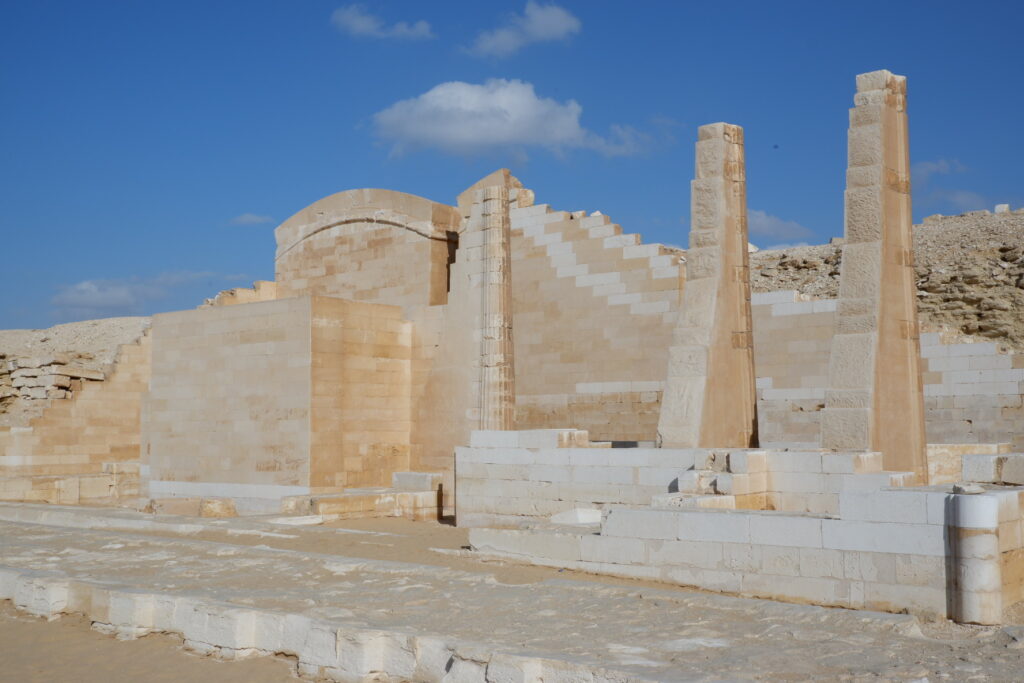
    Ruined temple walls and columns in the Saqqara necropolis

    While walking the open court look for an opening to your right: this is the area where the hepstat festival was held. The hepstat was sort of a reconfirmation of the pharaoh every 30 years, where he was to battle with a bull to prove he still ha the strength to rule. Later on in the dynasties, this became a rule every 5 years cause rarely the pharaohs ruled up to those 30 years.

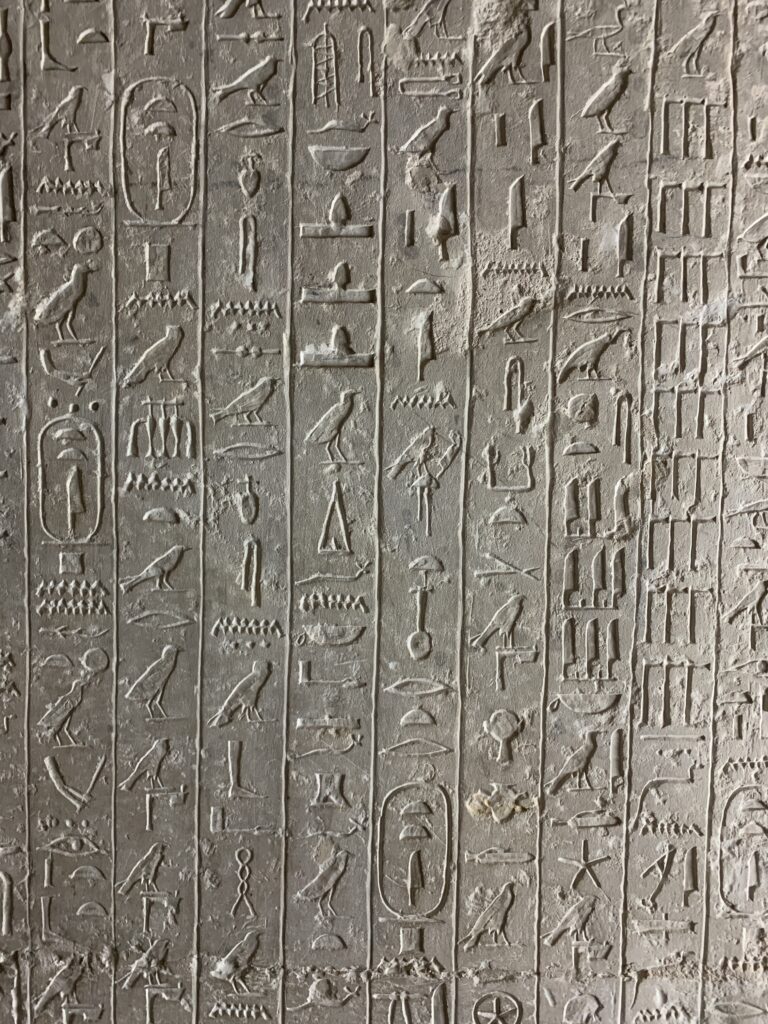
    After the brief excursus to Memphis for the Fourth Dynasty, the Fifth Dynasty went back to Saqqara for their pyramid building. Don’t be discouraged by their appearance from their outside: yes, they do look just like mounds of sands, but that simply because the blocks of limestones had been “recycled” by the 4 following Dynasties of the Middle Kingdom when the economy was not doing well. The Fifth Dynasty pyramids were the first to have hieroglyphical carvings inside. Those were either prayers or spells that the dead pharaoh could use to pass through various chambers or alcoves of the afterlife. This habit was lost in the Middle Kingdom, and was resumed in the New Kingdom where the walls of the tombs were carved with hieroglyphics and papyri guiding the pharaoh through the afterlife journey. What came to be known as “The Book of the Dead”.

    In Saqqara you will encounter the pyramid of Teti, the one pyramid which we visited inside. Through a small and long tunnel you will reach two burial chambers, where the roof is covered with carving of stars and the walls of hieroglyphs; look for the cartouche of Teti XXX. In the main chamber you will be awed by the size of the sarcophagus around which the whole pyramid was built, cause there would be no way of making it fit through the small corridors.

    Wall of carved hieroglyphs at Saqqara

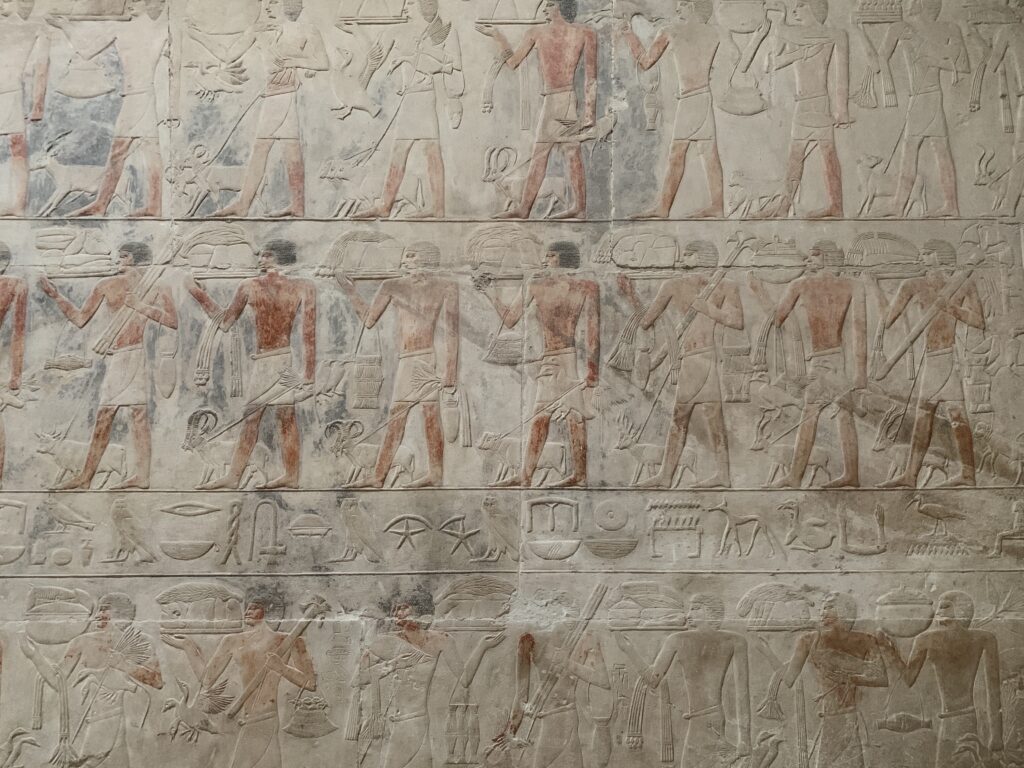
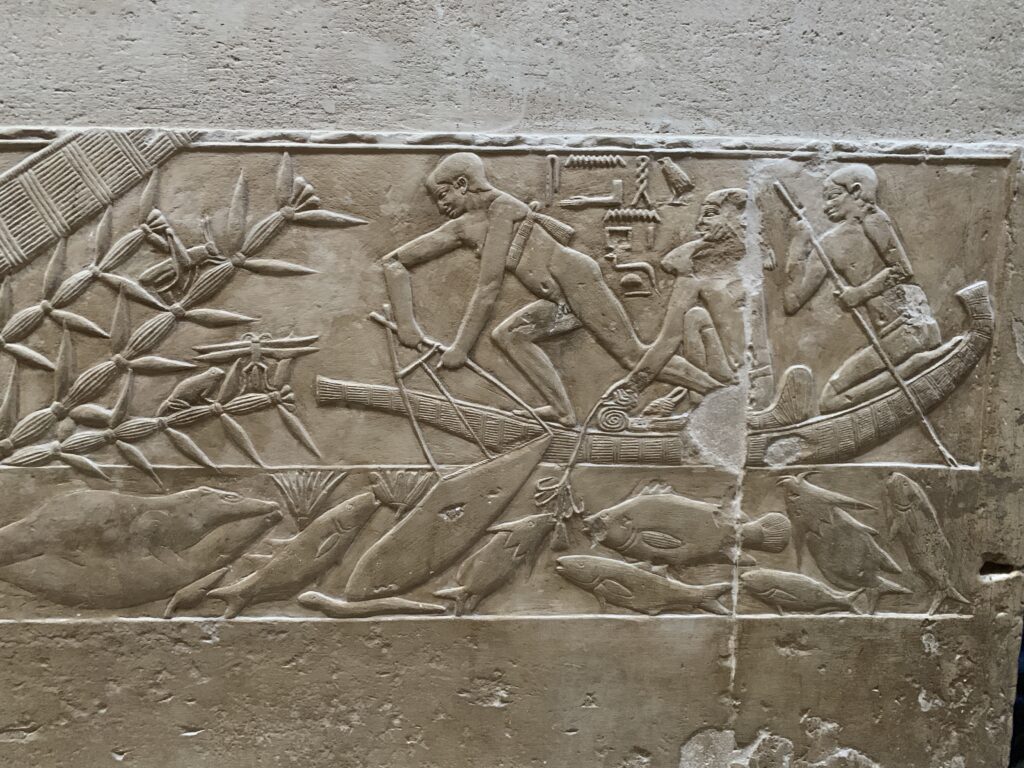
    Just out of the pyramid, the real jewel is the mastabah of Teti’s prime minister and brother-in-law. The inferior part of the wall was covered thought the years by sand and it’s just perfectly preserved. As you walk through the chambers, various altrelief depict scenes of everyday life, hunting scenes, and some colors are also preserved.

    Painted relief scenes on a tomb wall at Saqqara
    Relief of men in papyrus boats carved on a tomb wall at Saqqara

    Day 2 - The Egyptian Museum

    The Egyptian Museum was first meant to rise on the West Bank of the Nile, but the French who were leading the project soon realized it was too dump and they started to build it in 1897 on the East Bank instead. The facade is strongly pink, with statues of Isis wearing greek tunics and the latin names of the Egyptian dynasties. Lotus and papyrus plants (symbols of Lower and Upper Egypt) decorate the garden. 

    The lower floor is mainly dedicated to the three Kingdoms and the upper floor to the Tutankhamun collection. The first feeling when you walk inside is that someone is moving out, boxes on the sides of the rooms, walls half painted, tape and scaffolds, and plastic sheets over some of the antiquities. Fortunately the new museum (over which 1 billion dollars was spent, with donations from all over the world -300 millions from Japan-) seems to be almost ready to open and host the entire collection by the end of 2020.

    In front of the entrance on the right hand side there is a copy of the Rosetta stone (the original is at the British Museum). It dates to the era of Ptholomeus V and reports the same thing in hieroglyphic, demotic and ancient greek. Thanks to this a French linguistic by the name of Champollion was able to interpret hieroglyphics for the first time.

    Dark stone triad statue of three figures at the Egyptian Museum in Cairo
    Visitor beside a large stone statue in the Egyptian Museum, Cairo

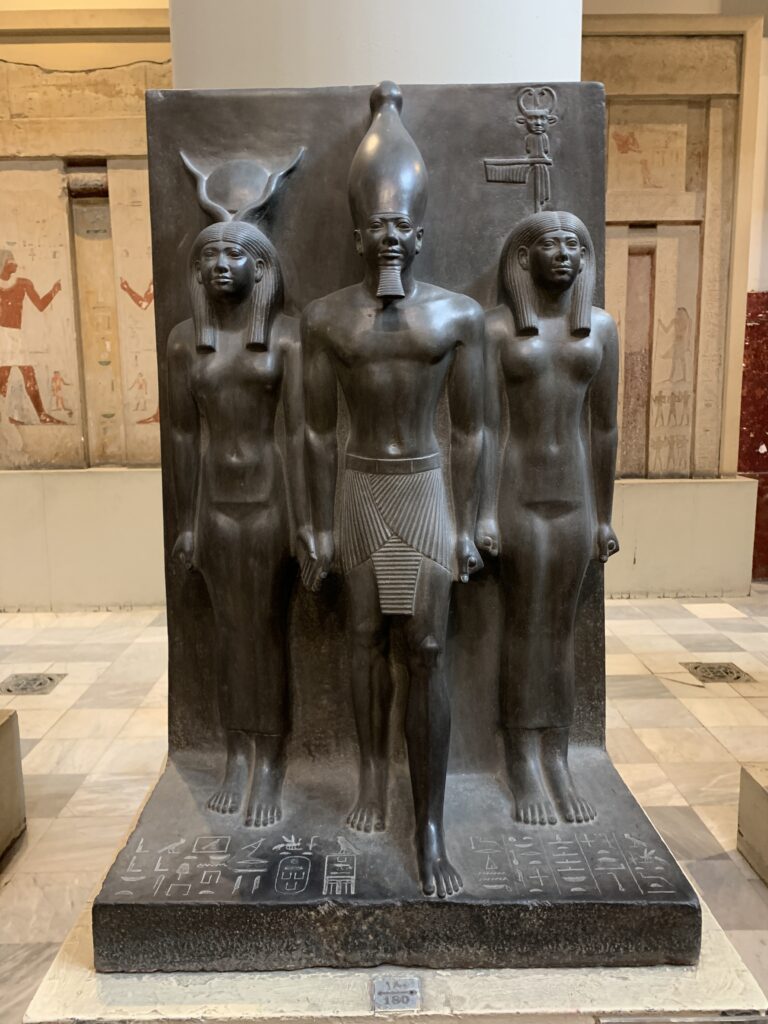
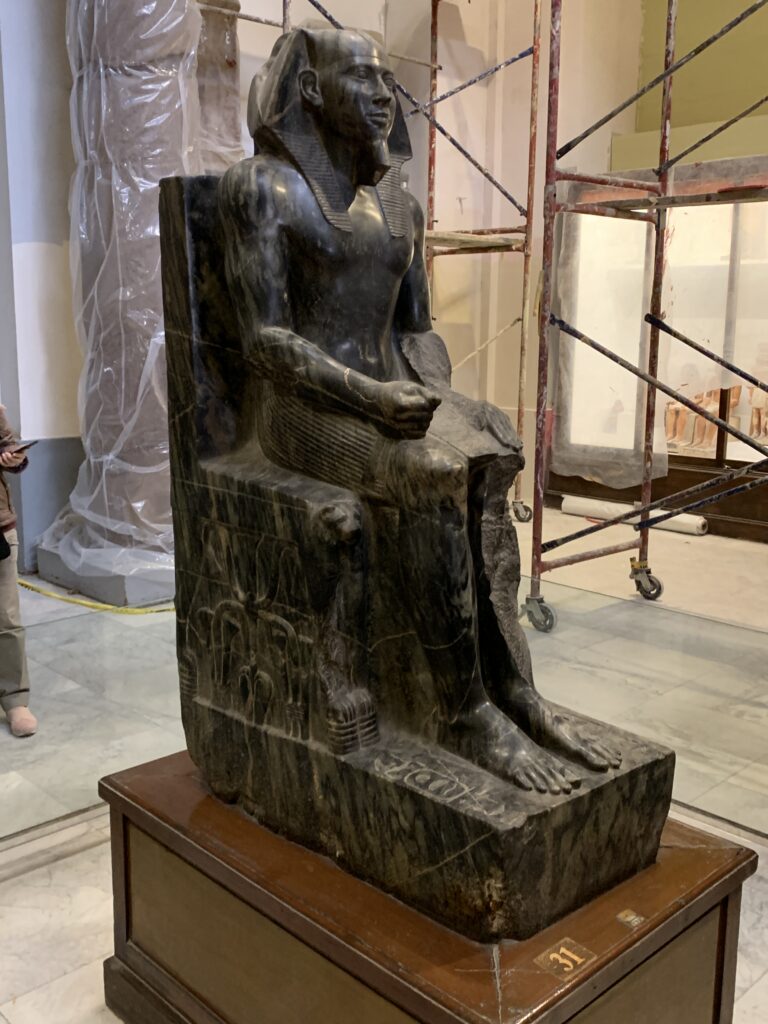
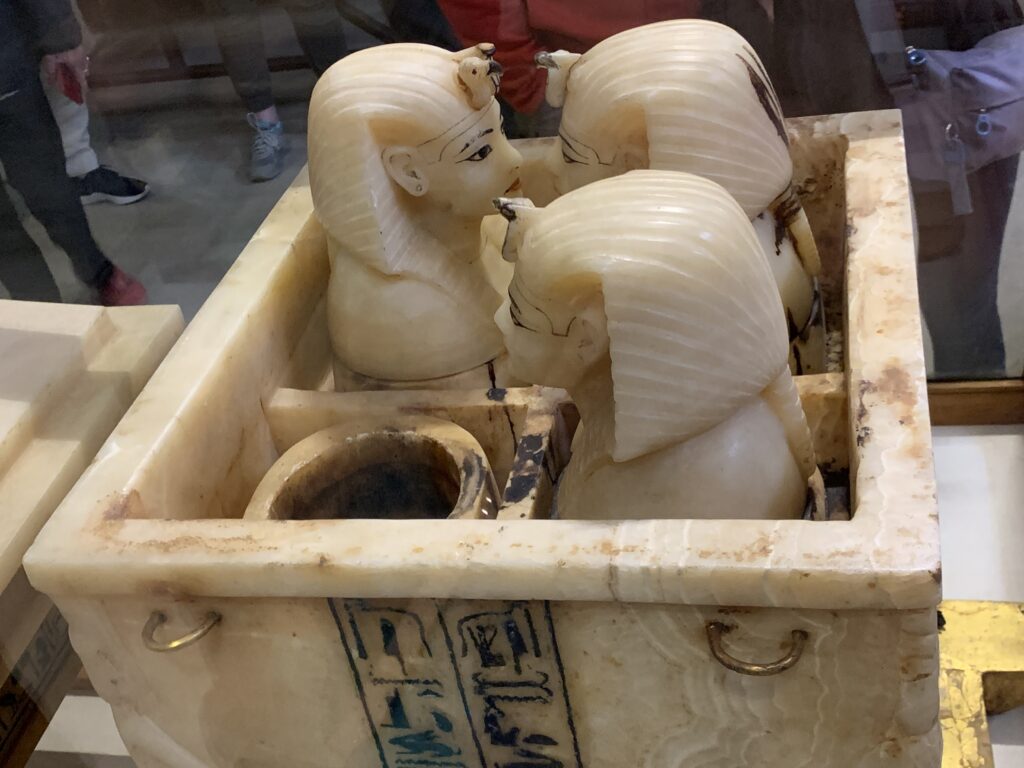
    On the left corridor you will encounter artifacts of the pharaohs who commissioned the pyramids from our Day 1 visit: Djozer (the most ancient statue of the museum dating 2700 BC, his right hand closed on the chest to symbolize power and the left resting on the leg in a sign of peace) and Mykerinos (depicted in 3 steles with the horned goddess Hakkur and a second female figure representing one of the 42 provinces of Egypt, which started the belief that there were a total of 42). In the cases take a look at the small heads that were buried in the sarcophagus in case the mummy was destroyed, to allow the soul to find the right body at the time of resurrection. On the walls dozens of false doors catch your attention, those were found in the tombs and only the soul was able to pass through them. 

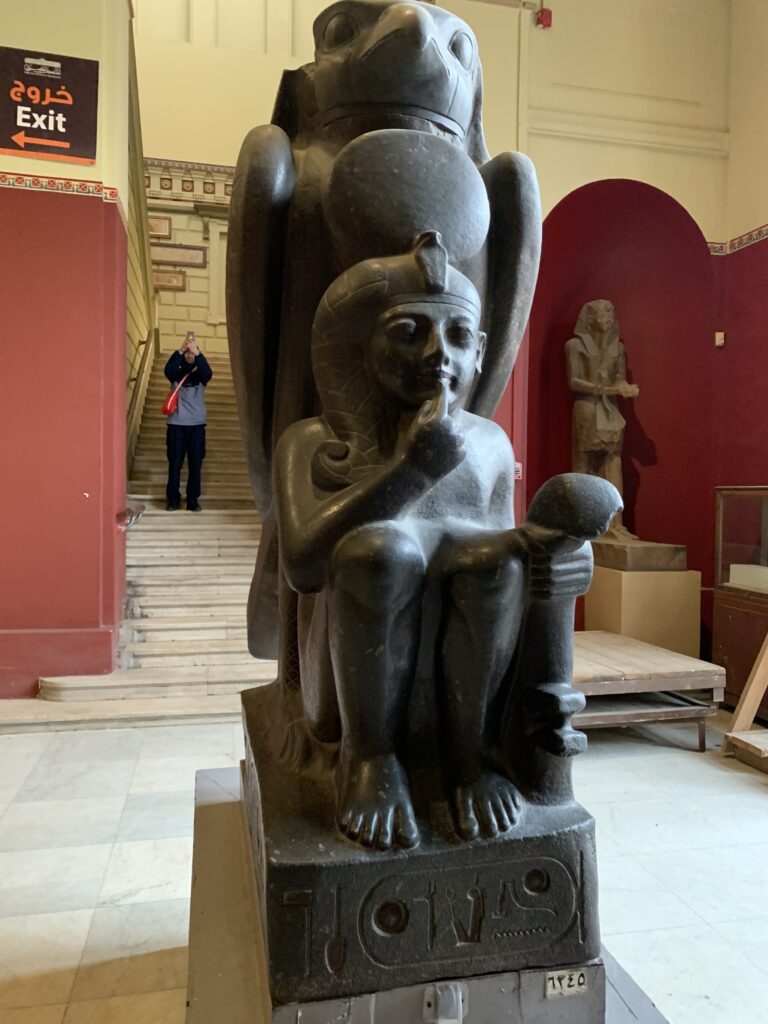
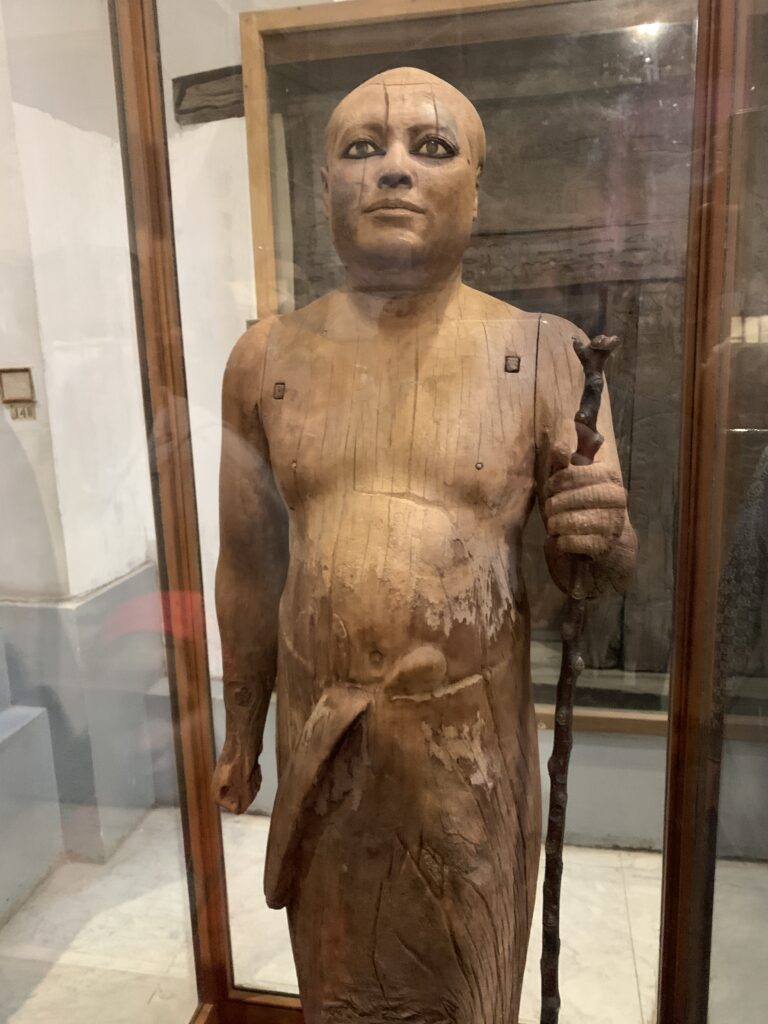
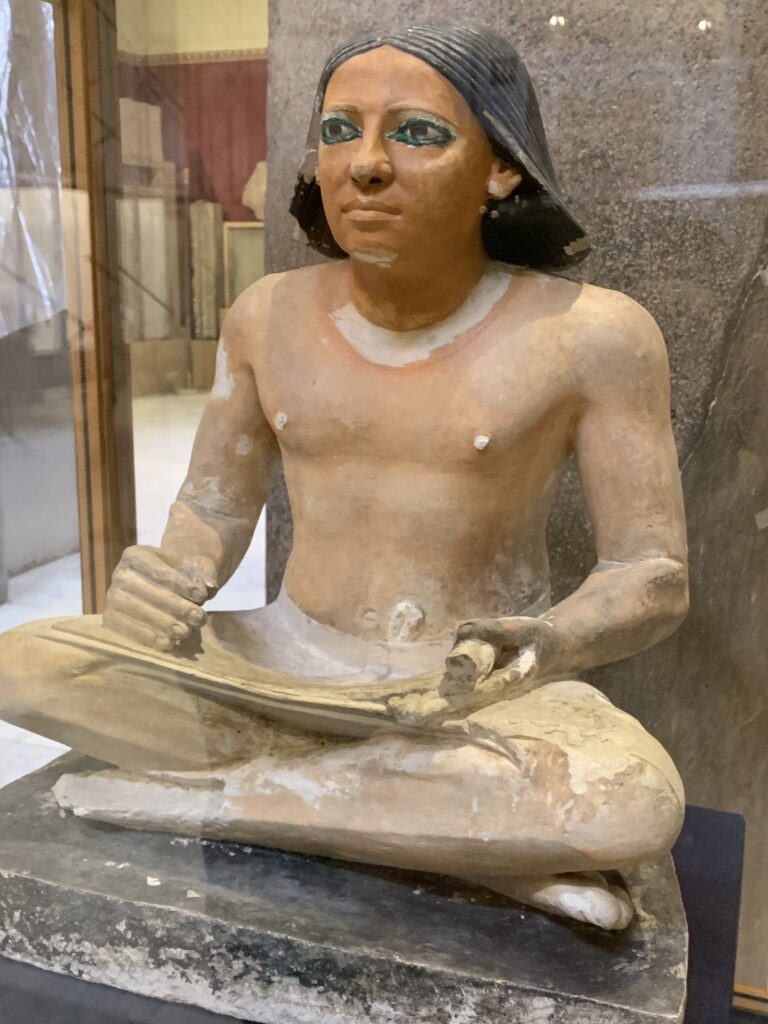
    At the end of the corridor turn right and then right again. This room hosts a few masterpieces. In the centre of the room, the durite bust of Chepren, with a falcon protecting his neck from behind. On the left one of the very few wooden statues (made of sycamore wood) representing a high priest. The eyes are the particularity: the white is made of quartz, and the eye is crystal with a nail in the centre to mimic the pupil. The same eyes are found in the limestone statue of a scribe in an adjacent case. Here the eyes outline is made of copper, that due to oxidation has acquired a green hue, making  it look like make up.

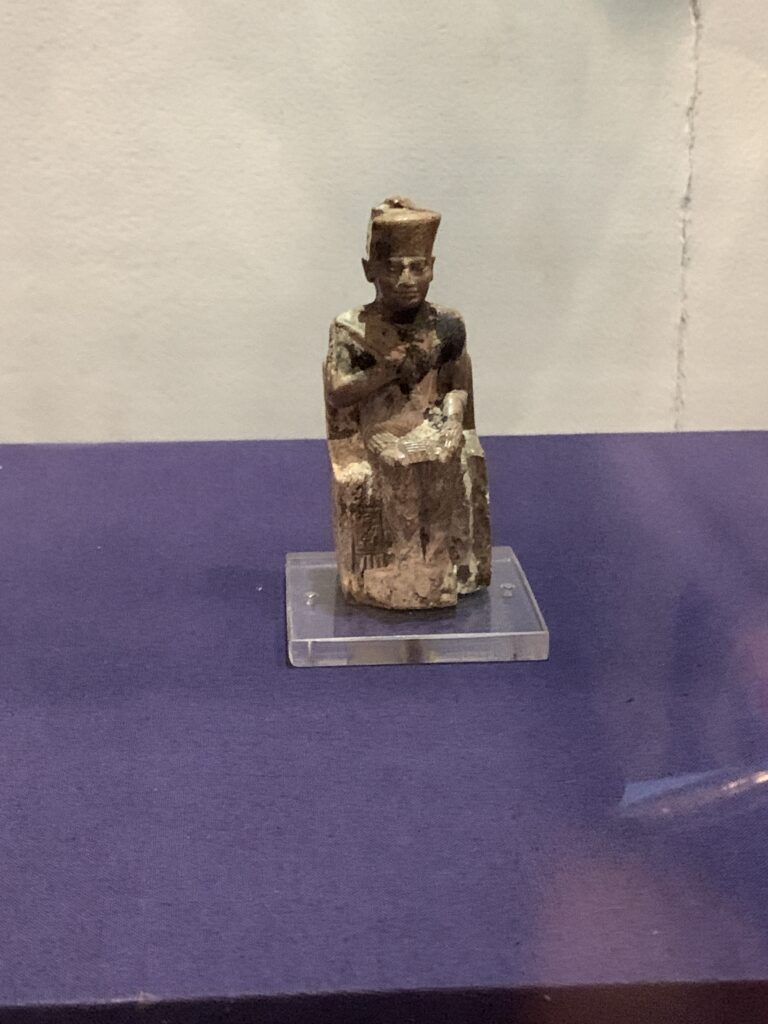
    Remember the smaller pyramid in Giza, behind Cheope’s, belonging to his mother? The alabaster sarcophagus, the canopis, the furnitures (bed, chairs, walking throne) that were found in the shaft next to her pyramid are all displayed in the next room. Here a case displays a tiny ivory statue, the only remaining image of Cheope. Cheope’s brother and his wife are depicted in two statues with amazing colors: note how the skin coloration of the men is always darker compared to the females’ (who were rarely under the sun). Cheope’s brother was the general of the army, so both his fists are clenched. 

    Large seated statue wrapped for transport in the Egyptian Museum, Cairo
    Wooden statue of a standing figure holding a staff, Egyptian Museum, Cairo
    Detail of a painted wooden statue in the Egyptian Museum, Cairo
    Small dark stone statue displayed at the Egyptian Museum, Cairo

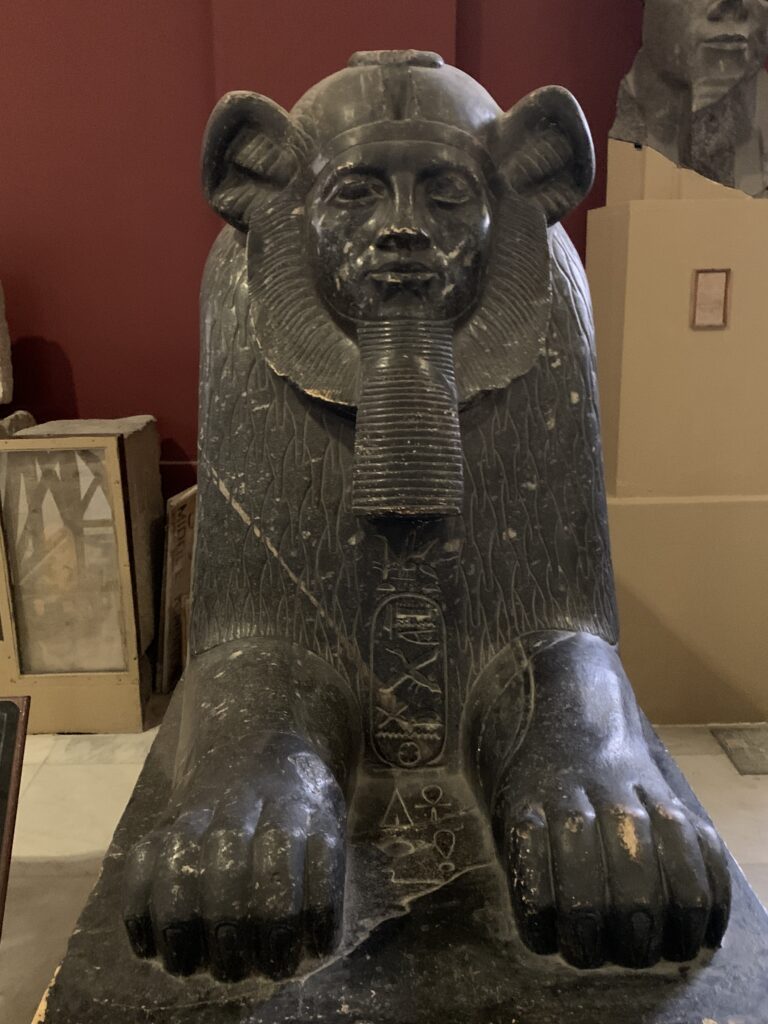
    Out of this room begins the Middle Kingdom. Here the sarcophaguses are inlaid with sacred hieroglyphics inside since pyramids were no longer being built. The Middle Kingdom only lasted 2 Dynasties before the Hittites occupied the country for 200 years. This long period of occupation is reflected in the sphynx that you see along the corridor with the face of a lion, far from the Egyptian style. But look closer and you will see between her paws a cartouche: once the Egyptians took their reign back, they carved all the Hittites statues.

    Seated statue wearing the royal headdress, Egyptian Museum, Cairo
    Close-up of a colossal carved stone face in the Egyptian Museum, Cairo

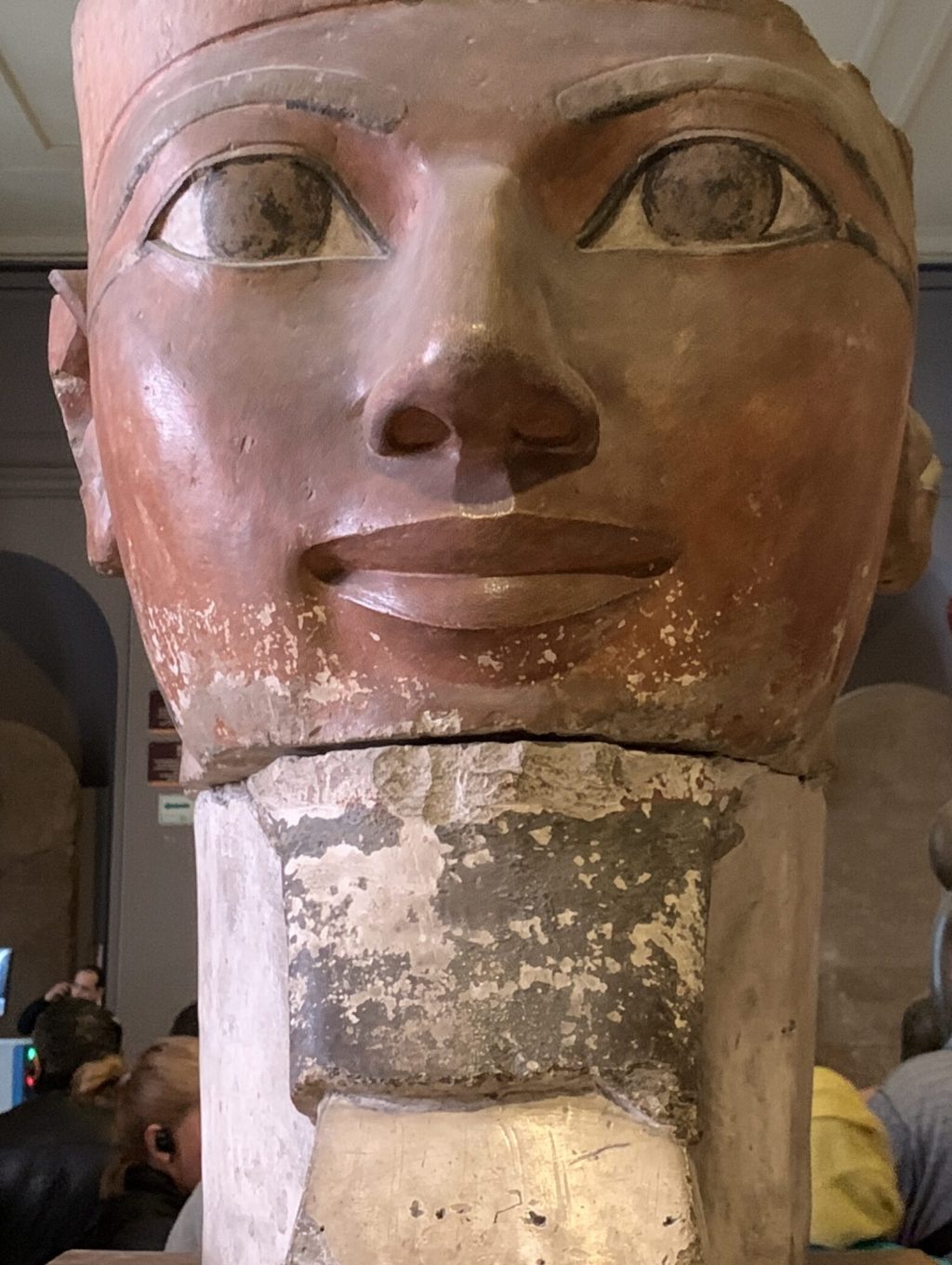
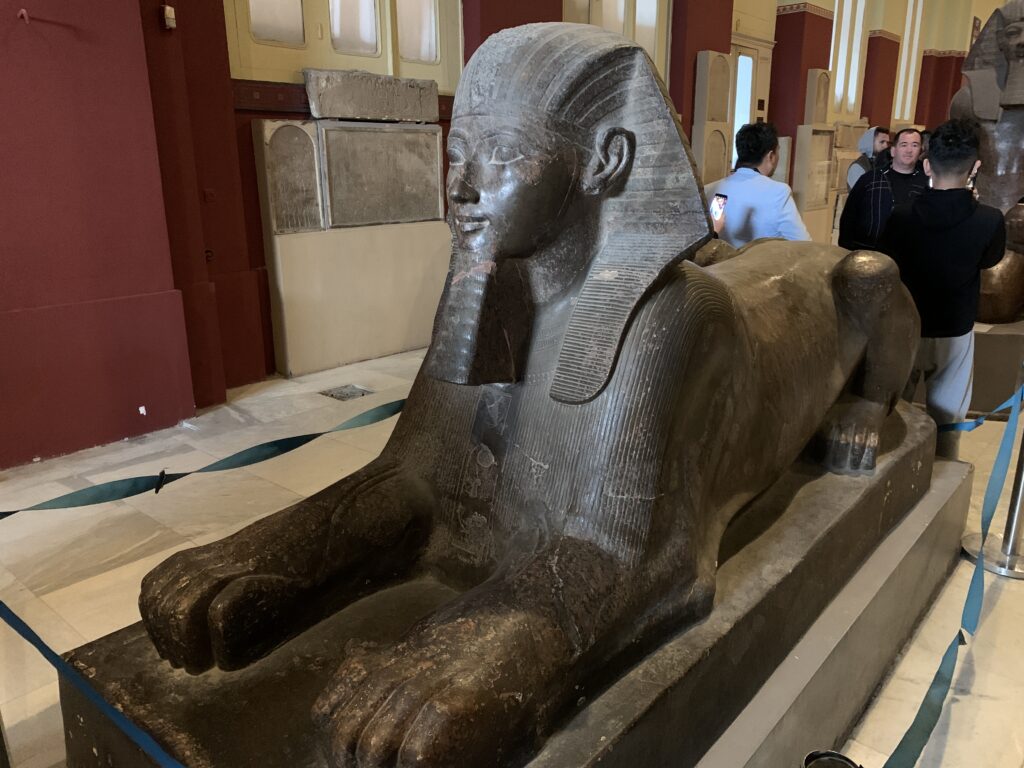
    Once the Hittites were chased, the New Kingdom started, the pharaohs were now identified as gods. Art changed, with carved faces on sarcophaguses, statues with longer and curved false beards, as you can see in Hatshepsut’s bust. But, wait! Hatshepsut is a woman, how can a woman be pharaoh? Hatshepsut was the royal daughter of King Tuthmosis I. She married her half brother and together they had Tuthmosis III, future heir of the throne. After her husband died, since her son was too young to rule, she proclaimed herself pharaoh and kept the power even when Tuthmosis III reached the adult age. According to testimonies she had a strong personality and was a great ruler, exploring Africa and being depicted with the darker skin of a man. Around the bust you will see some statues of her and a sphynx with her appearance, none of those carry her cartouche since her son after her death removed all of them as a sign of contempt for the mother who stole his throne.

    Large stone sphinx displayed in a hall of the Egyptian Museum, Cairo
    Colossal statue of Akhenaten in the Egyptian Museum, Cairo

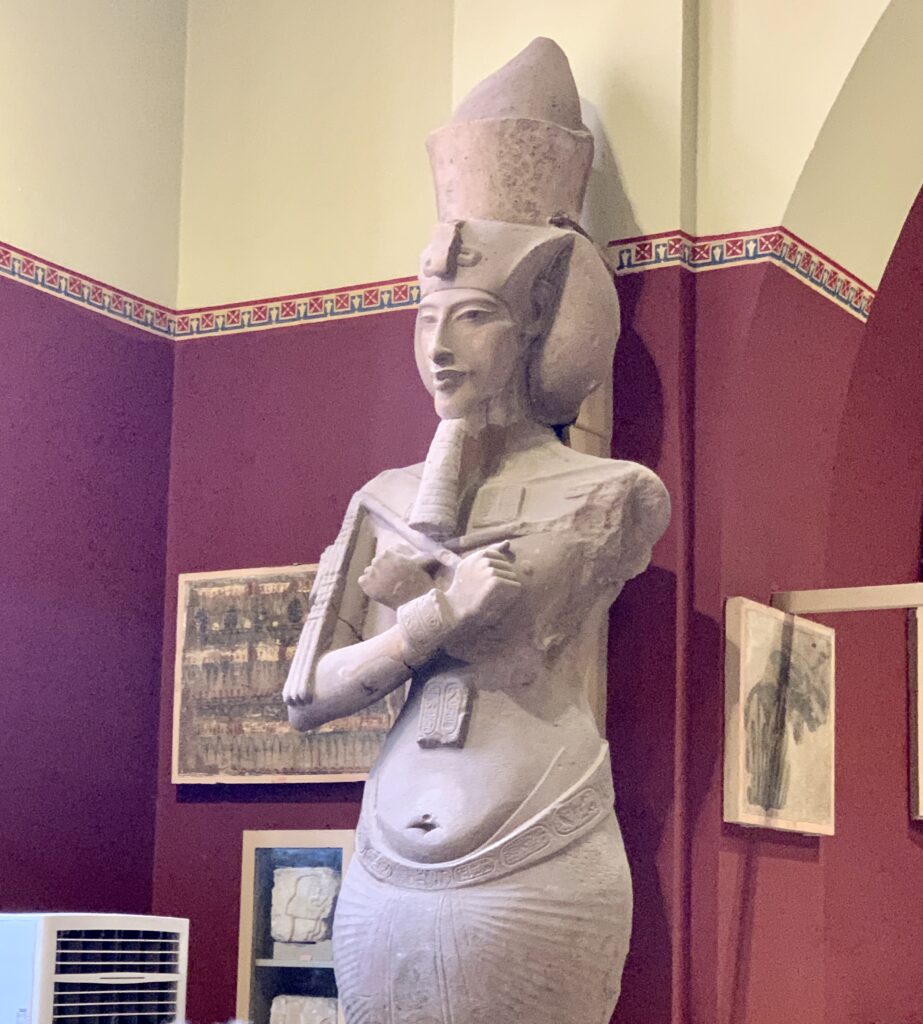
    Continue along the corridor and on your left a room is dedicated to Amenophis. With the New Kingdom, Luxor became the capital and its protecting local god, Amon, started being identified with the sun thus becoming Amon Ra. During the Eighteen Dynasty, King Amenophis III started professing the existence of a single god, Atten god of the solar disc. He forbade the worshipping of any other god, closed all temples and made himself intermediary between the people and the god, taking the name of Akhenaten. This was the first ever attempt to a monotheistic religion. Two important facts can shed more light to this religious change. The arrival of Joseph into Egypt according to the Bible dates around this period. Secondly, the parents-in-law of Amenophis III (whose wife was Nefertiti) carried very non-Egyptian names, Yuya and Tuyah, with a strong jew influence. In any case who was very unhappy with this monotheistic religion were the priest who fomented the crowds and overthrew the pharaoh, making his young son Tutankhamun king. In the room dedicated to Amenophis III the cartouche is missing from all the statues, removed by the priest to condemn him from eternity (the soul was not able to find its body without it). Amenophis III revolutionized art, his statues are androgynous since the pharaoh as an intermediary to the god was bot male and female. He was one of the few pharaohs that allowed representations of scenes of everyday royal life with his wife, Nefertiti (whose beautiful face you will see in a casa on the left), and his son Tutankhamun.

    Now climb the stairs to the upper floor, admiring the long papyri with the book of the dead that accompany your ascent.

    The upper exhibition starts with the story of how Tutankhamum tomb was found. Tutankhamum was 9 when his reign started and 19 when he died. Compared to other pharaohs he definitely played a minor role in the history of ancient Egypt, but he came to be very famous in the modern world since his tomb was the only found intact (up to now).

    Carter, an english archeologist had been digging in the area for years and never found anything. The tomb of Tutankhamun was just next to the one of the one of Ranses IX and no one thought there could be another one in the vicinity. For this reason the tents of the workers and the other archeologists were laid on top of the site where the tomb was buried by layers of sand. It was discovered on the 4th of November 1922 by chance, a local child was playing in the area and tripped on a hidden step. The step lead to a corridor at the end of which a door was hiding around 5000 antiquities in perfect state.

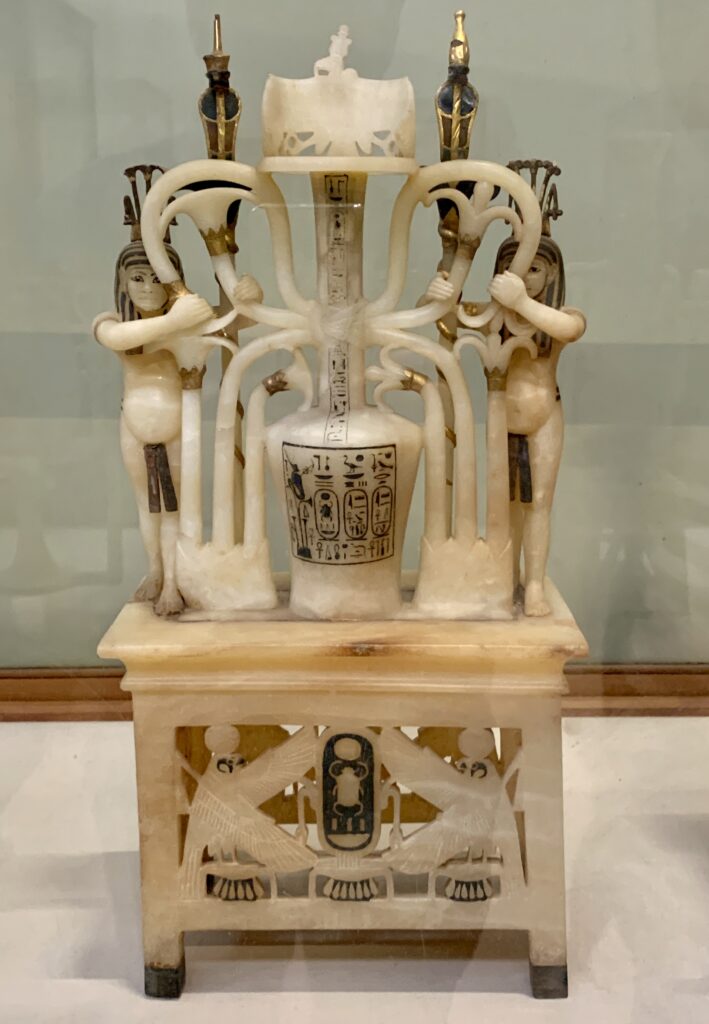
    Ornate carved alabaster vessel on display at the Egyptian Museum, Cairo
    Alabaster canopic chest with four carved stoppers, Egyptian Museum, Cairo

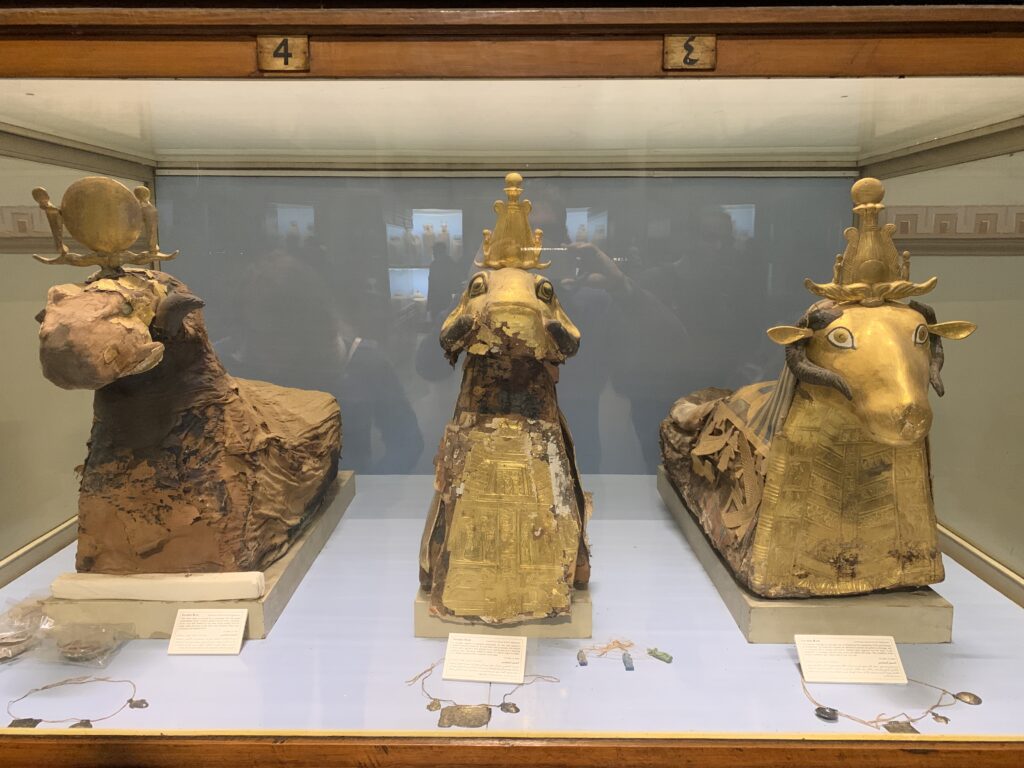
    Amongst the treasures there were thrones, canopis, jars with essential oils, foldable beds, festival chair and a lot more. Interesting is to notice that two different cartouches appear engraved on his throne, one that translates into Tutankatten, his birth name (given to him by his dad Amenophis III to honor the only god Atten) and one that translates to Tutankamon, the name he took to please the priests. This may be one of the reasons why the high priests honored his death with so many gifts and gold. According to Carter’s photos and testimonies, in the main chamber two statues guarded a wall behind which laid the actual shrine of the pharaoh. The four huge gold shrines exhibited in the corridor, one slightly bigger than the other, were arranged as a matryoshka and in the smaller one (guarded by statues of deities) the mummy was kept into three sarcophagus. 

    The external sarcophagus is in Luxor, the middle on in gilded wood is kept in a smaller room on the right side together with the innermost gold sarcophagus and the burial mask of Tutakhamun. The mummy is at the museum in Luxor. What the historians wonder is, if there was so much gold and treasures in the tomb of a pharaoh that barely ruled for 10 years without leading any war, conquering anything, what was there in the burial chambers of the more important pharaohs?

    One exhibition that we really enjoyed was the room dedicated to the animal mummies. Animals were mummified for three main reasons: to be buried with the pets you were attached to during your life; as food readily available inside the tomb at the moment of resurrection; and as votive animals inside temples. All sorts of animals can be found there, from crocodiles, to baboons, cats, dogs and a huge fish as well.

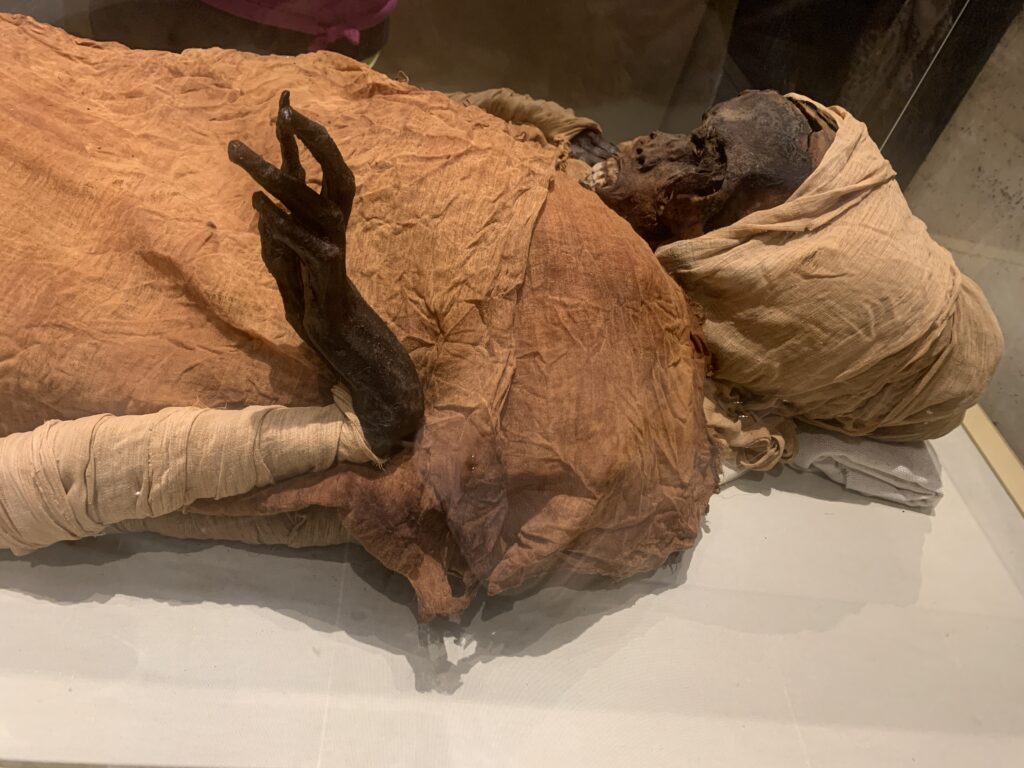
    In the two rooms at the two opposite ends of the first floor there is the royal mummies exhibit. A separate ticket has to be purchased to see them, but it’s definitely worth the price. Here you will find the mummy of Ramses II (look at his nails and hair perfectly preserved), of Hatshepsut, of Thutmosis, of pharaohs who died in the battle and got their skulls crashed. The skin is black due to the preserving fluid they employed. It’s nice, in a way, to finally be able to put a “face” to all these stories (pardon the black humor).

    Gilded funerary figures in a display case at the Egyptian Museum, Cairo
    Mummy displayed in a glass case at the Egyptian Museum, Cairo

    Always on the upper floor, a wing is dedicated to the treasures of the tombs of Yuya and Tuhya, the parents of Nefertiti. Their richness is manifested in the gilded artifacts and in the beauty of their sarcophaguses, with their mummies inside in pristine conditions. In the smaller, adjacent room an exhibition of utensils (from combs to spires, from tweezers to arc, from agricultural tools to mirrors, from dices to carving tools) will allow you to understand how the Egyptians were living their everyday life and conquered so much with so little

    Day 3 - Old Cairo and the Citadel

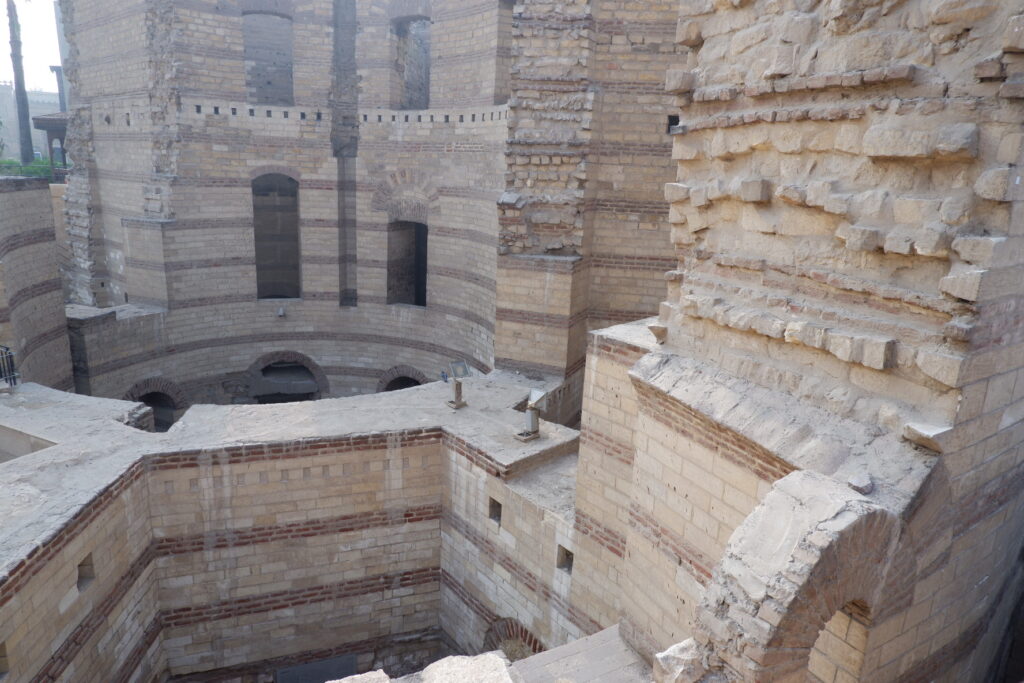
    Today we made a jump forward in history. The ancient Egyptian Dynasties ended when Alexander the great conquered Egypt and the greek culture pervaded the country. During the Ptolemaic Kingdom, the Roman Empire expansion to Egypt was made famous by Cleopatra, her liaison with Julius Caesar and later with Marc Anthony that she followed to was against Octavianus Augustus, a war that was lost thus delivering Egypt to the Romans. At the time, the capital of Egypt was still Alexandria, the city founded by Alexander the Great, and the Romans built the first nucleus of Cairo which was a fortress named Babylon (900 ac). 

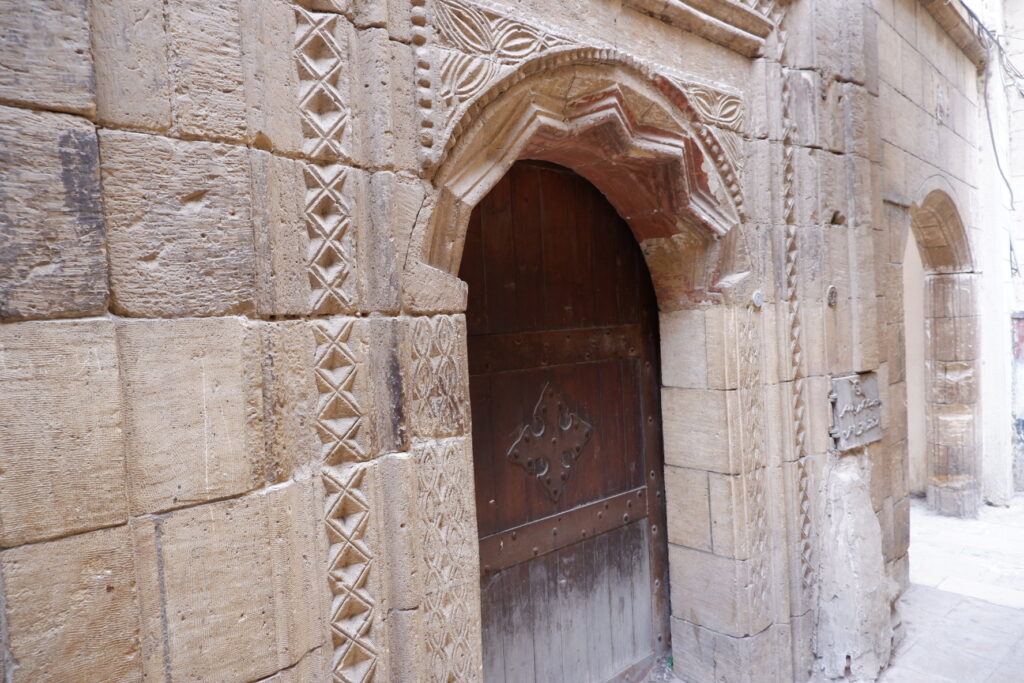
    Carved stone doorway of a historic building in Old Cairo

    While walking towards the stairs that will take you to the heart of Babylon, notice Cairo Metro line on your right. It was built where once a canal of the Nile river was running, a natural passage to the Red Sea (a sort of primitive Suez Canal) and made the commerce blooming in this area. This was the reason behind the Roman decision to build the fortress on this site as a protection for the traders.

    When, under Emperor Constantine, the Christian religion became the official religion of the Roman Empire and the persecution stopped, churches started to sprout in the fortress that today represents old Cairo. Helen, mother of Constantine, ordered the construction of numerous churches in this area. This site was considered particularly holy for the Christians because, according to the Bible, the Holy Family stalked by Herodes intent on killing the newborn king, seek shelter in a cave in this area for three months. On the site of the cave the Christian built the Cave Church, or Church of Saint Sergius. As the majority of the religious places that you will visit today, this church that dates III century has a basilica-style layout with three aisle separated by Corinthian columns. Differently from Catholic churches, coptic churches have icons all around their walls and an “iconostasis”, an ebony wooden wall that separates the transept from the main seating area and through which the worshipper takes the Eucharist. The “coptic” term through which Egyptian Christians are referred with, comes from the greek name Egyptos that the arabs that followed the Romans could not pronounce. Coptic Christians have their own cross with 4 arms, the trinity symbol at the end of each arm the cross of David in the center and symbol of Christian fishes between the arms. Coptic Christians also have their own language, derived from Greek with the addition of seven letters (this was an additional help to Champollion in deciphering hieroglyphics). 


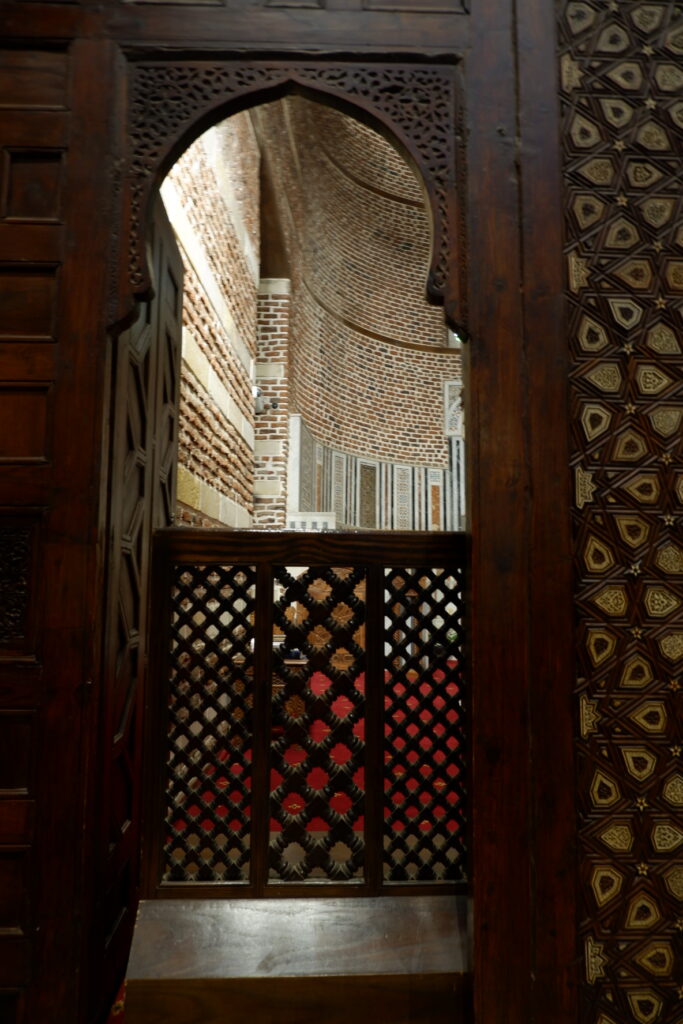
    Mashrabiya wooden lattice screens inside a house in Old Cairo

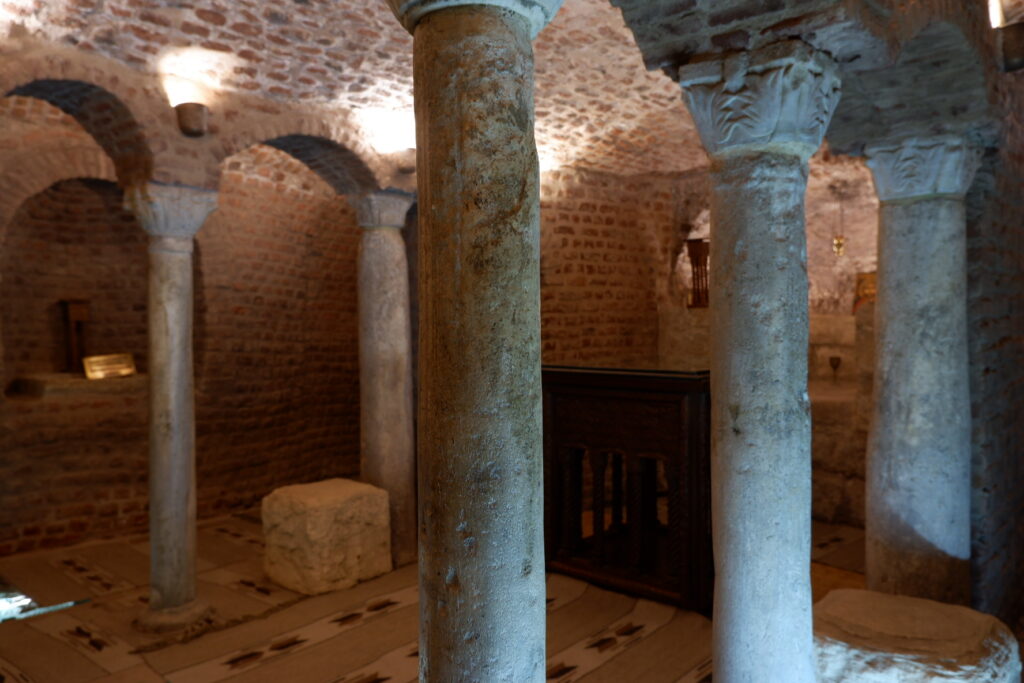
    A ramp of stairs will take you to the Church crypt where you can admire the cave where according to tradition the Holy Family hide for 3 months and the well from which they drank. Here the first church was built in the I Century.

    Stone columns in the underground crypt of a church in Coptic Cairo

    Follow the road outside of the Cave Church and you will reach the Ben Ezra Synagogue, an old church that in the X century was sold to the Jew Ben Ezra to cover some of the Christians debts. Once again, the location is not casual: according to the tradition, the daughter of the pharaoh found the basket with baby Joseph inside just in the nearby canal. Nowadays the Synagogue is not being used due to the paucity of Jews in Egypt: it takes at least 10 man to preach a liturgy and there are less than 200 Jews in all Egypt. that has not always be the case, the population was over 200.000 before Israel was created, but the majority of them moved to the new country and the relationship between Israel and Egypt has never been too good. Egypt never supported the creation of Israel; in 1967 president Nasser was so aggressive against Israel that the Israeli retaliated by invading Sinai and keeping it until 1973, when the Egyptian army declared war to get the region back. A cease-fire from the United Nations brought the two countries to a peace treaty with which Israel gave Sinai back to Egypt as long as the region was kept a demilitarizing zone.

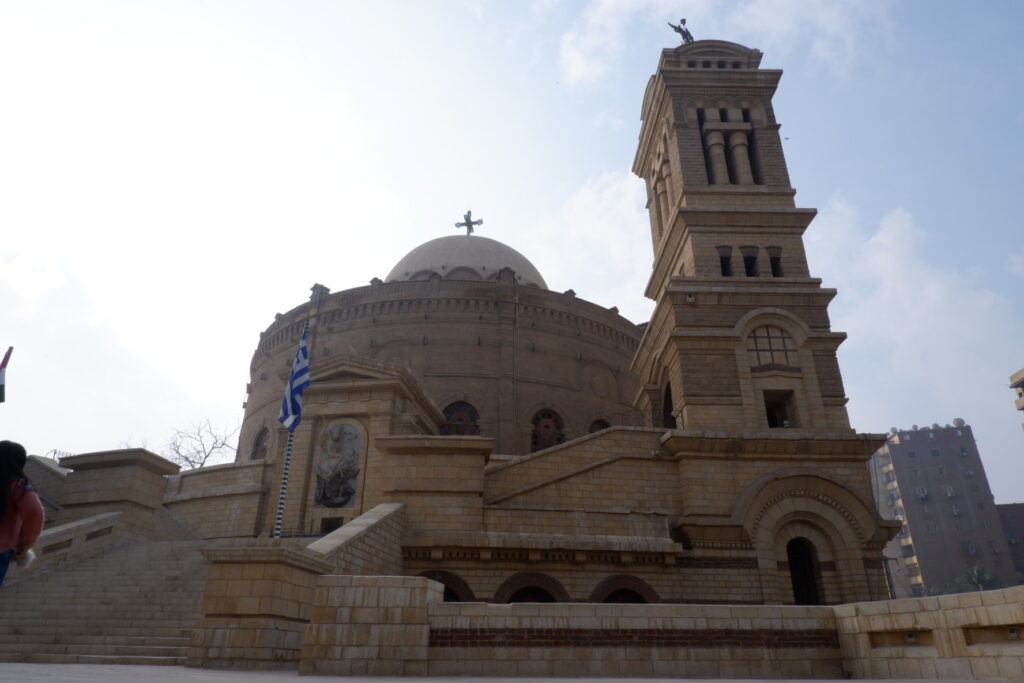
    Retrace your steps and walk the stairs up to the convent of Saint George, a greek orthodox church with 25 monks living inside. Next to the convent, the greek cemetery hosts the body of the previous orthodox pope who died in a plane crash. The convent is beautiful from the outside, but the inside was completely rebuilt inside after the fire of 1967; only the marble columns are original.

    Domed church and bell tower in Coptic Cairo
    Massive stone ramparts of the Citadel of Cairo

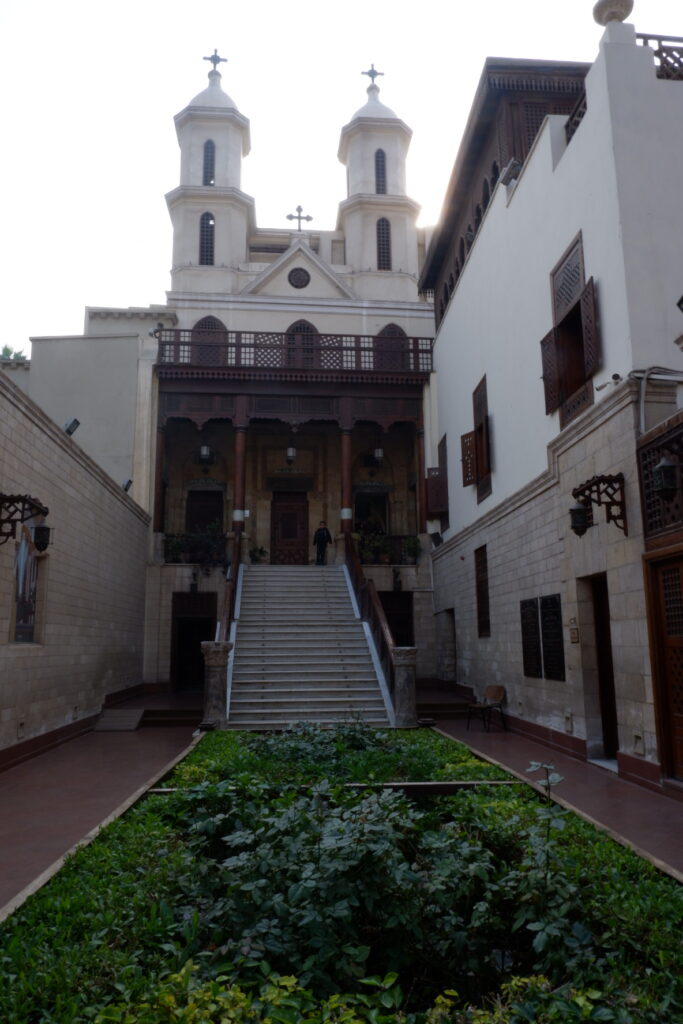
    Right after the convent, just by the side of the road on your left, stop to have a look at the remains of one of the turrets of the fortress. This will help you understand how the next church on the itinerary is a true rarity, the Hanging Church. You will immediately notice that the church is located on top of a ramp of stairs, elevated from the level of the street: this is because it has no fundaments, it was built using 2 adjacent turrets as support and bridging them with palm trunks. Once you reach the top of the stairs, the corridor to access the church displays on the right the photos of some of the 118 coptic popes and on the left of the King Farouk (last King of Egypt before the presidential republic in 1952), and the following presidents (Nasser and Mubarak among the most famous).

    The church is dedicated to Saint Mark; originally from Tunisia, Saint MarK started following Jesus as an apostle (this is why the Coptic religion is “apostolic” and has its own pope). According to tradition, the Last Supper was held in his house. After the Resurrection, Saint MarK went to Europe and only years later started preaching the Bible in Alexandria and the whole Egypt. Persecuted by the Romans, he was finally beheaded and his head was sent to Rome: only in 1967 it was brought back to Cairo where it is still kept inside the cathedral. Inside the church, some of the numerous icons represent Saint Mark; notice how is skin is dark, despite him coming from a land of fair-skinned people he was often depicted with a darker tan since his worshipper wished he was Egyptian. Next to his icon, in the right corner, you can find a Madonna of the XVIII century referred to as the “Egyptian Monna Lisa” due to her eyes following you. 


    Courtyard and staircase of a historic house in Old Cairo

    Now raise your heads to the ceiling, it’s entirely made of wood and in the shape of a boat, symbol of salvation. The pulpit is made of 15 columns, one in front symbolizing Jesus, 12 for the apostles and 2 for Saint Mark and Saint Luc (evangelists). If you wish to better understand what lies beneath your feet, go to the room on your right hand side. Here you can appreciate looking through a glass floor the round shape of one of the two towers, the palm trunks and the lack of foundations. 


    The church is dedicated to Saint MarK; originally from Tunisia, Saint MarK started following Jesus as an apostle (this is why the Coptic religion is “apostolic” and has its own pope). According to tradition, the Last Supper was held in his house. After the Resurrection, Saint MarK went to Europe and only years later started preaching the Bible in Alexandria and the whole Egypt. Persecuted by the Romans, he was finally beheaded and his head was sent to Rome: only in 1967 it was brought back to Cairo where it is still kept inside the cathedral. Inside the church, some of the numerous icons represent Saint Mark; notice how is skin is dark, despite him coming from a land of fair-skinned people he was often depicted with a darker tan since his worshipper wished he was Egyptian. Next to his icon, in the right corner, you can find a Madonna of the XVIII century referred to as the “Egyptian Monna Lisa” due to her eyes following you. Now raise your heads to the ceiling, it’s entirely made of wood and in the shape of a boat, symbol of salvation. The pulpit is made of 15 columns, one in front symbolizing Jesus, 12 for the apostles and 2 for Saint Mark and Saint Luc (evangelists). If you wish to better understand what lies beneath your feet, go to the room on your right hand side. Here you can appreciate looking through a glass floor the round shape of one of the two towers, the palm trunks and the lack of foundations. 

    The Arabs conquered Egypt in 641 ac, defeating the Romans. They were not used to living by the sea, so they changed the capital from Alexandria to Cairo, and built the first mosque right outside the Roman fortress that forms Old Cairo. Only the posterior section is original, the rest of the mosque has now been reconstructed since it was originally built in mud bricks that did not survive through the centuries. The following Arab dynasties started employing Christian architects that introduced them to the use of bricks.

    After getting Jerusalem back from the crusaders, Salah ad-Din conquered Egypt in the XII century and built at the edge of Cairo the Citadel to host his court. A little car ride will take you to this vast fortress on a plateau at the borders of Cairo. From the Citadel the Sultan’s slaves, the Memluk, rebelled in the XIII century and took control of the country keeping the power until the Ottomans defeated them in 1517. We did not visit the Citadel inside, but from the outside you can admire the Alabaster Mosque of Mohamed Ali. Built in the style of the Blue Mosque in Istambul, it was commissioned by Mehmet Ali, an Albanian serving in the Turkish army that in 1805 took the power and founded a royal dynasty that continued up to King Faruk in 1952. Inside the Citadel, Mehmet built a royal palace that was used by his successors up to his nephew that took the court to the royal palace in downtown Cairo.

  • Middle East,  Places,  United Arab Emirates

    Emirates Bio Farm

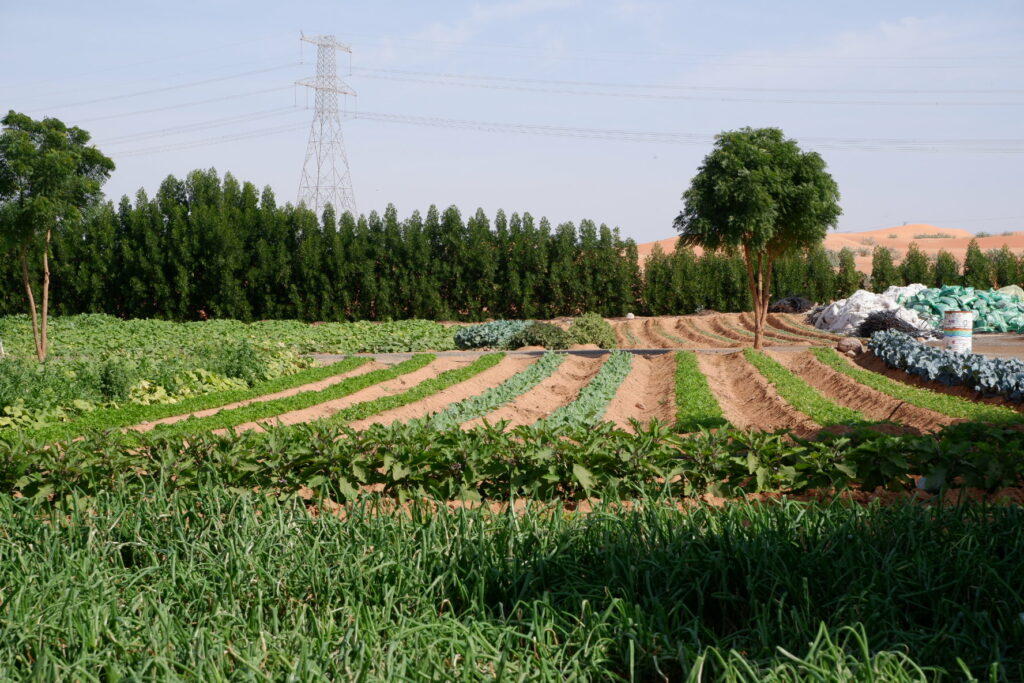
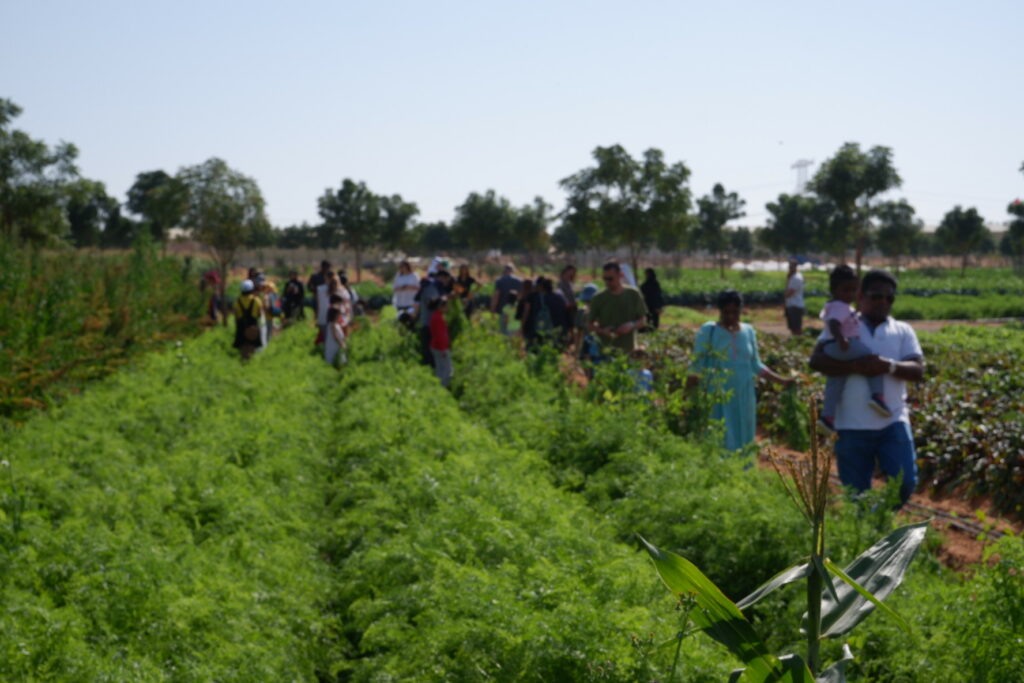
    Our start of 2020 was in a farm, but not any farm, the Emirates Bio Farm! I had put my eyes on it for quite a while, checked their website, their farm tours, their events. Unfortunately it’s not a quick drive from Abu Dhabi, so we kept postponing it forever. In the end we decided to book for the New Year brunch and tour! On the 1st of January we hit the road around 10, aiming to be there at 11.45, in time to sign up before our farm tour starting at 12. When you are almost there, the beautiful Omani mountains start appearing in front of you, then you reach the place and you can’t believe how much greenery there can be in the middle of the desert.

    It’s in fact the largest private organic farm in the UAE. It was established in 2016 on a 250,000 Sqm facility to continue the founding principles of advocating for environmental protection, health and well-being of all UAE residents – a guiding principle which they embrace from the teachings of sheikh Zayed Al Nahyan, the founding father of the UAE and an early champion of environmental protection.

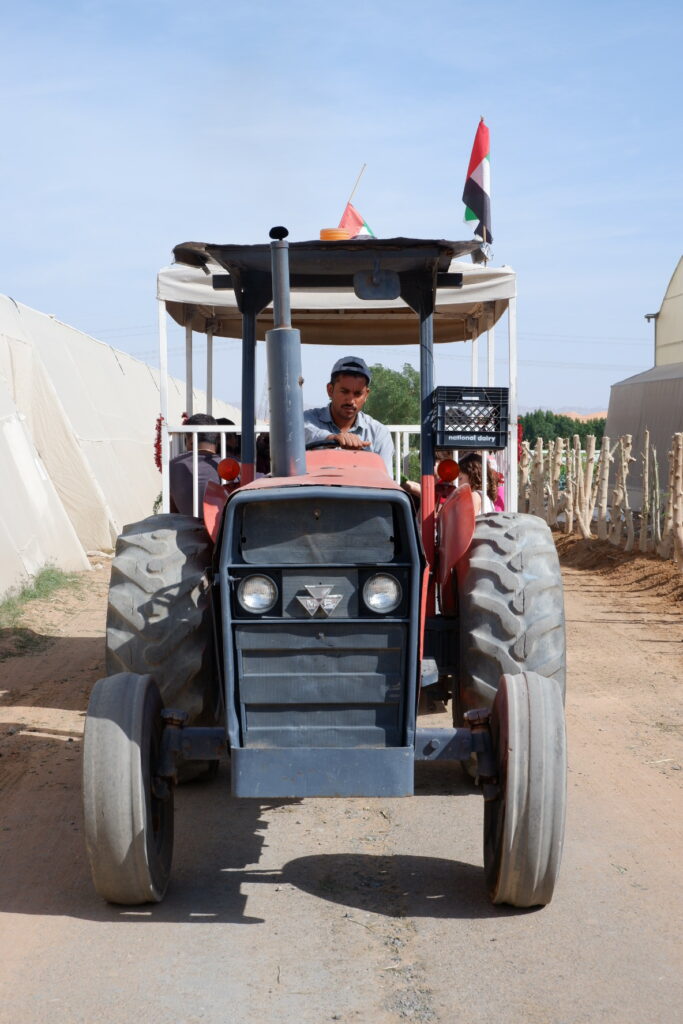
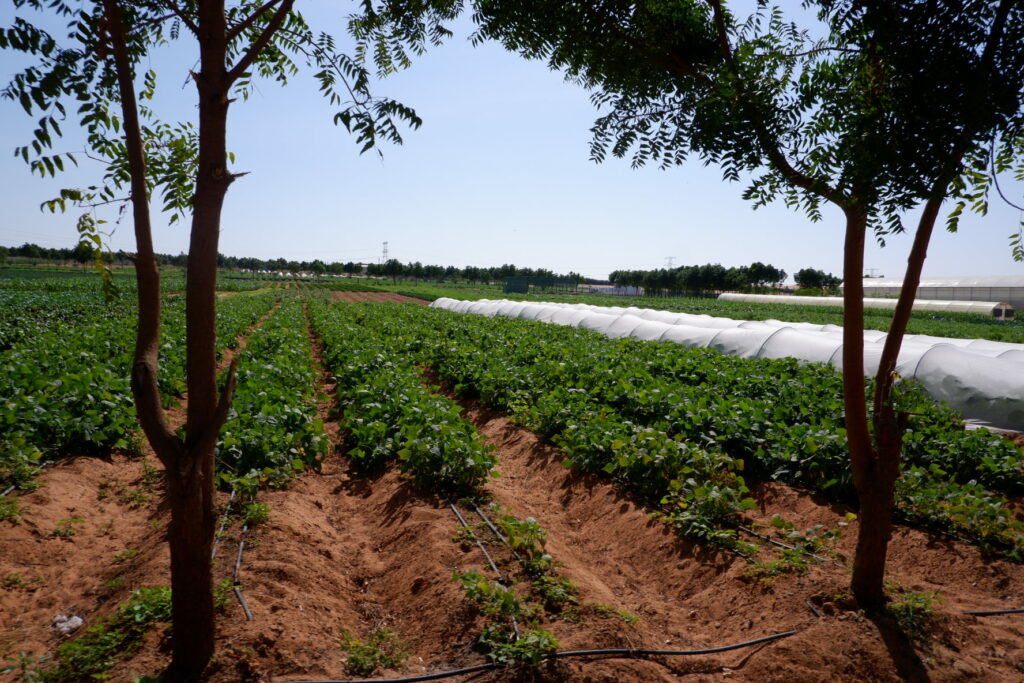
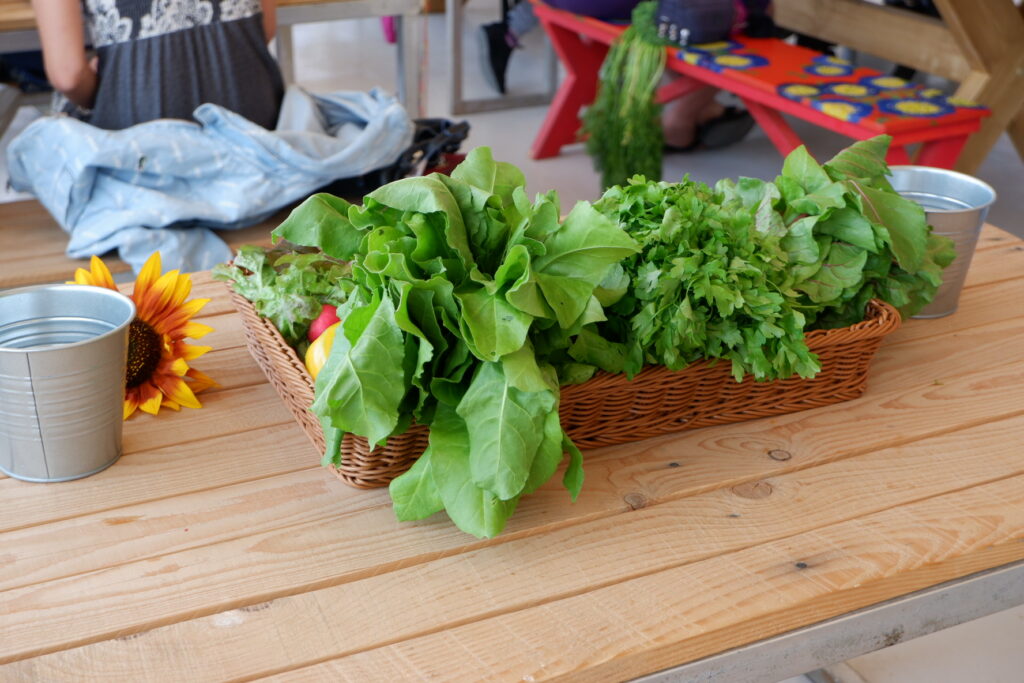
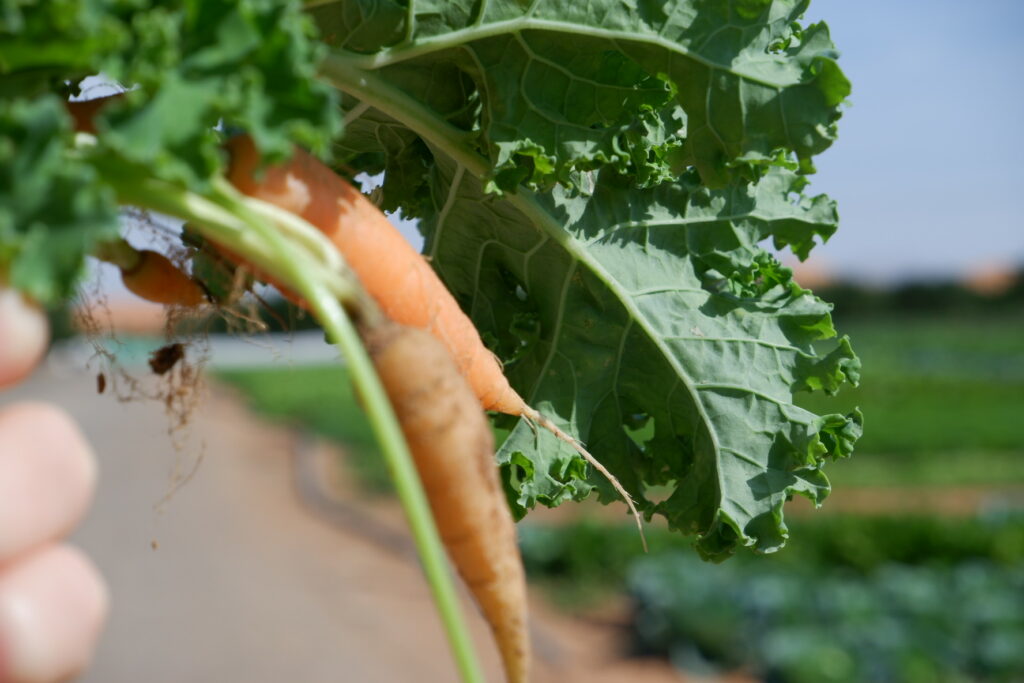
    At 12 they took us on a half an hour tour on the tractors around the farm, they told us the story of the place, how they transformed the desert sand into soil where you can grow quinoa, lettuce, kale, carrots, beetroot, tomatoes, eggplants and a lot more. The irrigation system takes the water from 100 m below ground and takes it throughout the whole farm. The soil is a mixture of sand, compost and chicken poop (there are 15000 chicken on the farm, which produce 8000 eggs a day).

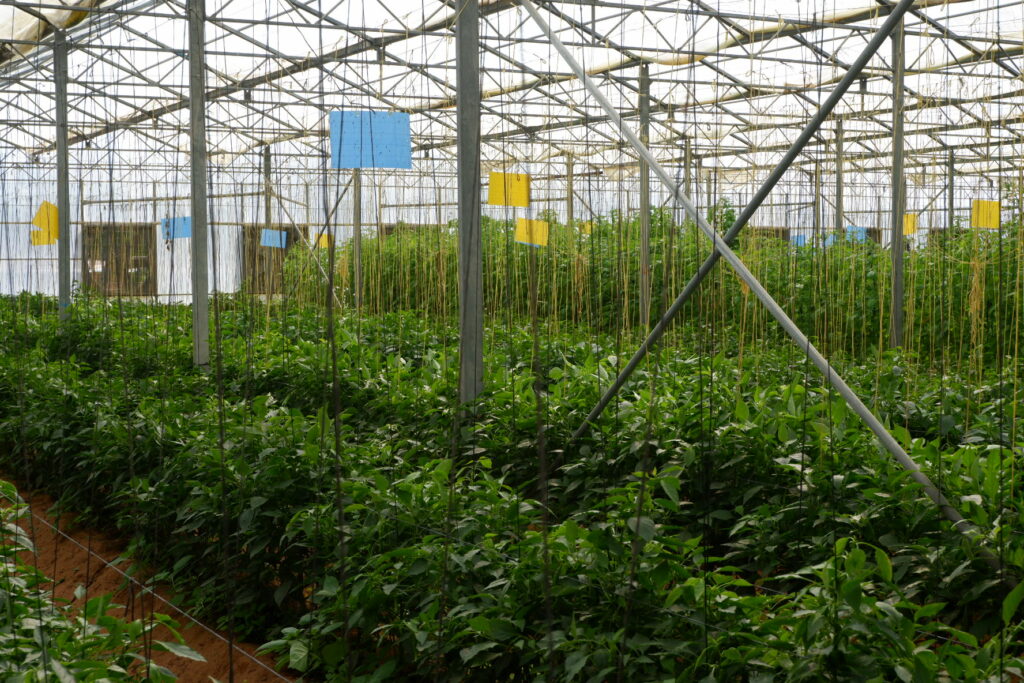
    The tour ends with a visit to the greenhouse, where with an ingenious mechanical system, the air is cooled down and even in the hot UAE summers they are able to grow plants.


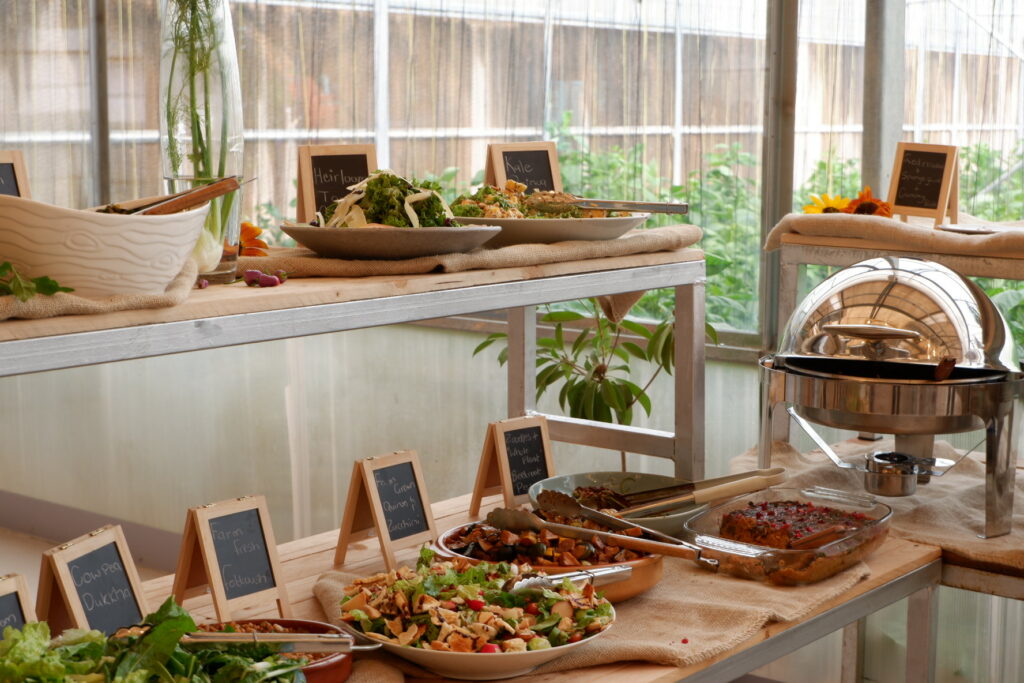
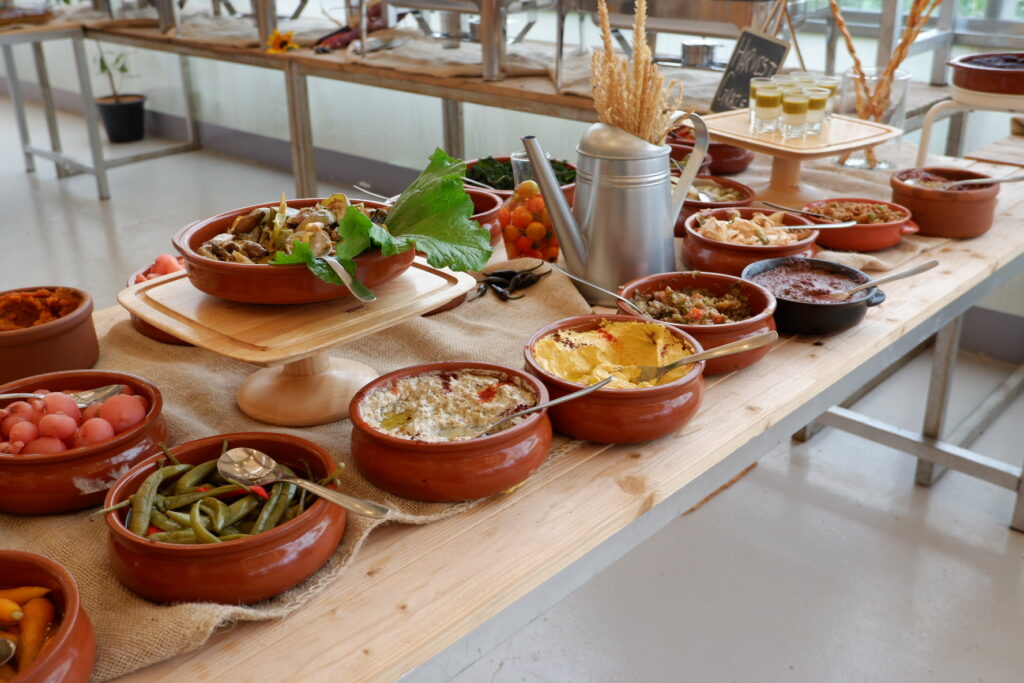
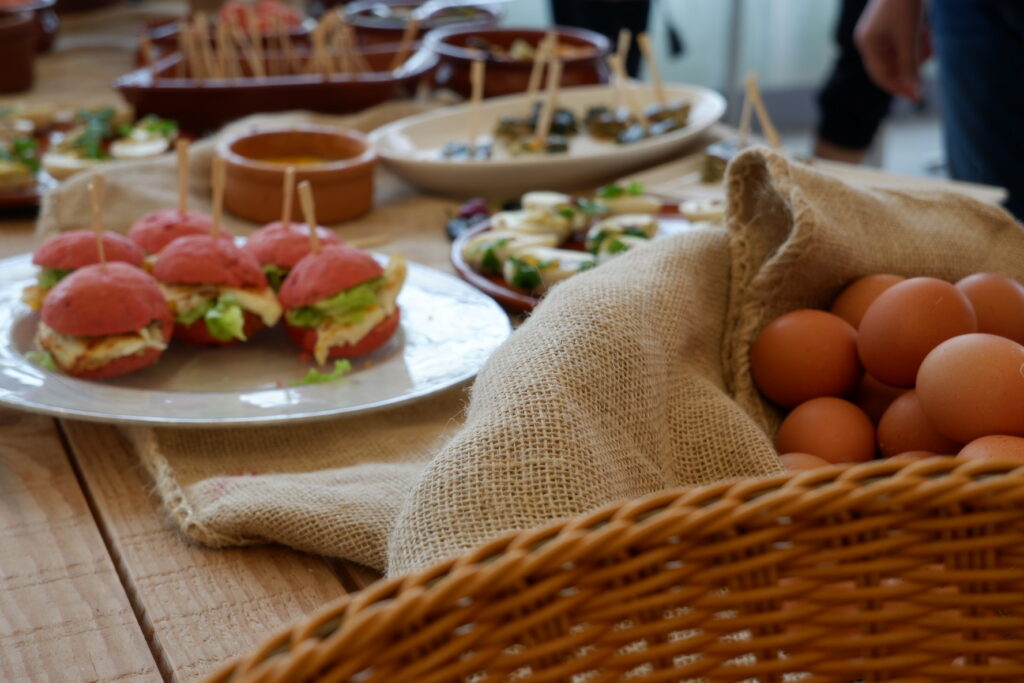
    The buffet lunch was just amazing, with a huge variety of dishes, all made with the freshly grown vegetables from the farm. Before the drive back to Abu Dhabi we stayed a couple of hours reading in one of the greenhouses, slept a bit and head back home with a few veggies and plants.

    Conclusione

    Comments Off on Emirates Bio Farm
  • Adventures,  Middle East,  Places,  Safari,  Sir Bani Yas,  United Arab Emirates

    Sir Bani Yas

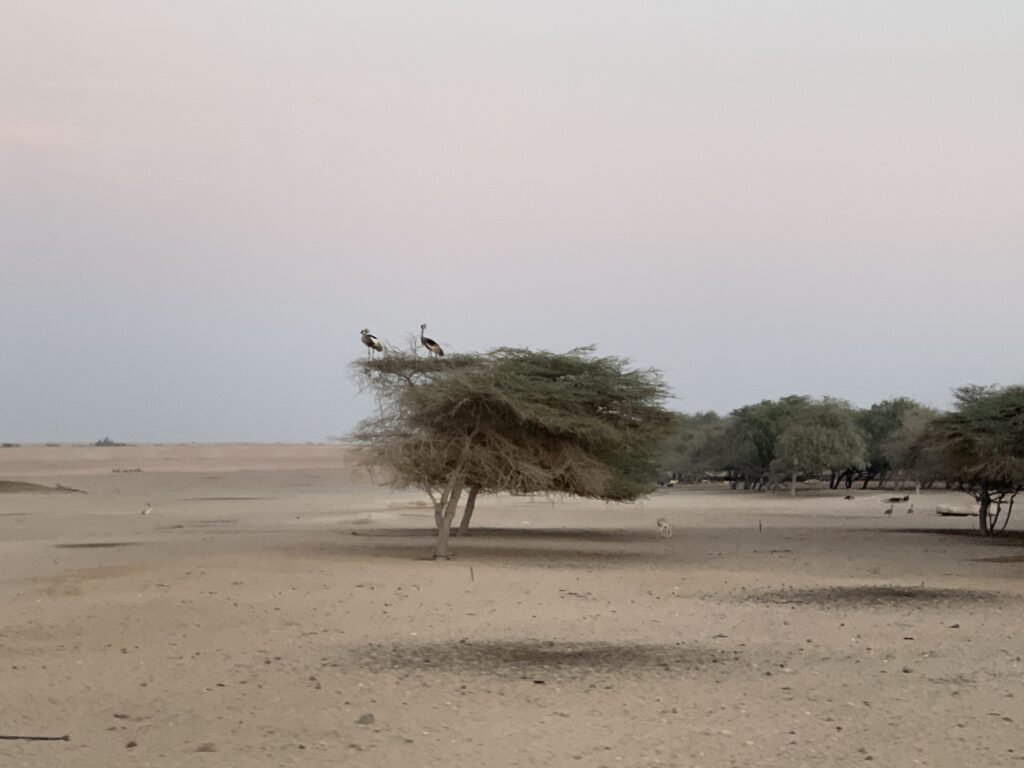
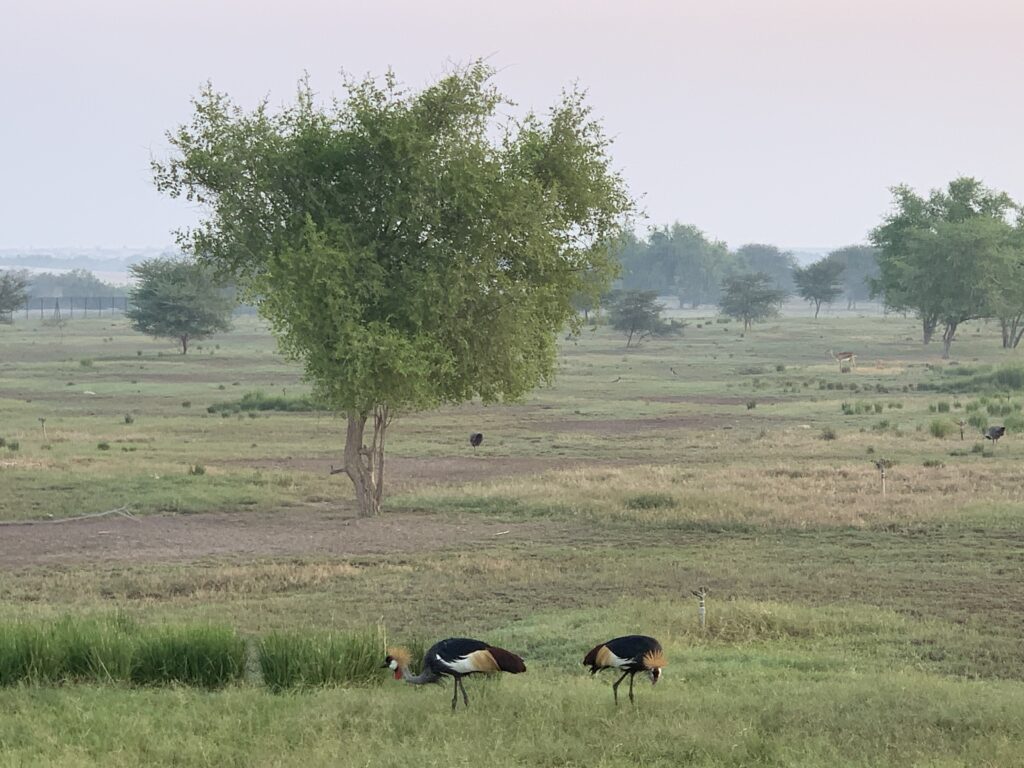
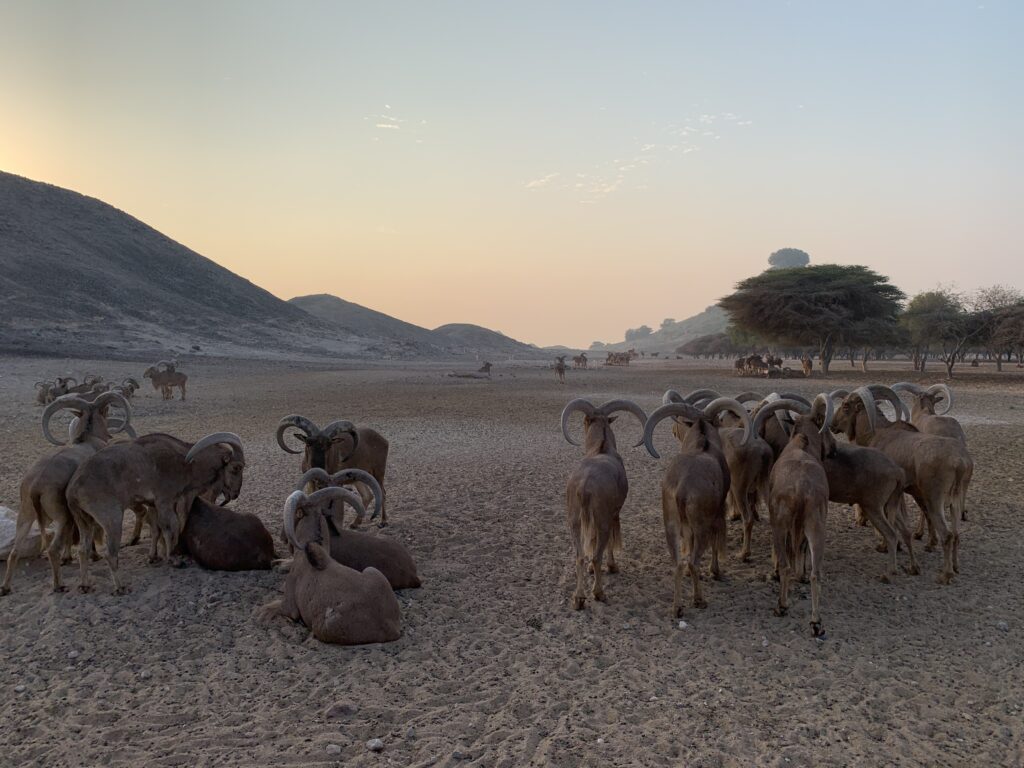
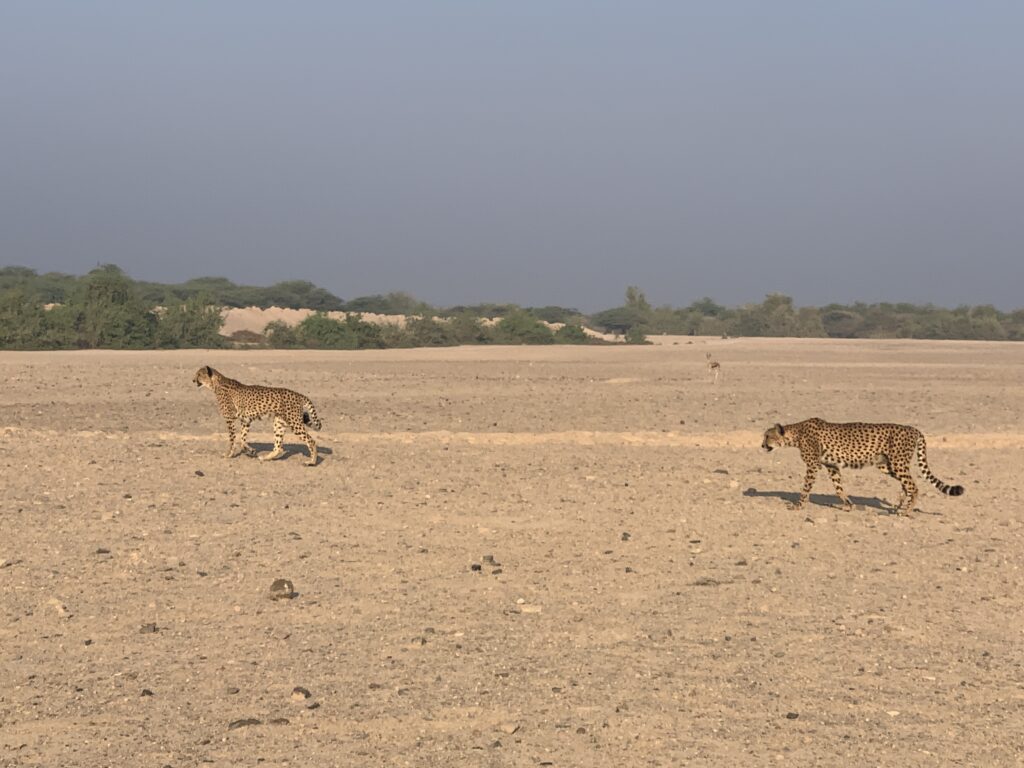
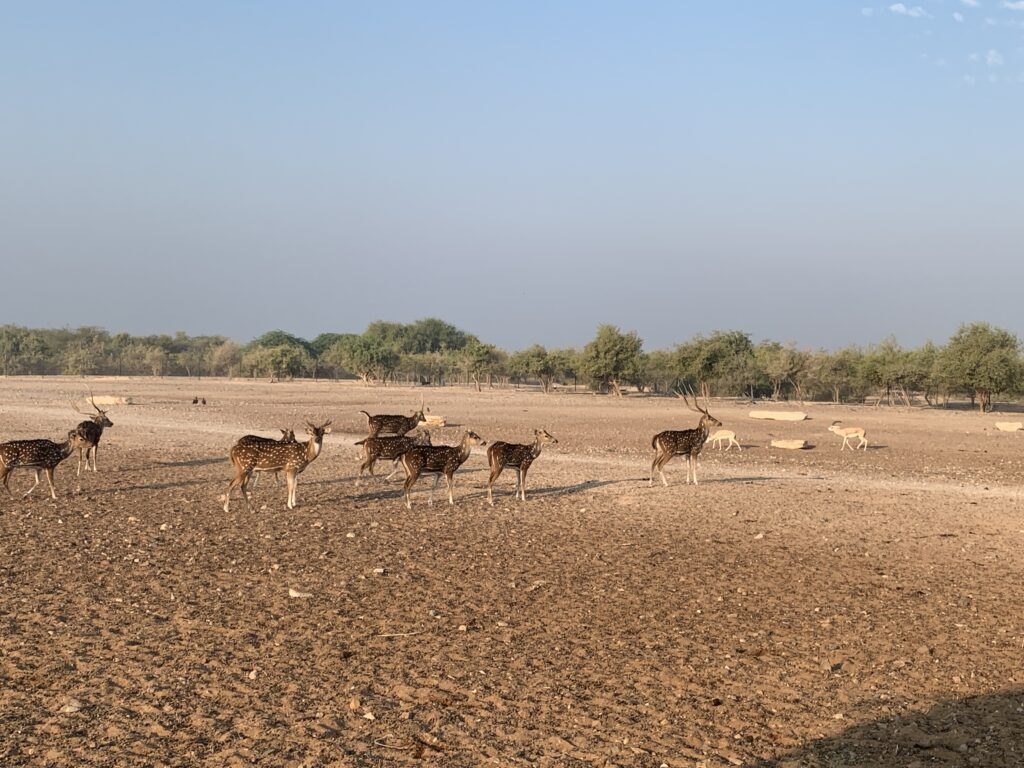
     Sir Bani Yas is an  island about 150 miles southwest of the United Arab Emirates capital of Abu Dhabi and it’s certainly not your standard stop in the desert. Not long ago, this 30-square-mile island—the biggest of eight Desert Islands just offshore—was abandoned. The Bani Yas tribe, who first moved here 7,000 years ago, left it for good at least a century ago. In the early 1970s, you could still see why. There were no trees or freshwater sources here; just craggy rocks and bare shorelines lapped by the waves of the Arabian Gulf. That’s when Sheikh Zayed bin Sultan Al Nahyan, the UAE’s founder visited and made a bold plan. He’d transform it into a nature reserve to give sanctuary to endangered animals of the UAE, Africa, and beyond. Since the death of Sheikh Zayed in 2004, Sir Bani Yas has been transformed into a wildlife park. More than 350 km of original fencing has been torn down to create an ‘open range’ safari feel on the refurbished island. Some creatures, such as the spotted deer and the athletic sand gazelles, roam wild – hence the 50km/h speed limit on the single lane, paved road – while others, such as cheetahs, are contained in sprawling, expansive pens. You can almost mistake the scene of oryxes, gazelles, hyenas, jackals, and cheetahs for a Kenyan savanna. 

    A two-and-a-half-hour drive from Abu Dhabi via the E-11 highway will allow you to hop onto one of the four short, daily ferry rides (departing at noon, 3 p.m., 6 p.m., and 11 p.m.). We took the earliest, so as to be able to still make the most of the afternoon ahead of us. Three resorts dot different parts of the island. We had reserved Desert Islands, a bigger resort on the north shore of Sir Bani Yas, set up at Sheikh Zayed’s former vacation home. And indeed the Hotel has a decor of Arabian, Asian and African influence, apparently designed to look as if Sheikh Zayed himself decorated it with exotic artifacts from his travels.The ground floor room was spacious and comfortable, with a broad balcony overlooking the sprawling pool. 

    Once you reach the hotel, there are so many activities to choose from that you run the risk of forgetting about the beautiful sandy beaches of the island. 

    Whilst the beaches are beautiful and it’s great to spend some time relaxing, everything is geared more towards getting out and making the most of the landscape, whether on dry land or in the water. And there is something for everyone with history and culture tours (there’s an ancient Christian Monastery on the island dating back to 600AD), kayaking, diving, snorkelling, horse riding, archery, nature walks, wildlife drives and mountain biking among other. 

    After booking our 2 activities for the weekend, we spent a couple of hours at the beach which, despite the hotel pool heaving with overnighters, was absolutely deserted.

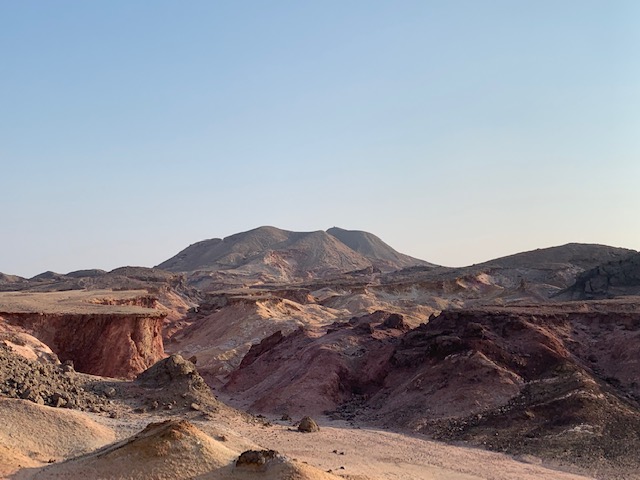
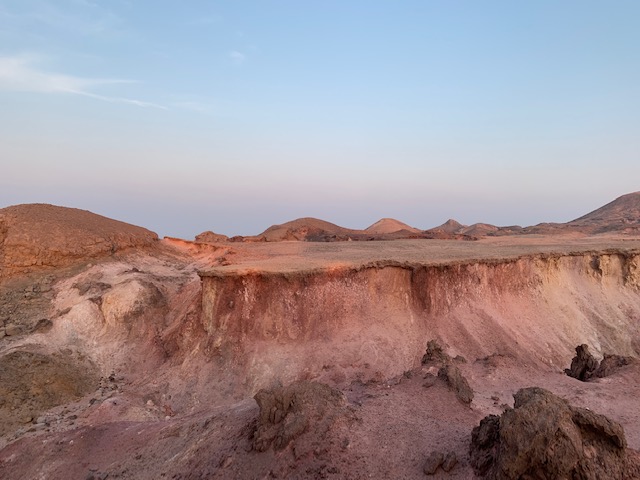
    We started our exploration of the island around 4:30 pm with a guided walk through a narrow, lunar-like wadi (valley or ravine). A wadi is technically a dried up river bed. The 90-minute walk rises slightly amidst the salt that in the century has risen from the depth of the island towards the surface, thus creating patterns of twisting rocks and shadowy crags that boast a rainbow of colors from the reddish hues of oxidized iron mixing with yellows from sulfur, purples from magnesium, green from copper and some sparkle from hematite on the red-rock floor.

    Although seemingly quite flat from the road, the landscape does boast some impressive rock formations and offers a completely different perspective from high up. The wadi is mostly made of salt and is therefore quite bare of vegetation. The crunching sound under your feet is the gypsum, the salt from which plaster is made of. Gypsum is white but it gets some color from the other neighboring minerals. We learnt from our guide that plaster differs from chalk in that the former can become solid again (as in plaster casts) while the latter does not have this ability.

    You’ll have no choice but to eat in the hotel while staying here – it is quite literally in the middle of nowhere. Don’t fear though, because you’ll be spoilt for choice with the food on offer. You can choose from a huge breakfast buffet at The Palm all-day-dining restaurant where the friendly chefs will whip you up a made-to-order omelette. For dinner there are a few options. We did a catch buffet barbecue at Amwaj. Set right on the beach, a small walk from the hotel, its décor is pretty special with cosy, oversized chairs and sofas on the terrace creating a relaxed vibe that makes you feel a world away from Abu Dhabi.

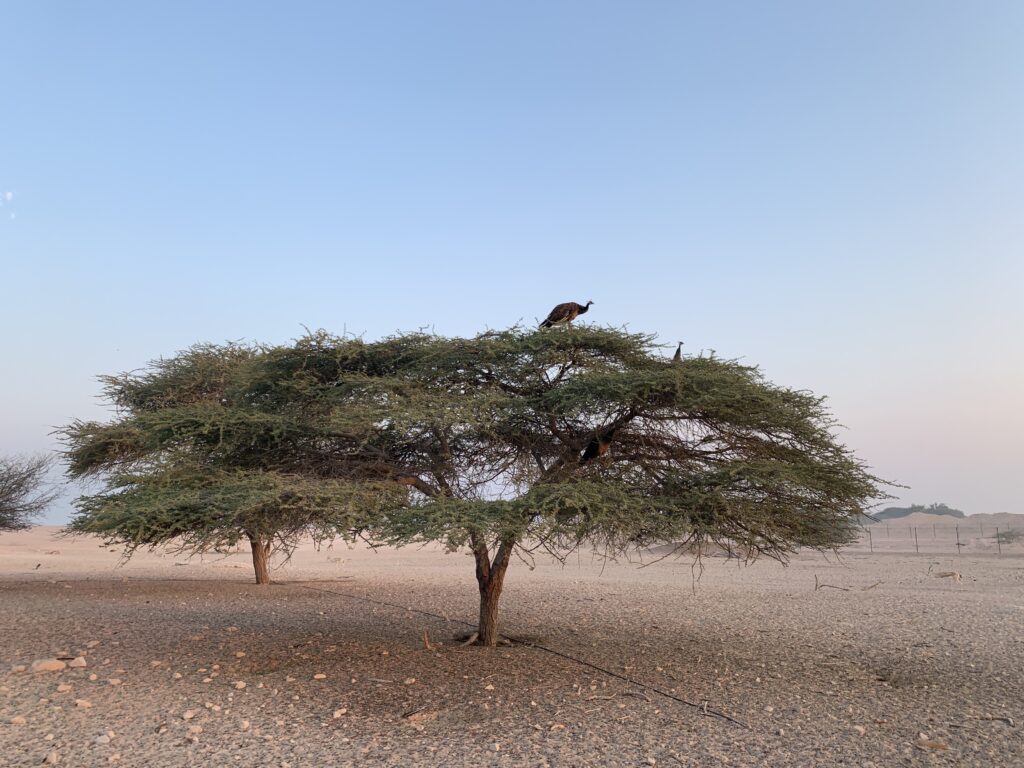
    The Arabian Wildlife Park safari that we did early morning of our second day is the highlight of any visit. Up to half a dozen guests jump into an open-sided Land Cruiser to make leisurely 90-minute drives.  The windows are open and the roof lifts up so you can be sure to get close up and unobstructed views of whatever you may be lucky enough to see. While you are driving towards the gated areas of the park, it is difficult to imagine that in the beginning there were only 70 dates trees in the island while now there are over 2.5 million trees—like the umbrella thorn acacia, olive trees, apple and pear trees, or the gum tree that the eland antelope are so drawn to— planted by hand. The pipeline system to irrigate this vast area (mostly made of salt, do not forget about it) extends over 73,000 miles. In addition, the resorts plant a mangrove for every guest.

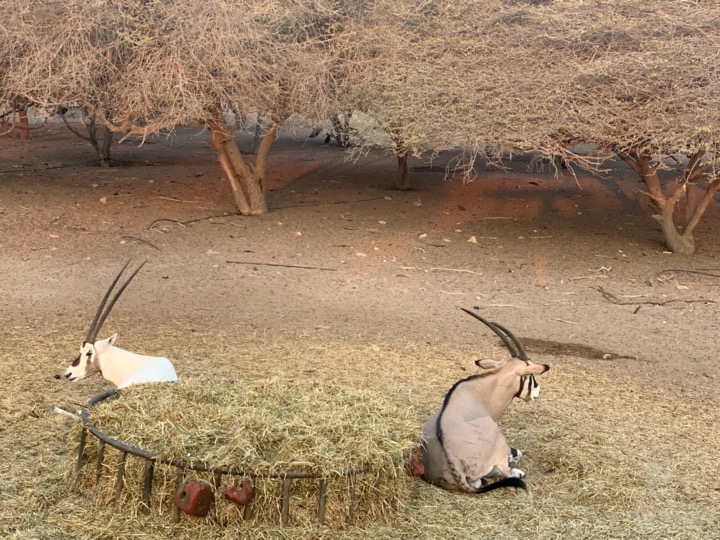
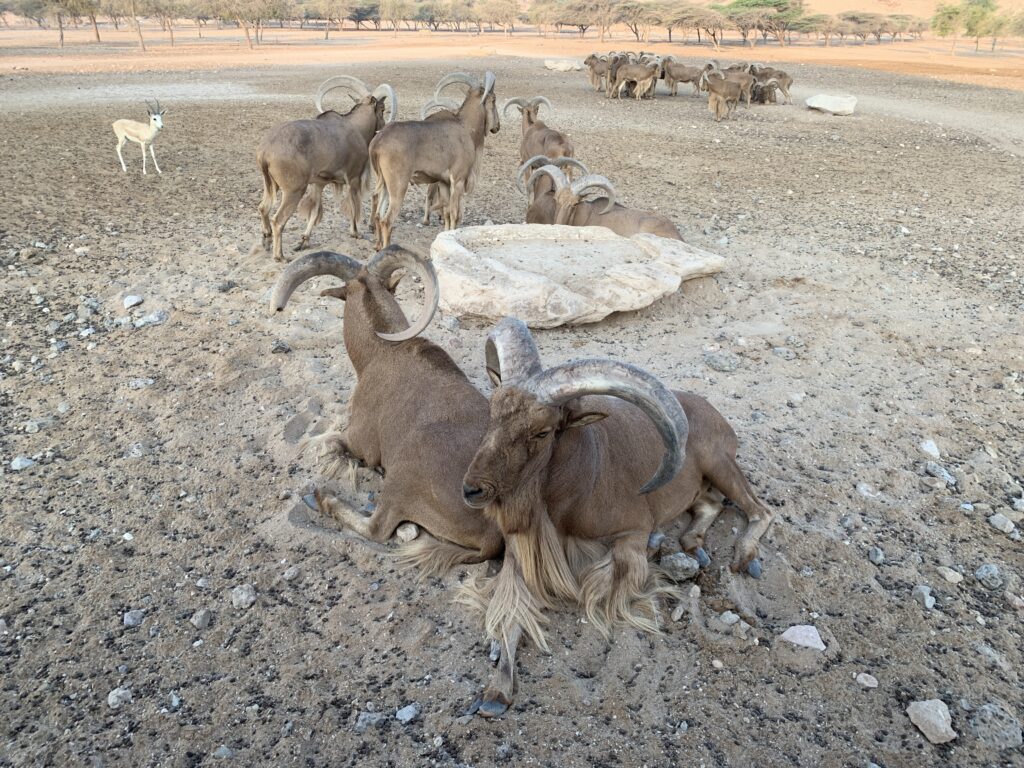
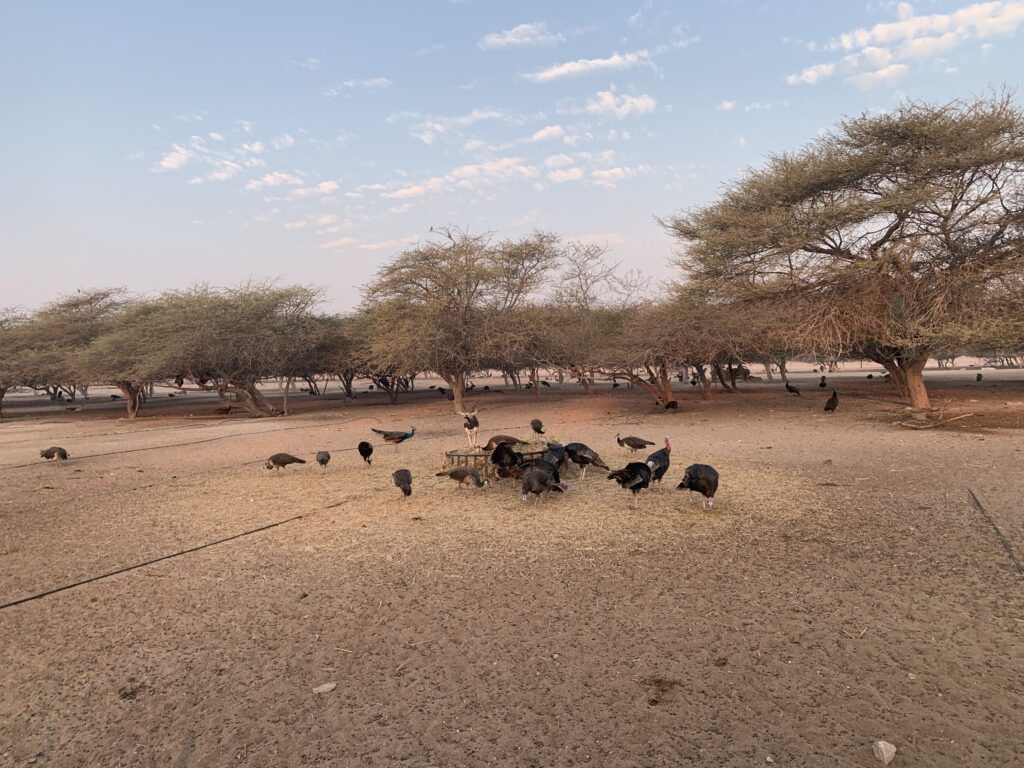
    Wildlife is literally everywhere on the island, and even before venturing behind the gates of the wildlife park we’d seen plenty of Sand Gazelles (the namesake of Abu Dhabi) and Arabian Hyrax to name only a couple. The Arabian Hyrax are actually the whole reason why Sheik Zayed created all this: they were a symbol of the gulf, nearly extinct 40 years ago, and now thanks to Sir Bani Yas no longer endangered. Behind the gates, this must be about as close as you can come to a safari outside of Africa, where 16 thousand of beasts of 27 different species now live, including Indian Black Bucks (the fastest one, at 87 km/h), Sand Gazelles (the most numerous), Barbary Sheep, Arabian Oryx (with their straight horns), peacocks (the blue ones are from India, the green ones from Burma) and Spotted Deers (those are antlers, not horns!). 

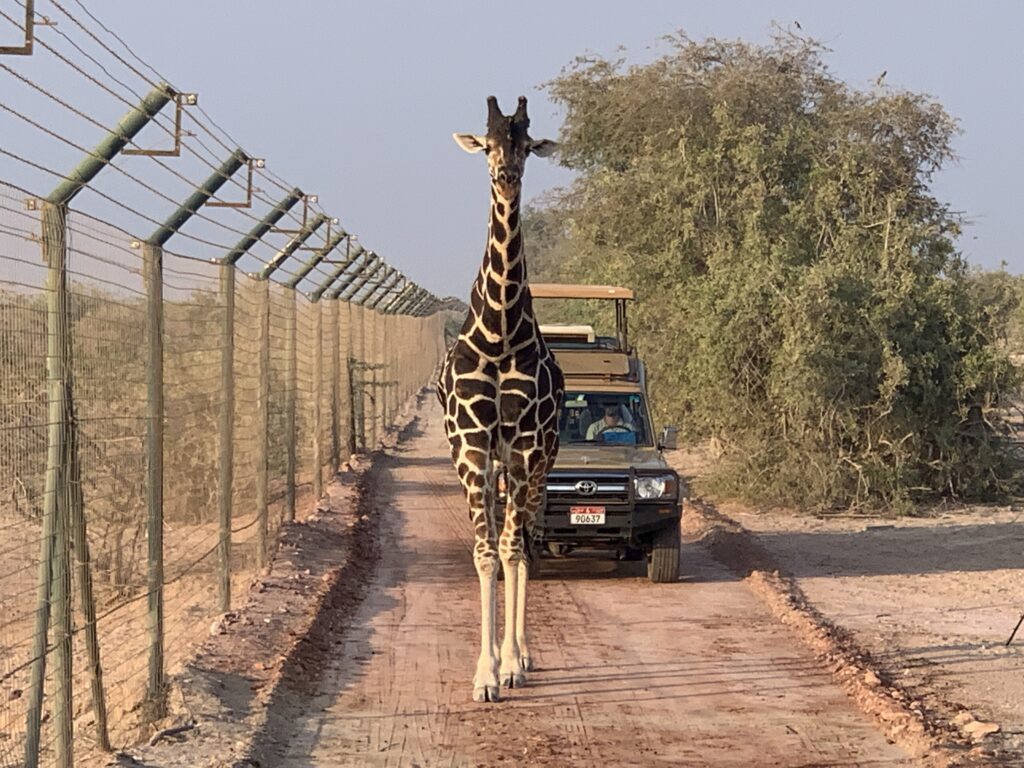
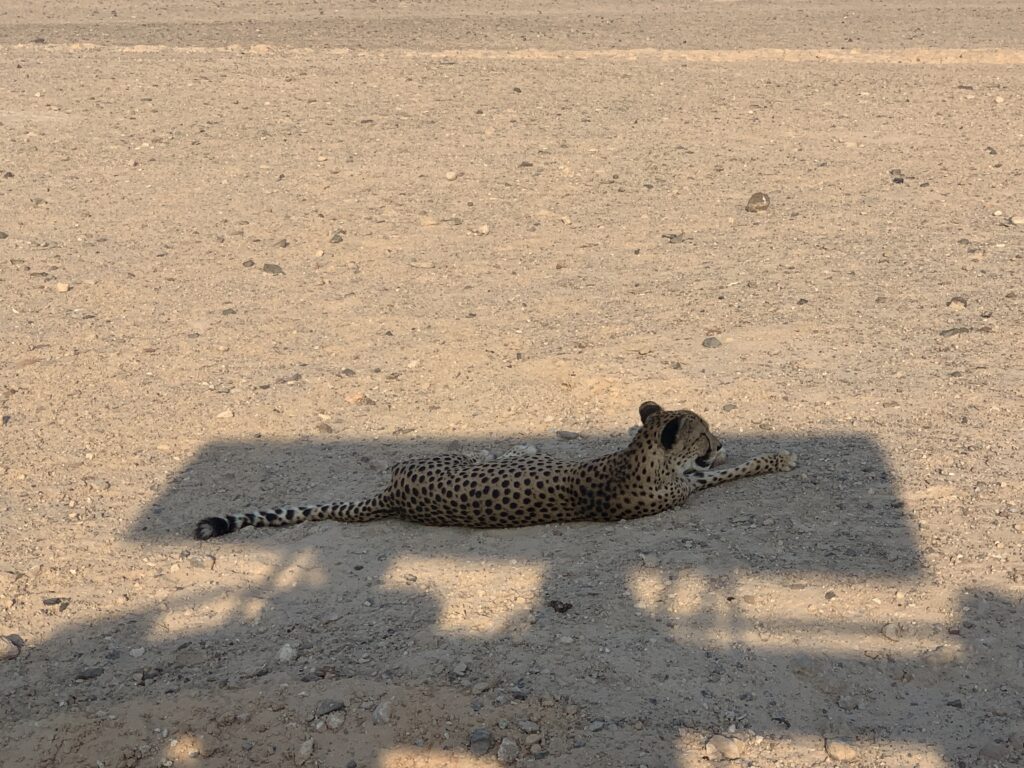
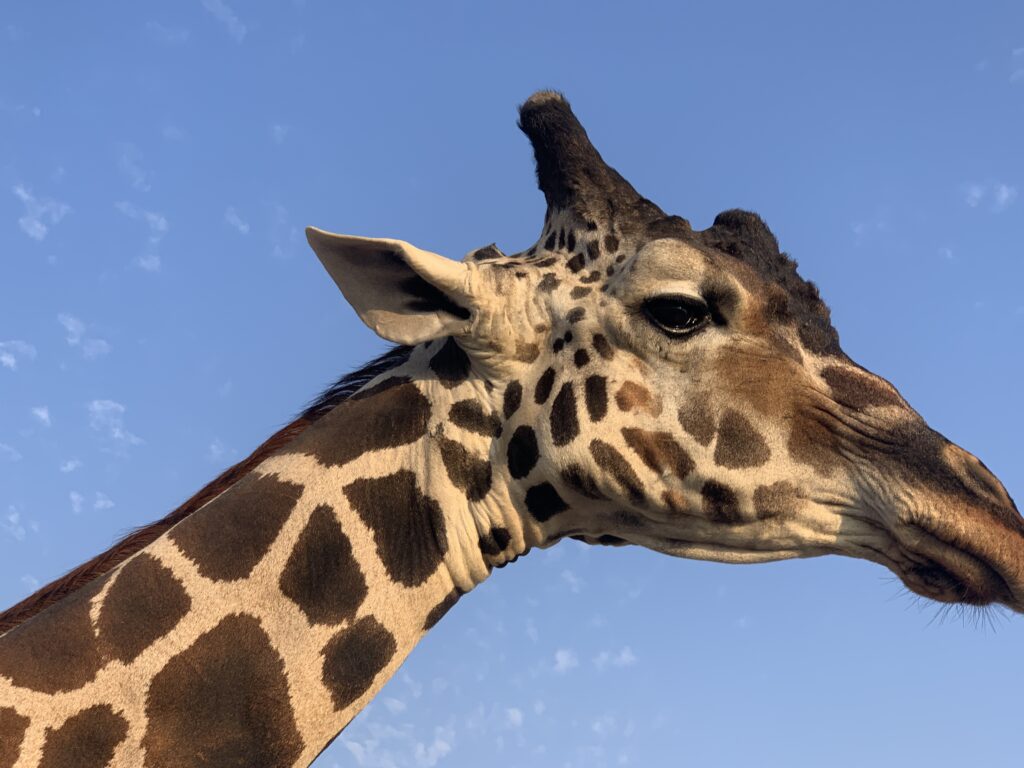
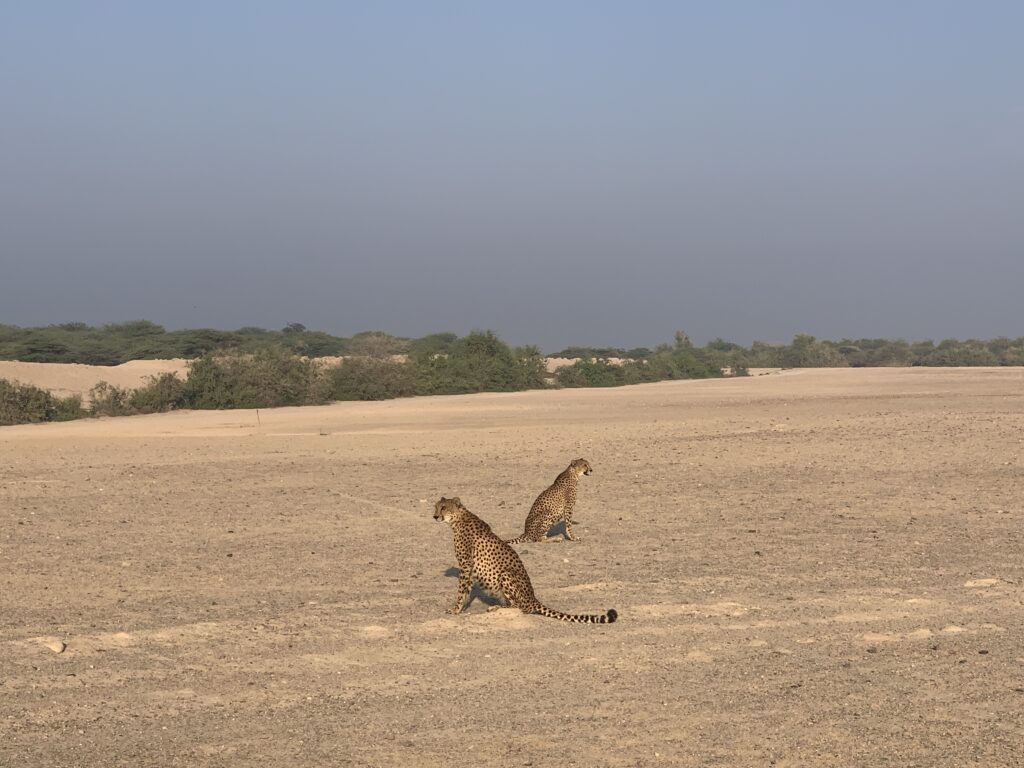
    After reaching the top of the mountain that stands at the center of the island (1040 ft), on the other side of the island we had a close-up encounter with reticulated giraffes. But the highlight of the safari was for certain getting to know the 3 cheetahs that roam the park (5 more will soon be coming). With an initial jump start of 7 meters, they can reach 120 km/h in 3 seconds and are really elegant and impressive felines. Two of them are brothers, Gabriel and Gibbs; you will easily recognize Gibbs from his limping. They are the perfect example of teamwork, with Gabriel running to catch the prey and Gibbs doing the killing. The third cheetah is Cuba, he lives by himself since he is not related to the other two and the Park wants to avoid fights among these endangered predators.


  • Bologna,  Europe,  Italy,  Places

    Bologna

    History

    The first settlements of Bologna date back to the first millennium BC, years in which it represented an important center for Etruscans and Celts. The two names of the city, Bologna and Felsina, originate respectively from the Celtic “Bona” (fortified center) and from the Etruscan “Fetzna”. The Romans dominated Bologna from 189 BC until the fall of the Empire. In 774 the city was conquered by Charlemagne who handed it over to the Pope. In 1115 it became a municipality, and in the XI-XII century its economy exploded thanks to the system of canals and the silk trade. In 1257 it was the first Italian municipality to promulgate the “Liber Paradisus” with which slavery was abolished, and slaves were bought with public money and freed.

    In the XIV century, internal struggles undermined the independence of the city which in a few decades was dominated by various noble families (Pepoli, Visconti, Bentivoglio) until it returned under Pope Julius II in 1506. In 1796 it was conquered by Napoleon who kept it until 1815, the year in which with the Congress of Vienna, the city returned to the Pope. Finally, in 1860, Bologna was annexed to the kingdom of Italy

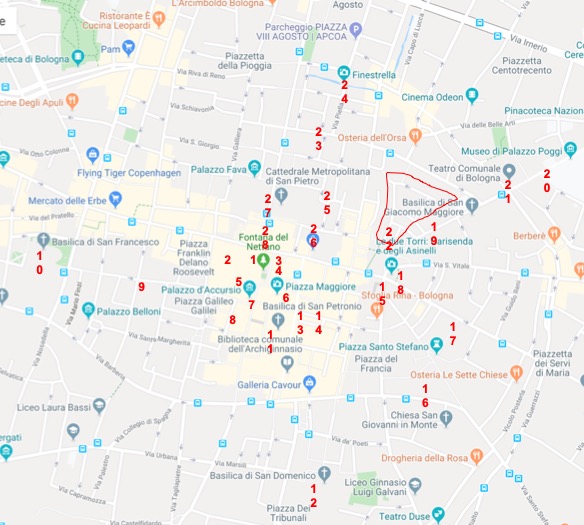
    Map of central Bologna with the walking route marked

    Tour of the city center

    Piazza Maggiore

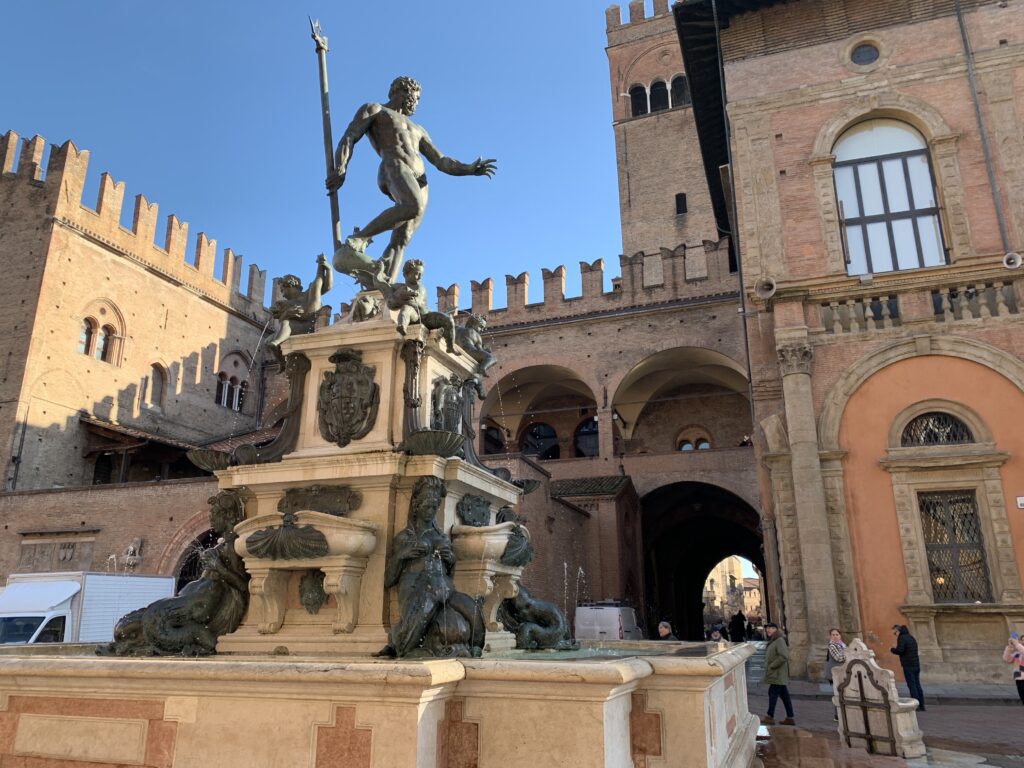
    Start the tour from Piazza del Nettuno (1); in 1564 buildings were demolished to make room for this square, where one of the symbols of Bologna was erected. The statue of Neptune was commissioned by Pius IV as a symbol of papal primacy over the world, and the Flemish Jean de Boulogne (known as Giambologna) was hired to sculpt it. The statue represents the god of the sea, Neptune, surrounded by four cherubs that embrace dolphins, to represent the four largest rivers known at the time (Ganges, Nile, Amazon River and Danube). On the four sides of the tank there are four engravings in Latin that say: made to adorn the square, made for the use of the citizens, made with public money and the date of 1564. As the engravings say, in the past it was used by citizens to draw drinking water and to wash clothes. Giambologna wanted to make the genitals of the god bigger without being admonished by the Church: the thumb of the the left hand seen from a particular position appears to be the erect member.

    The Fountain of Neptune in Piazza Maggiore, Bologna
    Piazza del Nettuno with Palazzo Re Enzo in the back
    Arcaded facade of Palazzo Re Enzo on Piazza Maggiore, Bologna
    Sala Borsa
    Galleried inner courtyard of a palace in Bologna
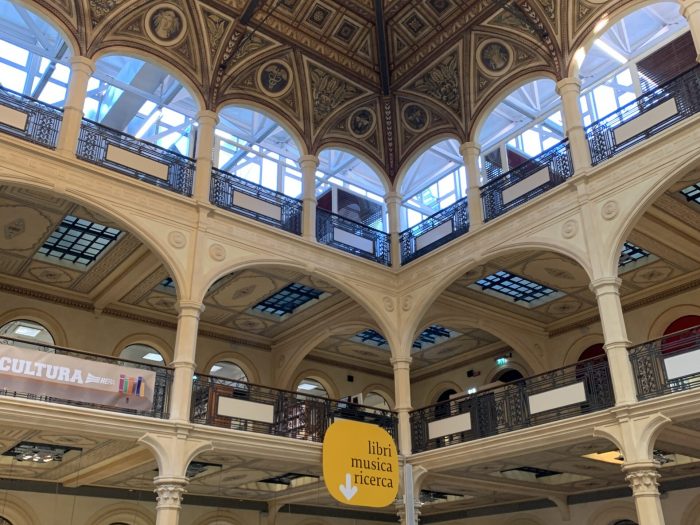
    The liberty-style inside Sala Borsa

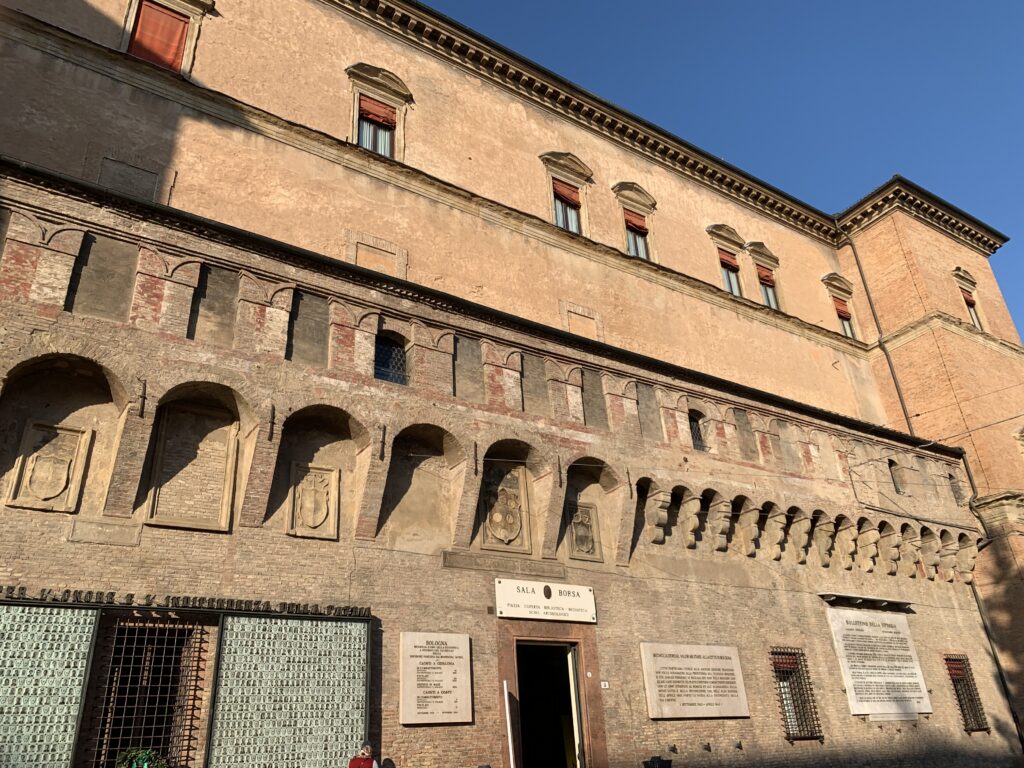
    Behind you stands a Milanese-style building commissioned by the Visconti family as the headquarters of the city’s militias. In 1883, with the Kingdom of Italy, the Sala Borsa (2) was built to house the Bologna Stock Exchange (closed in 1903). The art nouveau interior hall had various functions (sports hall) and only since 2001 has it been the seat of the municipal library. It is worth a quick walk inside to see the Roman remains in the trapdoors on the floor.

    Back in Piazza del Nettuno, the building opposite Sala Borsa is Palazzo Re Enzo (3), built in 1245 as an extension of the Palazzo del Podesta’. It takes its name from being a prison of Enzo, son of Federico Barbarossa, for 23 years. It was apparently a pleasant imprisonment, as Enzo asked to be buried in the city. The vault by the side of the building was the site of the city hangings: the condemned were first blessed in the little church next to it, now deconsecrated.

    Between Palazzo Re Enzo and Palazzo del Podesta’ (4) there is a cross vault with the four patron saints of the city at its corners. If two of you stand at two opposite corners and whisper against the column you will be able to clearly hear the other person’s voice: it was a method used by the priests to confess the lepers

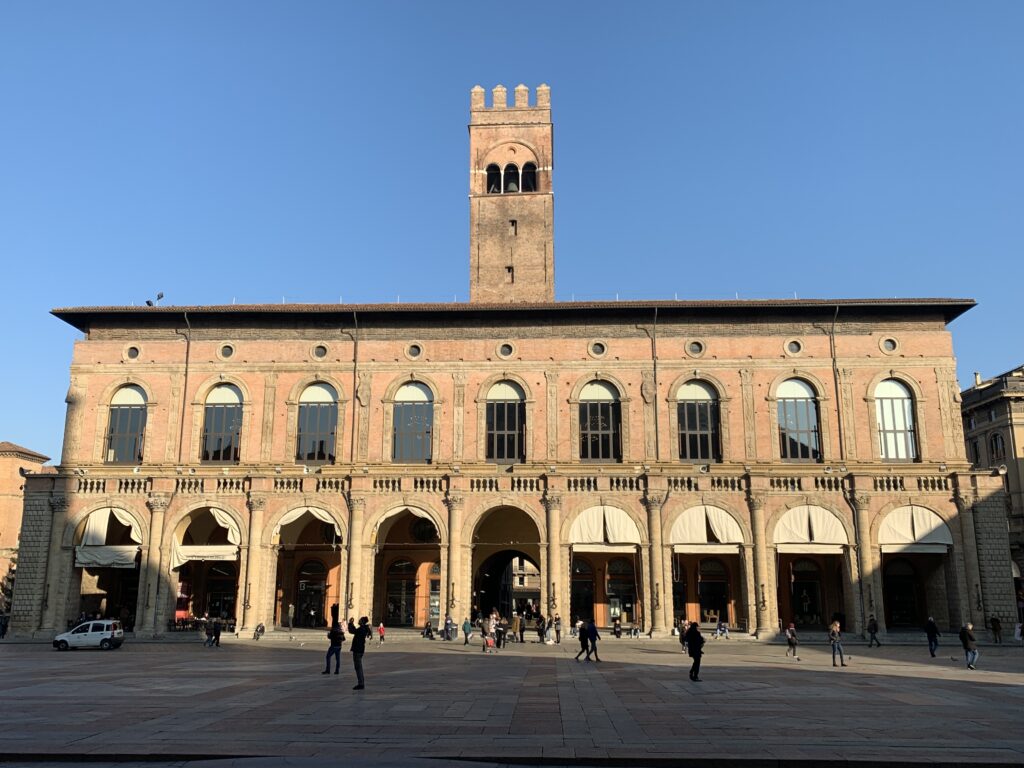
    Palazzo del Podestà and the Arengo tower, Piazza Maggiore, Bologna
    Palazzo del Podesta'
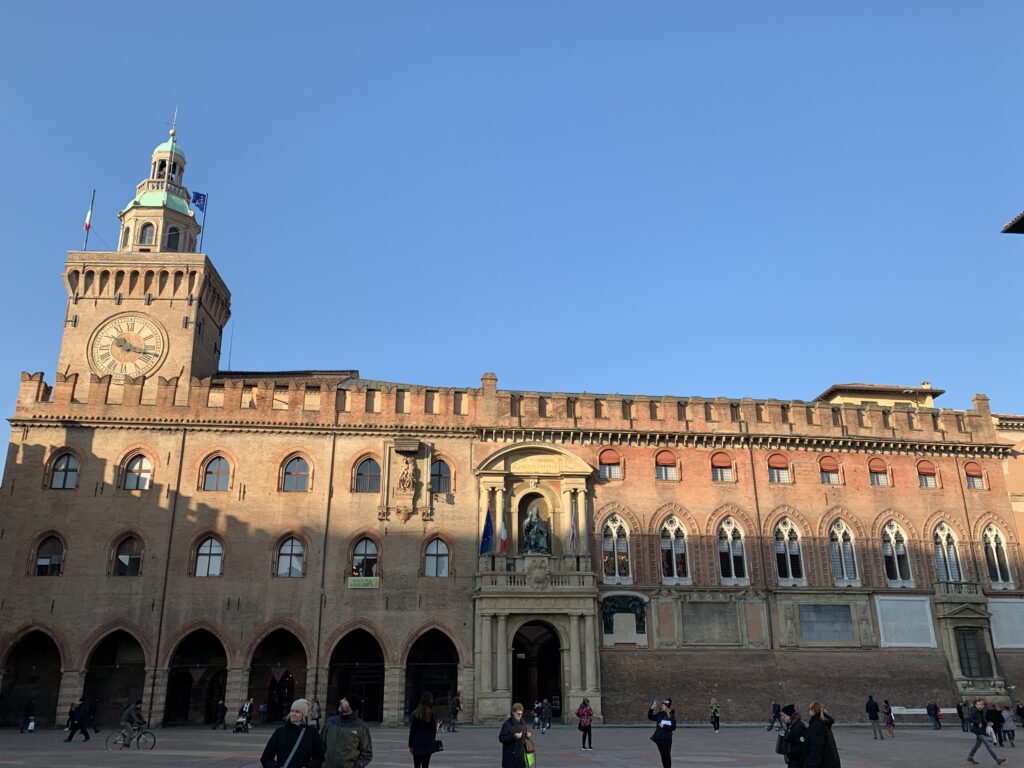
    Palazzo d'Accursio, Bologna's city hall, with its clock tower
    Palazzo d'Accursio

    From the vault, exit towards Piazza Maggiore (5)and turn around to admire the Palazzo del Podesta’ (4) under which you have just passed. The Arengo Tower is one of the largest suspended towers in Italy: its 5 tons bell was hoisted by Aristotele Fioravanti, architect of the Buda Castle in Budapest, and known for having moved the Templar tower in Bologna by 13 meters to look for gold hidden under it. The bell was ringing to call the Bolognese to gather in case of war, and in the last 100 years it tolled at the end of the Second World War and the fall of fascism.

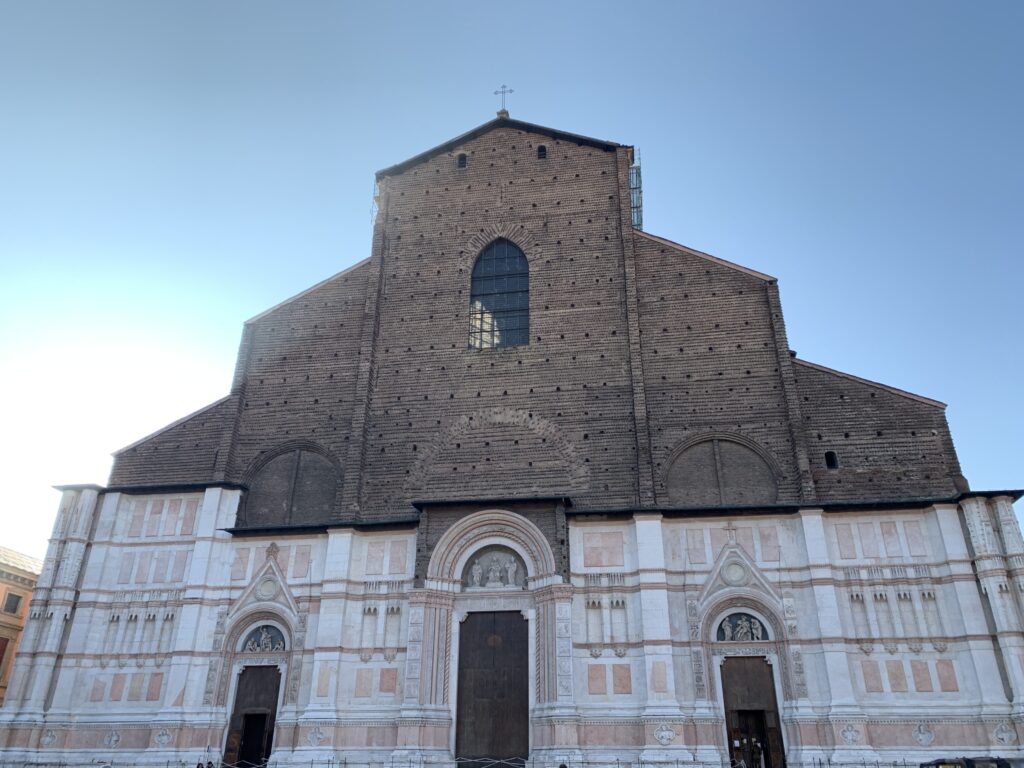
    Unfinished marble and brick facade of the Basilica di San Petronio, Bologna

    In front of you stands the Church of San Petronio (6), the largest in Bologna, and although unfinished one of the largest in Europe. It’s the largest gothic brick church in the world. It’s dedicated to Petronius, bishop of Bologna in the V century and sent to revive the city from the barbaric invasions. The church was begun in 1390, when Bologna already had a cathedral: the idea of its realization was not born in fact from the Church but for the will of the citizens. The architect Antonio di Vincenzo died 10 years after the workings began. This, together with obstacles from the pontifical prelate, interrupted the constructions for years. In 1514 a new project would have made it bigger than San Pietro in Rome, but it was never put in place. In 1530 Charles V was crowned as emperor of the Holy Roman Empire inside San Petronio.

    In 1562 Pope Pius IV decided to give priority to the construction of other surrounding buildings, and the works to complete the church were interrupted for good in 1563. The Church of San Petronio was consecrated only in 1954, and since 2000 has housed the relics of the Saint.

    Inside you can see the 4 crosses that for centuries and up to 1798 were outside the gates of the first city walls of Bologna, and which today are oriented as they were then. San Petronio is home to the largest sundial in the world, completed by Cassini in 1657 which measures 67 meters long, and even today misses the astronomical noon by a few seconds only.

    Detail of the unfinished brick facade of San Petronio, Bologna
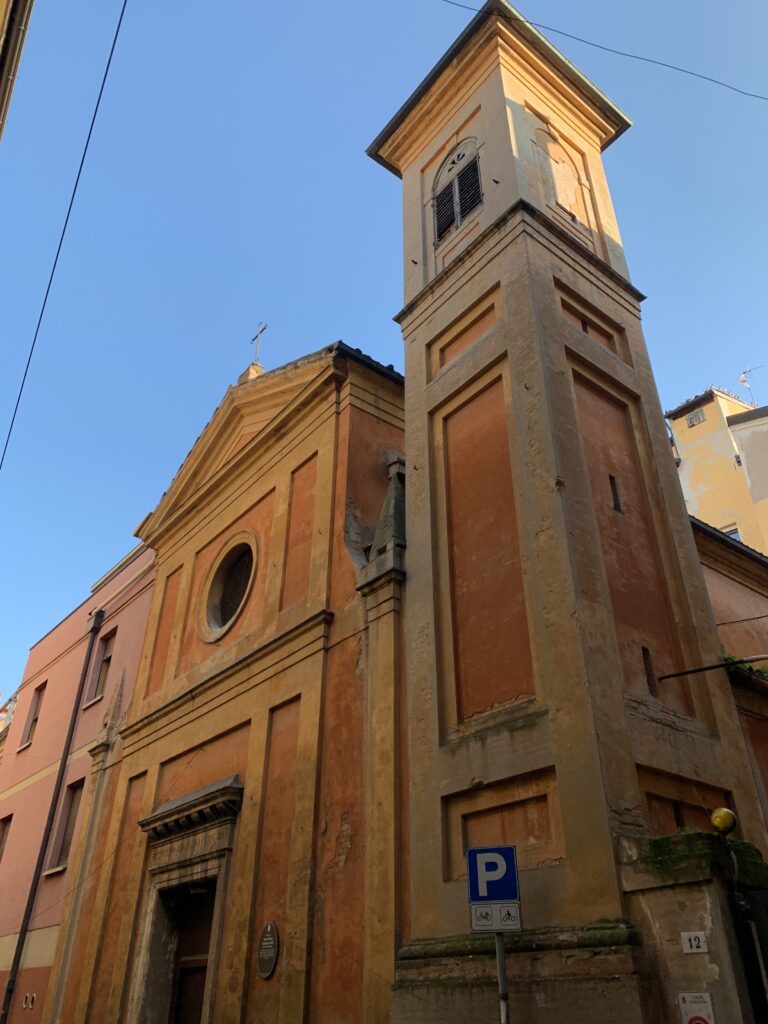
    Santa Maria Labarum Coeli
    Church facade in the centre of Bologna
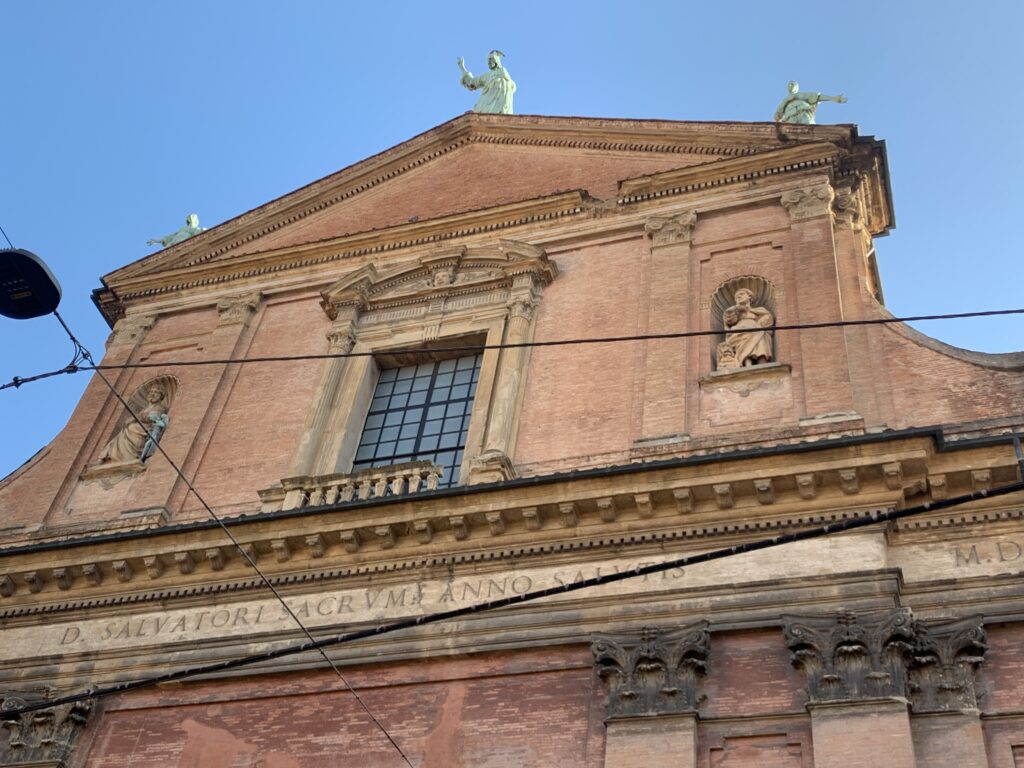
    San Salvatore

    Stroll through Via D’Azeglio (7), turn into Piazza dei Celestini and reach the Church of Santa Maria Labarum Coeli (8), from 1700. Labarum Coeli has no Latin translation: the name comes from the fact that the area was frequented by a prostitute named Baroncella . As the Church could not take this name, it was Latinized. Since 2006 it has hosted the Copts of Bologna.

    Take a quick detour to admire the church of San Salvatore (9), very ancient and restored in the 1600s. Raise your gaze to the top of the façade: a large caliber bullet fired by the Austrians in 1849 from the hills of Bologna is clearly visible .

    From 1213 the Franciscans are in Bologna and begin the construction of the Basilica of San Francesco (10) which ends in less than 30 years. After the arrival of the French in 1796, the church was deconsecrated and emptied. The church also suffered major damage during the Second World War. The facade is Romanesque but the building is in French Gothic style.

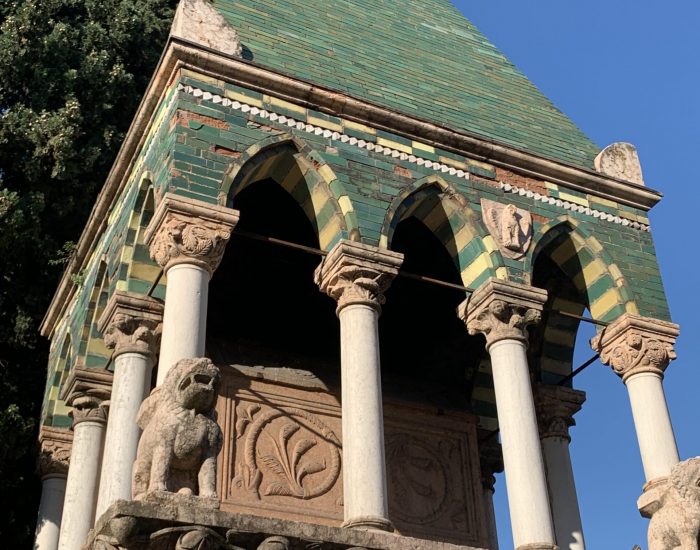
    Outside the church of San Francesco there are three tombs of the “Glossatori” which preserve the remains of the first university professors of the Middle Ages; at the time the University was above all jurisprudence, and the “Glossatori” commented on Roman law texts with additions to the margins (glosses).

    Green and white marble portico with carved capitals, Bologna
    Glossatori Tomb

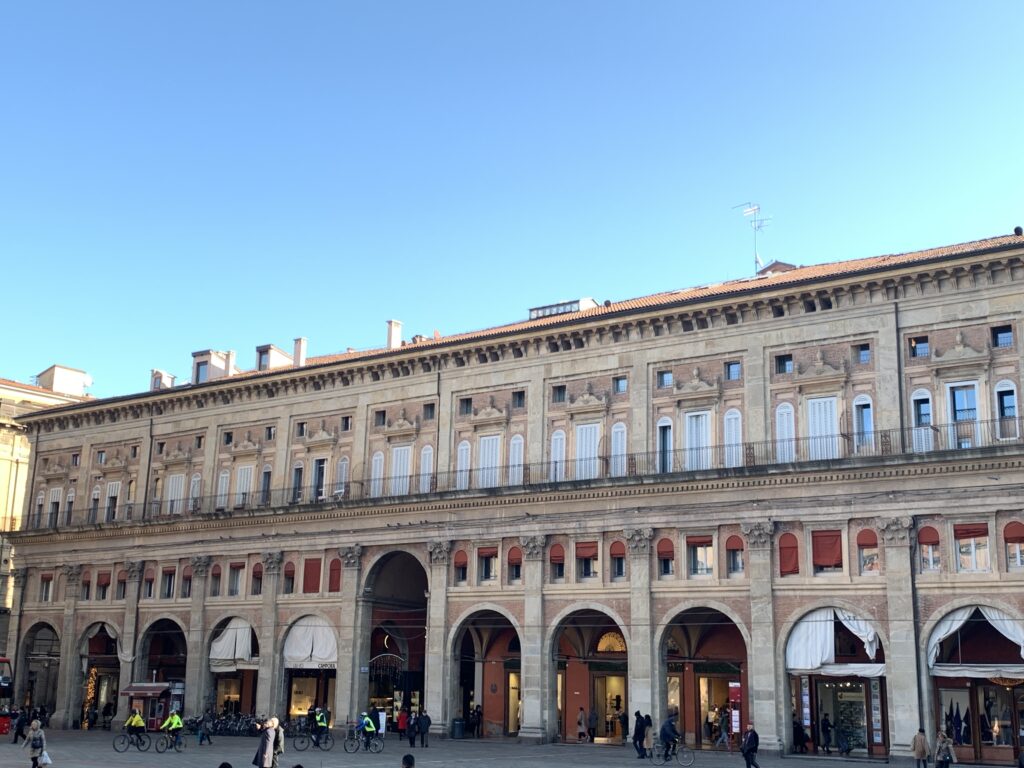
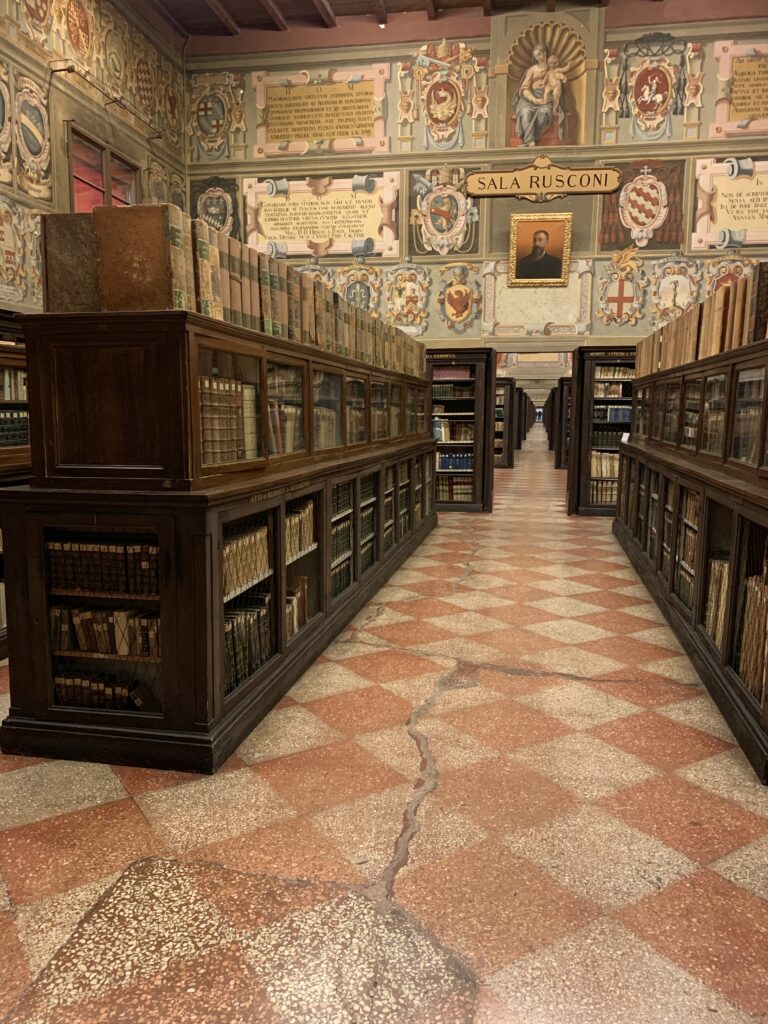
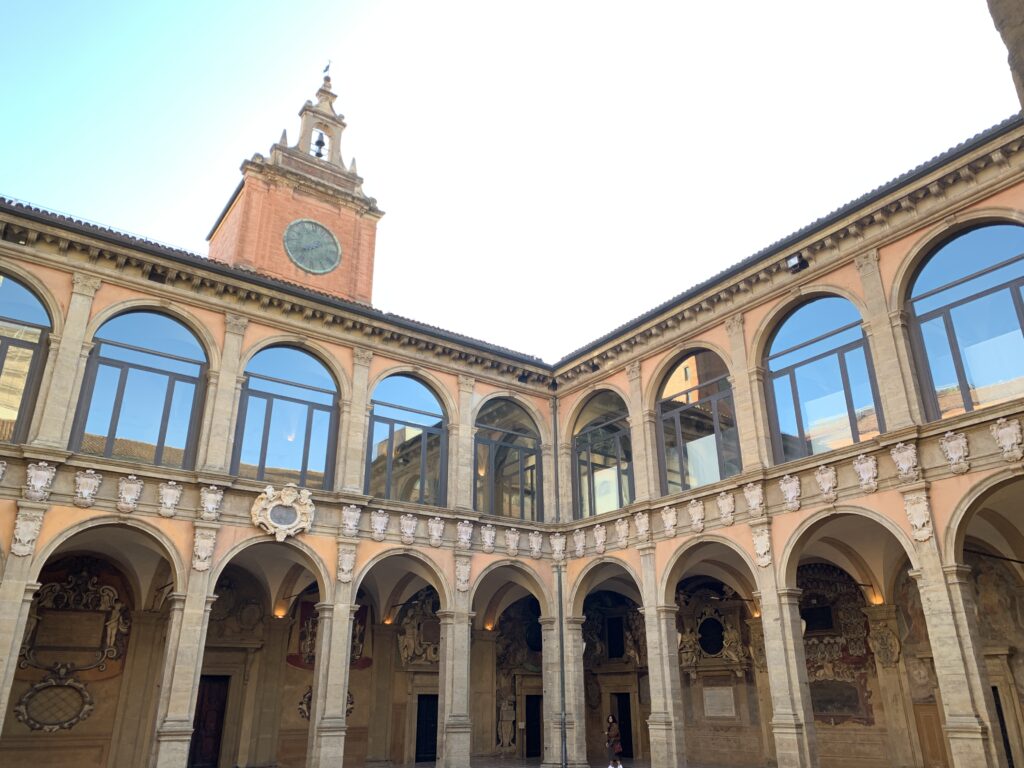
    Follow via Porta Nuova to return to Piazza Maggiore. In front of you, on the last side of the square that remains to be explored, opens up the Archiginnasio (11). It was finished in 1563 in order to give a home to the University (lessons were first held in public places) which remained there until 1803. Walking along the Pavaglione portico (which takes its name from “papillon” because here were hanging the silkworms) you will reach the door of the municipal library of the Archiginnasio, founded in 1838. 

    Long arcaded palace facade on a Bologna square
    Palazzo dei Banchi and the Portico del Pavaglione
    Courtyard of the Archiginnasio with its clock tower, Bologna
    The inside of Archiginnasio

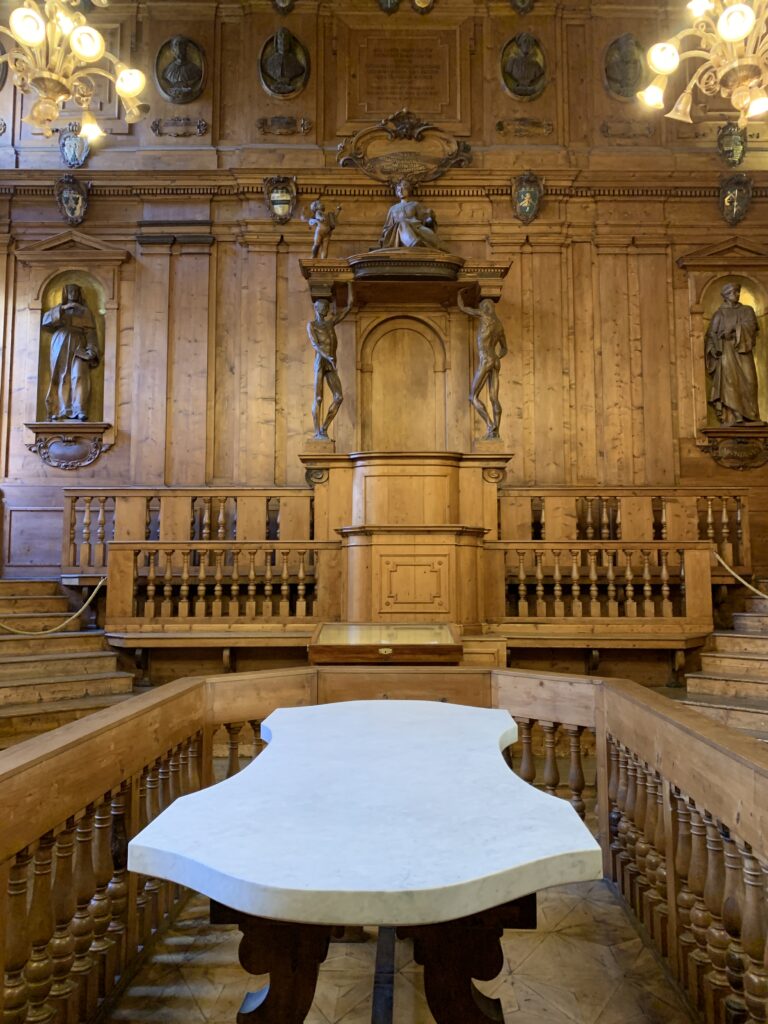
    Entering the courtyard there are more than 6000 student coats of arms and inscriptions of the professors representing the largest heraldic mural complex in the world. Climb up to the first floor to visit the anatomical theater of 1637. Constructed of fir wood, it has a chair on the right from which the professor read the anatomy books, dominated by a canopy supported by the statues of the skinned, and under it a stand from which the assistant indicated the body parts on the corpse the barber was dissecting on the marble table in the center.

    The wooden Anatomical Theatre of the Archiginnasio, Bologna
    The anatomical theater
    Reading room of the Archiginnasio library with wooden bookcases, Bologna
    The Archiginnasio library

    Out of the theater turn left under the portico and continue to the church of San Domenico (12). In 1218 the Dominicans arrived in Bologna and in 1240 completed the construction of the Basilica and the convent, inside which the remains of San Domenico (who died in Bologna in 1211) are preserved. In the square in front of the church there are two more tombs of the glossatori , the first medieval university professors.

    The Quadrilatero

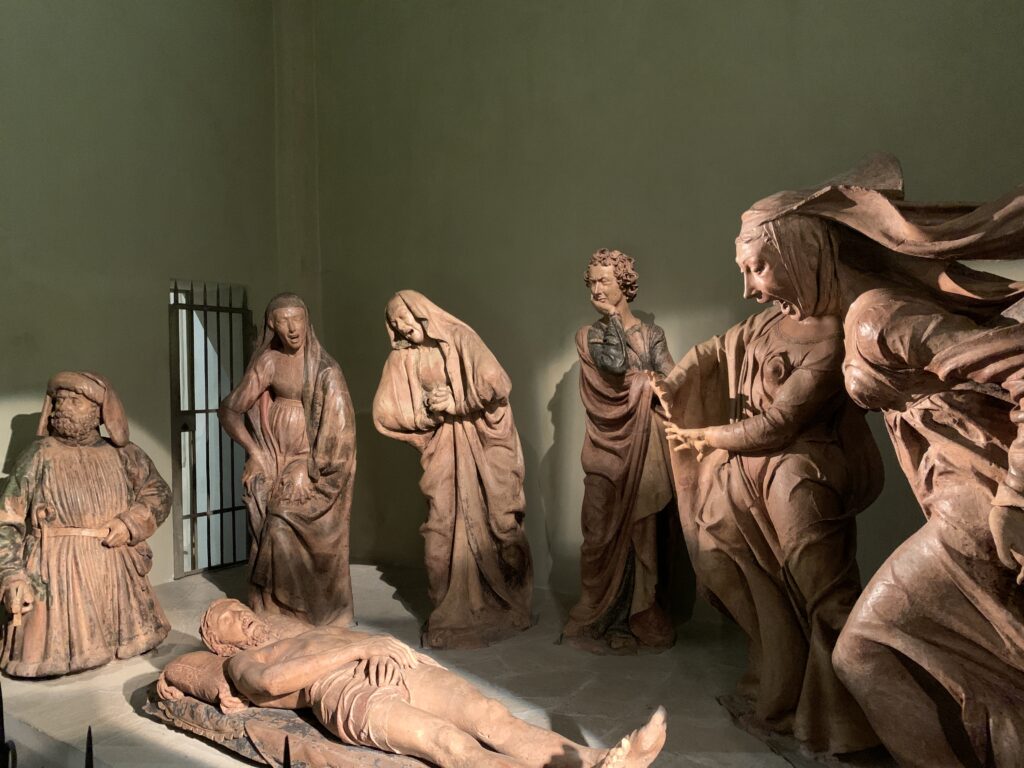
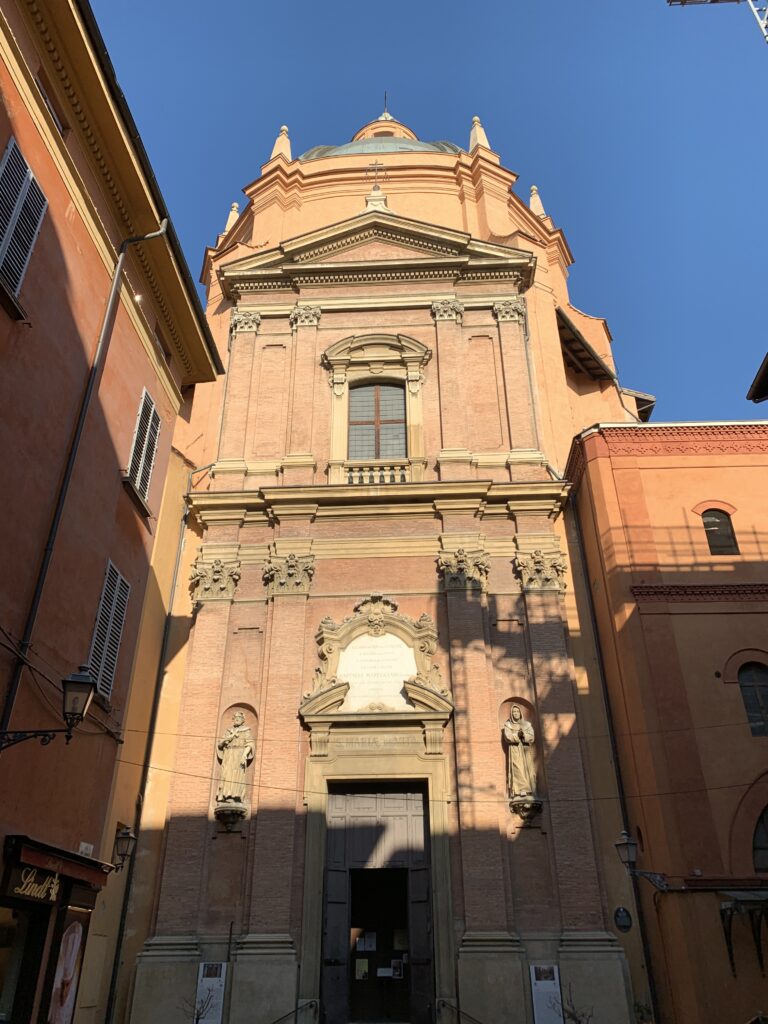
    Return to the Pavaglione porch and turn right this time into Via Clavature (13). You are entering the true heart of ancient Bologna, where every street takes its name from the trades that were practiced there. Along Via Clavature, on the left side, is the Church of Santa Maria della Vita (14), founded in the 13th century by the flagellar brotherhood. This religious order was dedicated to welfare activity and in 1287 transformed the Church into the first hospital in Bologna. The hospital occupied the entire building between the Pavaglione and the Church, but when the numbers became excessive the first triage was created, and the patients who were too serious were sent to the portico in front of the church, called the Porch of Death (1347). 

    Terracotta Lamentation over the Dead Christ by Niccolò dell'Arca, Bologna
    Baroque church facade in central Bologna
    Santa Maria della Vita

    Enter the Church to admire the Compianto of the Dead Christ of Niccolo dell’Arca (second half of the 400).

    Continue your walk in the quadrilatero immersing yourself in the ancient craft and commercial traditions: home to barbers, goldsmiths, fishermen, furriers, blacksmiths, to each of whom one of the streets is named.

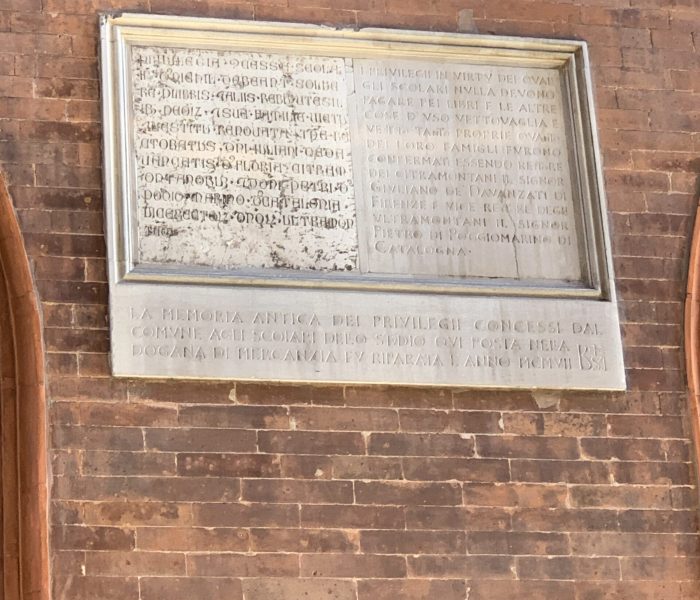
    Exit the quadrilatero in via degli Orefici and turn right to get to Palazzo della Mercanzia (15). In 1382 the Municipality established the seat of the Foro dei Mercanti in this palace built by the same architect as the Church of San Petronio: once the work was completed, the merchant court was established. Today it sacredly preserve the original recipes of the filling of tortellini, Bolognese ragu’, “certosino”, green lasagna, as well as the size of the real tagliatella (8 mm wide, or the 12270th part of the Torre degli Asinelli, and thick from 6 to 8 tenths of a mm). On the façade of the building that gives on Via Castiglione a plaque from the XV century lists the privileges of the students: to them the municipality paid for books, food and clothing.

    Carved stone inscription on a brick wall in Bologna

    Piazza Santo Stefano

    The Basilica of Santo Stefano on Piazza Santo Stefano, Bologna
    From right to left, Chiesa del Crocefisso, Chiesa del Sepolcro and Chiesa dei SS Vitale e Agricola. In the back, the Chiesa della Trinita'
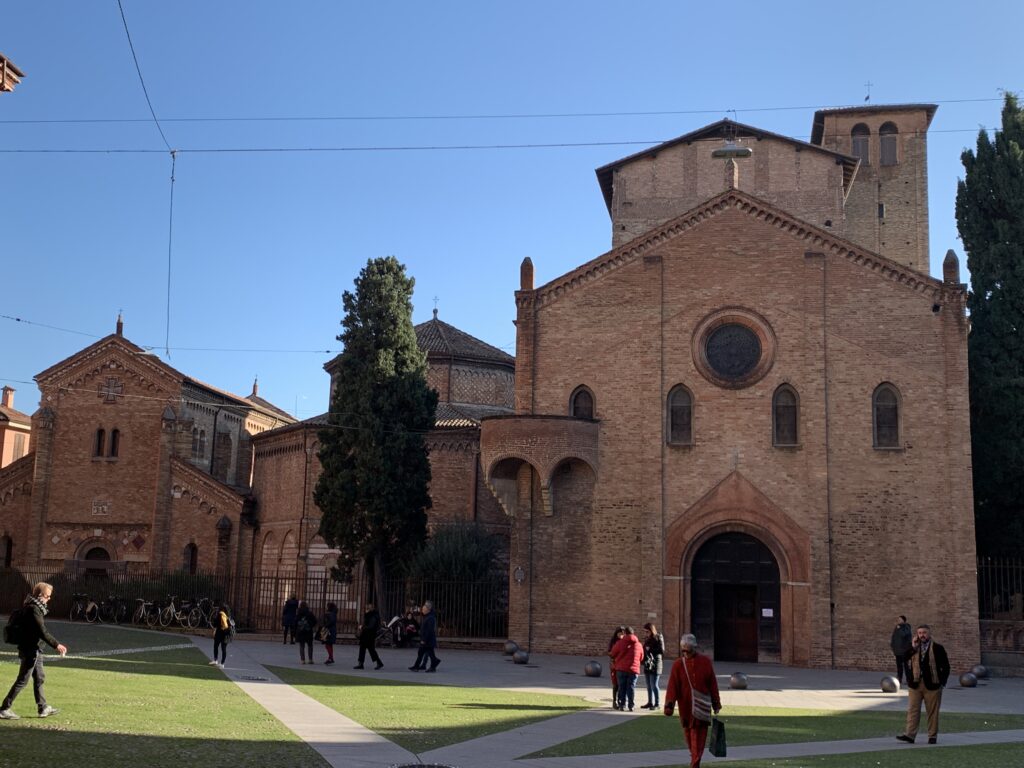
    The walk in Piazza Santo Stefano (16) will let you experience with your feet what the ancient Bolognesi were feeling everyday while walking the strees of the city: the pavement is still made of ancient pebbles. Admire in front of you the beautiful Basilica of Santo Stefano (or delle Sette Chiese, the Seven Churches), a complex of very old churches. The church from which you enter is the Chiesa del Crocefisso, of Lombard origin from the eighth century; in the crypt one of the columns is said to be of the same height as Jesus (1.70 m, very high for the time). At the bottom of the crypt two urns hold the remains of the Saints Vitale and Agricola. The church that is immediately on the left is the Church of the Sepulcher, dating back to the 5th century and built by Petronius as a simulacrum of the Holy Sepulcher of Jerusalem. The hexagonal plan of the church and the numerous pillars suggest that it was built on a temple of Isis. Inside, a shrine contained the relics of the Saint Petronio that the faithful could worship the week after Easter by kneeling through a small door (from 2000 the relics are in San Petronio). 

    In the past, Bolognese prostitutes went to the Church of the Holy Sepulcher on Easter morning to recite a prayer to Mary Magdalene, a prayer that was never revealed. Look among the columns for the one in black marble, symbol of the flagellation of Jesus: touching it would seem to guarantee 200 years of indulgence in the afterlife. The last basilica on the left is the Church of the Saints Vitale and Agricola, the oldest of the complex and dedicated to the first two martyrs of Bologna, victims of Diocletian’s persecution. The basilica already existed in 393, as suggested by the Roman floor. From the last Basilica exit on the Pilate Courtyard: the distance between this point and San Giovanni in Monte (the only natural hill in the vicinity) is the same existing between the Holy Sepulcher and the Calvary in Jerusalem. The small Church of the Trinity at the end of the courtyard had to have a different shape but it was rebuilt in 1800. Since the time of the Crusades there was a piece of the Holy Cross, later removed in 1950. Much more impressive, however, is the medieval cloister on the right, with capitals and tombstones bearing the names of the fallen Bolognesi of the Great Wars.

    The churches are therefore 4 and not 7, and none has the name of Santo Stefano …

    Just outside the basilica, under the portico on the right, take Corte Isolani (17) to reach Strada Maggiore. Under the wooden portico of Corte Isolani, look up and sharpen your eyes to find three arrows stuck in the wooden ceiling. There are three legends behind them: one of three assassins sent to kill an adulterous noblewoman who, at the sight of her beauty, hurled the arrows at the top; one of an armed conflict; and one that of a goliardic joke made in 1877 by students to the professor who was restoring the porch.

    Wooden brackets supporting an overhanging medieval house in Bologna
    The portico of Corte Isolani, with the three arrowns
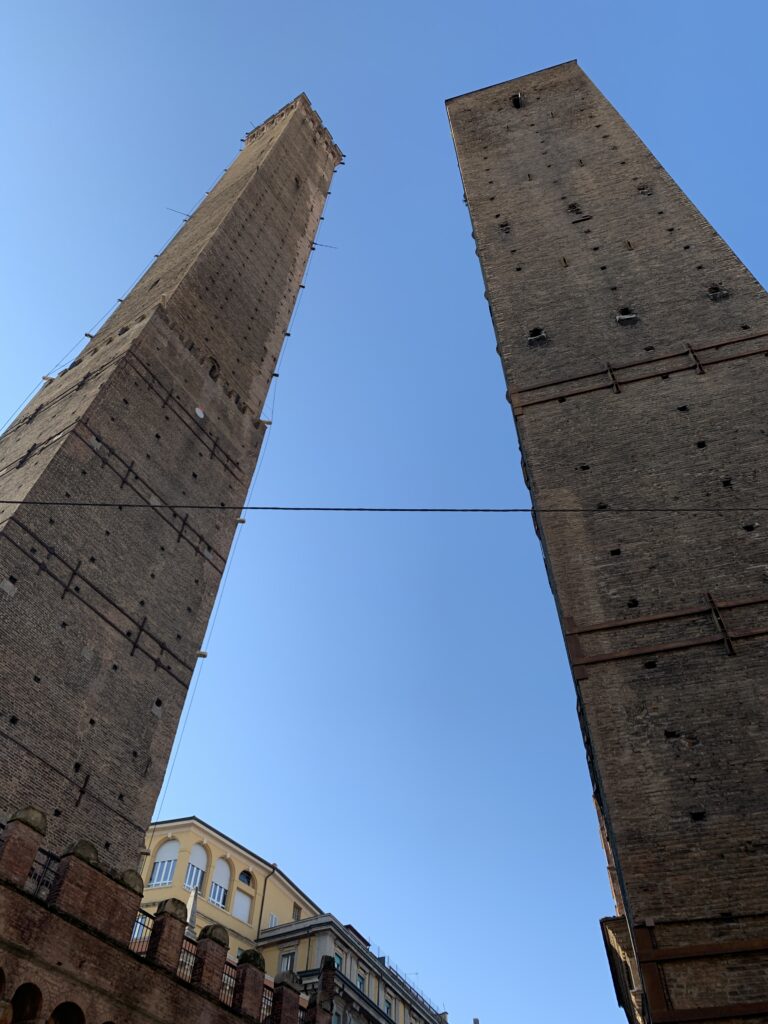
    The two leaning towers of Bologna, Asinelli and Garisenda
    Torre degli Asinelli e Garisenda
    And now, towards the symbol of Bologna, the two hanging towers (18). They are located at the crossroads of the 5 streets that led to the 5 gates of the city in the year 1000. Despite the names (Torre degli Asinelli and Garisenda), it is not certain that precisely those two families built them.

    The Torre degli Asinelli is 97 meters high but from the thickness of the walls of the top floors it is believed that it was originally at least 20 meters higher. Built between 1109 and 1119, its summit was remade in the 1400s. It has a 2.2-meter overhang that makes it the highest hanging tower in Italy. In 1300 it became possession of the Municipality that turned it into a prison. The Visconti made it an observation point, adding a wooden walkway that connected it to the Garisenda. Over the years it has hosted television antennas and during the Second World War it was used to spot bombing and direct relief efforts.

    The Garisenda is 48 meters high and has an overhang of 3.2 meters. Initially it was 60 meters high but was cut off in 1351 for the collapse of the foundations. It is mentioned by Dante in the Divine Comedy, and a plaque recalls its verse: if someone leans back against the Tower on a cloudy day and looks up, the moving clouds give the sense that the Tower falls on you.

    The University neighbourhood

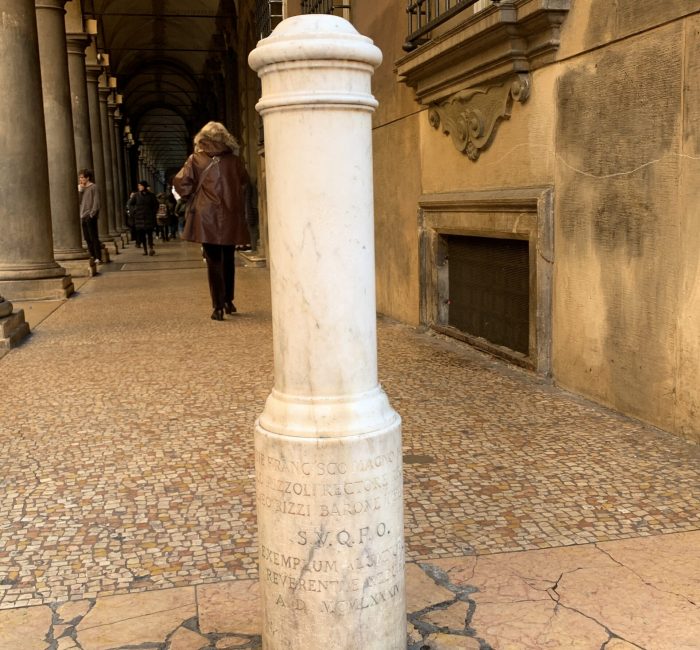
    Walk in via Zamboni (19) and you are in the heart of the university area of ​​Bologna. As you head towards Piazza Verdi, remember that the oldest University in the world went hand in hand with Goliardic associations. And at this point we cannot forget the “taproot” of the goliards. This taproot was originally located in the quadrilateral to prevent access to carriages, but became a meeting place for the Goliardia and a symbol for them. Due to the great rivalries with the other Italian universities, the taproot was repeatedly ripped off and stolen by rivals. When, for urban reasons, it was removed from the original site, the Goliardi raised a protest and occupied the town hall until they obtained the taproot back and carried it in procession and in great pomp in Via Zamboni, where it was walled to the ground (20). After innumerable damage caused by cars, it was restored by the municipality in the 1960s. The engraving on it reads SVQFO (Sacred and venerable order of the taproot).

    Column beneath a portico in Bologna's university quarter

    Piazza Verdi is the heart of the university area. The walls you see behind you are a wreck of those of the second circle. Piazza Verdi hosts the Teatro Comunale (21). it is located in the place where the Bentivoglio Palace was standing until 1507, when it was destroyed by the popular fury. Initiated in 1756, it was the first theater built with public funds and rented by the municipality. Opened in 1763 (only second to the San Carlo in Naples, both La Scala and La Fenice are younger), it is a theater closely linked to Wagner: it was the first theater to host the Parsifal outside Germany. In 1931, the director Toscanini was invited to direct at the Comunale but refused to open the concert with the fascist hymn, and was slapped: since then he left Italy for 15 years.

    Retrace your steps and at the beginning of Via Zamboni on the left you will find the entrance to the Ghetto (22), founded in 1556 following a papal bull. There are 3 entrances to the Ghetto, this one in particular still has the hinges of the gate. Lose yourself in the lanes of the ghetto, enjoy the absence of cars and head towards via Marsala (23).

    The "Portici" of Bologna

    Medieval wooden-beamed portico in Bologna

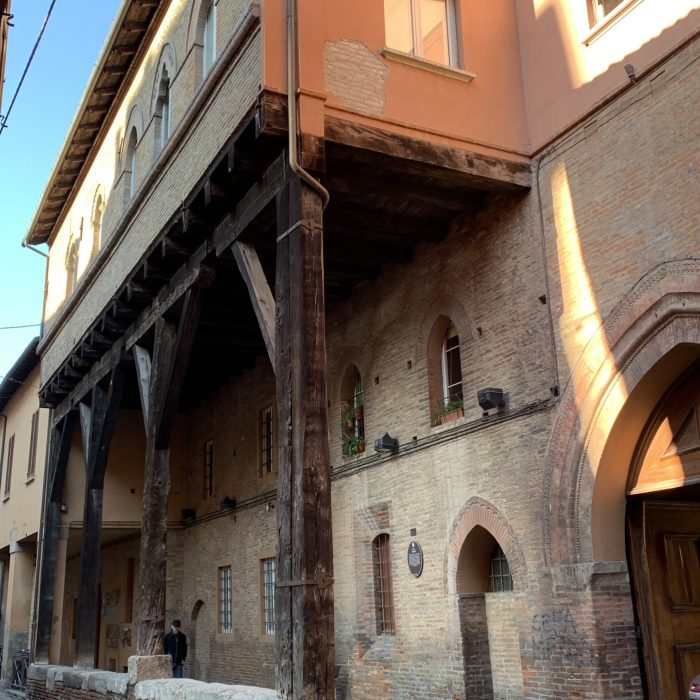
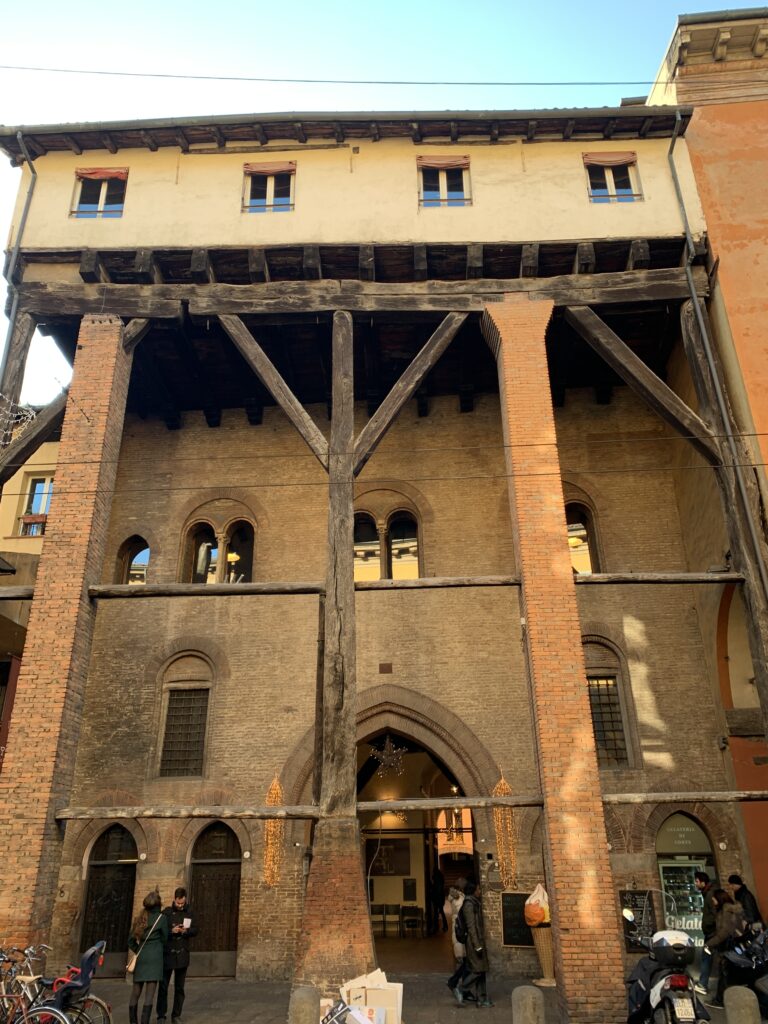
    What is missing in the ghetto (the architecture was left to the Jewish community) and that you can find once you arrive in Via Marsala (23), are the “portici”. The famous Bolognese arcades were born in the Middle Ages as spontaneous projection of private buildings on public land. With the boom of the university new houses were needed: the citizens began to extend the beams of the floors of the first floor to the outside, supported first by wooden capitals and then masonry. In 1288 a ban of the municipality established that all the new houses should have a porch and that those already existing should build it, leaving the burden of maintenance to the owner but guaranteeing the use of the land to the municipality. The arcades had to be at least 2.66 meters high (7 Bolognese feet) and wide to allow the passage of a man on horseback. In the poorest areas, very often the measures were not respected. In Via Marsala you can admire the highest portico (of the Officers’ Club) and in front of it the oldest portico. Bologna also boasts the longest portico in the world, the portico of San Luca, with 666 arches and 3796 meters long, built between 1600 and 1700.

    The Canals of Bologna

    Canale delle Moline running between houses in Bologna

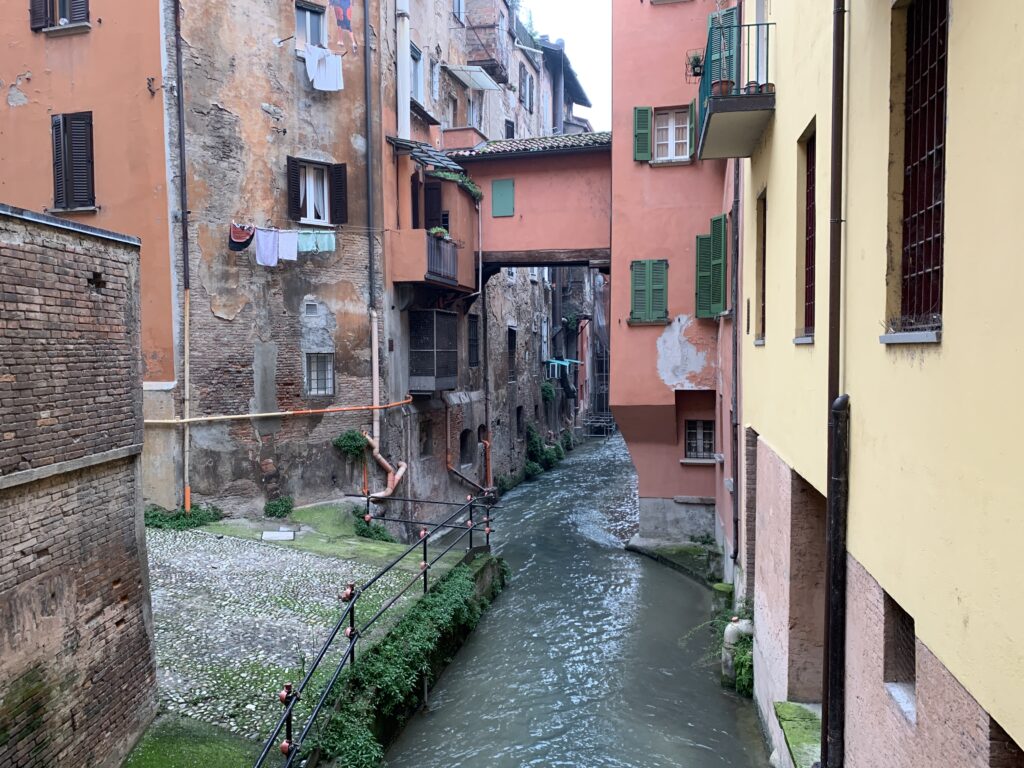
    Keep walking towards Via Piella (24). From the river Reno and Savena (west / east) a water network was developed between the XII and XVI. From south to north, Bologna has a drop of about 40 meters. The canals Reno and Savena enter the city together with a stream, the Aposa. The Reno canal is divided into Canale del Cavaticcio (connected to a small hydroelectric power station since 1995) and Canale delle Moline which supplied 15 mills. The Canale delle Moline connects Bologna to Ferrara and flows into the Po, thus linking Bologna to Venice. All this means that until 1950 Bologna had a functioning port. The Bolognese canals served as a means of connection and transport, to regulate the waters of the Apennine rivers during seasonal flow, and to supply energy to the water mills. A series of locks (some attributed to Leonardo) are all that remains of the Bolognese navigable system active from the 12th to the 20th century, without which Bologna could not have developed its economy.

    The economic boom of the medieval Bologna was due to silk processing and trading. In 1272 silk processing was exclusive to the city of Lucca, but in that year its secrets were stolen and soon this industry flourished in Bologna. The Bolognesi implemented this industry with the invention of the “bolognese mill”, thanks to which Bologna became one of the most important European silk centers. The Bolognese fleet became notable, so much so as to defeat the Venetian fleet in 1271: the victory granted to the Bolognese favorable commercial duties. Silk was the leading commercial sector in Bologna for a long time and in 1500 40% of the population dealt with silk. In 1600, 119 silk mills were in operation in Bologna.

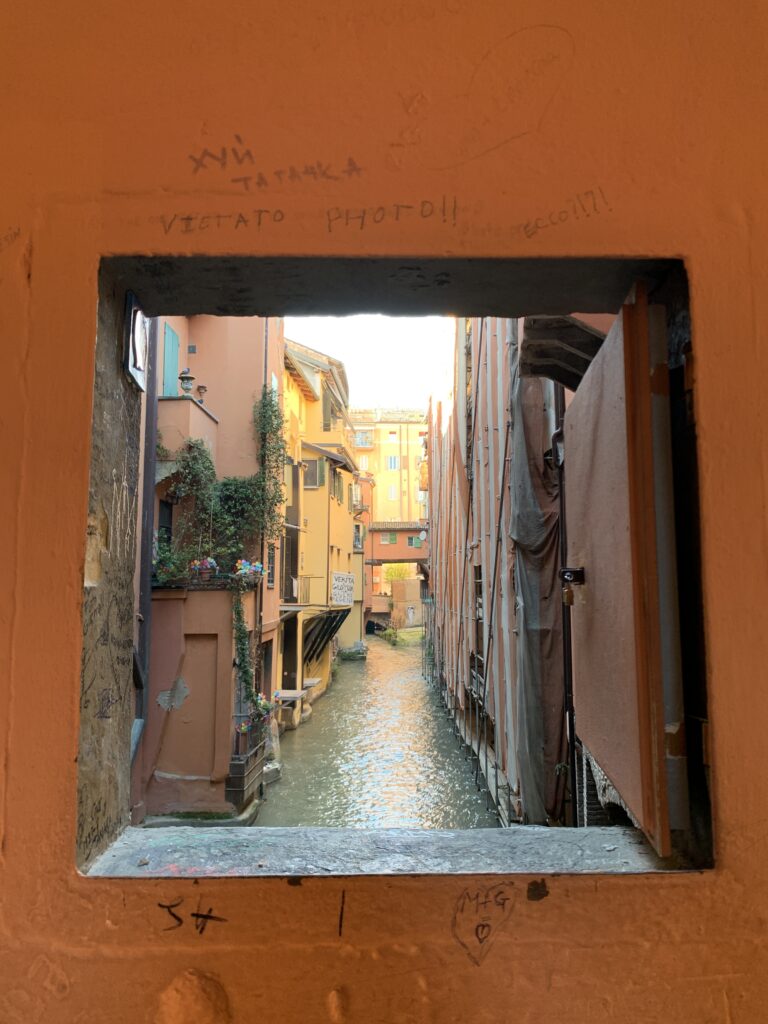
    Admire in Via Piella one of the few uncovered portions of the kilometers of canals that flow under Bologna.

    The Finestrella window looking onto the canal in via Piella, Bologna

    The Towers of Bologna

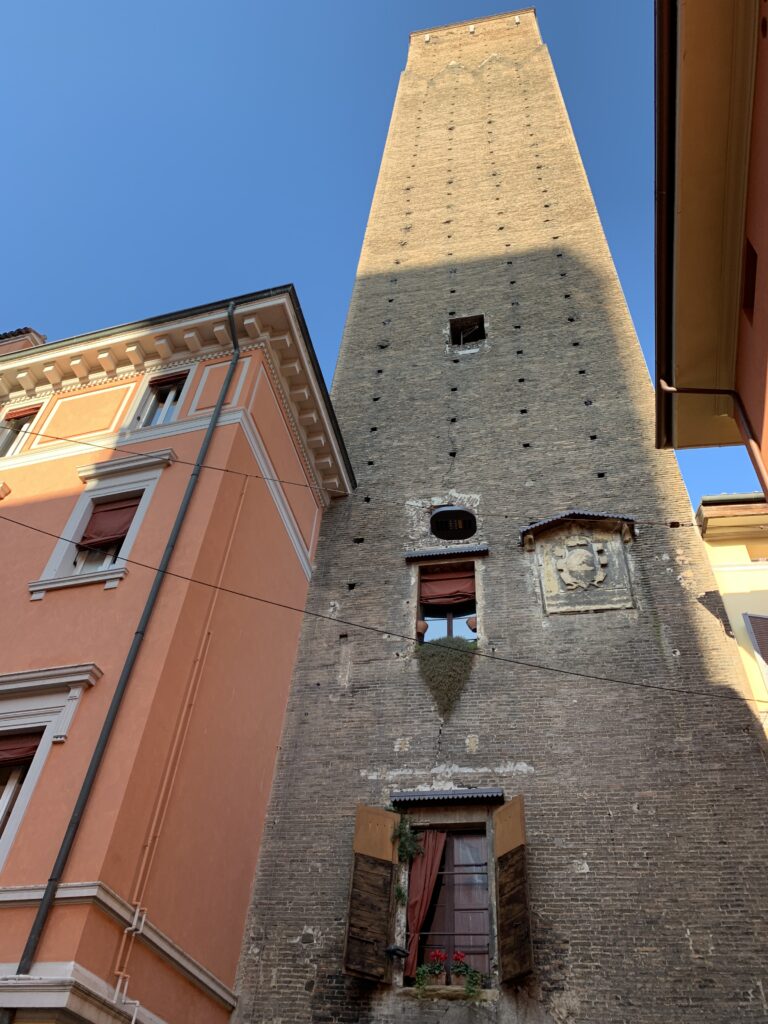
    From Via Piella retrace your steps to see two more of the Bologna towers. The towers of Bologna had a noble and military function, and between 1110 and 1200 there were about a hundred; today there are about 22 left. The towers gave luster to the family that built them, but they could also have offensive or defensive effects. “Tower-houses” were slightly different, lower but with a mainly residential function, less thick walls and more openings. During the 13th century many towers were either cut off, demolished, and some collapsed. The last tower was demolished in 1919. The foundations of the towers go down from 5 to 10 meters under the ground, the base is built with large blocks of selenite and then the tower rises with ever thinner walls. From 3 to 10 years were necessary to build 60 meters of tower.

    Reach the Torre Prendiparte (25) (also called Coronata), built in the second half of the 12th century and 59.5 meters high. At 50 meters from the ground there is a “crown” that reduces the thickness of the walls and lightens the tower. In 1700 it was a prison of the Church, various inscriptions of convicts remain including a “held captive for having impregnated two sisters”. A little further on is the Torre Azzoguidi (26), with its 61 meters of height, the second highest in Bologna, and severed as well.

    Leaning towers of Bologna seen from the street below

    Take a right into Via Atabella and reach San Pietro (27), the true cathedral of Bologna. The first construction dates back to the X-XI century and measured 57 meters in length, but after a fire in 1141 it was completely rebuilt and enlarged in 1184. In light of the numerous basilicas that were being completed all over Bologna, the Church made a (vain) attempt to expand San Pietro and make it more majestic. The current version is from the 1700s, with a baroque facade. The bell tower represents the true jewel of the cathedral: it holds inside a smaller round early Christian bell tower. The largest bell weighs 33 quintals, and together with the other 3 they reach a total of 65 quintals: to ring them, 23 bell ringers are required.

    Finish your ride under the portico of Via Indipendenza and look up at the porch ceiling (28). You will notice three writings: “Panis vita”, “Canabis protectio” and “Vinum laetitia” (bread is life, hemp is protection, wine is joy). From 1330 until the second post-war period, the production of hemp with woven use was very widespread between Bologna and Ferrara.

    Painted vaulted ceiling of a portico in Bologna
  • Europe,  Paris,  Places

    Paris – The Hidden Gems
    DAY 1

    The covered passages of Paris make it possible to walk while visiting the shops sheltered from the mud and the anarchic traffic of the street.

    Before the great transformations carried out under Napoleon III by the prefect Haussmann, between 1852-1870, most of the streets were in clay (no paving stones) and no sidewalks. During the French Revolution (1789), the properties of religious people and emigrants were put on sale, and commercial buildings were created generating significant income.

    The covered passages were created by wealthy bourgeois to promote trade without opening additional streets, which would take up space without generating profits. There were more than 40 passages in Paris. This section offers a walk through the covered galleries still existing in the 9th and 2nd district of Paris. These are the passages Verdau, Jouffroy, Panoramas, Princes, Vivienne, Colbert, and Choiseul.

    If you are traveling by subway, which is the most convenient way, the best is to go to Metro Cadet, line 7 and follow our itinerary.

    Most passages are private and are closed at night by gates or doors (usually from 8pm to 8am) and on Sundays.

    They are generally classified as historical monuments since 1974, but it is the owners who are in charge of maintaining them. IDurand comme

    Map of the covered passages around the Grands Boulevards in Paris
    Sign above the entrance to Passage Verdeau in Paris
    Glass-roofed entrance to a covered passage in Paris
    Shopfronts inside a nineteenth-century covered passage in Paris

    LE PASSAGE VERDEAU

    Take rue Cadet and turn in rue du Faubourg Montmartre, the Verdeau passage is just slightly on your left, on the other side of the road, at number 31 of the street. The glass rooftop makes the passage very luminous and the canopy is divided in in two parts allowing a circulation of air which prevents that the passage becomes an oven during the beautiful days. The passage houses many antique dealers and art dealers as well as restaurants.

    Second-hand books stacked in a passage bookshop window, Paris

    LE PASSAGE JOUFFROY

    Leaving the Verdeau passage, you just have to cross the street to find yourself in the passage Jouffroy built at the same time in 1847. This is the first passage entirely built in metal. This covered walkway is known to house the Musée Grévin, a wax museum that was inaugurated on January 20, 1882. Next to it,the hotel Chopin dates from the 19th century and it has its entrance directly in the passage. Where the passage overlooks the Rue de la Grange Batelière, the ground was not wide enough to allow 2 rows of shops. There is only one side of shops, with a boutique setting with just the showfront opposite.

     LE PASSAGE DES PANORAMAS

    One of the first passage to be opened in Europe in 1799 and to experience gas lighting in 1816, you just have to cross the boulevard Montmartre to enter it. The Passage des Panoramas is one of the most beautiful and lively in the capital. A popular place to walk since the 19th century, it is a Parisian Mecca of the trade of stamps for collection. The passage has the particularity of opening on small adjacent galleries. The passage takes its name from the attraction presented by the American inventor Robert Fulton. He financed his inventions (the steamboat, the submarine Nautilus and the torpedo), which he presented in Paris in an exhibition located in 2 rotundas and presenting panoramas of landscapes of Paris, Toulon, Rome.

    Glass roof and shopfronts of Passage Jouffroy, Paris
    Entrance to the Hôtel Chopin inside Passage Jouffroy, Paris

    LA GALERIE COLBERT

    It is one of the two most beautiful galleries of the capital with the Vivienne gallery. Its entrance is at 6 rue des Petits Champs, The gallery dates from 1826. It feels like entering a university building rather than a passage. This gallery was indeed bought by the B.N.F. and now houses the National Institute of Art History and the National Institute of Heritage. It is however free to access. though: a guard is at the entrance and opening hours are very limited. We could not get in there. In the center of the rotunda stands a bronze statue representing Eurydice, the wife of Orpheus.

    LA GALERIE VIVIENNE

    Inaugurated in 1826, the Galerie Vivienne imposes on the visitor its beauty with its elegant glass roof, the intricate pattern of its mosaic floor and the richness of its decor. The Vivienne gallery is the second longest in this presentation. It consists of several sections separated by steps.Today, it houses ready-to-wear and decorative items. The gallery is elegant all along, it seems quite uncrowded on weekends, the neighborhood comes alive especially during the week. The dome is one of the largest in the passages, elegant and sober.

     LE PASSAGE DE CHOISEUL

     The passage of Choiseul overlooks the 40 rue des petits champs on one side and ends at 23 rue Saint Augustin. The gas lighting was replaced by electric balls and lamps. The passage, very busy when it opened, fell into disuse, then had a revival of activity when the couturier Kenzo settled there in the 1970s, then declined when he left.


    DAY 2

    Sometimes a bit of jet lag is exactly what you need on vacation to start the day bright and early and don’t lose any time. The plan for this second day is to visit the Marais and the best way to reach is to take the metro to Chatelet (line 1) and walk from there. However, is the sky is blue and the day is warm, you may consider strolling down the Champs-Elysee and found the entrance of the Jardins de Champs-Elysee. Business men and women walking and listening to music, briefcase on hand on their way to work, cafés opening, gardeners keeping up the amazing look of the park.

    Insect hotels among the flowers in a Paris garden
    Flower bed in bloom in a Paris park

    The walk will take you all the way to Place de la Concorde. The Obelisque standing still in the middle of the square busy with morning traffic deserved a look (and a picture). It’s like nothing or anyone could ever bother it. It’s there now, it will be tomorrow and in a 100 years. Continue your walk inside the Jardins des Tuileries all the way up to the Louvre. Most of you will probably been there before so you may decide to leave out the visit of the museum this time. It’s huge and it would need a whole day (or more) to be visited properly, maybe you can keep the visit for when you’ll end up in Paris in a cold winter day.

    The Tuileries Garden with the Louvre behind, Paris
    Green metal chairs beside a wall in the Tuileries Garden, Paris

    Down again into Rue the Rivoli and then towards Les Halles. Les Halles is now a big mall, but was once the spot that hosted the central market of Paris. Next to the main square there is a gothic church that will catch your attention. Like we always do when we find something interesting, you may want to walk inside. It was undergoing renovation works when we visited it, but we still got a glimpse of it. The outside is more impressive than the inside for sure, but what is special about the church (but we came to know afterwards) is that it is the church where Moliere was baptized.

    Organ and gilded decoration inside a church in central Paris
    Coloured balloons rising against a Paris sky

    From there walk onwards towards the Beaubourg (better known as Centre Pompidou). It was designed in the style of high-tech architecture by the architectural team of Richard Rogers and Renzo Piano. It houses the Bibliothèque publique d’information, a vast public library; the Musée National d’Art Moderne, which is the largest museum for modern art in Europe; and IRCAM, a centre for music and acoustic research. Here is the link to the website, with more information on opening hours and exhibitions.

    Église Saint-Merri and the Stravinsky Fountain sculptures, Paris
    Coloured pipes on the facade of the Centre Pompidou, Paris

    Continue your walk and will found on your way the Hotel Sully. It was briefly mentioned in our guide, so we decided to take a look at it and you definitely should do as well.

    Facade of the Hôtel de Ville in Paris
    Garden of a historic mansion in the Marais, Paris

    DAY 3

    This itinerary will take you through Ile de la Cité and the Latin Quarter. We took the metro to Louvre-Rivoli (Line 1 and 7) and accidentally noticed at the exit of the metro station a beautiful romanic church. Saint-Germain-L’Auxerrois may not be on the touristic path, but it’s definitely worth a stop. Take Pont Neuf to Ile de la Cité, but instead of turning left on Place Dauphine, turn right and go down the staircase. At their base you’ll see the entrance to a small park (Square du Vert Galant) that covers the tip of the island. On the very tip of the island there are willows and you can see the Seine in front of you, feeling like on the bow of a boat. 

    Tree-lined lawn in a Paris park
    View along the Seine towards the Louvre, Paris

    Go back up and this time head to Place Dauphine and toward the Sainte Chapelle. The Sainte Chapelle was built in 1248 by orders of Luis IX to host the Crown of Thorns and transform Paris into the Catholic World Capital.  While we were queuing a gentleman approached us and told us there was going to be a guided visit starting after few minutes (by the time we exited the queue had grown quite a lot. We definitely suggest to buy the tickets online and check for the free guided visits).


    As the chapel for the Royals and their entourage, the Sainte Chapelle is situated in the Ile de la Cité since the Royal Palace used to be right there, before the King of France decided to move it to Versailles. The building that once hosted the Royal Palace is still there, but home to the Palais de Justice. The Sainte Chapelle consists of two different chapels. 

    The lower Chapel, which is the one you enter in, was meant for the servants of the palace. During the restoration (carried out 150 years ago) there was not enough information to reproduce the ceiling as it used to be, so they just copied the blue ceiling with Fleur de Lis (symbol of the French monarchy) that you can find on the upper Chapel. 

    Gothic exterior of the Sainte-Chapelle in Paris

    Going up a steep staircase you enter the upper Chapel, once directly connected to the personal apartments of Luis IX. This Chapel was strictly reserved to the King and his small entourage. A canopy in the abse used to host 22 relics among which the only survivors are the crown of thorns, a nail and splinter of the Cross. These three until few months ago were preserved in Notre Dame, but after the fire of April 2019, they were moved in the Louvre basements.

    The upper Chapel four sides are entirely made of stained glass and the weight of the structure is held by the outside pointed arches, a typical pattern on Gothic architecture. These beautifully painted windows cover an area of almost 700 sqmt and depict the whole Bible, from the Genesis to the Apocalypse which is painted on the giant rose window over the entrance. 

    Painted vaults of the lower chapel of the Sainte-Chapelle, Paris
    Stained glass windows of the upper chapel, Sainte-Chapelle, Paris
    Stained glass of the Sainte-Chapelle seen from below, Paris
    Rose window of the Sainte-Chapelle, Paris

    Walk then towards Notre Dame (was fenced all around when we were there and we believe it’s going to be for few more years) and take the Pont Saint Louis to stroll around in the nearby Island of Saint Louis. The entire island makes you feel like in a small French village, walking by small family owned businesses, restaurants and lovely townhouses. Stop by for lunch or a sandwich and finish off your break with a nice ice cream at Berthillon Glacier, before taking Pont de la Tournelle, towards the rive gauche.

    Strolling along the riverbanks you will soon end up in the Square René Viviani, next to which there is usually a crowd gathering in front of Shakespeare and Co. This independent english bookstore was opened in 1919 and makes for a very nice stop either in the modern bookstore on the ground floor or in the old looking one on the first floor. They will stamp your books, so also a nice idea for a gift/souvenir.

    Front of the Shakespeare and Company bookshop in Paris

    Get lost in the Latin Quarter breathing the air of the artists of early 1900, and find your way towards the Eglise Saint-Sulpice. Not only this is a very nice early Gothic Church, it’s interest lays in the Paris Meridian (the Rose Line mentioned by Dan Brown in The Da Vinci Code). This brass line on the floor is part of a gnomon, a device designed to cast a shadow on the ground in order to determine the position of the sun in the sky. The sunlight passes through a small round opening in the southern stained-glass window of the transept, at a height of 25 meters, forming a small light disk on the floor; this disk will cross the meridian each time the sun reaches its zenith at true noon. The sun will cross different parts of the meridian depending the time of year. At one end of the meridian is a square marble plaque, which corresponds to the position of the sun at the highest at midday, during the summer solstice about 21 June. At the other end is an obelisk, which is lit near its top when the sun is at it lowest at midday.

    Column and flower bed in a Paris garden
    The Panthéon in the Latin Quarter, Paris

    Walk your way towards the Jardins de Luxemburg and take your time exploring the gardens, maybe sitting in one of the reclining chairs and enjoying the afternoon sun, before hitting the last scientific stop of the day. The Pantheon is a neo-classical building, originally a church, that hosts the tombs of Napoleon, Voltaire, Rousseau, Hugo and Zola. The queue to get inside can be quite long so we definitely advise buying your tickets online. Our main interest inside was the Foucault pendulum, a simple device named after French physicist Léon Foucault that was introduced in 1851 as the first experiment to give simple, direct evidence of the earth’s rotation. The pendulum oscillates along the same line indefinitely while the Earth rotates underneath. In a day the pendulum will have completed a full turn.

    At night we enjoyed a very nice dinner at L’Absynth.

    DAY 4

    Get down at the metro stop Denfert-Rocherau on the line 6 to visit the Catacombs of paris. Try to be there around 9.15 to beat the crowd, the 45 min wait for the doors to open may be alleviated by a take away breakfast at the nearby Paul.

    Inscription 'Arrête, c'est ici l'empire de la mort' at the entrance to the Paris Catacombs
    Vaulted stone tunnel in the Paris Catacombs

    Not every inch of Paris is as romantic as you think – in fact, the Catacombs are downright chilling. Prior to the creation of the Catacombs in the late 18th century, Parisians buried their dead in cemeteries. But as the city continued to grow, burial grounds ran out of space, graves started to become exposed and stunk up surrounding neighborhoods. The limestone quarries located 65 feet beneath Paris eventually became the solution, providing ample and safe space for the city’s deceased loved ones. ones from the defunct Cimetière des Innocents were the first to arrive in 1786, when decomposing bodies started seeping into the cellars of the market at Les Halles, drawing swarms of ravenous rats. It took 12 years to move 6 million bodies from all the Parisien graves.

    Today, the solemn, skull-and-boned lined tunnels weave beneath the heart of the City of Love, beckoning to visitors with an interest in the departed. The legions of bones dumped here are stacked not by owner but by type—rows of skulls, packs of tibias, and piles of spinal disks, often rather artfully arranged. Among the nameless 6 million or so are the bones of Madame de Pompadour (1721–64), laid to rest with the riffraff after a lifetime spent as the mistress of Louis XV.

    The catacombs stretch for miles all over the city, but visitors are only allowed to access a mile’s worth for 45 minutes at the Denfert-Rochereau (lines 4,6 and RER B) metro station.

    And because of the attraction’s unique nature and popularity, expect a queue. We went on the previous day and there was an hour (or more) wait. So we were advised by the personnel to come back the day after at 9:15 to beat the crowd. Even if some people are already queuing at that time, the doors open at 10 am and they let in 200 persons. And the wait can be alleviated by a take away breakafast and coffee from the nearby Paul’s. 

    Stacked skulls and bones lining a wall in the Paris Catacombs
    Skulls and bones arranged in the Paris Catacombs

    The same metro line 6 will take you to canal Saint Martin (Oberkampf stop). The Canal Saint-Martin neighborhood is nestled between Gare du Nord and Republique in Northeastern Paris, in the 10th arrondissement. The canal feeds into the Seine River in the South and the Bassin de la Villette and the Canal de l’Ourq in the North.

    Napoléon I ordered the construction of the Canal Saint-Martin in 1802. It was originally built to link to the Canal de l’Ourq, further north, to supply fresh water to the city. In the 19th century, the area was mostly occupied by working-class laborers. The canal and its surroundings were entirely reconstructed on set for Marcel Carné’s 1938 film, Hôtel du Nord. Only recently has it started to attract well-to-do professionals eager to take up residence in apartments with views of the canal. As a result, it’s come to be known as an area where fashion boutiques are continually springing up in the neighborhood. In the spring and summer, locals come in droves to the banks of the Saint-Martin Canal to picnic, strum guitars waterside, and bask in the lazy long evenings as dusk settles over the photogenic area.On Sundays, two streets running parallel to the canal, Quai de Valmy and Quai de Jemmapes, are reserved for pedestrians and cyclists—perfect for renting a bike and seeing the city from a fresh angle.  

    The canal is drained and cleaned every 10–15 years, and it is always a source of fascination for Parisians to discover curiosities and even some treasures among the hundreds of tonnes of discarded objects.

    Walk or bike along the canal until you reach Jaures on line 2, and take it to Montparnasse. get out at the stop Blanche.

    Tree-lined Canal Saint-Martin in Paris
    Lock on the Canal Saint-Martin, Paris

    Montmartre is talked about by Parisians the way New Yorkers talk about the Village: It’s not what it used to be, It’s like Disneyland, the artists can’t afford to live here anymore, too many tourists etc. There is some truth these opinions, but there are two ways of approaching this incredibly unique village within the metropolis. The first is to follow the herd instinct and stampede your way up the famous hill, take a picture of yourself on the steps of the basilica, buy an overpriced crepe at the Place du Tertre, get conned into having your portrait sketched, and walk back down clutching newly bought key-rings, postcards, gaudy T-shirts feeling a little mystified about what all the fuss is about. The second method is to keep a map in your pocket (just in case) and try to lose yourself in the steep and cobbled streets of one of the most historic and interesting neighborhoods in Paris. Remember that the Basilica of Sacre-Coeur sits on the crest of the hill, so as long as you are heading uphill there is little possibility of being lost for long. At the bottom of the hill is the Boulevard de Clichy which is lined with bars, kebab shops, and more sex shops and peep-shows than you can possibly pretend you are not looking at. If you think of a triangle, consider the base of it to be the section of Blvd. de Clichy and Blvd. de Rochechouart between the metro stations Blanche and Anvers. The tip of the triangle would be the Basilica of Sacre-Coeur. The area between these three points is roughly the area of interest.

    The Moulin Rouge in Pigalle, Paris
    Café des Deux Moulins in Montmartre, Paris

    You can begin your walk at any point along the base of the hill, but because all the great poets have told us the journey is more important than the destination, we recommend you start at metro Blanche (Moulin Rouge) and gradually enter the “village”. This will make it feel more like a pilgrimage toward the place that nurtured most of the great artists and writers living in France this past century. 

    Street corner in Montmartre, Paris
    Artists' stalls on the Place du Tertre in Montmartre, Paris
    Dome of the Sacré-Cœur seen through trees, Montmartre

    After enjoying the eagle-eyed view of Parsi from the Sacre Coeur, walk the staircase towards the feet of the hill. The closest metro station at the bottom of the stairs is Anvers. From there, reach the metro stop La Muette on line 9. In a tranquil, upscale neighborhood of the 16th Arrondissement, hidden in plain sight, is the world’s largest collection of the paintings of Impressionist master, Claude Monet. Housed in a mansion that was designed as a hunting lodge for the Duke of Valmy, the Musée Marmottan Monet features one of the most complete collections of Impressionist and Post-Impressionist paintings. The collection was bequeathed by a friend of the family and by Claude’s son, Michel Monet, in 1966, and represents a highly personal selection of works. The mansion, which is decorated with Napoleonic era decorative elements, contains 66 of Monet’s paintings. In addition to the works by Monet, the museum also houses works by Impressionist painters such as Manet, Pissarro, Renoir, Rodin or Sisley and a significant number of creations by Berthe Morisot, Manet’s wife. Now in a specially designed room on the lower floor of the museum, the collection gives you the rare opportunity to follow the master’s career and experience his technical and artistic evolution. The Marmottan Monet Museum displays Monet’s treasures from his early Impression: Sunrise work to some of his large-scale water lilies.

    Day 5

    Sadly, the overuse of Monet’s art to decorate coffee mugs, coasters, and calendars has likely served to oversimplify and dilute his extraordinary body of work in the minds of the public. His celebrated water lilies start to feel cliche when you see them on too much merchandise, in other words.  The cure to this is a visit at his house in Giverny.

    Water lilies on the pond in Monet's garden at Giverny

    Monet settled in Giverny in 1883 and lived in this house until his death in 1926. This place was for him a source of inspiration and he invested heavily in its beautification and maintenance.

    Claude Monet discovered the house in Giverny, Normandy, while looking out of a train window during a trip from Vernon to Gasny. He immediately fell in love with the place. Monet rented the house where he would spend the rest of his life in May 1883 and immediately begun to create the garden in front of the house, which is called “Clos Normand.” In November 1890 he was able to buy the house and the land. In 1893 he purchased another piece of land, back then behind the train tracks that run at the edge of the property. Here he created a water garden, the “Jardin d’Eau,” with the famous water lily pond.

    Monet's house with green shutters at Giverny
    Yellow dining room in Monet's house at Giverny
    Blue-tiled kitchen with copper pans in Monet's house at Giverny

    Claude Monet supervised the renovation of the house himself. He made sure that the colors of the house and its interior were matching the colors of his palette. He chose a bright pink for the outside of the house and had the windows, doors, and shutters painted in a bright green. The dining room was painted bright yellow and the main color in the kitchen is blue. On the walls are many of the Japanese prints that Monet was fascinated with and collected. Many of the rooms are open to visitors, including the salon, the dining room, the bedroom, and the studio. Inside the house, rooms have been restored to their 19th century condition, just as they were in Monet’s time. Monet’s studios are complete with reproductions of his paintings, and bedrooms are also open for public viewing.

    The visit begins with his workshop where multiple paintings reproductions are exposed on the walls. This is his first workshop where he worked until 1899. A first staircase then leads into the private apartments where we discover Monet’s room, his bathroom, the room of Alice (his wife). Back to the ground floor the yellow dining room and blue kitchen are particularly memorable, one entirely furnished in bright shades of yellow, the other in tranquil blue. The furniture painted in this color was then very modern for the time. Passionate about Japan, he had covered the walls with multiple Japanese prints (211 are on display) and constituted an exceptional collection. 

    Flower-lined path under the green arch in Monet's garden, Giverny
    Willows reflected in the water lily pond at Giverny
    Water lilies on the pond at Giverny

    Many of his paintings were painted in Giverny, the village where his home is located, especially in his own gardens. 

    The French artist drew inspiration from his home in the village of Giverny in Northern France from 1883. Visiting his house and gardens today— now the Foundation Claude Monet Museum—you can see the Japanese bridge, waterlilies, and weeping willows that were the subjects of some of his iconic paintings.

    When Monet moved to Giverny, the house had a huge garden of 1 hectare composed of an apple orchard and a vegetable garden. Passionate about gardening, Monet invested a lot in improving the garden.  In 1893, he bought a piece of land at the end of Clos Normand and hijacked the little arm of the Epte to create a pond that became “the water garden”. When he created the Clos Normand he transferred all his knowledge about color, light, and perspective from his paintings to his garden. The main path of Clos Normand is covered with metallic arches on which roses grow. Straight lines and groups of colors dominate the whole garden. He built a Japanese bridge, certainly inspired by one of his Japanese prints and painted in green to stand out from the red traditionally used in Japan. It creates an oriental atmosphere via plants such as bamboo, lily flowers, weeping willows which surround the pond. At the bottom of the pond, he also planted water lilies he began to paint in 1897. 

    Walking through these gardens is like stepping into one of Claude Monet’s famous paintings.

    Comments Off on Paris – The Hidden Gems
  • Europe,  Hole in the wall,  Places,  Restaurants

    L’ABSYNTHE – Paris

    Beetroot Gaspacho with goat cheese, a thick juicy steak, their signature Le Hot Duck as appetizer… these are only a few of the savory items on the menu that you’ll find here at the Michel Rostang’s L’Absinthe. It is run by Michel Rostang’s daughter, Caroline, who presents a soft, “hip” version of Rostang’s cuisine in this renovated old place. Pair that with a chilled carafe of Beaujolais and you’ve got yourself a memorable meal. Adding to the charm of this family bistro is its location on the Marche St. Honore, a pedestrian area and market square hidden between the Eglise St. Roch and Place Vendome. And let’s not forget the handcrafted absinthe cocktails, the namesake of this little gem. Though if sitting out on this picturesque terrace on a Parisian market square and pedestrian zone is your idea of a perfect end to a wonderful day, then rest assured there are plenty of cocktails and a solid wine list, too, to choose from for your down time.
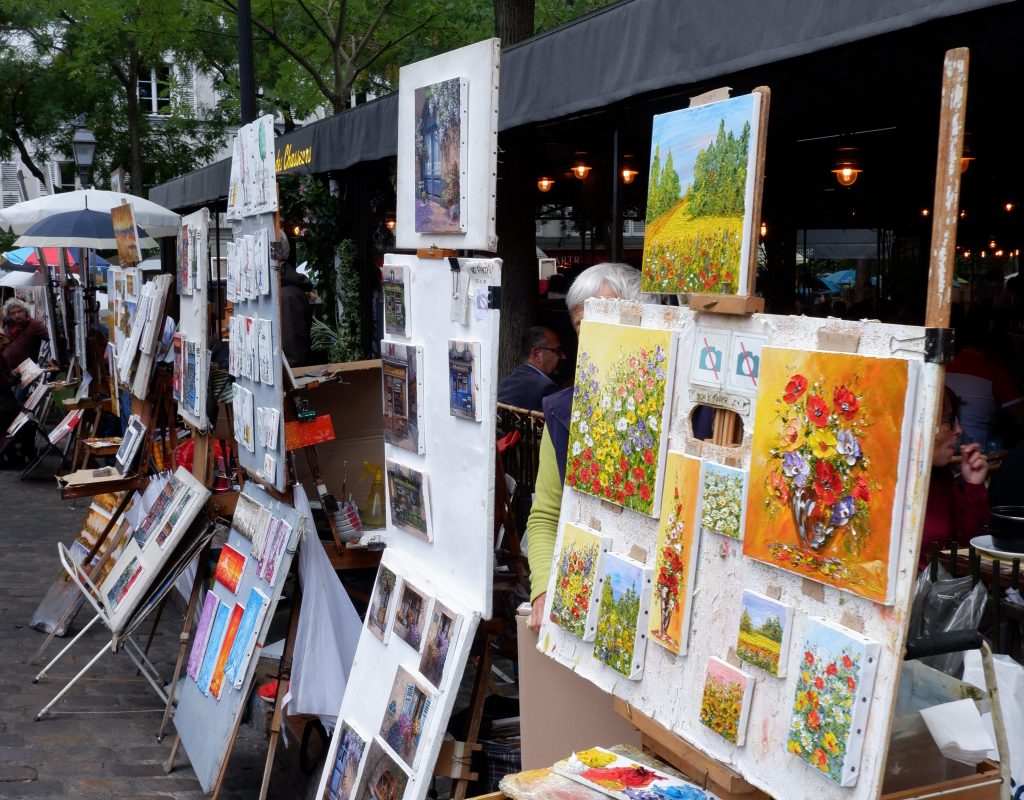
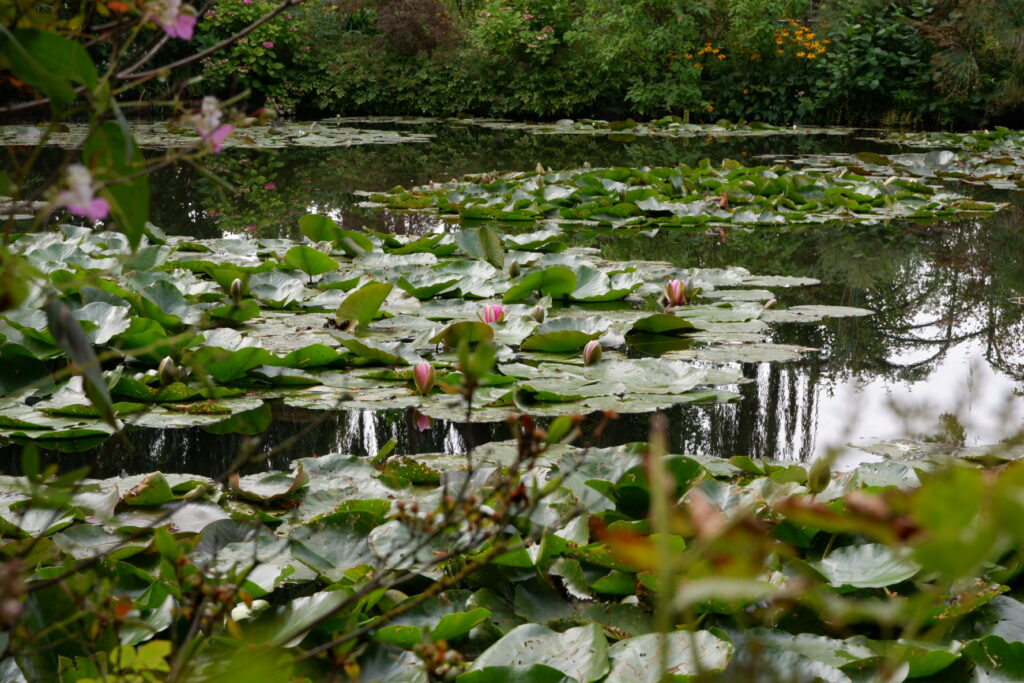
    Comments Off on L’ABSYNTHE – Paris
  • Europe,  Hole in the wall,  Places,  Restaurants

    PAIN, VIN, FROMAGE – Paris

    This cozy, hole-in-the-wall little restaurant next to Rue du Renard is a hidden gem of Paris, and the best place to eat a traditional fondue or a raquelette. Ok, not so “hidden”, it’s so notorious among gastronomy lovers that a reservation 2-3 days in advance is mandatory if you hope to be able to clog your arteries with cholesterol (but indeed a mouth-watering cholesterol).

    The best choice is probably the “fondue savoyarde”, a classic with emmental, beaufort, comté, white wine, kirsch and spices: accompany it with a plate of mixed cured meat, and some boiled potatoes, and you will go out of there with a big smile on your face and a full belly. A good bottle of cider is necessary to gulp down all that cheese of course!

    For dessert, they recommended the cheesecake, a house specialty, and I can guarantee it was definitela great piece of advice.

    Comments Off on PAIN, VIN, FROMAGE – Paris
  • Europe,  Places,  Restaurants,  Starred

    LE CINQ – Paris

    The restaurant Le Cinq opened in 2001, part of the luxury Georges V palace hotel, an art deco landmark dating back to 1928. This was where General Eisenhower chose to make his headquarters during the Allied liberation of Paris.

    In October 2014 Christian Le Squer, who had earned three stars for a dozen consecutive years at Ledoyen, moved to Le Cinq. He has clearly been recruited with the mission of gaining a third star for the restaurant and in His mission he has succeed.

    Stepping into Four Seasons George V hotel is like stepping into a luxury private château – chandeliers, lofty ceilings, beautiful tapestry, silken couches and massive ornate carpets. The stage set is an amalgam of styles: Art Deco, Neo-Classical and Moderne Louis XV and Louis XVI. This is a place of heavy bling: brocade carpets, Louis XVI chairs, crystal chandeliers, and gorgeous mahogany commodes. Add to that fantastical floral creations – a signature of the hotel – which stand almost as high as the potted palm trees. Jazz music from the hotel’s neighbouring lounge often wafts in, which completes the picture. Dining at Le Cinq is like dining at au grand couvert where you are the king and queen and the entire court seamlessly twist, twirl, pop, pour and lift to almost mechanical, ballet-like precision. We felt like Beauty and the Beast’s Belle in Lumière’s dining room – half-expecting the plates to start dancing.

    We were greeted by champagne trolley with a selection of excellent champagnes. The meal began with a trio of canapés, most notably a jewel-like silver bubble that pops in your mouth releasing a burst of flavours. This one was so clean, refreshing and you can only appreciate the technical skills that would have gone in making these canapés. Bread was made in the kitchen from scratch, and we sampled the baguette and a multi-seed roll. These were very high quality, especially the baguette. Next was the amuse–bouche, after which the real meal begun. The starter was Le Squer’s signature dish, and one that shows off his technical acumen – ‘Parisian style’ gratinated onions. The menu description belied what followed: tiny, silk-shelled globes which popped in the mouth to reveal unctuous, syrupy onion soup, like liquid gold. Main course was lamb fillet and harissa flavoured lamb sausage served on a bed of lemon scented semolina.  This was a very strong and rich dish. Cheese came from top Paris suppliers, and was in impeccable condition, a Camembert particularly impressive. A pre-dessert was necessary at this point to wash our mouth before the dessert. Grapefruit millefeuille was served in both preserved and natural form. This is another Ledoyen classic and was beautifully executed here, the interplay of textures and the balance between the sugar and the fruit acidity makes this dish a thing to behold. There was a layer of confit grapefruit, a layer of grapefruit infused with vanilla and lime, then grapefruit sorbet with a layer of sugar crisp with a touch of basil. Strawberry cake came with strawberries cooked in their own juices and strawberry foam. The fruit was of very high quality and the different textures worked very well together, the overall effect refreshing and enjoyable.Then arrives the dessert trolley, with  delicate little sugar pastries that were simply superb, as well as a choice of different chocolate petit fours from an impressive selection presented on a trolley.

    As we chomped on some fluffy, Tinkerbell-green absinthe marshmallow from the plentiful dessert trolley, Lumière’s words resounded: “Try the grey stuff – it’s delicious – don’t believe me, ask the dishes, they can sing, they can dance, for after all dear this is France – and the dinner here is never second best.” And quite right he was. 


    The price for 4 course may seem steep at the time of booking but remember you are paying for the entire experience and not just 4 courses.

    Comments Off on LE CINQ – Paris